accessibility options
P1
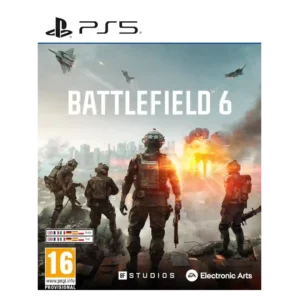
Product 1: Battlefield 6
4.2
settings breadth was praised as unusually extensive.
P2
Product 2: Borderlands 4
2.0
Accessibility evidence is limited but negative, focused on small text that can be hard to read from normal TV distance.
AI behavior
P1
Product 1: Battlefield 6
1.8
AI behavior was one of the most criticized areas, especially in the campaign.
P2
Product 2: Borderlands 4
4.0
AI behavior has limited scored evidence, but enemies are credited with making the player adapt to tactics in memorable ways.
aiming precision
P1
Product 1: Battlefield 6
4.3
aiming and weapon feedback were praised for accuracy, recoil feel, ADS, and satisfying shots.
P2
Product 2: Borderlands 4
4.5
Aiming precision receives positive evidence from headshot and critical-hit satisfaction during gunplay.
animation quality
P1
Product 1: Battlefield 6
4.2
animation quality was praised through detailed reload animation feedback.
P2
Product 2: Borderlands 4
3.5
Animation quality is mixed: cutscenes are praised for life, while NPC animations are described as limited in another review.
art direction
P1
Product 1: Battlefield 6
2.8
art direction drew concern that the visuals moved backward artistically despite technical gains.
P2
Product 2: Borderlands 4
5.0
Art direction receives strong praise for the series’ comic-book style being more striking than before.
atmosphere
P1
Product 1: Battlefield 6
4.5
atmosphere was praised for noise, destruction, spectacle, and sensory overload.
P2
Product 2: Borderlands 4
5.0
Atmosphere has limited positive evidence from music and art that fit the Timekeeper and Order presentation.
boss design
P1Product 1: Battlefield 6
No score yet
P2
Product 2: Borderlands 4
3.4
Boss design is mixed: some reviewers praise new mechanics and serious fights, while others complain about excessive health, weak scale, or tedious phases.
bug frequency
P1
Product 1: Battlefield 6
2.7
bug frequency was mixed: multiplayer looked stable to some, while campaign bugs and glitches were major complaints elsewhere.
P2
Product 2: Borderlands 4
2.1
Bug frequency is a common concern, from minor bugs to severe reports that affect co-op, quests, and playability.
character development
P1
Product 1: Battlefield 6
2.4
character development was shallow, with reviewers noting limited personality or missing relationships.
P2
Product 2: Borderlands 4
2.7
Character development is mixed-to-negative overall, with criticism of bland characters balanced by one review that found the cast tolerable.
character roster
P1
Product 1: Battlefield 6
2.5
the campaign roster was criticized as generic military archetypes.
P2
Product 2: Borderlands 4
4.7
The character roster is widely praised for distinct Vault Hunters, varied playstyles, and stronger class variety than past entries.
checkpoint system
P1
Product 1: Battlefield 6
2.8
checkpoint/respawn systems were mixed, from bad checkpoint recovery to praised respawn choices.
P2
Product 2: Borderlands 4
2.0
Checkpoint design is criticized for a severe lack of respawn points in parts of the open world.
class balance
P1
Product 1: Battlefield 6
4.0
class balance was usually praised for distinct roles, though open weapons blurred lines for some reviewers.
P2
Product 2: Borderlands 4
4.5
Class balance is positive, with reviewers saying the Vault Hunters feel useful, viable, and suited to different playstyles.
co-op experience
P1
Product 1: Battlefield 6
4.3
co-op and squad play were praised when teams communicated, revived, and coordinated roles.
P2
Product 2: Borderlands 4
4.3
Co-op experience is generally praised as fun and central, though one review warns that bugs and progression issues can undermine group play.
combat system
P1
Product 1: Battlefield 6
4.5
combat and gunplay were repeatedly praised as satisfying, impactful, and series-leading.
P2
Product 2: Borderlands 4
4.7
Combat is the strongest consensus point: reviewers praise punchy gunplay, chaotic fights, and responsive shooting, despite a few concerns about repetition or tuning.
community features
P1
Product 1: Battlefield 6
4.4
community features were praised through Portal creations and party tools.
P2
Product 2: Borderlands 4
4.0
Community features have limited positive evidence around the community hunt for Maurice’s vending machine.
companion AI
P1
Product 1: Battlefield 6
2.5
companion AI drew criticism when squad marking failed to help consistently.
P2
Product 2: Borderlands 4
4.0
Companion AI is mixed-to-positive, with Echo-4 navigation described as useful in one review and hit-or-miss in another.
content variety
P1
Product 1: Battlefield 6
3.9
content variety was generally positive thanks to modes and maps, though big-map quantity remained a concern.
P2
Product 2: Borderlands 4
4.5
Content variety is generally positive, with reviewers citing many side missions, weapons, endgame loops, and activities, though some later content still feels thin.
controls responsiveness
P1
Product 1: Battlefield 6
4.4
controls were viewed positively where reviewers cited tight handling and consistent firefights.
P2
Product 2: Borderlands 4
4.1
Controls are mostly praised for smooth aiming and responsive play, although one reviewer found a specific melee-style ability poorly controlled.
core gameplay loop
P1
Product 1: Battlefield 6
4.5
the core loop was treated as a strong Battlefield-style foundation.
P2
Product 2: Borderlands 4
4.9
The shoot-loot-repeat loop is repeatedly praised as addictive and strong, with reviewers calling the core feel one of the game’s biggest successes.
crash stability
P1
Product 1: Battlefield 6
3.8
crash stability ranged from zero issues to isolated crashes or campaign technical trouble.
P2
Product 2: Borderlands 4
2.8
Crash stability varies widely, with some reviewers reporting no crashes and others citing crashes, black screens, or crash-related lost rewards.
cross-play support
P1
Product 1: Battlefield 6
3.5
cross-play was mixed because support exists but PC players lacked a console-style opt-out.
P2
Product 2: Borderlands 4
4.0
Cross-play support has limited positive evidence, with multiplayer cross-play described as working well.
dialogue quality
P1
Product 1: Battlefield 6
1.9
dialogue was criticized for weak, smirky, or wooden writing.
P2
Product 2: Borderlands 4
3.7
Dialogue quality is mixed: several reviewers like sharper chatter, while others criticize sarcasm, cringe remnants, or uneven quips.
difficulty balance
P1
Product 1: Battlefield 6
3.8
revives made the campaign feel more forgiving.
P2
Product 2: Borderlands 4
2.9
Difficulty balance is divided: reviewers enjoy tougher challenge in places, but criticize level spikes, bullet sponges, damage scaling, and lack of difficulty options.
driving mechanics
P1
Product 1: Battlefield 6
3.6
vehicle handling was mixed, with tanks praised by some and awkward controls criticized by others.
P2
Product 2: Borderlands 4
3.5
Driving is convenient when vehicles can be summoned instantly, but reviewers also complain about weak firepower or awkward vehicle handling.
economy and resource balance
P1
Product 1: Battlefield 6
1.8
Battlefield Coins and battle-pass progression were criticized as overly slow.
P2
Product 2: Borderlands 4
4.0
Resource balance has limited evidence, but the repkit health option is judged useful when health drops are unavailable.
emotional impact
P1
Product 1: Battlefield 6
2.2
emotional impact was weak overall, with one multiplayer review praising memorable emergent stories.
P2
Product 2: Borderlands 4
3.5
Emotional impact is split between a lack of sincerity in one review and surprisingly thoughtful side content in another.
endgame content
P1
Product 1: Battlefield 6
2.5
endgame/long-term content was criticized for not yet satisfying the reviewer’s content appetite.
P2
Product 2: Borderlands 4
3.5
Endgame content is mixed: several reviewers call it robust, addictive, or rich, while others say it is thin, weak, or disappointing at launch.
enemy variety
P1
Product 1: Battlefield 6
2.0
enemy variety was criticized as generic cannon fodder.
P2
Product 2: Borderlands 4
4.7
Enemy variety is praised across reviews for distinct factions, modifiers, new enemy types, and encounters that force tactical adjustments.
environmental detail
P1
Product 1: Battlefield 6
4.4
environmental detail was praised through rubble, destructible structures, and map detail.
P2
Product 2: Borderlands 4
2.5
Environmental detail has limited negative evidence, focused on muddy-looking textures and real-time loading issues.
exploration quality
P1
Product 1: Battlefield 6
3.8
open-ended segments gave the campaign some limited exploratory value.
P2
Product 2: Borderlands 4
3.8
Exploration is rewarding when it leads to loot and side content, but some reviewers find navigation and invisible walls limiting.
faithfulness to franchise
P1
Product 1: Battlefield 6
4.0
faithfulness to franchise was mostly positive as a return to Battlefield’s classic identity, though some reviewers disputed it.
P2
Product 2: Borderlands 4
4.0
Faithfulness to franchise is mostly positive, with several reviewers calling it a return to what worked, though one says the identity is partly lost.
flying mechanics
P1
Product 1: Battlefield 6
2.4
flying was a repeated weak spot because aircraft controls and practice options frustrated reviewers.
P2
Product 2: Borderlands 4
2.5
Flying and aerial traversal are mixed: gliding is enjoyable, while grappling and aerial tactics can feel underexplored or poorly implemented.
frame rate stability
P1
Product 1: Battlefield 6
4.7
frame-rate stability was praised for smooth or very high FPS performance.
P2
Product 2: Borderlands 4
2.9
Frame rate stability is mixed-to-negative, with dips, tearing, stutters, and console issues offset by a few reports of smooth 60 fps modes.
fun factor
P1
Product 1: Battlefield 6
4.3
fun factor was strongly positive for multiplayer despite campaign and progression complaints.
P2
Product 2: Borderlands 4
4.3
Fun factor is strongly positive overall, despite some dissent, with many reviewers calling the game highly fun, addictive, or a favorite.
gameplay mechanics
P1
Product 1: Battlefield 6
4.6
core mechanics were praised for smooth, strong FPS fundamentals.
P2
Product 2: Borderlands 4
4.6
Reviewers who scored general gameplay mechanics describe the new mechanics as fun, layered, and stronger than prior entries, with only isolated caveats.
graphics quality
P1
Product 1: Battlefield 6
4.0
graphics were usually praised as realistic, beautiful, or technically strong.
P2
Product 2: Borderlands 4
4.4
Graphics quality is mostly praised, with reviewers calling the game beautiful, detailed, or good-looking, despite some isolated environmental texture concerns.
grind level
P1
Product 1: Battlefield 6
1.8
grind level was criticized as tedious.
P2
Product 2: Borderlands 4
4.3
Grind level is mixed-to-positive for players who enjoy farming, but low drop chances and repeated boss farming can become a chore.
handheld play suitability
P1Product 1: Battlefield 6
No score yet
P2
Product 2: Borderlands 4
2.3
Handheld play suitability is weak, with Steam Deck play criticized even though another handheld performed better.
haptic feedback integration
P1
Product 1: Battlefield 6
4.9
DualSense haptics and adaptive triggers were strongly praised.
P2Product 2: Borderlands 4
No score yetHUD clarity
P1
Product 1: Battlefield 6
2.1
HUD clarity and visibility were criticized for weak indicators and hard-to-see enemies.
P2
Product 2: Borderlands 4
3.5
HUD clarity is mixed-to-positive, with a serviceable compass and optional radar helping situational awareness.
immersion
P1
Product 1: Battlefield 6
4.7
immersion was praised through grounded aesthetics and the way combat, levels, and destruction combine.
P2
Product 2: Borderlands 4
4.5
Immersion has limited positive evidence, with the open world helping one reviewer feel more like a Vault Hunter.
innovation
P1
Product 1: Battlefield 6
2.6
innovation was limited, with reviewers saying the game plays safe.
P2
Product 2: Borderlands 4
3.0
Innovation is mixed-to-low, with reviewers saying the series has not reinvented itself even as it improves key systems.
learning curve
P1
Product 1: Battlefield 6
3.4
the learning curve was mixed: some systems are accessible, but new players can feel overwhelmed.
P2
Product 2: Borderlands 4
3.0
Learning curve evidence is limited and mixed, with one reviewer noting that builds take time to come online.
level design
P1
Product 1: Battlefield 6
3.5
campaign level design had occasional barriers and spawn issues that limited otherwise solid encounters.
P2
Product 2: Borderlands 4
2.0
Level design draws negative evidence from a reviewer who felt the open-world gaps were filled with weak filler content.
live-service support
P1
Product 1: Battlefield 6
3.5
live-service support was mixed: early seasonal promises helped, but long-term content cadence was questioned.
P2
Product 2: Borderlands 4
3.9
Live-service support is moderately positive but slow, with reviewers expecting free and paid updates while noting post-launch momentum is still building.
load times
P1
Product 1: Battlefield 6
2.8
load times were noted as a minor drawback.
P2
Product 2: Borderlands 4
5.0
Load times receive positive evidence from seamless traversal and the absence of loading-screen interruptions.
loot system
P1Product 1: Battlefield 6
No score yet
P2
Product 2: Borderlands 4
4.1
The loot system is heavily praised for addictive drops and build-defining combinations, though several reviewers dislike weak legendaries, bad guns, or rarity balance.
map and navigation design
P1
Product 1: Battlefield 6
3.0
map and navigation design was highly divisive, with praise for some maps but repeated concern over small maps, limited variety, and uneven layouts.
P2
Product 2: Borderlands 4
2.5
Map and navigation design is mixed-to-negative, with pathing failures, rough navigation, missing minimap complaints, and clunky map controls.
menu usability
P1
Product 1: Battlefield 6
3.1
menu usability was mixed: some queue tools helped, but menus were also called unintuitive.
P2
Product 2: Borderlands 4
1.8
Menu usability is criticized for poor backpack design, annoying sorting, slow opening, and clunky loot-management steps.
microtransaction impact
P1
Product 1: Battlefield 6
1.5
microtransactions were criticized for appearing in an already full-price game.
P2
Product 2: Borderlands 4
5.0
Microtransaction impact has limited positive evidence because one reviewer praises the absence of a microtransaction-driven always-online focus.
mission design
P1
Product 1: Battlefield 6
2.0
mission design was one of the weakest areas, often described as dull, passive, or dated.
P2
Product 2: Borderlands 4
3.2
Main mission design ranges from carefully crafted to fetch-quest heavy, with reviewers split between praise for structure and frustration with repetition.
mission variety
P1
Product 1: Battlefield 6
2.3
campaign mission variety was weak because vehicle, stealth, and on-rails attempts often failed to add much.
P2
Product 2: Borderlands 4
3.8
Mission variety is positive for side content and activities, but some reviewers still find enemy waves or fights repetitive.
monetization fairness
P1
Product 1: Battlefield 6
1.7
monetization fairness was criticized as predatory or overpriced.
P2
Product 2: Borderlands 4
5.0
Monetization fairness is praised because reviewers value the single-box-price approach and lack of live-service monetization pressure.
movement feel
P1
Product 1: Battlefield 6
4.2
movement was usually praised for speed and fluidity, though a few reviewers found it too arcade-like.
P2
Product 2: Borderlands 4
4.5
Movement is widely praised as a major upgrade, with gliding, grappling, dashing, and vertical combat making fights and traversal feel faster and more dynamic.
multiplayer design
P1
Product 1: Battlefield 6
4.4
multiplayer design was the strongest consensus positive, praised as layered, chaotic, and highly replayable.
P2
Product 2: Borderlands 4
5.0
Multiplayer design has limited but strong positive evidence for frictionless shared play design.
narrative quality
P1
Product 1: Battlefield 6
2.1
narrative quality was broadly weak, with only isolated positive impressions.
P2
Product 2: Borderlands 4
3.4
Narrative quality is strongly divided: reviewers praise the grounded tone and progression while others call the story dull, thin, or weakened near the end.
onboarding experience
P1
Product 1: Battlefield 6
4.0
guide-style evidence found the game explainable despite many systems.
P2
Product 2: Borderlands 4
3.8
Onboarding is mixed: one reviewer praises menu tutorials, while another says important level and difficulty information is poorly communicated.
online stability
P1
Product 1: Battlefield 6
2.2
online stability had at least one negative end-of-match issue.
P2
Product 2: Borderlands 4
3.3
Online stability is highly mixed, from smooth co-op sessions to lag, desync, and Steam/network weirdness.
open-world design
P1
Product 1: Battlefield 6
2.0
the open-world-style campaign mission was criticized for falling flat.
P2
Product 2: Borderlands 4
4.0
Open-world design is broadly praised as a smart evolution for the series, yet several reviewers criticize emptiness, old-fashioned structure, or frustrating traversal barriers.
originality
P1
Product 1: Battlefield 6
2.0
originality was criticized because reviewers found few genuinely new ideas.
P2
Product 2: Borderlands 4
3.5
Originality is mixed: reviewers see the game as fresh enough, but not especially original.
pacing
P1
Product 1: Battlefield 6
1.5
campaign pacing was criticized as nearly nonexistent.
P2
Product 2: Borderlands 4
2.7
Pacing is mixed to negative: several reviewers mention slow starts, overlong fights, drawn-out structure, or content stretched too thin.
performance optimization
P1
Product 1: Battlefield 6
4.8
performance optimization was consistently praised across PC and console evidence.
P2
Product 2: Borderlands 4
2.7
Performance optimization is the most repeated concern, with reviews ranging from smooth experiences to severe stutter, bad optimization, and hardware caveats.
platform-specific feature support
P1
Product 1: Battlefield 6
4.2
platform-specific creator and console options were appreciated.
P2
Product 2: Borderlands 4
2.5
Platform-specific feature support is mixed-to-negative, especially around console FOV support and platform-specific launch concerns.
polish
P1
Product 1: Battlefield 6
2.6
polish was mixed: multiplayer felt solid, while campaign polish was often poor.
P2
Product 2: Borderlands 4
1.0
Polish has limited negative evidence, with one review calling the launch state rushed and half-baked.
progression system
P1
Product 1: Battlefield 6
3.0
progression was divisive: straightforward or rewarding for some, but slow, grindy, or frustrating for others.
P2
Product 2: Borderlands 4
3.8
Progression is often praised for customization and character growth, but some reviewers dislike slow early growth, RNG layers, or Ultimate Vault Hunter progression friction.
protagonist appeal
P1
Product 1: Battlefield 6
2.0
the protagonists were criticized as cookie-cutter military archetypes.
P2
Product 2: Borderlands 4
2.5
Protagonist appeal has limited evidence, with Vex criticized as too quippy and shallow in one review.
replay value
P1
Product 1: Battlefield 6
4.7
replay value looked strong because long rounds and hundreds of hours still produced stories and enjoyment.
P2
Product 2: Borderlands 4
4.6
Replay value is strongly positive, driven by alternate Vault Hunters, build experimentation, co-op, and endgame loops.
sandbox freedom
P1
Product 1: Battlefield 6
4.5
the multiplayer sandbox was praised for letting players create their own fun.
P2
Product 2: Borderlands 4
5.0
Sandbox freedom is praised for allowing players to leave the main path and explore Kairos with fewer structural constraints.
save system reliability
P1Product 1: Battlefield 6
No score yet
P2
Product 2: Borderlands 4
1.3
Save reliability is a serious concern in the scored evidence, including lost progress, wiped saves, and non-host progress problems.
seasonal content quality
P1
Product 1: Battlefield 6
3.8
seasonal content was seen as improved versus earlier Battlefield releases, though still limited.
P2
Product 2: Borderlands 4
3.5
Seasonal content quality has limited evidence, focused on unique Halloween-themed legendary items rather than broad seasonal depth.
side character depth
P1
Product 1: Battlefield 6
2.0
side characters were criticized as interchangeable.
P2
Product 2: Borderlands 4
3.5
Side character depth is split: one review finds faction leaders relatable, while another says the game does not spend enough time with them.
skill tree depth
P1
Product 1: Battlefield 6
4.2
training paths were viewed as a useful layer of class depth.
P2
Product 2: Borderlands 4
4.6
Skill tree depth is a major strength, with reviewers repeatedly praising broader trees, build variety, and meaningful character experimentation.
social features
P1
Product 1: Battlefield 6
4.2
social features were praised for quick revive-thanks interactions.
P2
Product 2: Borderlands 4
4.0
Social features have limited positive evidence around sharing desirable loot with friends.
sound design
P1
Product 1: Battlefield 6
4.6
sound design was one of the strongest points, repeatedly praised for weapons, vehicles, and explosions.
P2
Product 2: Borderlands 4
4.1
Sound design is mostly praised for clean combat readability, strong audio mix, and punchier weapon sound, with one audio-cutting complaint.
soundtrack quality
P1
Product 1: Battlefield 6
4.2
the soundtrack was praised for its Battlefield-style score.
P2
Product 2: Borderlands 4
4.1
Soundtrack quality is generally positive, though one reviewer wanted more music in the wide world.
tutorial quality
P1
Product 1: Battlefield 6
3.4
tutorial/training support was mixed, with class introduction praised but free practice options missed.
P2
Product 2: Borderlands 4
2.5
Tutorial quality is criticized for a weak opening tutorial and for leaving important movement or systems unexplained.
upgrade system
P1
Product 1: Battlefield 6
4.1
weapon upgrades and attachments were praised for making weapons improve and change meaningfully.
P2
Product 2: Borderlands 4
4.3
Upgrade systems receive positive evidence for direct SDU upgrades and inventory-capacity improvements tied to collectibles.
user interface design
P1
Product 1: Battlefield 6
2.0
UI design was a common complaint, especially streaming-app-style menus and loadout screens.
P2
Product 2: Borderlands 4
2.2
User interface design is one of the clearest pain points, criticized as poorly conceived, flat, slow, or a step backward despite one positive UI comparison note.
value for money
P1
Product 1: Battlefield 6
3.4
value for money was mixed: multiplayer value was praised but some reviewers advised waiting for sale.
P2
Product 2: Borderlands 4
3.1
Value for money is mixed, from strong recommendations to warnings to wait for patches or avoid the current state.
visual effects quality
P1
Product 1: Battlefield 6
4.6
visual effects were praised for debris, VFX, and destruction spectacle.
P2
Product 2: Borderlands 4
4.5
Visual effects quality has limited positive evidence, with combat described as a colorful burst of effects and particles.
voice acting
P1
Product 1: Battlefield 6
3.7
voice acting was mixed-to-positive, with some believable performances but forgettable campaign delivery in one review.
P2
Product 2: Borderlands 4
4.6
Voice acting is consistently praised where scored, with reviewers calling the performances strong, phenomenal, or a contributor to character appeal.
weapon balance
P1
Product 1: Battlefield 6
3.0
weapon balance was only moderately positive because some guns needed tuning.
P2
Product 2: Borderlands 4
3.0
Weapon balance is mixed: variety is praised, but weak charged guns, disappointing weapons, uneven legendaries, and risky overpowered items are noted.
world-building
P1
Product 1: Battlefield 6
2.0
world-building was criticized for shallow context around the conflict.
P2
Product 2: Borderlands 4
3.9
World-building is moderately positive, with Kairos and the franchise lore described as broader and more connected, though not always fully realized.
world interactivity
P1
Product 1: Battlefield 6
4.0
destruction and terrain changes were praised for making battles reactive and meaningful, though one veteran found it less impactful than older games.
P2
Product 2: Borderlands 4
2.0
World interactivity has limited scored evidence and is criticized for not giving players more engaging ways to interact beyond combat and object prompts.
writing quality
P1
Product 1: Battlefield 6
1.7
writing quality was criticized as predictable, disjointed, or unbearable.
P2
Product 2: Borderlands 4
3.9
Writing quality is mixed but often improved over prior entries, with praise for stronger humor and tone balanced by complaints of bland or bad writing.