Commonly included extras across kits/reviews: spare side brushes, spare filter, and a small cleaning tool; some versions include a remote and batteries.
AdaptiLift-style chassis lifting is a standout feature, helping it clear taller thresholds and better handle higher-pile carpet transitions than many competitors.
Design feedback is neutral-to-positive: it looks like a modern Roborock with familiar styling, with some notes that higher-priced variants mainly differ in appearance rather than core cleaning.
App control is repeatedly described as straightforward and useful for scheduling and mode selection; some note it uses a Tuya/Smart Life-style backend and supports voice assistants (Alexa/Google) depending on configuration.
The app and automation feature set is described as robust: detailed maps, zones/no-go areas, vacuum-then-mop routines, obstacle settings, and smart-home/voice options in some reviews.
It handles rugs by lifting the mop pads and, with the lift chassis, can traverse many transitions; very thick or shaggy rugs may still be better managed with no-go zones.
Setup is described as beginner-friendly: install side brushes, place/plug the dock, charge, and pair via app/Wi-Fi; pairing steps are generally manageable though still require 2.4GHz network and manual steps.
Setup is repeatedly described as straightforward, with fast initial mapping and a smooth app onboarding process.
Battery life is frequently reported as strong for the class, with typical auto-return behavior; occasional mid-floor shutdowns are reported but described as infrequent and sometimes linked to charging contact/placement issues.
Battery life is reported as strong for a premium robot, with long-run claims up to roughly three hours and above-average endurance in at least one benchmark.
Bin capacity and access are generally viewed positively for a budget robot, with reviewers describing it as easy to remove and dump; some users empty every run out of habit but note it can often go multiple runs.
The system relies on a dock bag for auto-emptying; bag swaps are clean and easy, and reviewers expect weeks to a couple months per bag depending on home size and debris.
Build quality impressions are generally decent for the price (lightweight, basic plastics). Reviewers don’t expect premium durability, but several report it feels solid enough for entry-level use.
High-pile/deeper carpet pickup is consistently identified as a weak point due to the lack of a main brush roller; it may pass over carpet but won’t deep-clean embedded dirt well.
Low-pile carpet pickup is described as acceptable for surface debris, but not comparable to robots with main brush rollers; results improve with higher suction and repeated passes.
Low-pile carpet pickup is a strength, with strong results on surface debris and good overall coverage.
Medium-pile carpet performance tests come back above average, with strong deep-clean results in sand-style benchmarks.
Reviews frequently compare it with other premium robots (including close Roborock siblings), generally placing it in the top tier for features and overall capability.
Controls are commonly praised as simple (app plus single-button operation; some kits include a remote). Mode selection and suction level adjustments are typically app/remote-driven.
Controls are mostly app-driven; reviewers call the interface clear and informative (showing dock actions like washing/drying) with enough settings to tailor cleaning behavior.
Corner reach is better than typical due to the extending side brush, but ultra-tight corners can still be missed occasionally depending on layout and avoidance settings.
Dirty-water/intelligent dirt sensing is used to trigger re-washing or targeted re-mopping, which reviewers credit for better consistency on messier zones.
Docking is mixed: some reviewers report it finds and docks reliably, while others report longer docking searches or occasional failure/erratic docking, especially without mapping and in less-ideal dock placement.
Docking and auto-empty reliability is viewed as high, with dependable returns to the base and consistent mop washing/drying and emptying behavior in most reports.
Ease of use is a major positive: reviewers emphasize set-and-forget routines, strong automation, and minimal day-to-day intervention beyond basic dock maintenance.
Edge and baseboard performance is usually described as only fair to decent; several reviews note it doesn’t prioritize perimeter runs like higher-end bots or can miss edges depending on mode.
Edge and baseboard reach is a consistent strength thanks to the extending brush/mop system, improving coverage along walls compared with typical round robots.
Edge-following accuracy is strong, with the extending mop/brush system getting close to baseboards and improving wall-line coverage.
Emptying is usually straightforward (lift lid, pull bin, dump). However, at least one test source notes it’s not among the easiest in class to keep filter/bin clean, so expectations should be modest.
Auto-emptying to a bag keeps mess low, but owners still need to stay on top of bag changes and basic dock upkeep to avoid overflow-type messes.
Filtration is described as basic HEPA-style/filter-in-bin. Some sources praise having an included spare filter, while lab-style commentary raises concerns about maintenance ease and overall containment versus higher-performing robots.
Hair pickup on carpets is inconsistent and generally weaker than on hard floors; reviewers point to the no-roller design as the reason it can push hair rather than lift it.
Carpet hair pickup is above average, with strong performance on flattened pet hair in at least one controlled test.
Hair pickup on hard floors is often reported as good for the price, especially for day-to-day pet hair, though occasional pushing of hair is also mentioned in testing.
Hair pickup on hard floors is generally very good, though one review notes it can occasionally leave a bit of pet fluff behind in tricky spots.
The no-main-brush design reduces classic brush-roll hair wrap, lowering one major tangle point; side brushes can still collect some hair and may need occasional cleaning.
Tangle resistance is a standout theme: the split anti-tangle brush design is repeatedly praised and testing reports near-zero hair wrap.
On hard floors, fine dust pickup is described as generally good for light daily cleaning, though performance varies by suction setting and repeated passes can be needed for denser messes.
Fine dust pickup on hard floors is repeatedly strong in testing, with high scores in flour/dust-style trials.
On hard floors, it handles everyday crumbs and small-to-moderate debris reasonably well, but very dense piles or stubborn messes often require extra passes.
Large-debris pickup on hard floors is also excellent, handling cereal and mixed debris well without excessive scatter.
Innovation callouts center on the chassis-lift capability and the split anti-tangle brush, plus the edge-reaching mop/brush hardware that targets common robot-cleaning weak spots.
Low-profile behavior is generally positive, with reviewers noting it can fit under furniture well for basic under-furniture pickup in many homes.
Maintenance is generally considered low effort (simple bin/filter access; fewer brush-roll tangles), but periodic side-brush cleaning and filter tapping/rinsing is still recommended.
Maintenance is mostly predictable: refill water, empty dirty water, replace bags, and periodically clean brushes/filters; not zero-effort, but manageable for a premium docked robot.
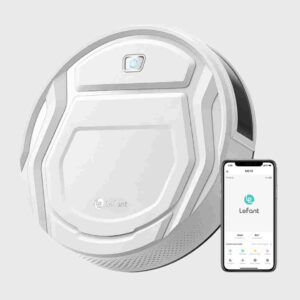
Lacks true mapping and stored maps; navigation is basic (random/row-by-row/edge/spot-style patterns depending on mode). This limits efficiency in larger multi-room layouts and contributes to inconsistent coverage.
Mapping and pathing are widely praised: quick maps, efficient room coverage, and reliable navigation that reduces random wandering.
The mop-lift system reliably raises pads on carpet and rugs, reducing wet-carpet incidents and allowing mixed-surface cleaning runs.
Everyday mopping performance is rated very strong, with good results on dried stains; heavier spills may require higher settings, extra passes, or a remop cycle.
Generally described as quiet during cleaning, with some notes that collisions/bumping can create louder momentary noise than the suction itself; higher suction settings increase volume.
Noise is generally acceptable for daily use, with mopping noted as relatively quiet; max-power vacuuming is still noticeably loud (low-to-mid 70 dB range in one test).
Obstacle avoidance is basic: it can avoid some larger obstacles and cliffs/stairs, but small objects (cords, tassels) can still cause issues and bumping behavior is reported across multiple reviews.
Reactive AI obstacle avoidance is generally effective (with camera-based recognition in some models), but reviewers still see occasional misses or conservative detours that can leave small areas untouched.
Reviewers highlight pet-friendly strengths: excellent hair handling, good pickup of pet hair, and smarter avoidance features (including pet-related options and snapshots) that help around bowls, toys, and messes.
Consistently positioned as strong value for the money (often highlighted around budget pricing and frequent sale pricing). Reviewers accept missing mapping and weaker carpet performance as the main compromises for the low price.
Value is the biggest point of debate: performance is premium, but several reviews frame it as expensive at full MSRP and much easier to justify when discounted.
Camera-based features enable better object recognition and remote viewing in some configurations, but privacy-sensitive buyers may prefer variants without camera capability.
Default runtime is commonly described around the ~100–120 minute class (varies by mode and suction). Reviewers generally find it adequate for small/medium spaces and routine runs.
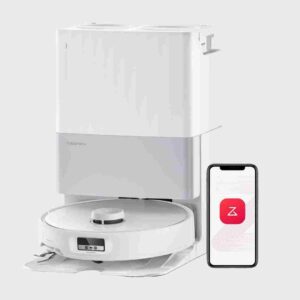
The dock earns consistent praise for hands-off care: hot-water mop washing, warm-air drying, and self-cleaning functions that keep pads fresher between manual deep cleans.
Software support is viewed as important because some behavior (like water usage and streaking control) may improve with firmware updates, and smart-home integrations are part of the long-term appeal.
A common limitation is the lack of an auto detergent/solution tank; if you want solution, you manually add it to the clean water tank.
Streaking and smearing can happen when water output is high or when tackling big wet messes; several reviews say dialing settings down helps, and it appears improved versus some close siblings.
Stuck resistance is mixed: it may do fine in open areas, but multiple sources note getting stuck on rug tassels or struggling around certain clutter; cords can be a recurring challenge.
Most testing suggests it navigates without frequent hang-ups, but real-world owners still report the occasional rescue when it wedges under furniture or hits an odd edge case.
Across reviews, suction is consistently described as flagship-strong (around 18,000-18,500 Pa) with very high debris pickup on both hard floors and carpet.
No summary yet.
The dock manages clean and dirty water with auto-refill to the robot; owners still need to refill the clean tank and empty the dirty tank periodically.