P1
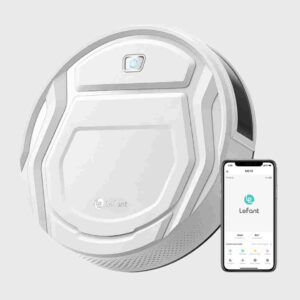
Lefant Robot Vacuum Cleaner, M210
P2
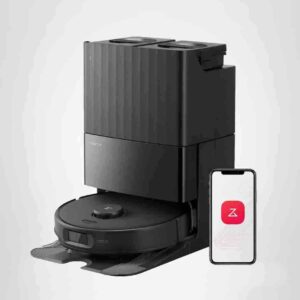
Roborock Qrevo Edge S5A Robot Vacuum and Mop
Average score
P1
Product 1: Lefant Robot Vacuum Cleaner, M210
3.7
P2
Product 2: Roborock Qrevo Edge S5A Robot...
4.3
Accessories and Tools
P1
Product 1: Lefant Robot Vacuum Cleaner, M210
4.0
Included extras such as filters, side brushes, and a maintenance brush are viewed as useful additions for a budget robot.
P2
Product 2: Roborock Qrevo Edge S5A Robot...
3.5
Box contents were adequate, but the main opinionated note was that the included quick-start literature felt unusually large.
Adaptive chassis lift
P1Product 1: Lefant Robot Vacuum Cleaner, M210
No score yet
P2
Product 2: Roborock Qrevo Edge S5A Robot...
2.3
Adaptive chassis lift was a clear weakness because the S5A lacks it and cannot handle the same high thresholds as pricier models.
Aesthetic design and finish
P1
Product 1: Lefant Robot Vacuum Cleaner, M210
4.5
The white finish drew clear praise from one reviewer, who liked the cleaner look for hiding dust.
P2
Product 2: Roborock Qrevo Edge S5A Robot...
3.5
Design impressions were mixed: one reviewer found the exposed dock more industrial, while another liked the S5A dock’s grooved styling.
AI, Smart, App and Automation
P1
Product 1: Lefant Robot Vacuum Cleaner, M210
4.3
Smart features receive strong praise, including scheduling, app controls, voice-assistant compatibility, and easy remote-like control from a phone.
P2
Product 2: Roborock Qrevo Edge S5A Robot...
4.8
Smart features were a standout, with praise for the Roborock app, routines, no-go zones, remopping automation, and dock controls.
Area Rug Handling
P1
Product 1: Lefant Robot Vacuum Cleaner, M210
3.5
Area rug handling is mixed: it can handle some rugs and transitions, but tassels can trap it.
P2
Product 2: Roborock Qrevo Edge S5A Robot...
4.3
Area-rug handling was mostly good on normal rugs, but high-pile carpets could still get damp in one reviewer’s home.
Assembly and Setup
P1
Product 1: Lefant Robot Vacuum Cleaner, M210
4.5
Setup is consistently described as quick and beginner-friendly, with app pairing and brush installation requiring little effort.
P2
Product 2: Roborock Qrevo Edge S5A Robot...
4.3
Setup was repeatedly described as simple or straightforward, with ramp installation, charging, and tank filling as the main steps.
Battery and Charging
P1
Product 1: Lefant Robot Vacuum Cleaner, M210
4.3
Battery and charging sentiment is positive overall, with reviewers praising long or convenient battery life and self-charging behavior.
P2
Product 2: Roborock Qrevo Edge S5A Robot...
4.5
Battery and charging impressions were positive overall, especially the advertised runtime and above-average low-suction coverage.
Bin and Bag
P1
Product 1: Lefant Robot Vacuum Cleaner, M210
4.0
The dustbin is described as a decent, convenient size and easy enough to access for routine cleaning.
P2
Product 2: Roborock Qrevo Edge S5A Robot...
4.3
The bag system was viewed as low-effort because bags can last weeks and are not changed constantly.
Build quality and durability
P1
Product 1: Lefant Robot Vacuum Cleaner, M210
4.0
One reviewer praised the build as solid for the price after hands-on use.
P2Product 2: Roborock Qrevo Edge S5A Robot...
No score yetCarpet — High-Pile Pickup
P1
Product 1: Lefant Robot Vacuum Cleaner, M210
2.0
High-pile or deeper-carpet pickup is weak in the one review that discussed deeper carpets.
P2Product 2: Roborock Qrevo Edge S5A Robot...
No score yetCarpet — Low-Pile Pickup
P1
Product 1: Lefant Robot Vacuum Cleaner, M210
2.8
Low-pile and general carpet pickup is the main weakness: it handles surface debris but lacks deep agitation.
P2Product 2: Roborock Qrevo Edge S5A Robot...
No score yetCarpet — Medium-Pile Pickup
P1Product 1: Lefant Robot Vacuum Cleaner, M210
No score yet
P2
Product 2: Roborock Qrevo Edge S5A Robot...
4.5
Carpet deep-cleaning results were stronger than expected, scoring above the reviewer’s average despite middling airflow and pressure numbers.
Clogging and debris prevention
P1
Product 1: Lefant Robot Vacuum Cleaner, M210
4.5
The lack of a main brush roller helped prevent tangles in one hands-on test.
P2
Product 2: Roborock Qrevo Edge S5A Robot...
5.0
The self-empty system was praised for moving hair into the dock without clogging during a heavy hair test.
Comparative performance
P1
Product 1: Lefant Robot Vacuum Cleaner, M210
2.5
Comparisons are unfavorable on cleaning depth versus stronger brands or alternatives, though one reviewer noted the price difference.
P2
Product 2: Roborock Qrevo Edge S5A Robot...
4.0
Compared with higher and lower models, reviewers saw the S5A as a strong mid-tier option that misses some flagship features but keeps core cleaning power.
Controls and UI
P1
Product 1: Lefant Robot Vacuum Cleaner, M210
4.2
Controls are a strength: reviewers liked the app, remote, single-button use, manual control, scheduling, and mode selection.
P2
Product 2: Roborock Qrevo Edge S5A Robot...
4.8
Controls and UI drew strong praise for being clean, intuitive, customizable, and granular in both app and dock settings.
Corner Cleaning (Robot)
P1
Product 1: Lefant Robot Vacuum Cleaner, M210
2.8
Corner and edge cleaning is mixed to weak: lab and one reviewer criticized edges, while another liked wall-follow mode.
P2
Product 2: Roborock Qrevo Edge S5A Robot...
4.4
Corner cleaning was generally good thanks to extending edge tools, though some reviewers still wanted more aggressive corner coverage.
Dirty water sensor
P1Product 1: Lefant Robot Vacuum Cleaner, M210
No score yet
P2
Product 2: Roborock Qrevo Edge S5A Robot...
4.4
Dirty-water detection was mixed: several tests triggered remopping successfully, while one dried-stain test failed to send the robot back automatically.
Docking and Auto-Empty Reliability (Robot)
P1
Product 1: Lefant Robot Vacuum Cleaner, M210
3.5
Docking reliability is mixed, with some successful returns but repeated caveats about erratic docking or trouble if moved from the dock.
P2
Product 2: Roborock Qrevo Edge S5A Robot...
4.5
Auto-empty reliability had limited but positive evidence from one reviewer who said the dock empties the onboard bin automatically enough that manual access is rare.
Dried-On Stain Removal
P1Product 1: Lefant Robot Vacuum Cleaner, M210
No score yet
P2
Product 2: Roborock Qrevo Edge S5A Robot...
4.0
Dried-on stain evidence was mixed: normal grime cleaned well, but ketchup and coffee required manual repeat runs in one test.
Ease of use
P1
Product 1: Lefant Robot Vacuum Cleaner, M210
3.7
Ease of use is mixed: some users found it intuitive, while Consumer Reports said it was not straightforward.
P2
Product 2: Roborock Qrevo Edge S5A Robot...
4.8
Ease of use was strong where the robot reduced manual cleaning steps and freed users from babysitting the process.
Edge and Baseboard Cleaning (Hard Floors)
P1Product 1: Lefant Robot Vacuum Cleaner, M210
No score yet
P2
Product 2: Roborock Qrevo Edge S5A Robot...
4.9
Edge and baseboard cleaning was a major strength, helped by the extending mop and side brush reaching walls closely.
Edge‑Following Accuracy (Robot)
P1
Product 1: Lefant Robot Vacuum Cleaner, M210
3.3
Edge-following is mixed because default navigation may miss edges, but dedicated wall-follow mode can clean baseboards well.
P2
Product 2: Roborock Qrevo Edge S5A Robot...
5.0
Edge-following accuracy was strong in tests where the robot stayed close to walls and reached tight edges.
Emptying and Mess Control
P1
Product 1: Lefant Robot Vacuum Cleaner, M210
3.6
Emptying is mixed: several users found it easy, while Consumer Reports gave a poor ease score for filter and bin cleaning.
P2
Product 2: Roborock Qrevo Edge S5A Robot...
5.0
Emptying and mess control were positive because the dust bag slid out cleanly without creating a mess.
Floorhead design
P1
Product 1: Lefant Robot Vacuum Cleaner, M210
2.5
The brushless floorhead reduces tangles and maintenance but is also the main reason reviewers cite weaker deep-cleaning performance.
P2
Product 2: Roborock Qrevo Edge S5A Robot...
5.0
The DuoDivide floorhead design was repeatedly called a standout because it helped reduce tangling and channel debris effectively.
Fresh Liquid Pickup Speed
P1Product 1: Lefant Robot Vacuum Cleaner, M210
No score yet
P2
Product 2: Roborock Qrevo Edge S5A Robot...
4.5
Fresh liquid pickup was positive in the spill test, where the spinning pads effectively mopped up a large water spill.
Hair-removal channel issues
P1Product 1: Lefant Robot Vacuum Cleaner, M210
No score yet
P2
Product 2: Roborock Qrevo Edge S5A Robot...
3.5
Hair-removal channel evidence was mixed: the design centralized hair and made it easy to remove, but did not fully suck it all in during a stress test.
Hair Pickup — Carpets
P1Product 1: Lefant Robot Vacuum Cleaner, M210
No score yet
P2
Product 2: Roborock Qrevo Edge S5A Robot...
4.5
Carpet hair pickup evidence was limited but positive, with one rug test describing strong suction that pulled up hair and fine debris.
Hair Pickup — Hard Floors
P1
Product 1: Lefant Robot Vacuum Cleaner, M210
3.3
Hard-floor hair pickup is mixed to positive, with strong laminate performance from some reviewers and a negative lab finding from Consumer Reports.
P2
Product 2: Roborock Qrevo Edge S5A Robot...
5.0
Hard-floor hair pickup was excellent in both customer-style testing and dedicated hair tests with long and damp strands.
Hair‑Wrap / Tangle Resistance
P1
Product 1: Lefant Robot Vacuum Cleaner, M210
4.1
Hair-wrap resistance is a strength because the no-roller design reduces tangles and brush maintenance.
P2
Product 2: Roborock Qrevo Edge S5A Robot...
4.8
Hair-wrap resistance was one of the strongest recurring themes, with most reviewers reporting no tangles or easy clearing.
Hard Floor — Fine Dust Pickup
P1
Product 1: Lefant Robot Vacuum Cleaner, M210
4.0
Hard-floor fine-dust pickup is consistently positive, with reviewers describing effective pickup of dust, hair, and surface messes.
P2
Product 2: Roborock Qrevo Edge S5A Robot...
5.0
Fine dust pickup on hard floors was positive in the chili-powder test and broader hard-floor debris cleanup.
Hard Floor — Large Debris Intake
P1
Product 1: Lefant Robot Vacuum Cleaner, M210
3.8
Large hard-floor debris intake is decent for crumbs, confetti, and pieces that fit the inlet, but it has limits.
P2
Product 2: Roborock Qrevo Edge S5A Robot...
4.8
Large hard-floor debris intake was strong in rice, oatmeal, and edge debris examples.
Headlight and LED lights
P1Product 1: Lefant Robot Vacuum Cleaner, M210
No score yet
P2
Product 2: Roborock Qrevo Edge S5A Robot...
2.5
The lack of LED lighting was treated as a limitation because reviewers said a light would help in dim rooms.
Heating element
P1Product 1: Lefant Robot Vacuum Cleaner, M210
No score yet
P2
Product 2: Roborock Qrevo Edge S5A Robot...
3.5
Hot-water washing was present, but one reviewer measured lower pad temperatures than advertised and treated the result as qualified.
Innovation compared to competitors
P1
Product 1: Lefant Robot Vacuum Cleaner, M210
4.0
One reviewer praised the amount of sensor technology available at the price, but this innovation evidence is limited to that review.
P2
Product 2: Roborock Qrevo Edge S5A Robot...
4.5
Innovation was strongest in the broader robot-vacuum category and the S5A’s inherited core features, though it lacks the newest flagship systems.
Kid-friendliness
P1
Product 1: Lefant Robot Vacuum Cleaner, M210
4.5
Family use is supported by one review that valued help with kids’ crumbs around tables and highchairs.
P2Product 2: Roborock Qrevo Edge S5A Robot...
No score yetLarge debris handling
P1
Product 1: Lefant Robot Vacuum Cleaner, M210
2.5
Large debris handling is limited; it can pick up some bigger pieces but is not suited to large piles.
P2
Product 2: Roborock Qrevo Edge S5A Robot...
4.8
Large debris handling was positive in real tests with rice, oatmeal, and even a double-A battery pickup claim.
Low-profile design
P1
Product 1: Lefant Robot Vacuum Cleaner, M210
4.5
Low-profile design is praised for fitting under furniture and low spaces.
P2
Product 2: Roborock Qrevo Edge S5A Robot...
4.5
Low-profile impressions were positive in real-home clearance tests, though one comparison noted the top LiDAR made it taller than a flagship.
Maintenance requirements
P1
Product 1: Lefant Robot Vacuum Cleaner, M210
4.3
Maintenance requirements are favorable because the dustbin, filter access, and brushless design reduce routine upkeep.
P2
Product 2: Roborock Qrevo Edge S5A Robot...
4.0
Maintenance was viewed as manageable because bag swaps were fast, hair clearing was easy, and the dock tray could be cleaned at the sink.
Maneuverability and Handling
P1
Product 1: Lefant Robot Vacuum Cleaner, M210
4.3
Maneuverability is generally praised, especially around furniture legs, rugs, and normal household surfaces.
P2
Product 2: Roborock Qrevo Edge S5A Robot...
4.0
Threshold handling was acceptable up to about 2 cm, but higher thresholds exposed the S5A’s lack of adaptive chassis lift.
Map and Path Efficiency (Robot Vacuums)
P1
Product 1: Lefant Robot Vacuum Cleaner, M210
2.9
Path efficiency is mixed because the robot can clean in lines, yet reviewers criticize the lack of room mapping and trouble in larger homes.
P2
Product 2: Roborock Qrevo Edge S5A Robot...
4.4
Mapping and routing were widely praised as fast, accurate, efficient, and easy to use across multiple reviews.
Mop lifting system
P1Product 1: Lefant Robot Vacuum Cleaner, M210
No score yet
P2
Product 2: Roborock Qrevo Edge S5A Robot...
4.4
Mop lifting worked well on normal rugs and carpets, but high-pile carpet still created some wetness risk.
Mopping performance
P1Product 1: Lefant Robot Vacuum Cleaner, M210
No score yet
P2
Product 2: Roborock Qrevo Edge S5A Robot...
4.9
Mopping performance was the strongest consensus area, with multiple reviewers praising clean floors, mud removal, residue pickup, and edge reach.
Noise level
P1
Product 1: Lefant Robot Vacuum Cleaner, M210
3.9
Reviewers broadly describe the M210 as quiet or less noisy than average, with the main caveat that higher suction settings and bumping can be louder.
P2
Product 2: Roborock Qrevo Edge S5A Robot...
4.3
Noise was consistently treated as a strength, with measured levels below average and real-home testing noting low disruption.
Obstacle Avoidance (Robot)
P1
Product 1: Lefant Robot Vacuum Cleaner, M210
3.4
Obstacle avoidance is mixed: sensors impressed some reviewers, but bumping into furniture and small-object limitations remain common.
P2
Product 2: Roborock Qrevo Edge S5A Robot...
3.1
Obstacle avoidance was the most consistent weakness, especially for cables, socks, small toys, and low objects, though it sometimes avoided larger items.
Odor control
P1Product 1: Lefant Robot Vacuum Cleaner, M210
No score yet
P2
Product 2: Roborock Qrevo Edge S5A Robot...
4.7
Odor control was positive, with hot-air drying and self-cleaning pads leaving no smells in real-home use.
Overall cleaning convenience
P1
Product 1: Lefant Robot Vacuum Cleaner, M210
4.1
Reviewers like the daily-cleaning convenience for crumbs, hard floors, and set-it-and-forget-it routines.
P2
Product 2: Roborock Qrevo Edge S5A Robot...
4.8
Cleaning convenience was a core strength, with reviewers saying it saved time, reduced manual steps, and made cleaning more hands-off.
Overall durability/longevity
P1
Product 1: Lefant Robot Vacuum Cleaner, M210
3.0
One reviewer found the unit solid but noted it became scuffed, leaving long-term durability only moderately supported.
P2Product 2: Roborock Qrevo Edge S5A Robot...
No score yetOverall opinion
P1
Product 1: Lefant Robot Vacuum Cleaner, M210
3.6
Overall opinion is split: Consumer Reports rated it uneven, while several hands-on reviewers liked it as a budget hard-floor robot.
P2
Product 2: Roborock Qrevo Edge S5A Robot...
4.6
Overall sentiment was strongly positive across reviews, with reviewers repeatedly calling it capable, useful, and easy to recommend.
Pet-Ready Features
P1
Product 1: Lefant Robot Vacuum Cleaner, M210
3.9
Pet-hair evidence is generally favorable, especially on hard floors and for reducing brush tangles, though Consumer Reports found pet hair could be pushed around.
P2
Product 2: Roborock Qrevo Edge S5A Robot...
4.5
Pet-related feedback was positive: reviewers praised hair handling, anti-tangle results, and pet-area settings, though camera-based pet features belonged to higher models.
Price and Value
P1
Product 1: Lefant Robot Vacuum Cleaner, M210
4.4
Most reviewer sentiment frames the M210 as strong budget value, although one reviewer felt a small price increase could buy a more thorough cleaner.
P2
Product 2: Roborock Qrevo Edge S5A Robot...
4.3
Value depended on sale pricing: reviewers praised discounted prices but still flagged the higher price point as a budget consideration.
Privacy controls
P1Product 1: Lefant Robot Vacuum Cleaner, M210
No score yet
P2
Product 2: Roborock Qrevo Edge S5A Robot...
4.5
Privacy was a clear benefit for reviewers who liked that the S5A removed camera/video features while retaining navigation sensors.
Runtime
P1
Product 1: Lefant Robot Vacuum Cleaner, M210
4.3
Runtime evidence is positive, with reviewers saying battery life meets claims or lasts long enough for routine service.
P2
Product 2: Roborock Qrevo Edge S5A Robot...
4.0
Runtime was strong on low power and enough for full-level cleaning, but max suction coverage was below average in one benchmark.
Scratch resistance
P1
Product 1: Lefant Robot Vacuum Cleaner, M210
3.0
Scratch resistance is only moderately supported because one reviewer said the unit picked up scuffs during use.
P2Product 2: Roborock Qrevo Edge S5A Robot...
No score yetSelf-cleaning cycle
P1Product 1: Lefant Robot Vacuum Cleaner, M210
No score yet
P2
Product 2: Roborock Qrevo Edge S5A Robot...
4.6
Self-cleaning was a consistent strength, with reviewers praising mop washing, hot-air drying, dock wipers, and reduced manual rinsing.
Solution / Liquid system
P1Product 1: Lefant Robot Vacuum Cleaner, M210
No score yet
P2
Product 2: Roborock Qrevo Edge S5A Robot...
2.5
The liquid system was a repeated weakness because reviewers wanted automatic solution dispensing instead of manual mixing.
Storage footprint and upright-stand stability
P1Product 1: Lefant Robot Vacuum Cleaner, M210
No score yet
P2
Product 2: Roborock Qrevo Edge S5A Robot...
3.5
The dock was acknowledged as large, with the size mainly justified by the clean and dirty water tanks.
Streaking / Residue
P1Product 1: Lefant Robot Vacuum Cleaner, M210
No score yet
P2
Product 2: Roborock Qrevo Edge S5A Robot...
5.0
Streaking and residue results were positive, with reviewers repeatedly reporting clean, streak-free hard floors.
Stuck resistance
P1
Product 1: Lefant Robot Vacuum Cleaner, M210
2.7
Stuck resistance is mixed: it can avoid some tangles and rugs, but cords and tassel rugs caused clear problems.
P2
Product 2: Roborock Qrevo Edge S5A Robot...
3.7
Stuck resistance was mixed: some obstacle courses ended without tangles, but cable and sock tests still caused trouble.
Suction and Airflow
P1
Product 1: Lefant Robot Vacuum Cleaner, M210
3.0
Suction is usable for surface dust, crumbs, and hard-floor maintenance, but multiple reviewers say the brushless design limits deeper carpet cleaning.
P2
Product 2: Roborock Qrevo Edge S5A Robot...
4.1
Reviewers found suction strong in real use, with good pickup despite one airflow measurement below average and a slight spec drop versus the higher Edge.
Suitability for heavy-duty use
P1
Product 1: Lefant Robot Vacuum Cleaner, M210
2.5
The M210 is not positioned as a heavy-duty primary vacuum; reviewers repeatedly suggest keeping another vacuum for carpets or larger homes.
P2
Product 2: Roborock Qrevo Edge S5A Robot...
4.5
Heavy-duty suitability was supported by the fundamentals: strong mopping, carpet cleaning, and hair handling made it feel capable for demanding homes.
Suitability for small spaces
P1
Product 1: Lefant Robot Vacuum Cleaner, M210
4.0
Small-space suitability is positive in one review, which found it can clean small areas without getting lost.
P2
Product 2: Roborock Qrevo Edge S5A Robot...
4.3
Small-space suitability was positive where reviewers noted a slimmer/narrower body or dock and the ability to fit under tight cabinetry.
Support and Reliability
P1Product 1: Lefant Robot Vacuum Cleaner, M210
No score yet
P2
Product 2: Roborock Qrevo Edge S5A Robot...
4.0
One real-home test found connection reliability solid, with quick pairing and stable Wi-Fi during testing.
Surface safety with attachments
P1Product 1: Lefant Robot Vacuum Cleaner, M210
No score yet
P2
Product 2: Roborock Qrevo Edge S5A Robot...
4.0
Surface safety received limited but positive evidence from a reviewer who described the brush system as gentle on hardwood floors.
Under-Furniture Pickup
P1
Product 1: Lefant Robot Vacuum Cleaner, M210
4.5
Under-furniture pickup is praised because the robot fits underneath low spaces well.
P2
Product 2: Roborock Qrevo Edge S5A Robot...
5.0
Under-furniture pickup was a standout in homes where the S5A fit under cabinet toe kicks, couches, beds, or low furniture.
Value-for-money
P1
Product 1: Lefant Robot Vacuum Cleaner, M210
4.4
Value-for-money sentiment is very strong overall, especially at sale prices, though not all reviewers think it is the best buy.
P2
Product 2: Roborock Qrevo Edge S5A Robot...
4.8
Value-for-money was strong when discounted, especially versus higher-priced models with similar core cleaning performance.
Versatility
P1
Product 1: Lefant Robot Vacuum Cleaner, M210
3.7
The M210 offers useful mode, app, voice-assistant, and schedule flexibility, but reviewers still frame it as a bare-bones cleaner.
P2
Product 2: Roborock Qrevo Edge S5A Robot...
4.5
Versatility was praised through broad app control, multiple cleaning modes, zones, routines, and core vacuum-mop features.
Water tank
P1Product 1: Lefant Robot Vacuum Cleaner, M210
No score yet
P2
Product 2: Roborock Qrevo Edge S5A Robot...
4.3
Water capacity was considered helpful for hands-off use, with large tanks reducing refill frequency and supporting multiple mop cycles.
Weight
P1
Product 1: Lefant Robot Vacuum Cleaner, M210
4.0
Weight sentiment is positive from one reviewer who called the unit super lightweight.
P2Product 2: Roborock Qrevo Edge S5A Robot...
No score yet