Accessories support is positive where mentioned. Reviews note included cleaning-solution bottles or detergents and say the product comes with what is needed to get started.
Adaptive lifting and climbing support is tied to four-wheel drive, threshold climbing, and the ability to handle raised transitions. The evidence points to better movement over thresholds rather than staircase use.
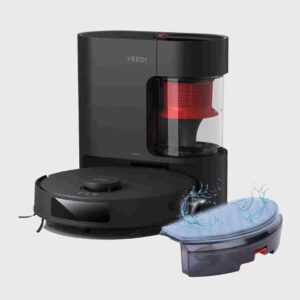
Design impressions are positive but limited. PCMag liked the darker X11-like look, while another reviewer called the dock and robot simple, modern, and unobtrusive.
Smart/app features cover the essentials (Wi-Fi app control, mapping, schedules), but reviews note missing or limited voice-assistant support compared with some rivals. Automation is strongest inside the Yeedi app rather than through external ecosystems.
Smart features are broad: sources mention LiDAR, RGB camera, AI stain detection, Agent Yiko, adaptive scheduling, app control, smart-home integration, and app-based customization. One hands-on reviewer says app mapping could improve.
Airflow blowback is only directly supported by PCMag’s hard-floor test, where the side brush did not fling sand or rice across the room.
On rugs, it performs well on low-pile area rugs for vacuuming, but mopping around rugs requires care and planning. Homes with many rugs benefit from no-mop zones or running vacuum-only on rug-heavy areas.
Area-rug and carpet transitions are a clear strength. Sources repeatedly describe carpet detection, mop lifting, a mop cover, carpet-first cleaning, and keeping rugs or carpets dry.
Setup is widely described as straightforward, with quick app pairing and mapping after initial runs. Some users note you may need to learn the vacuum-vs-mop configuration steps early to avoid confusion.
Setup is described as straightforward or very easy. Sources mention scanning the QR code, app pairing, Wi-Fi setup, and fast mapping or configuration.
Automatic standby is only directly supported by one hands-on review, which says the robot put itself to sleep after taking care of its cleaning routines.
Battery and charging behavior is described as dependable, with enough endurance for typical apartments/medium homes and expected recharge behavior when needed. Long sessions may involve recharge-and-resume depending on floorplan and settings.
Battery and charging are mostly positive, with repeated mentions of PowerBoost top-ups and quick charging. PCMag is the main caveat, saying its real-world runtime stepped back from the X11 despite still exceeding 90 minutes.
Bin/bag capacity is viewed as a strong point for the class, with a usable onboard bin and a larger base collection capacity that reduces daily maintenance. This setup supports longer stretches between manual empties for most households.
The bagless bin and dock are one of the most repeated design points. Sources emphasize no disposable dust bags and self-emptying, though hands-on testing also found the canister could still need manual cleaning.
Build quality impressions are generally solid for the price tier, with a functional, mid-range feel rather than premium materials. Long-term durability is viewed as reasonable, though a few reviews raise typical reliability caveats for budget robots.
Build comments are limited but generally positive, with references to a large plastic canister and a heavy-duty robot body rather than long-term durability testing.
Low-pile carpet pickup is consistently reported as strong for routine maintenance, with enough suction to lift daily dust and hair. Deep cleaning still benefits from occasional manual vacuuming.
Child lock support is direct but limited to one review, which describes Child mode as turning off access to the top buttons.
Debris prevention is mostly tied to the anti-tangle system and airflow path. Most sources describe reduced hair wrap, while PCMag still found hair and dirt wedged in the canister or robot crevices.
Comparative evidence is extensive. Sources compare the X12 with the X11, other Deebots, traditional robot mops, and bagged versions; PCMag’s comparison is the most critical, favoring other recent Deebot models.
Controls and UI (especially in-app) are generally described as easy to use, with clear mapping, room selection, and scheduling. Occasional limitations are mentioned around deeper smart-home integration.
Controls are well covered through the app, room targeting, cleaning modes, physical switches, and app-based settings. Reviewers describe the interface as easy or breezy, with one Italian review noting app control for targeted stain cleaning.
Corner cleaning is acceptable but not class-leading; several reviews note it can leave some debris in tight corners, especially compared to higher-end robots with more advanced edge strategies.
Corner cleaning is generally good but not perfect. Several sources cite better corner reach or hard-to-reach cleaning, while one hands-on video warns that corners still need occasional manual attention.
Cyclone performance evidence centers on the bagless OmniCyclone or PureCyclone dock, with sources describing cyclone-style debris separation, no disposable bags, and reduced long-term consumables.
Docking and auto-emptying are generally reliable, with the base consistently collecting debris after runs. The station is simpler than self-washing mop docks, but it delivers the core convenience of hands-off dust disposal.
Docking and auto-empty reliability are major strengths across the reviews: the dock empties debris, washes and dries the mop or roller, manages water, and lets the robot continue cleaning with less intervention.
Dried-on stain handling is the headline feature. Most sources praise FocusJet pretreatment or water-jet softening, while hands-on tests show limits: jelly was not sprayed in one run and the worst stains may need more than one pass.
Ease of use is high for day-to-day vacuuming and scheduled runs, especially with auto-emptying. Mopping is less effortless because it can require manual pad handling and configuration changes.
Ease of use is positive. Reviews describe app controls, intuitive operation, easy setup, room targeting, and straightforward cleaning-mode changes.
Edge and baseboard cleaning is repeatedly praised or claimed through TruEdge, extended roller coverage, and close-to-wall cleaning, with multiple sources citing walls, baseboards, or hard-to-reach edges.
Edge performance is frequently called out as only okay, with some reviewers explicitly noting it is not great on edges/baseboards. It can miss fine debris right against walls without occasional targeted runs.
Edge-following accuracy is a repeated strength through TruEdge, extended roller reach, and close wall/baseboard cleaning across many reviews and launch writeups.
Emptying is convenient and largely mess-controlled thanks to the auto-empty dock, reducing how often users handle the onboard bin. A few reviews still recommend routine checks to prevent overfill or clogs, especially with heavy hair.
Emptying and mess control is mixed. Many sources praise self-emptying and dirty-water management, but PCMag had to pull out remnants manually and a hands-on video says damp dirt can stick inside the bagless bin.
Dust containment is mixed. One review likes the washable dust-bin filter, while PCMag found dirt and pet hair wedged in the canister, requiring manual removal.
Floor drying is supported mostly through fresh-water control, relatively dry floor results, and hot-air drying of the mop or roller. The strongest direct floor result says it leaves the floor relatively dry.
The floorhead design centers on the long OZMO roller mop, brush roll, and roller-based cleaning approach. Sources repeatedly contrast the roller with pads and describe continuous refresh or wider coverage.
Fresh liquid pickup is only directly evidenced in PCMag’s soy-sauce test, where the robot sprayed the stain, mopped it up in one swoop, and returned for mop washing.
Hair-removal channel issues are supported only by PCMag, which found some hair stuck in crevices on the bottom despite no visible pet-hair remnants on the floor.
Carpet hair pickup is generally good on low-pile surfaces, with enough power for maintenance. For homes with lots of hair on thicker carpet, results are more variable and may require extra passes.
Carpet hair pickup is strong in the two hands-on reviews that discuss it: PCMag found no noticeable pet hair remnants, and Android Police was impressed by dog-hair pickup on carpet.
On hard floors, reviews report very good pickup of pet hair, crumbs, and dust for everyday cleaning. Fine dust performance is generally praised, especially when paired with consistent scheduling.
Hair-wrap resistance earns positive mentions, with the anti-tangle brush design handling pet hair well in many tests. Some routine brush checks are still recommended, but tangling appears less frequent than on basic rollers.
Hair-wrap resistance is consistently praised or described through ZeroTangle, anti-tangle airflow, and reduced hair wrapping. PCMag still noted some hair stuck in robot crevices.
Hard-floor fine-dust pickup is mixed in PCMag’s measurement: the X12 picked up sand on hardwood but left clumps and had a worsening dirt-dropping issue on that surface.
Hard-floor large-debris intake is mixed in PCMag’s rice test. It picked up most of the rice, but the reviewer still found clumps near bed posts and around the throw rug.
Heating support appears in the dock routines: sources describe hot-water mop washing, heated water, and hot-air drying for the roller or mop.
Innovation is strongly supported. Most sources focus on the unusual FocusJet stain pretreatment, water-jet system, bagless dock, and broader attempt to solve stains, hair, edges, and maintenance together.
Kid-friendliness is supported by one hands-on family review that highlights Child mode and frames the robot as useful in a house with active young boys and pets.
Large-debris handling is lightly supported by one hands-on review that tested crumbs and pet hair in everyday home conditions; PCMag’s rice test is scored separately under hard-floor large debris.
Its relatively low profile (often cited around 9.6cm / 3.77in) helps it slip under more furniture than taller bots, improving day-to-day coverage in living rooms and bedrooms.
Low-profile performance is lightly supported by one review that says the robot reached hard-to-reach spots under the couch.
Maintenance is moderate: auto-empty reduces daily chores, but owners still need to wash/replace the mop pad, clean brushes/filters, and periodically check sensors. The simpler mop system shifts some upkeep back to the user.
Maintenance requirements are lower than typical but not zero. Sources emphasize self-emptying, self-washing, drying, bagless operation, and reduced manual upkeep, while hands-on testing still found occasional bin cleaning.
Maneuverability is generally strong. Reviews cite four-wheel drive, threshold climbing, floor-to-floor movement, real-home navigation, and no stuck runs, though one source says navigation still has room to develop.
Mapping and navigation are a highlight in most reviews, with the app map described as accurate and efficient for room-to-room coverage. Users report reliable route planning and useful scheduling/zoning, helping it keep floors tidy between deeper cleans.
Mapping and path efficiency are good but not perfect. PCMag reports fast, accurate mapping and efficient navigation, while another hands-on review says the map layout is good but fine details can be missed.
The mop lifting system is consistently supported. Sources describe a 15mm lift, automatic carpet detection, and a smart cover that protects carpets or fabric surfaces from moisture.
Mopping is generally rated as good for upkeep and everyday grime, but the system is simpler than flagship bots: a single flat pad, smaller onboard tank, and no dock-based pad washing/drying. Expect effective light mops, with more effort needed for dried-on messes and periodic manual pad cleaning.
Mopping performance is strong in concept and often positive, especially with the roller and FocusJet system, but hands-on reviews note limits with worst stains, residue, and one-pass stain removal.
Noise is mixed: several reviews describe louder operation than quieter premium models, especially on higher suction settings. It is generally tolerable for daytime cleaning, but can be noticeable in smaller homes or when running near people.
Noise feedback is mixed. One reviewer says higher suction increases noise, an Italian review prefers that it does not make too much noise, and a hands-on video says the roller is louder than pad-based mopping.
Obstacle/object avoidance is a common weak spot. Multiple reviews mention it can struggle with small clutter (like socks or low items) and benefits from pre-tidying, making it less set-and-forget in busy rooms.
Obstacle avoidance is mixed-positive. The robot handled shoes, cords, and most objects in some reviews, but PCMag’s test says it ran over one small white toy and only avoided the larger, more colorful ones.
Odor control is supported through hot-air drying and carpet/wet separation language. Sources describe hot-air drying as preventing wet-mop smells or bad odors.
Ownership costs benefit from the bagless design and reduced need for replacement bags, but cleaning solution is a continuing consumable and one review lists replacement solution pricing.
Overall cleaning convenience is high. Sources emphasize hands-off cleaning, reduced maintenance, clean-looking floors, lower daily work, and automatic dock routines, even where performance is not flawless.
Overall opinion is favorable but not unanimous. Several reviewers call it effective, innovative, or worth it, while PCMag’s conclusion is more reserved because of dirt dropping, battery comparison, and value.
Packaging evidence is limited to PCMag’s setup description, which says protective packing material covered nearly every surface before use.
Pet owners generally find it effective for keeping up with hair and tracked-in debris, helped by solid suction and anti-tangle design. It works best as a frequent-maintenance bot rather than a once-a-week deep clean for heavy-shedding homes.
Pet use is a recurring theme: sources describe homes with cats, dogs, high-shedding pets, or kids and pets, and point to suction, pet-hair pickup, anti-tangle design, and maintenance automation as the relevant strengths.
Value is a major selling point in reviews: it is often framed as a budget-to-midrange option that delivers strong cleaning and mapping for the price. The tradeoff is fewer premium automation features (like advanced obstacle avoidance or mop-wash docks).
Value is mixed. Some coverage notes the unchanged price or savings from fewer bags, but hands-on reviews repeatedly flag the $1,499 price and PCMag prefers other Deebot models for overall value.
Runtime in default modes is typically sufficient for routine whole-home maintenance in small-to-mid spaces, with most reviewers implying it completes normal schedules without frequent interruptions.
Runtime and continuous cleaning are positive overall because of PowerBoost top-ups and larger-home claims, though PCMag measured 118 minutes and said the X11 regained charge more effectively.
Self-cleaning is one of the strongest repeated points. Sources describe automatic dust emptying, mop washing, roller rinsing, drying, water management, tray cleaning, and dock-based maintenance routines.
Software-update support is only lightly evidenced: PCMag says the app setup process includes downloading updates after placing the robot in the base.
The liquid system is a major theme: sources describe cleaning-solution mixing, dual high-pressure jets, fresh-water rinsing, dirty-water separation, detergent reservoirs, and clean-water flow to the roller.
Storage footprint is a drawback. The dock needs clearance, takes up considerable space, and multiple sources frame the product as overkill or less suitable for small spaces.
Streaking and residue performance is mixed. Several sources say fresh-water roller washing avoids dirty-water spreading or streaks, while PCMag’s jelly test left residue and spread stickiness.
Stuck resistance is average: it handles common thresholds and room transitions, but small clutter and cords can still cause interruptions. Prepping the floor improves consistency.
Stuck resistance is a strong point in the hands-on reviews. PCMag says it never got stuck, Android Police did not need to rescue it, and other sources cite reduced stuck risk or solid object handling.
Reviews consistently describe strong suction for a mid-tier robot (often citing 8,000Pa), with very good pickup on hard floors and low-pile rugs. Performance is solid for daily maintenance, but it is not positioned as a deep-clean replacement for thicker carpet or heavy debris in one pass.
The X12 is repeatedly tied to strong suction, usually around 22,000Pa, with several sources linking that airflow to crumbs, dust, debris, and pet hair pickup. PCMag’s measured pickup was more mixed, especially for sand on carpet.
Heavy-duty suitability is one of the clearest audience fits. Sources repeatedly frame the X12 for larger homes, pets, kids, sticky messes, heavy carpet layouts, or full-home cleaning rather than light upkeep.
Small-space suitability is weak. Reviews describe the dock as large, the product as not tiny, and the cleaner as overkill for small apartments or already-clean homes.
Support/reliability sentiment is mixed-to-positive overall: many report stable performance, while others mention occasional quirks or the need for troubleshooting. It does not stand out as the most robust support experience in the category.
Operational reliability is mostly positive in the hands-on evidence: several reviews report no rescues or good stuck resistance, though one source says software and navigation still have room to improve.
The low stance helps it reach under many beds/sofas for routine pickup, though very low-clearance furniture can still be a limitation depending on leg height and clutter.
Under-furniture pickup is supported by one hands-on review that says the robot reached hard-to-reach spots under the couch.
Value-for-money is mixed-positive. Bagless operation lowers consumable costs, discounts appear in some coverage, and reviewers value time savings, but the high launch price and PCMag’s comparison limit the score.
Versatility is strong because the X12 combines vacuuming, mopping, stain pretreatment, self-cleaning, carpet handling, room targeting, and multi-floor or mixed-floor use in one system.
The onboard water tank is sufficient for light maintenance mops rather than heavy scrubbing sessions. Several reviews highlight the absence of a large dock water system, so refills and pad care are part of ownership.
The water system is a repeated strength: sources describe clean and dirty water reservoirs or tanks, water-refill management, separate dirty-water handling, and detergent/cleaning-solution reservoirs.
Weight/size evidence is limited and mostly about bulk: PCMag lists the robot dimensions, while Android Police calls it not tiny and heavy-duty.