Access logs
P1
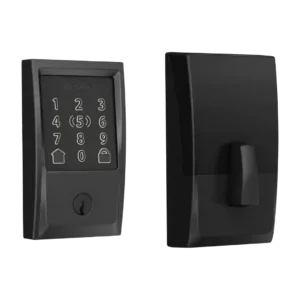
Product 1: Schlage Encode Plus Smart Lock
4.5
Access logs were praised by reviewers who liked being able to see lock history and how the lock was opened or closed.
P2
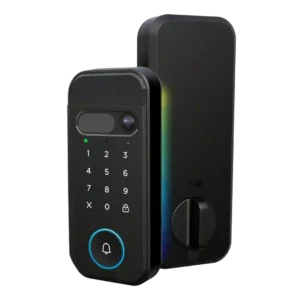
Product 2: myQ Secure View 3-in-1 Smart...
4.0
Access-log evidence was limited but positive, with one reviewer noting individual pins can show who opened the door.
Alarm/siren loudness (if included)
P1
Product 1: Schlage Encode Plus Smart Lock
2.3
The built-in alarm was criticized as too quiet, even by reviewers who liked having forced-entry detection available.
P2Product 2: myQ Secure View 3-in-1 Smart...
No score yetApp
P1
Product 1: Schlage Encode Plus Smart Lock
2.7
The app experience was mixed because the Schlage app exposes useful settings, but Apple Home app limitations and sync quirks made access-code and HomeKit management confusing.
P2
Product 2: myQ Secure View 3-in-1 Smart...
4.5
The app setup experience was praised as simple, with phone control presented as easy to use.
Auto-lock
P1
Product 1: Schlage Encode Plus Smart Lock
4.0
Auto-lock received positive comments as a useful safety net, especially for users who want the door to relock after a delay or when the last person leaves.
P2
Product 2: myQ Secure View 3-in-1 Smart...
4.0
Auto-lock support was viewed as useful and configurable, though the evidence centers on one reviewer’s setup experience.
Auto-relock after failed attempts
P1
Product 1: Schlage Encode Plus Smart Lock
4.0
Failed-code lockout behavior was treated as a useful security deterrent because repeated wrong entries frustrate brute-force attempts.
P2Product 2: myQ Secure View 3-in-1 Smart...
No score yetBattery
P1
Product 1: Schlage Encode Plus Smart Lock
2.8
Battery impressions were mixed: one long-term user reported jams near low battery, one called two-month life terrible, while another early reviewer projected strong life.
P2
Product 2: myQ Secure View 3-in-1 Smart...
4.0
Battery impressions were mixed: reviewers liked the rechargeable pack, but one noted a long initial charge time.
Build quality and durability
P1
Product 1: Schlage Encode Plus Smart Lock
4.4
Build quality received strong praise from reviewers who described the lock as solid, secure-feeling, and backed by Schlage's reputation for durable hardware.
P2
Product 2: myQ Secure View 3-in-1 Smart...
4.8
Reviewers praised the physical construction, describing the lock as a great quality product and super well built.
Camera and doorbell performance
P1Product 1: Schlage Encode Plus Smart Lock
No score yet
P2
Product 2: myQ Secure View 3-in-1 Smart...
4.7
Camera and doorbell evidence was positive, with praise for clear visitor video, a wide-angle view, and the integrated 2K camera-doorbell design.
Door-sense
P1
Product 1: Schlage Encode Plus Smart Lock
2.0
Door-sense capability was criticized as absent, with a reviewer saying an open/closed door sensor would still be useful despite lock/unlock notifications.
P2
Product 2: myQ Secure View 3-in-1 Smart...
4.0
Door-sense worked in the reviewer’s test, with the app state updating once the door closed.
Door compatibility (deadbolt fit)
P1
Product 1: Schlage Encode Plus Smart Lock
3.2
Door fit mattered because reviewers warned that smart locks dislike resistance and may have battery or operation issues if the deadbolt does not move smoothly.
P2
Product 2: myQ Secure View 3-in-1 Smart...
4.0
Door-fit evidence was limited but positive: one reviewer’s older steel door prep worked with the included jig and deadbolt drilling guidance.
Facial recognition
P1Product 1: Schlage Encode Plus Smart Lock
No score yet
P2
Product 2: myQ Secure View 3-in-1 Smart...
5.0
Facial recognition drew some of the strongest praise, with reviewers calling it cool, incredible, and very fast.
Fingerprint
P1
Product 1: Schlage Encode Plus Smart Lock
2.0
Fingerprint unlocking was a notable missing feature, especially because reviewers compared it unfavorably with lower-priced competing locks that include it.
P2
Product 2: myQ Secure View 3-in-1 Smart...
5.0
Fingerprint access performed well in hands-on testing, with the reviewer saying the biometrics worked completely.
Guest Codes and Access
P1
Product 1: Schlage Encode Plus Smart Lock
3.8
Guest access was praised for schedules, renter use, and easy code sharing, but one reviewer criticized the 100-code limit versus competing locks with more capacity.
P2
Product 2: myQ Secure View 3-in-1 Smart...
4.5
Guest access was praised for service or pet-care scenarios where the owner could let someone in without sharing a key.
Hub requirement
P1
Product 1: Schlage Encode Plus Smart Lock
3.6
Reviewers liked that the lock can avoid a separate bridge, but Apple/HomeKit users still saw hub requirements as important for remote control, Thread performance, or battery life.
P2Product 2: myQ Secure View 3-in-1 Smart...
No score yetIndustrial design
P1
Product 1: Schlage Encode Plus Smart Lock
3.7
Reviewers liked the styling and finish options when they matched existing hardware, but some noted that the interior/exterior lock body is larger and less discreet than slimmer rivals.
P2
Product 2: myQ Secure View 3-in-1 Smart...
4.5
The lock’s integrated design was praised for reducing separate-device clutter and for looking slick and well designed.
Installation and Setup
P1
Product 1: Schlage Encode Plus Smart Lock
4.3
Reviewers consistently found the hardware installation easy, often describing setup as quick, smooth, or straightforward, though Apple/Home app setup could add complexity for some users.
P2
Product 2: myQ Secure View 3-in-1 Smart...
4.5
Hands-on reviewers generally found installation approachable, praising complete hardware, easy installation, clear directions, and a smooth process, with one longer install still going fairly smoothly.
Keypad
P1
Product 1: Schlage Encode Plus Smart Lock
3.3
Keypad feedback was split: some reviewers praised responsiveness and readability, while several complained that the numbers are hard to see or that the touch keypad feels lower quality.
P2
Product 2: myQ Secure View 3-in-1 Smart...
4.3
Keypad evidence was mixed: one reviewer preferred physical buttons, while another confirmed the pin code worked.
Lock/unlock speed
P1
Product 1: Schlage Encode Plus Smart Lock
4.6
Locking and unlocking speed earned strong praise, with multiple reviewers describing Home Key, app, voice, or Thread responses as very quick or nearly instant.
P2
Product 2: myQ Secure View 3-in-1 Smart...
5.0
Speed was a standout: one article cited two-second unlock latency, while a hands-on reviewer found face recognition extremely fast.
Locking motor
P1
Product 1: Schlage Encode Plus Smart Lock
4.3
The lock motor was repeatedly praised as smooth, fast, and quieter than prior Schlage or Nest/Yale locks, making everyday locking less disruptive.
P2
Product 2: myQ Secure View 3-in-1 Smart...
5.0
The interior locking action received strong praise from a reviewer who described it as super smooth.
Locking reliability
P1
Product 1: Schlage Encode Plus Smart Lock
4.7
Reliability was a major strength in hands-on reviews, with reviewers describing the lock as dependable, fast, and easy to live with.
P2
Product 2: myQ Secure View 3-in-1 Smart...
4.5
A hands-on reviewer tested multiple unlock methods and found them working successfully.
Notifications
P1
Product 1: Schlage Encode Plus Smart Lock
4.2
Notifications were praised when they identified who unlocked the door, especially through Apple devices and Home Key alerts.
P2
Product 2: myQ Secure View 3-in-1 Smart...
3.8
Notification evidence was mixed: one review praised context-aware alerts, while another noted unsubscribed alerts lacked detection details.
Remote access
P1
Product 1: Schlage Encode Plus Smart Lock
2.5
Remote access was limited in Apple Home setups without a hub, which reviewers treated as an important caveat despite the lock's built-in Wi-Fi.
P2
Product 2: myQ Secure View 3-in-1 Smart...
4.5
Remote access was praised for letting someone enter without needing a physical key handoff.
Security features (encryption)
P1Product 1: Schlage Encode Plus Smart Lock
No score yet
P2
Product 2: myQ Secure View 3-in-1 Smart...
5.0
Security handling for face scans was praised because the reviewer said scans stay on the device rather than going to the cloud.
Smart-home integration (Alexa, Google, Siri, HomeKit, Matter, Thread)
P1
Product 1: Schlage Encode Plus Smart Lock
4.3
The strongest praise centered on Apple Home Key and broad smart-home support, with reviewers calling Home Key fast and convenient, especially for iPhone and Apple Watch users.
P2
Product 2: myQ Secure View 3-in-1 Smart...
2.7
Integration evidence was split: myQ ecosystem control was praised, but multiple reviews criticized or warned about limited popular smart-home platform support.
Touchscreen
P1
Product 1: Schlage Encode Plus Smart Lock
2.7
Touchscreen opinions were mixed to negative: reviewers liked some visual and audio cues but complained about no haptics, weak feedback, and a flawed touch keypad.
P2
Product 2: myQ Secure View 3-in-1 Smart...
3.5
The touch-sensitive keypad divided preference, with one reviewer noting some people may prefer physical buttons instead.
Two-factor authentication availability
P1
Product 1: Schlage Encode Plus Smart Lock
2.0
Two-factor authentication was criticized as missing from the Schlage app, reducing account-security confidence compared with some rival smart-lock apps.
P2Product 2: myQ Secure View 3-in-1 Smart...
No score yetUser access management
P1
Product 1: Schlage Encode Plus Smart Lock
3.7
User access management was praised for admin keys and code toggles, but reviewers also reported Home app and Schlage app code-management limitations.
P2
Product 2: myQ Secure View 3-in-1 Smart...
4.0
User access management was described as easy for users, PIN codes, and alerts.
Value and Price
P1
Product 1: Schlage Encode Plus Smart Lock
3.8
Value depended heavily on Apple/HomeKit use: many reviewers called it worth the high price for Home Key, while others felt it costs more while missing some rival features.
P2
Product 2: myQ Secure View 3-in-1 Smart...
3.3
Value depends heavily on use case: reviewers praised the feature bundle and recommendations, but flagged overkill, subscriptions, and fee concerns.
Weather resistance
P1
Product 1: Schlage Encode Plus Smart Lock
2.0
Weather resistance drew criticism from one reviewer who wanted stronger sealing and said the lock did not meet weather-resistant expectations.
P2
Product 2: myQ Secure View 3-in-1 Smart...
4.5
Weather protection was praised through the exterior gasket, which a reviewer said sealed well to keep moisture out.
Wi-Fi
P1
Product 1: Schlage Encode Plus Smart Lock
4.5
Wi-Fi performed well in the reviews that tested it, and integrated Wi-Fi was praised for reducing bridge dependence, though Apple users may still need a hub for remote features.
P2Product 2: myQ Secure View 3-in-1 Smart...
No score yet