Activity logging is available and useful for seeing who unlocked and when, but some reviewers want more detail and better accuracy, and at least one notes that logs can be more accessible when you are within Bluetooth range.
Activity history is consistently highlighted as useful and detailed, showing who locked/unlocked, when it happened, and which method was used, with logs available without a subscription in most discussions.
Sound feedback is polarizing: the lock offers volume controls, but multiple reviewers still find the lowest setting too loud and wish silence or finer-grained control were available without relying on the Level app.
The built-in alarm exists on most configurations, but reviewers disagree on loudness: some call it very loud or irritating, while at least one source describes it as relatively quiet in practice.
The Level app is generally seen as capable for setup, sharing, passes, and tuning settings like sound and range, but several reviews note quirks (e.g., firmware update progress) and many Apple-first users rely more on the Home app day to day.
Schlage Home app is widely described as straightforward for everyday locking, code management, schedules, and history; the main complaints are onboarding confusion when pairing with third-party ecosystems or needing multiple apps for Amazon Key/Ring use.
Auto-lock works as a time-based setting and is generally seen as useful, but reviewers note it cannot confirm the door is actually closed. Some users compensate with Home automations using a separate door sensor. Auto-unlock exists but is treated as more finicky than Home Key, because it relies on Bluetooth plus location logic and often requires leaving the geofence boundary before it will re-arm. Several reviewers prefer NFC/Home Key for intentional, predictable entry.
Auto-lock is frequently praised for preventing forgotten locks, with adjustable delays from seconds to minutes; a minority caution that auto-lock can be annoying if the door is often opened/closed rapidly or if alignment causes bolt contact. Auto-unlock is repeatedly listed as missing, and reviewers suggest paying more for a different model if hands-free entry is a must-have.
After multiple invalid code attempts, the lock can temporarily disable keypad entry to slow brute-force guessing; this protection is noted as effective, though alerts about the event may be more visible in logs than as real-time notifications.
Backset support is geared toward common standards (2-3/8 and 2-3/4 inches), with included parts like bolt extenders/long caps noted as helpful when adapting to typical door setups.
Backset support is reported for common 2-3/8 inch and 2-3/4 inch configurations via an adjustable latch, covering typical residential doors; uncommon backsets may require different hardware.
Battery design (CR2 hidden in the bolt) is widely praised for tool-free access and simplicity, with typical life estimates around six months. The most common complaint is the app reporting being too coarse (no percentage), making planning replacements harder.
Battery life is commonly estimated around six months for Wi-Fi use, with real-world reports ranging from better-than-expected to shorter than some non-Wi-Fi models; most agree Wi-Fi convenience comes with more frequent AA changes.
Bluetooth is central for local operation and some features, but it draws mixed feedback: some reviewers find it stable, while others call it temperamental and prefer Thread-class reliability. A boost-range option can help at the cost of battery life.
Bluetooth is mentioned as a local fallback and pairing method, helping nearby control even when the internet is down; locksmith reviews call out modern, encrypted Bluetooth as a positive differentiator.
Build quality is consistently described as premium and discreet, with lots of metal and very little visible bulk. Multiple reviewers cite robust ratings/standards and generally trust the hardware durability once properly aligned.
Build quality is consistently described as sturdy, heavy, and premium, with special praise for the exterior hardware; a few critiques focus on the bulky interior housing and plastic battery compartment aesthetics rather than durability.
Door-sense is a notable omission: multiple reviewers explicitly wish the lock could detect when the door is closed to make auto-lock smarter and reduce mis-lock scenarios on ajar doors.
Door-sense is frequently cited as absent, which means the lock may auto-lock even if the door is not fully closed unless users are attentive or add a separate sensor-based workflow.
Fit is best on standard deadbolt-prepped doors that close smoothly. Several reviews stress that misalignment, shallow strike holes, or the Lock+ round bolt/battery design can cause extra tweaking on some doors.
Door fit is largely standard for deadbolt replacements, though some installers needed to adjust strike alignment or manage a tight cable path; once aligned, operation is smooth even on slightly imperfect doors.
This model replaces the full deadbolt, so you generally cannot reuse your existing keyed hardware the way retrofit kits can. Rekeying is possible but often framed as a locksmith job, and some reviewers note it is not a casual DIY swap.
Encode is a full deadbolt replacement but reuses standard door prep (common holes and latch dimensions), so most users do not need door modifications unless their existing setup is nonstandard or misaligned.
Firmware and future features come up often: reviewers mention updates and the expectation of expanded Thread/Matter capabilities, but also express frustration with delays or minor app update bugs like progress reporting.
Firmware or feature updates are referenced mainly during setup, with some users noting initial update friction; once updated, the lock generally runs smoothly and app features remain stable.
Fingerprint entry is not included, and at least one reviewer flags this as a missing convenience feature compared with similarly priced competitors that bundle fingerprint readers.
Fingerprint unlocking is not available on Encode, and at least one reviewer frames that absence as the main feature they would add.
Aesthetics are a major strength, but finish and matching hardware are mixed: some praise the available finishes while others want more color options or matching strike plates for cohesive looks.
Finish options and styling are often praised, and some sources cite top-grade finish ratings; most feedback suggests the exterior holds up well, with limited long-term wear data in the reviewed set.
Geofencing underpins auto-unlock and some touch behaviors, typically using a ~200-meter home boundary. It can work, but many reviewers note extra constraints and prefer Home Key for faster, less error-prone entry.
Multiple reviews explicitly call out the lack of geofencing features on this model, so proximity-based automation is not part of the Encode experience.
Guest access options include app-based invites, shareable passes, NFC cards/fobs, and keypad PINs if you add the keypad. The main downside is friction when guests must install the Level app, unless you lean on keypad/cards instead.
Encode supports up to about 100 user PINs plus temporary or recurring schedules, making it well-suited for families, guests, and service providers without handing out physical keys.
Hub/bridge needs are a recurring theme. Apple Home users get the cleanest remote experience with a Home hub, while non-Apple ecosystems often need Level Connect or other bridges and may still feel less complete until Thread/Matter support is fully active.
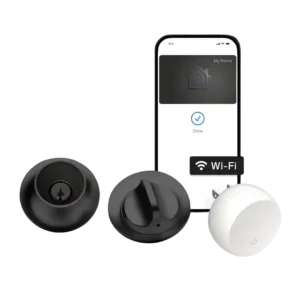
Multiple reviewers praise that Encode connects directly to Wi-Fi with no bridge or hub, which simplifies setup and ongoing use compared with add-on adapters.
Most reviewers found installation quick with basic tools, but doors that are tight, have nonstandard cutouts, or mismatched strike plates sometimes required sanding, drilling, or careful alignment to avoid binding.
Installation is usually quick with a screwdriver and standard deadbolt holes; the snap-in/faceplate design helps one-person installs, but a few testers found alignment or juggling parts tricky on certain doors.
Jam detection/alerts appear when alignment is off or the strike-hole depth is shallow; reviewers who encountered it generally resolved the issue by adjusting the door/strike rather than blaming the motor itself.
Physical keys remain a dependable fallback and are appreciated because the lock lacks external emergency power terminals. Reviewers report rarely needing the key, but value having it when batteries or connectivity fail.
Physical key override is valued as a reliable fallback for dead batteries or connectivity issues; some reviewers note only one key is included, but the cylinder is easy to rekey or match to a home.
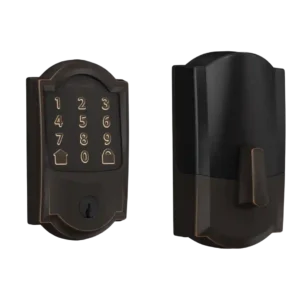
There is no built-in keypad, which is a frequent tradeoff callout. An optional keypad accessory is viewed as useful and flexible to mount, but it adds cost and reduces the stealth aesthetic.
No summary yet.
The keyway/cylinder is widely described as a standard consumer-grade core, and several reviewers criticize it for lacking higher-security pins. Upgrading or rekeying to a stronger cylinder is a common recommendation if pick resistance matters.
Keyway/cylinder quality is seen as solid and serviceable, with locksmith reviewers noting standard Schlage keyways and straightforward rekeying; ultimate high-security upgrades are possible for those who want them.
Home Key and NFC interactions are usually described as fast and near-instant, while app-based control can be slower—especially when routing through a hub for remote commands or when Bluetooth has to sync first.
Unlocking via code or app is usually near-instant, and the keypad response is praised; a few sources mention remote actions can take longer to reflect in the app due to cloud latency.
The internal motorized chassis is praised for its clean, hidden design, but it is sensitive to resistance from door alignment. When the door throws smoothly it performs well; binding can trigger jams or slower operation.
Motor strength and reliability are praised for handling slight door misalignment, but multiple reviewers complain the motor can be loud or grinding, especially from the interior side.
Overall reliability is strong once the door and strike are aligned, with Home Key working the vast majority of the time in multiple long-term accounts. The main reliability complaints revolve around Bluetooth/geo features and mechanical binding when the door is not fully closed.
Overall locking reliability is rated highly once installed and calibrated, with stable schedules and consistent app/keypad performance; most issues cluster around setup confusion and Wi-Fi signal quality, not day-to-day locking.
Notifications are commonly referenced through Apple Home (alerts when the lock is used) and through activity updates in the Level app, though detail and consistency vary depending on connectivity and which app you rely on.
Notifications are generally responsive and configurable (including per-user alerts), but at least one reviewer notes that certain security events such as repeated wrong-code attempts may appear in history without an immediate push alert.
Against brute-force attacks, reviewers point to strong hardware ratings and argue the deadbolt strength is solid, with the door or frame likely failing before the bolt does in many scenarios.
Encode’s ANSI/BHMA Grade 1 ratings are repeatedly cited as a major advantage, with reviewers framing it as unusually robust for a consumer smart lock and better than typical Grade 2 options.
Pick resistance is a consistent weak spot in the review set, with multiple references to quick picks or bump-style demonstrations using basic tools. Several reviewers recommend rekeying or upgrading the cylinder if this is a concern.
Several reviews point to strong resistance to common attacks and high-grade hardware, though most do not provide formal drill/pick test results; locksmith commentary suggests the cylinder is solid but not invulnerable and can be upgraded if desired.
Remote access is reliable when paired with the right hub (Apple Home hub or a Wi-Fi bridge), but without one the lock is largely a local-control device. Several reviewers highlight this as the key deciding factor beyond aesthetics.
Remote lock/unlock and status checks work well once connected, with occasional delays reported when commands travel through cloud integrations or Wi-Fi conditions are poor.
Security-wise, encryption is described positively (including end-to-end encryption mentions), and Home Key offers choices like Express Mode vs requiring device authentication, letting users balance speed and protection.
Security discussions highlight encrypted wireless communication (especially over Bluetooth in locksmith-focused reviews) and the importance of PIN requirements for sensitive actions like voice unlocking.
Smart-home integration is best in Apple Home/HomeKit, where Home Key is a standout differentiator. Alexa/Google/SmartThings support is more conditional (often bridge- or version-dependent), and Thread/Matter readiness is frequently discussed as a future-proofing promise.
Integrations are strongest with Alexa, Google Assistant, Amazon Key, and select Ring doorbells/cameras; repeated drawbacks are no Apple HomeKit on this model, limited Google capabilities, no IFTTT/SmartThings, and known Ring Alarm limitations.
Tamper/forced-entry detection is available and sometimes adjustable in the app; it is treated as a useful deterrent, but real-world sensitivity and false-alarm rates are not uniformly tested across reviews.
Touch interface is generally responsive and designed to reduce visible smudge patterns; several reviewers note it is not a phone-like glass touchscreen but works reliably in varied conditions.
Access management is a strong point, with clear admin vs guest roles, time windows, recurring schedules, and revocation. Reviewers especially like the flexibility for service providers, visitors, and short-term use cases.
User management is a standout: reviewers mention per-user schedules, easy creation/deletion of codes, optional virtual keys for app-based users, and role-like admin control through master codes.
Pricing is consistently called high (roughly $329-$349). Reviewers see the value proposition as strongest for buyers who prioritize an invisible design plus Home Key convenience, and weakest for those who want built-in keypad features or higher-security cylinders without extra cost.
Value is debated: many feel the hub-free Wi-Fi convenience and high security rating justify the premium, while others consider it expensive versus competitors, especially given missing HomeKit/geofencing and the need to replace AA batteries more often.
Voice control works well in Apple environments via Siri (often with confirmation) and can work with Alexa/Google depending on bridges and ecosystem choices. Several reviews caution that cross-ecosystem support is not equally mature.
Voice control is convenient for locking and status checks, and Alexa can unlock with a required voice PIN; Google Assistant is commonly reported as more limited, and voice actions can show mild latency.
Warranty expectations are generally positive, with specific mentions of multi-year electronics coverage and long mechanical coverage; support feedback is limited, but locksmith sources note brand familiarity and serviceability.
Weather and temperature considerations show up mainly as door-fit sensitivity (cold weather can change alignment) plus mentions of sealing details like an O-ring and broad operating temperature specs.
Weather resistance is generally treated as adequate for exterior use, with weatherproof keypad assemblies noted in at least one detailed spec-focused review.
The lock does not include direct Wi-Fi, so remote control depends on a bridge or ecosystem hub. Reviews that used a Wi-Fi bridge generally liked the added reach, but complained about placement constraints and the one-bridge-per-lock reality in some setups.
Built-in 2.4GHz Wi-Fi enables true remote control from anywhere; performance is generally reliable, though some users note occasional lag or weaker connections if the router signal is marginal.