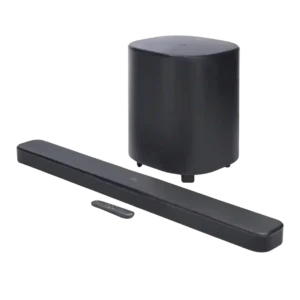
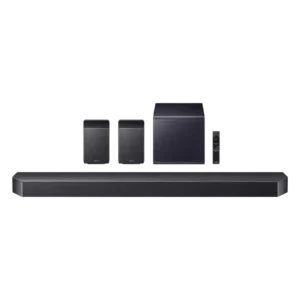
Average score
P1
Product 1: JBL Bar 500 MK2 Soundbar
4.1
P2
Product 2: Samsung HW-Q990F Soundbar
4.3
AI Room Calibration
P1
Product 1: JBL Bar 500 MK2 Soundbar
4.7
Room calibration was one of the most praised features, described as easy and useful for improving room-specific sound.
P2
Product 2: Samsung HW-Q990F Soundbar
4.4
Room calibration is generally useful and effective, though several reviewers characterize the improvements as subtle or requiring small manual corrections.
AirPlay compatibility
P1
Product 1: JBL Bar 500 MK2 Soundbar
4.7
AirPlay support was treated as part of a broad, convenient casting package that helped the bar work as a wireless music system.
P2
Product 2: Samsung HW-Q990F Soundbar
4.5
AirPlay is supported with positive reviewer comments around fast, reliable, or Atmos-compatible wireless playback.
App reliability
P1
Product 1: JBL Bar 500 MK2 Soundbar
3.3
The JBL One app drew mixed feedback: quick detection and feature access were praised, but EQ saving and in-app music limitations hurt confidence.
P2
Product 2: Samsung HW-Q990F Soundbar
4.2
The SmartThings app is generally praised as helpful and easier than the display/remote, with only minor complaints about using it for deeper adjustments.
Audio format support
P1
Product 1: JBL Bar 500 MK2 Soundbar
3.4
Audio format support was mixed: Dolby Atmos and DTS Virtual X support helped immersion, but one review cited no DTS support.
P2
Product 2: Samsung HW-Q990F Soundbar
4.3
Audio format support is broad and positively framed, covering mainstream immersive formats and newer support without major reviewer concern.
Backwards compatibility
P1Product 1: JBL Bar 500 MK2 Soundbar
No score yet
P2
Product 2: Samsung HW-Q990F Soundbar
4.5
Compatibility beyond Samsung is positive in limited evidence, with one reviewer saying it works fine with non-Samsung TV products.
Bluetooth connection stability
P1Product 1: JBL Bar 500 MK2 Soundbar
No score yet
P2
Product 2: Samsung HW-Q990F Soundbar
4.5
Bluetooth/AirPlay/Tidal connection speed receives a positive reviewer note, but Bluetooth-specific stability evidence is limited.
Cabinet construction / bracing
P1Product 1: JBL Bar 500 MK2 Soundbar
No score yet
P2
Product 2: Samsung HW-Q990F Soundbar
2.5
Cabinet construction is mostly fine, but one reviewer reports audible creak/rattle from the subwoofer cabinet under very high-volume strain.
Chromecast compatibility
P1
Product 1: JBL Bar 500 MK2 Soundbar
4.7
Chromecast/Google Cast support was praised within the broader casting feature set, making phone-based playback feel easy and flexible.
P2
Product 2: Samsung HW-Q990F Soundbar
4.5
Google Cast/Chromecast-style streaming is included in a wireless feature set reviewers describe positively.
Cohesive presentation
P1
Product 1: JBL Bar 500 MK2 Soundbar
3.5
Cohesive presentation was mixed: one review noted subwoofer integration gaps, while another said the bass complemented the bar well.
P2
Product 2: Samsung HW-Q990F Soundbar
5.0
Cohesion is excellent in the strongest reviews, with subwoofer, bar, and surrounds described as seamless and tonally matched.
Control button responsiveness
P1Product 1: JBL Bar 500 MK2 Soundbar
No score yet
P2
Product 2: Samsung HW-Q990F Soundbar
4.5
Physical control buttons are praised for being clicky rather than touch-sensitive.
Design and aesthetics
P1
Product 1: JBL Bar 500 MK2 Soundbar
4.5
Design and aesthetics were widely praised for compactness, discretion, a low TV-friendly profile and an attractive white option.
P2
Product 2: Samsung HW-Q990F Soundbar
3.8
Design is polarizing: many like the cleaner subwoofer and modern industrial look, while others find the soundbar dated, bulky, or not home-friendly.
Design and build quality
P1
Product 1: JBL Bar 500 MK2 Soundbar
4.1
Build quality evidence was generally decent-to-positive, with plastic construction acknowledged but the shape and finish still viewed favorably.
P2
Product 2: Samsung HW-Q990F Soundbar
4.1
Build quality is mostly positive, with sturdy metal and high-end feel, but one reviewer calls the overall construction merely adequate for the class.
Detail retrieval
P1
Product 1: JBL Bar 500 MK2 Soundbar
4.4
Detail retrieval was praised in movie and music playback, with reviewers hearing lifelike effects and small audio nuances.
P2
Product 2: Samsung HW-Q990F Soundbar
4.7
Detail retrieval is a major strength, with reviewers praising fine effects, quiet details, and textural information in movies and music.
Dialogue clarity (for TV/soundbar use)
P1
Product 1: JBL Bar 500 MK2 Soundbar
4.5
Dialogue clarity was a major strength across most reviews, though one reviewer felt movie clarity was weaker than expected.
P2
Product 2: Samsung HW-Q990F Soundbar
4.3
Dialogue clarity is usually considered strong, helped by Samsung’s voice features, but one review sharply criticized speech as muffled and underwhelming.
Distortion at high volume
P1Product 1: JBL Bar 500 MK2 Soundbar
No score yet
P2
Product 2: Samsung HW-Q990F Soundbar
4.8
Most reviewers report clean performance at high levels, though one notes cabinet strain/rattle from the redesigned subwoofer when pushed very hard.
Dolby Atmos height effects
P1
Product 1: JBL Bar 500 MK2 Soundbar
3.4
Dolby Atmos effects were praised by one reviewer but more limited or illusion-like in others because the bar lacks dedicated up-firing drivers.
P2
Product 2: Samsung HW-Q990F Soundbar
4.7
Dolby Atmos height and 3D effects are widely praised as convincing, well placed, and among the best reviewers have heard from soundbars.
Dynamic headroom
P1Product 1: JBL Bar 500 MK2 Soundbar
No score yet
P2
Product 2: Samsung HW-Q990F Soundbar
5.0
Dynamic headroom is praised for punch, scale, and powerful transient impact.
EQ customization
P1
Product 1: JBL Bar 500 MK2 Soundbar
3.8
EQ customization was useful through bass/treble controls and app features, but one reviewer criticized the lack of saved presets.
P2
Product 2: Samsung HW-Q990F Soundbar
4.2
EQ and channel customization are broadly useful, though some reviewers note limits and prefer the app for detailed adjustments.
Frequency response balance
P1
Product 1: JBL Bar 500 MK2 Soundbar
3.9
Tonal balance was generally positive, especially in treble and bass warmth, but reviewers also noted subwoofer integration limits and music-dependent tradeoffs.
P2
Product 2: Samsung HW-Q990F Soundbar
4.6
Reviewers broadly praise the tonal balance, clarity, bass-to-midrange integration, and detailed highs, with only isolated complaints around music quality.
Gaming HDMI passthrough
P1
Product 1: JBL Bar 500 MK2 Soundbar
3.0
Gaming passthrough was limited by 4K/60 and non-HDMI 2.1 support, making direct console-to-TV connection preferable for 4K/120 gaming.
P2
Product 2: Samsung HW-Q990F Soundbar
5.0
Gaming HDMI passthrough receives positive evidence from PS5 testing, where reviewers reported no lag or video-quality drop.
Google
P1
Product 1: JBL Bar 500 MK2 Soundbar
3.0
Google-related voice control was similarly limited in one review because it required an external device.
P2
Product 2: Samsung HW-Q990F Soundbar
2.5
Google integration is mixed: Google Cast support is praised as part of the wireless set, while one reviewer could not connect Google Home.
HDMI 2.1 gaming
P1
Product 1: JBL Bar 500 MK2 Soundbar
2.7
HDMI 2.1 gaming support was a weakness because reviewers noted the HDMI input is not HDMI 2.1 and is limited for 4K/120 use.
P2
Product 2: Samsung HW-Q990F Soundbar
4.7
HDMI 2.1 gaming support is praised for 4K/120-style passthrough and no lag or video-quality loss in gaming tests.
HDMI ARC
P1
Product 1: JBL Bar 500 MK2 Soundbar
4.4
HDMI ARC/eARC was viewed as simple and sufficient for TV hookup when the TV has enough device inputs.
P2
Product 2: Samsung HW-Q990F Soundbar
4.5
HDMI eARC is praised for letting the TV remote handle everyday volume and mute control.
Home theater integration
P1
Product 1: JBL Bar 500 MK2 Soundbar
4.5
Home theater integration was praised for balancing cinema-like sound with convenience and for lifting TV sound without adding clutter.
P2
Product 2: Samsung HW-Q990F Soundbar
4.5
Home theater integration is a core strength, especially with Samsung TVs/Q-Symphony, but the four-piece system can feel like clutter and Q-Symphony results vary.
Inter-speaker connectivity
P1
Product 1: JBL Bar 500 MK2 Soundbar
4.5
Inter-speaker connectivity was praised in one review for letting audio continue on another compatible speaker around the home.
P2
Product 2: Samsung HW-Q990F Soundbar
5.0
Inter-speaker wireless communication is praised for retaining connections without manual input.
Latency with TV (lip sync)
P1Product 1: JBL Bar 500 MK2 Soundbar
No score yet
P2
Product 2: Samsung HW-Q990F Soundbar
4.8
TV/lip-sync latency is rated strongly, with reviewers reporting no delay, no lag, or low-latency playback across wired and wireless setups.
Loudness / maximum volume
P1
Product 1: JBL Bar 500 MK2 Soundbar
4.8
Reviewers found the bar/sub system loud enough to fill rooms, with strong sound pressure and big impact even without using the full volume range.
P2
Product 2: Samsung HW-Q990F Soundbar
4.7
Reviewers consistently describe the system as loud and room-filling, with enough output for large rooms; no review frames maximum volume as a major weakness.
Low-volume performance
P1
Product 1: JBL Bar 500 MK2 Soundbar
4.4
Low-volume performance was positive, especially for apartment or nighttime use where dialogue help and restrained volume matter.
P2
Product 2: Samsung HW-Q990F Soundbar
4.7
Low-volume performance is unusually strong, with reviewers praising quiet-detail audibility and private/low-level listening usefulness.
Multi-speaker pairing reliability
P1Product 1: JBL Bar 500 MK2 Soundbar
No score yet
P2
Product 2: Samsung HW-Q990F Soundbar
5.0
The wireless rear/sub pairing process is repeatedly described as seamless, instant, or nearly effortless.
Omnidirectional sound
P1Product 1: JBL Bar 500 MK2 Soundbar
No score yet
P2
Product 2: Samsung HW-Q990F Soundbar
5.0
The system’s bass and spatial presentation are described as non-directional or room-filling enough to feel omnidirectional.
On-device controls
P1
Product 1: JBL Bar 500 MK2 Soundbar
2.5
On-device controls drew a usability complaint from one reviewer who disliked that any button could turn the unit on.
P2
Product 2: Samsung HW-Q990F Soundbar
4.0
On-device controls are useful and accessible, though the strongest control praise tends to shift toward the app.
optical
P1Product 1: JBL Bar 500 MK2 Soundbar
No score yet
P2
Product 2: Samsung HW-Q990F Soundbar
4.5
The optical input receives a positive latency assessment in the available evidence.
Privacy and data
P1Product 1: JBL Bar 500 MK2 Soundbar
No score yet
P2
Product 2: Samsung HW-Q990F Soundbar
4.0
The physical microphone mute is considered an important privacy/control feature.
Rear speaker cable length
P1Product 1: JBL Bar 500 MK2 Soundbar
No score yet
P2
Product 2: Samsung HW-Q990F Soundbar
4.5
Rear-speaker cable flexibility receives one positive note because Samsung includes different lead lengths for easier placement.
Remote control usability
P1
Product 1: JBL Bar 500 MK2 Soundbar
4.0
Remote usability received limited but positive evidence, with one reviewer calling the remote fairly simple.
P2
Product 2: Samsung HW-Q990F Soundbar
4.2
Remote usability is mixed: some reviewers like the simple, well-laid-out design, while others find deeper remote/display navigation tedious.
Setup simplicity
P1
Product 1: JBL Bar 500 MK2 Soundbar
4.8
Setup simplicity was a consistent strength, helped by easier connection, simple calibration and little need for audio knowledge.
P2
Product 2: Samsung HW-Q990F Soundbar
4.8
Setup is one of the strongest positives, repeatedly described as easy, plug-and-play, or novice-friendly, though one review wanted some manual intervention.
Smart assistant integration (Alexa
P1
Product 1: JBL Bar 500 MK2 Soundbar
3.0
Alexa-style smart assistant integration was limited in one review because voice control required an external device rather than being built in.
P2
Product 2: Samsung HW-Q990F Soundbar
3.0
Alexa-style assistant integration is present and useful, but one reviewer found the always-listening behavior annoying enough to mute.
Smart features
P1
Product 1: JBL Bar 500 MK2 Soundbar
4.6
Smart features were a clear strength, especially broad casting support, direct streaming and multi-room convenience.
P2
Product 2: Samsung HW-Q990F Soundbar
4.0
Smart features are generally useful and well integrated, especially app control and streaming options.
Soundstage height
P1
Product 1: JBL Bar 500 MK2 Soundbar
4.5
Soundstage height received positive evidence in one review, where ambient effects were described as hovering in midair.
P2
Product 2: Samsung HW-Q990F Soundbar
5.0
Height staging receives standout praise, including claims it is better produced than on other soundbar systems.
Spotify Connect reliability
P1
Product 1: JBL Bar 500 MK2 Soundbar
4.9
Spotify Connect evidence was positive overall, with one review saying Spotify and Tidal Connect worked seamlessly.
P2
Product 2: Samsung HW-Q990F Soundbar
4.5
Spotify Connect is included in a wireless streaming bundle reviewers call stellar, though reviews do not deeply isolate Spotify-specific behavior.
Status indicators
P1
Product 1: JBL Bar 500 MK2 Soundbar
4.5
The status display was praised for using plain English instead of confusing light patterns.
P2
Product 2: Samsung HW-Q990F Soundbar
3.0
Status indicators are a recurring weak spot because the dot-matrix/front display can be hard to read or tedious for adjustments.
Stereo imaging accuracy
P1
Product 1: JBL Bar 500 MK2 Soundbar
4.5
Stereo imaging earned praise in one review for keeping vocal effects centered cleanly within the stereo image.
P2
Product 2: Samsung HW-Q990F Soundbar
3.9
Stereo and music imaging are generally praised for focus, width, and staging, but one dissenting review found music performance especially weak.
Subwoofer
P1
Product 1: JBL Bar 500 MK2 Soundbar
4.4
The subwoofer was consistently viewed as powerful, deep and fun, but not always the fastest or most seamlessly integrated for music.
P2
Product 2: Samsung HW-Q990F Soundbar
4.6
The smaller dual-driver subwoofer is widely praised for deep, controlled, room-filling bass, but a few reviewers note placement sensitivity, looser timing, or strain at high output.
Surround sound simulation
P1
Product 1: JBL Bar 500 MK2 Soundbar
4.3
Surround simulation was widely praised for creating an immersive field without rear speakers, with caveats that the effect is still virtual and room-dependent.
P2
Product 2: Samsung HW-Q990F Soundbar
4.7
Surround presentation is the product’s strongest consensus area, with reviewers praising immersion, positioning, and a convincing sound bubble; one review found rear speakers weaker under stress.
Value for money
P1
Product 1: JBL Bar 500 MK2 Soundbar
4.6
Value for money was strong overall, with several reviewers calling it a compelling buy at the $500 or discounted sub-$400 range.
P2
Product 2: Samsung HW-Q990F Soundbar
4.2
Value is split by price sensitivity: many reviewers say performance justifies the cost, while others say the expensive system is not clearly excellent enough.
Video passthrough support
P1
Product 1: JBL Bar 500 MK2 Soundbar
4.1
Video passthrough was useful for disc players and consoles, but gaming use is limited by 4K/60 constraints.
P2
Product 2: Samsung HW-Q990F Soundbar
4.5
Video passthrough support is strong, with praise for 4K/120, HDR format passthrough, and gaming-friendly HDMI behavior.
Voice assistant responsiveness
P1Product 1: JBL Bar 500 MK2 Soundbar
No score yet
P2
Product 2: Samsung HW-Q990F Soundbar
3.0
Voice assistant responsiveness appears high enough to trigger annoyance in one review, but the evidence is limited.
Voice clarity
P1
Product 1: JBL Bar 500 MK2 Soundbar
4.8
Voice clarity was praised in one review, where narration came through clearly with the subwoofer adding depth.
P2
Product 2: Samsung HW-Q990F Soundbar
4.0
Vocal clarity is mostly praised for clean, present voices, though some reviewers found voice processing unnatural or dialogue/vocals muffled.
Weight convenience
P1
Product 1: JBL Bar 500 MK2 Soundbar
3.8
Weight convenience was a tradeoff: the subwoofer is heavy, but one reviewer said it should not need moving after setup.
P2
Product 2: Samsung HW-Q990F Soundbar
3.0
The system’s size and weight are a tradeoff: reviewers accept the heft for performance but warn it may not fit easily under some TVs.
Wi-Fi streaming reliability
P1
Product 1: JBL Bar 500 MK2 Soundbar
4.2
Wireless streaming was mostly described as easy and reliable, though one reviewer warned that weak Wi-Fi coverage could matter because there is no Ethernet.
P2
Product 2: Samsung HW-Q990F Soundbar
3.3
Wireless streaming is mixed: several reviewers praise wireless connectivity, while others flag dropouts or fussy phone handoff behavior.
Wired input
P1
Product 1: JBL Bar 500 MK2 Soundbar
4.1
Wired inputs were considered practical, with reviewers saying the rear inputs were accessible and the connection set was sufficient.
P2
Product 2: Samsung HW-Q990F Soundbar
4.4
Wired connectivity is repeatedly described as excellent or sufficient, especially for HDMI/eARC and optical use.