Average score
P1
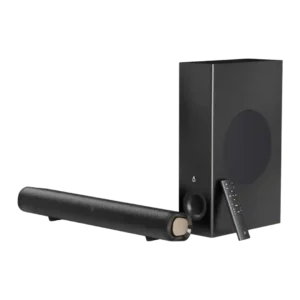
Product 1: Creative Stage Pro Soundbar
3.7
P2
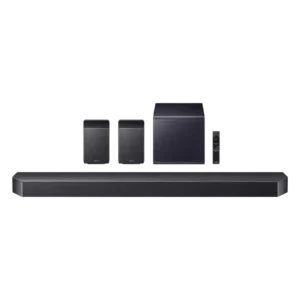
Product 2: Samsung HW-Q990F Soundbar
4.3
AI Room Calibration
P1Product 1: Creative Stage Pro Soundbar
No score yet
P2
Product 2: Samsung HW-Q990F Soundbar
4.4
Room calibration is generally useful and effective, though several reviewers characterize the improvements as subtle or requiring small manual corrections.
AirPlay compatibility
P1Product 1: Creative Stage Pro Soundbar
No score yet
P2
Product 2: Samsung HW-Q990F Soundbar
4.5
AirPlay is supported with positive reviewer comments around fast, reliable, or Atmos-compatible wireless playback.
App reliability
P1Product 1: Creative Stage Pro Soundbar
No score yet
P2
Product 2: Samsung HW-Q990F Soundbar
4.2
The SmartThings app is generally praised as helpful and easier than the display/remote, with only minor complaints about using it for deeper adjustments.
Audio format support
P1
Product 1: Creative Stage Pro Soundbar
2.9
Audio format support is serviceable for the price, with Dolby Digital/Plus noted, but reviewers repeatedly call out missing Atmos and eARC-related limits.
P2
Product 2: Samsung HW-Q990F Soundbar
4.3
Audio format support is broad and positively framed, covering mainstream immersive formats and newer support without major reviewer concern.
Backwards compatibility
P1Product 1: Creative Stage Pro Soundbar
No score yet
P2
Product 2: Samsung HW-Q990F Soundbar
4.5
Compatibility beyond Samsung is positive in limited evidence, with one reviewer saying it works fine with non-Samsung TV products.
Bluetooth codec support
P1
Product 1: Creative Stage Pro Soundbar
3.6
Bluetooth codec support is limited by the reported SBC codec, though the same reviewer still found the Bluetooth audio acceptable.
P2Product 2: Samsung HW-Q990F Soundbar
No score yetBluetooth connection stability
P1
Product 1: Creative Stage Pro Soundbar
4.4
Bluetooth stability is positive in the limited evidence, with quick pairing and clear, crisp playback reported.
P2
Product 2: Samsung HW-Q990F Soundbar
4.5
Bluetooth/AirPlay/Tidal connection speed receives a positive reviewer note, but Bluetooth-specific stability evidence is limited.
Cabinet construction / bracing
P1Product 1: Creative Stage Pro Soundbar
No score yet
P2
Product 2: Samsung HW-Q990F Soundbar
2.5
Cabinet construction is mostly fine, but one reviewer reports audible creak/rattle from the subwoofer cabinet under very high-volume strain.
Chromecast compatibility
P1Product 1: Creative Stage Pro Soundbar
No score yet
P2
Product 2: Samsung HW-Q990F Soundbar
4.5
Google Cast/Chromecast-style streaming is included in a wireless feature set reviewers describe positively.
Cohesive presentation
P1
Product 1: Creative Stage Pro Soundbar
4.0
Overall presentation is consistently competent for the price, often described as cohesive, versatile, and all-around, though not premium or cinematic at scale.
P2
Product 2: Samsung HW-Q990F Soundbar
5.0
Cohesion is excellent in the strongest reviews, with subwoofer, bar, and surrounds described as seamless and tonally matched.
Control button responsiveness
P1Product 1: Creative Stage Pro Soundbar
No score yet
P2
Product 2: Samsung HW-Q990F Soundbar
4.5
Physical control buttons are praised for being clicky rather than touch-sensitive.
Design and aesthetics
P1
Product 1: Creative Stage Pro Soundbar
3.5
Aesthetics are divisive: some reviewers liked the compact, elegant, premium-feeling look, while others disliked the gold accents or cheap-looking design.
P2
Product 2: Samsung HW-Q990F Soundbar
3.8
Design is polarizing: many like the cleaner subwoofer and modern industrial look, while others find the soundbar dated, bulky, or not home-friendly.
Design and build quality
P1
Product 1: Creative Stage Pro Soundbar
4.3
Build quality is seen as solid for the price, with reviewers calling the bar well built and the soundbar/subwoofer set solidly constructed.
P2
Product 2: Samsung HW-Q990F Soundbar
4.1
Build quality is mostly positive, with sturdy metal and high-end feel, but one reviewer calls the overall construction merely adequate for the class.
Detail retrieval
P1
Product 1: Creative Stage Pro Soundbar
4.0
Detail retrieval is generally good for the price, especially dialogue, treble, games, and moderate volumes, though busy mixes and some effects lose clarity.
P2
Product 2: Samsung HW-Q990F Soundbar
4.7
Detail retrieval is a major strength, with reviewers praising fine effects, quiet details, and textural information in movies and music.
Dialogue clarity (for TV/soundbar use)
P1
Product 1: Creative Stage Pro Soundbar
4.1
Dialogue clarity is usually a standout, with many reviewers praising crisp, intelligible speech, though one review strongly criticized muffled dialogue in action-heavy content.
P2
Product 2: Samsung HW-Q990F Soundbar
4.3
Dialogue clarity is usually considered strong, helped by Samsung’s voice features, but one review sharply criticized speech as muffled and underwhelming.
Distortion at high volume
P1
Product 1: Creative Stage Pro Soundbar
3.8
High-volume behavior is mixed: several reviewers heard little or no distortion, while others found the system strained, sharp, or less pleasant when pushed hard.
P2
Product 2: Samsung HW-Q990F Soundbar
4.8
Most reviewers report clean performance at high levels, though one notes cabinet strain/rattle from the redesigned subwoofer when pushed very hard.
Dolby Atmos height effects
P1
Product 1: Creative Stage Pro Soundbar
2.8
Height/Atmos-style performance is limited; reviewers treated SuperWide as a partial substitute, but it is not true Dolby Atmos and does not match Atmos effects.
P2
Product 2: Samsung HW-Q990F Soundbar
4.7
Dolby Atmos height and 3D effects are widely praised as convincing, well placed, and among the best reviewers have heard from soundbars.
Dynamic headroom
P1
Product 1: Creative Stage Pro Soundbar
4.2
Dynamic headroom is praised in limited evidence, with reviewers noting punchy dynamics and a cinematic feel rather than flat presentation.
P2
Product 2: Samsung HW-Q990F Soundbar
5.0
Dynamic headroom is praised for punch, scale, and powerful transient impact.
EQ customization
P1
Product 1: Creative Stage Pro Soundbar
3.5
EQ customization is helpful for bass/treble adjustment, but reviewers criticized subtle presets and the lack of deeper app-based band control.
P2
Product 2: Samsung HW-Q990F Soundbar
4.2
EQ and channel customization are broadly useful, though some reviewers note limits and prefer the app for detailed adjustments.
Frequency response balance
P1
Product 1: Creative Stage Pro Soundbar
3.7
Tonal balance earns praise for warmth, fullness, and clean treble in some reviews, but others note boosted mids/highs, muddiness, or tinniness depending on content.
P2
Product 2: Samsung HW-Q990F Soundbar
4.6
Reviewers broadly praise the tonal balance, clarity, bass-to-midrange integration, and detailed highs, with only isolated complaints around music quality.
Gaming HDMI passthrough
P1Product 1: Creative Stage Pro Soundbar
No score yet
P2
Product 2: Samsung HW-Q990F Soundbar
5.0
Gaming HDMI passthrough receives positive evidence from PS5 testing, where reviewers reported no lag or video-quality drop.
Google
P1Product 1: Creative Stage Pro Soundbar
No score yet
P2
Product 2: Samsung HW-Q990F Soundbar
2.5
Google integration is mixed: Google Cast support is praised as part of the wireless set, while one reviewer could not connect Google Home.
HDMI 2.1 gaming
P1Product 1: Creative Stage Pro Soundbar
No score yet
P2
Product 2: Samsung HW-Q990F Soundbar
4.7
HDMI 2.1 gaming support is praised for 4K/120-style passthrough and no lag or video-quality loss in gaming tests.
HDMI ARC
P1
Product 1: Creative Stage Pro Soundbar
2.8
HDMI ARC support is convenient when it works, but reviewers reported ARC-only limitations, missing eARC, and one serious volume-step issue.
P2
Product 2: Samsung HW-Q990F Soundbar
4.5
HDMI eARC is praised for letting the TV remote handle everyday volume and mute control.
Home theater integration
P1
Product 1: Creative Stage Pro Soundbar
3.7
Home theater integration works best in small rooms, desktops, bedrooms, or dens; reviewers consistently warn it is not ideal for large rooms or big TVs.
P2
Product 2: Samsung HW-Q990F Soundbar
4.5
Home theater integration is a core strength, especially with Samsung TVs/Q-Symphony, but the four-piece system can feel like clutter and Q-Symphony results vary.
Inter-speaker connectivity
P1
Product 1: Creative Stage Pro Soundbar
2.7
Inter-speaker connectivity is simple but cable-heavy: reviewers noted the wired subwoofer and overall cable load as practical constraints.
P2
Product 2: Samsung HW-Q990F Soundbar
5.0
Inter-speaker wireless communication is praised for retaining connections without manual input.
Latency with TV (lip sync)
P1
Product 1: Creative Stage Pro Soundbar
3.8
Latency evidence is mixed: one reviewer saw no Bluetooth delay with a projector, while another noticed brief audio skips during UHD Blu-ray playback.
P2
Product 2: Samsung HW-Q990F Soundbar
4.8
TV/lip-sync latency is rated strongly, with reviewers reporting no delay, no lag, or low-latency playback across wired and wireless setups.
Loudness / maximum volume
P1
Product 1: Creative Stage Pro Soundbar
4.3
Reviewers generally found the compact bar louder than expected, with enough output for bedrooms, desks, and small living rooms, though room-filling scale is limited.
P2
Product 2: Samsung HW-Q990F Soundbar
4.7
Reviewers consistently describe the system as loud and room-filling, with enough output for large rooms; no review frames maximum volume as a major weakness.
Low-volume performance
P1
Product 1: Creative Stage Pro Soundbar
3.8
Low-volume performance is mixed: low-level dynamics and late-night control are praised, but HDMI volume steps can be too coarse or loud.
P2
Product 2: Samsung HW-Q990F Soundbar
4.7
Low-volume performance is unusually strong, with reviewers praising quiet-detail audibility and private/low-level listening usefulness.
Multi-speaker pairing reliability
P1Product 1: Creative Stage Pro Soundbar
No score yet
P2
Product 2: Samsung HW-Q990F Soundbar
5.0
The wireless rear/sub pairing process is repeatedly described as seamless, instant, or nearly effortless.
Omnidirectional sound
P1Product 1: Creative Stage Pro Soundbar
No score yet
P2
Product 2: Samsung HW-Q990F Soundbar
5.0
The system’s bass and spatial presentation are described as non-directional or room-filling enough to feel omnidirectional.
On-device controls
P1
Product 1: Creative Stage Pro Soundbar
4.0
On-device controls are useful as backup basics, with reviewers appreciating physical buttons, though fuller control still depends on the remote.
P2
Product 2: Samsung HW-Q990F Soundbar
4.0
On-device controls are useful and accessible, though the strongest control praise tends to shift toward the app.
optical
P1
Product 1: Creative Stage Pro Soundbar
3.6
Optical input worked as a practical workaround for one reviewer after HDMI ARC volume control caused problems, but it also changed remote-control behavior.
P2
Product 2: Samsung HW-Q990F Soundbar
4.5
The optical input receives a positive latency assessment in the available evidence.
Privacy and data
P1Product 1: Creative Stage Pro Soundbar
No score yet
P2
Product 2: Samsung HW-Q990F Soundbar
4.0
The physical microphone mute is considered an important privacy/control feature.
Rear speaker cable length
P1
Product 1: Creative Stage Pro Soundbar
2.6
Speaker/subwoofer cable placement is a recurring limitation, with the wired sub restricting where reviewers could place it in TV or couch setups.
P2
Product 2: Samsung HW-Q990F Soundbar
4.5
Rear-speaker cable flexibility receives one positive note because Samsung includes different lead lengths for easier placement.
Remote control usability
P1
Product 1: Creative Stage Pro Soundbar
3.8
The remote is generally useful and sometimes praised, but reviewers warned not to lose it and noted quirks such as limited onboard backup or awkward behavior.
P2
Product 2: Samsung HW-Q990F Soundbar
4.2
Remote usability is mixed: some reviewers like the simple, well-laid-out design, while others find deeper remote/display navigation tedious.
Setup simplicity
P1
Product 1: Creative Stage Pro Soundbar
4.6
Setup is one of the clearest strengths, with reviewers repeatedly describing it as simple, easy, and quick for TV, desktop, and general use.
P2
Product 2: Samsung HW-Q990F Soundbar
4.8
Setup is one of the strongest positives, repeatedly described as easy, plug-and-play, or novice-friendly, though one review wanted some manual intervention.
Smart assistant integration (Alexa
P1Product 1: Creative Stage Pro Soundbar
No score yet
P2
Product 2: Samsung HW-Q990F Soundbar
3.0
Alexa-style assistant integration is present and useful, but one reviewer found the always-listening behavior annoying enough to mute.
Smart features
P1
Product 1: Creative Stage Pro Soundbar
2.3
Smart features are limited, with reviewers pointing to absent Wi-Fi streaming, no richer feature set, and missing app EQ support.
P2
Product 2: Samsung HW-Q990F Soundbar
4.0
Smart features are generally useful and well integrated, especially app control and streaming options.
Soundstage height
P1
Product 1: Creative Stage Pro Soundbar
3.6
Height and driver-aiming benefits depend heavily on placement; reviewers noted the angled drivers and fake-Atmos presentation but not true height immersion.
P2
Product 2: Samsung HW-Q990F Soundbar
5.0
Height staging receives standout praise, including claims it is better produced than on other soundbar systems.
Spotify Connect reliability
P1Product 1: Creative Stage Pro Soundbar
No score yet
P2
Product 2: Samsung HW-Q990F Soundbar
4.5
Spotify Connect is included in a wireless streaming bundle reviewers call stellar, though reviews do not deeply isolate Spotify-specific behavior.
Status indicators
P1
Product 1: Creative Stage Pro Soundbar
3.3
Status indicators are useful but imperfect: reviewers appreciated clear source/input displays, while others found the standby or dark-room display too bright.
P2
Product 2: Samsung HW-Q990F Soundbar
3.0
Status indicators are a recurring weak spot because the dot-matrix/front display can be hard to read or tedious for adjustments.
Stereo imaging accuracy
P1
Product 1: Creative Stage Pro Soundbar
2.7
Stereo imaging is a weak point overall, with repeated comments about narrow, localized sound, limited separation, and stronger performance only near the sweet spot.
P2
Product 2: Samsung HW-Q990F Soundbar
3.9
Stereo and music imaging are generally praised for focus, width, and staging, but one dissenting review found music performance especially weak.
Subwoofer
P1
Product 1: Creative Stage Pro Soundbar
4.2
The wired subwoofer is a major strength for the price, adding punch, warmth, and bass weight, though it does not reach deep premium-subwoofer performance.
P2
Product 2: Samsung HW-Q990F Soundbar
4.6
The smaller dual-driver subwoofer is widely praised for deep, controlled, room-filling bass, but a few reviewers note placement sensitivity, looser timing, or strain at high output.
Surround sound simulation
P1
Product 1: Creative Stage Pro Soundbar
3.7
SuperWide and surround simulation are useful but imperfect; reviewers liked the wider, more immersive effect, while also noting lost definition, gimmickry, or fake-Atmos limits.
P2
Product 2: Samsung HW-Q990F Soundbar
4.7
Surround presentation is the product’s strongest consensus area, with reviewers praising immersion, positioning, and a convincing sound bubble; one review found rear speakers weaker under stress.
Value for money
P1
Product 1: Creative Stage Pro Soundbar
4.5
Value is one of the strongest consensus points, with nearly every reviewer framing the Stage Pro as unusually capable for its low price.
P2
Product 2: Samsung HW-Q990F Soundbar
4.2
Value is split by price sensitivity: many reviewers say performance justifies the cost, while others say the expensive system is not clearly excellent enough.
Video passthrough support
P1Product 1: Creative Stage Pro Soundbar
No score yet
P2
Product 2: Samsung HW-Q990F Soundbar
4.5
Video passthrough support is strong, with praise for 4K/120, HDR format passthrough, and gaming-friendly HDMI behavior.
Voice assistant responsiveness
P1Product 1: Creative Stage Pro Soundbar
No score yet
P2
Product 2: Samsung HW-Q990F Soundbar
3.0
Voice assistant responsiveness appears high enough to trigger annoyance in one review, but the evidence is limited.
Voice clarity
P1
Product 1: Creative Stage Pro Soundbar
4.0
Voice clarity is split: several reviewers heard clear vocals, while one found vocals pushed back in music and dialogue-heavy scenes.
P2
Product 2: Samsung HW-Q990F Soundbar
4.0
Vocal clarity is mostly praised for clean, present voices, though some reviewers found voice processing unnatural or dialogue/vocals muffled.
Weight convenience
P1
Product 1: Creative Stage Pro Soundbar
4.5
The bar’s compact, lightweight body was praised as easy to handle and set up individually.
P2
Product 2: Samsung HW-Q990F Soundbar
3.0
The system’s size and weight are a tradeoff: reviewers accept the heft for performance but warn it may not fit easily under some TVs.
Wi-Fi streaming reliability
P1Product 1: Creative Stage Pro Soundbar
No score yet
P2
Product 2: Samsung HW-Q990F Soundbar
3.3
Wireless streaming is mixed: several reviewers praise wireless connectivity, while others flag dropouts or fussy phone handoff behavior.
Wired input
P1
Product 1: Creative Stage Pro Soundbar
4.5
Wired connectivity is consistently praised, especially HDMI ARC, optical, USB-C, and aux support, with USB-C helping the bar fit TV, console, and PC setups.
P2
Product 2: Samsung HW-Q990F Soundbar
4.4
Wired connectivity is repeatedly described as excellent or sufficient, especially for HDMI/eARC and optical use.