Average score
P1
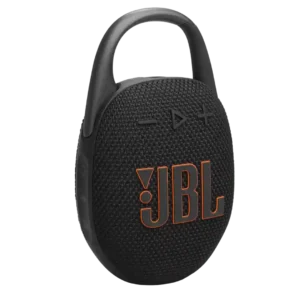
Product 1: JBL Clip 5 Bluetooth Speaker
3.8
P2
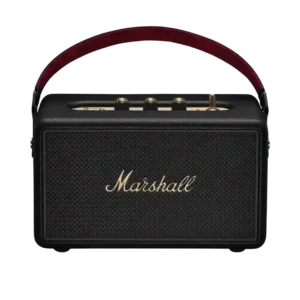
Product 2: Marshall Kilburn III Portable Bluetooth...
3.9
Amplifier power requirements
P1
Product 1: JBL Clip 5 Bluetooth Speaker
4.0
Power-related evidence focuses on the built-in 7W output, repeatedly presented as stronger than older Clip models for a small speaker.
P2
Product 2: Marshall Kilburn III Portable Bluetooth...
4.4
Power references point to a strong 50W Class D amplifier setup, repeatedly tied to the speaker's loud, forceful output.
App reliability
P1Product 1: JBL Clip 5 Bluetooth Speaker
No score yet
P2
Product 2: Marshall Kilburn III Portable Bluetooth...
3.8
App impressions are mixed: one reviewer could not finalize the app connection, while others found the app clean, useful, and easy for EQ and settings.
Audio format support
P1Product 1: JBL Clip 5 Bluetooth Speaker
No score yet
P2
Product 2: Marshall Kilburn III Portable Bluetooth...
2.9
Audio format support is adequate but limited, with reviewers noting SBC, AAC, and LC3 while calling out the lack of higher-resolution codecs.
Backwards compatibility
P1
Product 1: JBL Clip 5 Bluetooth Speaker
2.0
Backwards compatibility is limited because one reviewer said it cannot pair with older JBL PartyBoost speakers.
P2Product 2: Marshall Kilburn III Portable Bluetooth...
No score yetBattery life (if portable)
P1
Product 1: JBL Clip 5 Bluetooth Speaker
4.2
Battery life was widely described as solid around 12 hours, with Playtime Boost extending runtime and real-world results varying by volume.
P2
Product 2: Marshall Kilburn III Portable Bluetooth...
4.9
Battery life is one of the clearest strengths, with reviewers repeatedly citing about 50 hours or real-world multi-day use.
Bluetooth codec support
P1
Product 1: JBL Clip 5 Bluetooth Speaker
2.0
Bluetooth codec support is limited, with one review specifically noting no higher-bitrate codec support.
P2
Product 2: Marshall Kilburn III Portable Bluetooth...
3.2
Bluetooth codec support covers standard lossy codecs, but reviewers consistently noted the absence of hi-res options such as LDAC or aptX Adaptive.
Bluetooth connection stability
P1
Product 1: JBL Clip 5 Bluetooth Speaker
3.9
Bluetooth stability evidence is mixed: one reviewer noted an initial phone connection issue, while another praised stable Bluetooth 5.3 at distance.
P2
Product 2: Marshall Kilburn III Portable Bluetooth...
4.8
Bluetooth connection stability tested well in direct use, with one reviewer reporting easy pairing, a solid connection, and no signal weirdness.
Bluetooth range
P1
Product 1: JBL Clip 5 Bluetooth Speaker
4.3
Only one review discussed range directly, describing a stable Bluetooth 5.3 connection at distance.
P2
Product 2: Marshall Kilburn III Portable Bluetooth...
4.7
Bluetooth range is viewed positively, with reviewers citing a 10-meter range and one test exceeding that distance around the house.
Cabinet construction / bracing
P1
Product 1: JBL Clip 5 Bluetooth Speaker
4.3
Construction evidence is positive, with reviewers citing high-quality mesh, rubberized durability, integrated feet, and solid build quality.
P2
Product 2: Marshall Kilburn III Portable Bluetooth...
4.6
Build and cabinet quality are praised as solid, premium, and durable-feeling, with sturdy materials and a serviceable battery access door.
Charging time
P1
Product 1: JBL Clip 5 Bluetooth Speaker
3.3
Charging time is only average in the reviewed evidence, with reported full-charge times around two and a half to three hours.
P2
Product 2: Marshall Kilburn III Portable Bluetooth...
4.2
Charging is generally strong with USB-C PD and quick-charge claims, though reviewers warn that weaker chargers or playback while charging can slow things down.
Cohesive presentation
P1
Product 1: JBL Clip 5 Bluetooth Speaker
4.2
Reviewers generally found the presentation enjoyable and coherent for its size, though one review criticized depth and congestion.
P2
Product 2: Marshall Kilburn III Portable Bluetooth...
4.5
The speaker presents a cohesive Marshall package, combining warm sound, loud output, physical controls, and retro styling into a unified experience.
Control button responsiveness
P1
Product 1: JBL Clip 5 Bluetooth Speaker
4.6
Button feel and responsiveness were praised, with reviewers calling controls intuitive, firm, easy to find, and able to skip tracks.
P2
Product 2: Marshall Kilburn III Portable Bluetooth...
4.8
Physical control feel is a major strength, with reviewers praising tactile switches, knobs, and playback controls.
Design and aesthetics
P1
Product 1: JBL Clip 5 Bluetooth Speaker
4.3
Design feedback was mostly positive, covering the premium look, colors, recycled-material styling, compact build, and improved carabiner form.
P2
Product 2: Marshall Kilburn III Portable Bluetooth...
4.8
Design is one of the most widely praised traits, with reviewers repeatedly calling out the amp-inspired retro look, premium finishes, and statement-piece character.
Detail retrieval
P1
Product 1: JBL Clip 5 Bluetooth Speaker
4.3
Detail retrieval was praised for a micro speaker, with reviewers hearing added detail, clearer highs, cymbal details, and more layered music.
P2
Product 2: Marshall Kilburn III Portable Bluetooth...
4.4
Detail retrieval is generally strong, especially in vocals, cymbals, bass texture, and layered tracks, though one reviewer heard some upper-mid detail loss.
Distortion at high volume
P1
Product 1: JBL Clip 5 Bluetooth Speaker
3.9
High-volume behavior was mixed: some reviewers heard crowding, shrillness, or distortion, while others reported little or no distortion at maximum volume.
P2
Product 2: Marshall Kilburn III Portable Bluetooth...
4.8
High-volume distortion control is excellent across reviews, with repeated reports of loud playback without cracking, hissing, peaking, muddiness, or obvious distortion.
Drop resistance durability
P1
Product 1: JBL Clip 5 Bluetooth Speaker
4.1
Durability evidence was positive but mostly broad, focusing on rugged materials, rubberized protection, and build quality rather than formal drop testing.
P2Product 2: Marshall Kilburn III Portable Bluetooth...
No score yetDust resistance rating
P1
Product 1: JBL Clip 5 Bluetooth Speaker
5.0
Dust resistance was also well supported through the IP67 rating and explicit dustproof comments.
P2
Product 2: Marshall Kilburn III Portable Bluetooth...
4.0
Dust resistance improved over the prior model, with reviewers consistently citing IP54 protection as useful but not fully rugged.
Dynamic headroom
P1
Product 1: JBL Clip 5 Bluetooth Speaker
4.5
Dynamic headroom is strong for the size, with reviewers emphasizing power, volume, and punch above its weight.
P2
Product 2: Marshall Kilburn III Portable Bluetooth...
4.7
Dynamic behavior is a strength, with reviewers crediting dynamic loudness and placement compensation for preserving balance and detail as volume changes.
Energy efficiency
P1
Product 1: JBL Clip 5 Bluetooth Speaker
3.9
Energy efficiency evidence is mixed: Bluetooth 5.3 and Playtime Boost help runtime, but boosting battery can reduce bass or sound quality.
P2
Product 2: Marshall Kilburn III Portable Bluetooth...
4.8
Energy efficiency is supported by the unusually long runtime from only a modest battery-capacity increase, which one reviewer attributes to major efficiency gains.
EQ customization
P1
Product 1: JBL Clip 5 Bluetooth Speaker
4.4
EQ customization is a clear upgrade, with reviewers repeatedly citing app presets and a custom five-band EQ, though not everyone found the presets dramatic.
P2
Product 2: Marshall Kilburn III Portable Bluetooth...
4.5
EQ customization is broad for a Bluetooth speaker, with physical bass and treble knobs plus app presets, custom EQ, placement compensation, and M-button shortcuts.
Everyday usability
P1
Product 1: JBL Clip 5 Bluetooth Speaker
4.5
Everyday usability was a major strength, with reviewers using it for daily listening, travel, showers, biking, parks, and casual outdoor use.
P2
Product 2: Marshall Kilburn III Portable Bluetooth...
4.7
Everyday usability is strong thanks to straightforward controls, easy living-room use, and the ability to move the speaker around without losing useful sound coverage.
Frequency response balance
P1
Product 1: JBL Clip 5 Bluetooth Speaker
4.1
Reviewers generally described a balanced small-speaker sound with clear highs and usable bass, while noting limited low-frequency depth and occasional treble emphasis.
P2
Product 2: Marshall Kilburn III Portable Bluetooth...
4.7
Frequency balance is broadly praised for tight bass, clear mids, and crisp highs, though a few reviewers heard extra bass or mids in some contexts.
Google
P1Product 1: JBL Clip 5 Bluetooth Speaker
No score yet
P2
Product 2: Marshall Kilburn III Portable Bluetooth...
4.3
Google support is limited to Fast Pair, which reviewers describe as a useful setup convenience rather than a full smart ecosystem feature.
Handle or strap quality
P1
Product 1: JBL Clip 5 Bluetooth Speaker
4.7
The built-in carabiner was one of the strongest points across reviews, with praise for its wider opening, easier clipping, and practical hanging options.
P2
Product 2: Marshall Kilburn III Portable Bluetooth...
4.7
The carry strap is praised for comfort, style, and usefulness, especially its velvet lining and secure feel despite the speaker's weight.
Home theater integration
P1Product 1: JBL Clip 5 Bluetooth Speaker
No score yet
P2
Product 2: Marshall Kilburn III Portable Bluetooth...
3.0
Home theater integration is limited today, but one reviewer notes future Auracast surround use with Marshall soundbars as a possible path.
Inter-speaker connectivity
P1
Product 1: JBL Clip 5 Bluetooth Speaker
4.3
Inter-speaker connectivity is a core feature through Auracast and stereo pairing, though compatibility is mainly with supported JBL/Auracast speakers.
P2
Product 2: Marshall Kilburn III Portable Bluetooth...
1.7
Inter-speaker connectivity is a weakness: reviewers repeatedly note no native stereo pairing or multi-speaker system, and one Auracast attempt was glitchy.
Latency with TV (lip sync)
P1
Product 1: JBL Clip 5 Bluetooth Speaker
4.5
One reviewer found latency acceptable for watching videos on a phone, with no lip-sync issue noted in that use case.
P2Product 2: Marshall Kilburn III Portable Bluetooth...
No score yetLED lighting effects
P1Product 1: JBL Clip 5 Bluetooth Speaker
No score yet
P2
Product 2: Marshall Kilburn III Portable Bluetooth...
3.2
LED lighting is present as functional knob illumination and level indication, not as decorative party lighting.
Lighting effects
P1Product 1: JBL Clip 5 Bluetooth Speaker
No score yet
P2
Product 2: Marshall Kilburn III Portable Bluetooth...
3.2
Lighting is limited to useful LED indicators on the controls rather than immersive or decorative effects.
Loudness / maximum volume
P1
Product 1: JBL Clip 5 Bluetooth Speaker
4.3
Most reviewers found the Clip 5 loud for its size, though one noted it will not power a full party and another saw shorter runtime at higher volumes.
P2
Product 2: Marshall Kilburn III Portable Bluetooth...
4.8
Maximum volume is a major strength, with reviewers describing serious, room-filling, or even unbelievable loudness for a single portable speaker.
Low-volume performance
P1
Product 1: JBL Clip 5 Bluetooth Speaker
4.2
Low-volume evidence is limited but positive, with one long-term user happy listening around 30 percent volume.
P2
Product 2: Marshall Kilburn III Portable Bluetooth...
4.8
Low-volume performance is specifically praised for retaining richness, separation, and bass rather than thinning out in background listening.
Microphone
P1
Product 1: JBL Clip 5 Bluetooth Speaker
1.0
Microphone support is absent; reviewers explicitly state there is no mic or expected microphone capability.
P2
Product 2: Marshall Kilburn III Portable Bluetooth...
1.0
The microphone category is a clear weakness because multiple reviewers state there is no built-in mic.
Multi-speaker pairing reliability
P1
Product 1: JBL Clip 5 Bluetooth Speaker
4.2
Multi-speaker pairing is supported through Auracast and stereo pairing, with one hands-on review reporting immediate syncing and others noting identical-unit limits for stereo.
P2
Product 2: Marshall Kilburn III Portable Bluetooth...
1.6
Multi-speaker pairing reliability is weak because reviewers say the speaker lacks true wireless stereo or native multi-speaker pairing, with one failed Auracast attempt.
Multipoint connectivity
P1
Product 1: JBL Clip 5 Bluetooth Speaker
4.5
Multipoint support is directly confirmed, allowing two devices to connect so two people can take turns controlling playback.
P2
Product 2: Marshall Kilburn III Portable Bluetooth...
4.7
Multipoint connectivity is supported and described as letting two devices pair at the same time.
Omnidirectional sound
P1
Product 1: JBL Clip 5 Bluetooth Speaker
2.0
Omnidirectional sound is not a strength because one review describes the Clip 5 as using a single frontward-firing transducer.
P2
Product 2: Marshall Kilburn III Portable Bluetooth...
4.7
Omnidirectional sound is a standout feature, with reviewers repeatedly praising the 360-degree, wide, room-filling presentation and minimal dead spots.
On-device controls
P1
Product 1: JBL Clip 5 Bluetooth Speaker
4.5
On-device controls are consistently praised as simple, accessible, logically placed, and easy to use.
P2
Product 2: Marshall Kilburn III Portable Bluetooth...
4.7
On-device controls are a major strength, with reviewers repeatedly praising the knobs, switches, playback control, and simple no-learning-curve operation.
Power bank function
P1
Product 1: JBL Clip 5 Bluetooth Speaker
1.0
Power bank functionality is absent; one reviewer explicitly says the Clip 5 cannot charge other devices.
P2
Product 2: Marshall Kilburn III Portable Bluetooth...
4.8
The power-bank function is repeatedly confirmed, letting the speaker charge phones or other devices through USB-C.
Price / value for money
P1
Product 1: JBL Clip 5 Bluetooth Speaker
4.4
Reviewers generally considered the price fair for the portability, durability, sound, EQ, and clip design, with some value concerns versus cheaper or longer-lasting rivals.
P2
Product 2: Marshall Kilburn III Portable Bluetooth...
4.1
Price and value are mixed-to-positive: reviewers call it pricey, but most say the sound, design, battery, and upgrades justify the cost.
Setup simplicity
P1
Product 1: JBL Clip 5 Bluetooth Speaker
4.3
Setup was generally described as simple, although one reviewer experienced an initial phone pairing delay before resolving it.
P2
Product 2: Marshall Kilburn III Portable Bluetooth...
4.8
Setup is simple, helped by Bluetooth pairing and Google Fast Pair, with one reviewer calling the pairing process real simple.
Smart assistant integration (Alexa
P1Product 1: JBL Clip 5 Bluetooth Speaker
No score yet
P2
Product 2: Marshall Kilburn III Portable Bluetooth...
1.0
Smart assistant integration is effectively absent, with reviewers repeatedly noting no voice assistant or voice control.
Smart features
P1
Product 1: JBL Clip 5 Bluetooth Speaker
4.1
Smart features center on the JBL Portable app, EQ, Playtime Boost, stereo pairing, Auracast, and firmware/settings control rather than voice assistants.
P2
Product 2: Marshall Kilburn III Portable Bluetooth...
1.5
Smart features are intentionally minimal, with no Wi-Fi, voice assistant, or smart-speaker behavior despite a useful app and EQ tools.
Speakerphone quality
P1
Product 1: JBL Clip 5 Bluetooth Speaker
1.0
Speakerphone quality is effectively absent because reviewers state the Clip 5 cannot be used for phone calls or speakerphone use.
P2
Product 2: Marshall Kilburn III Portable Bluetooth...
1.0
Speakerphone capability is absent because reviewers state there is no built-in microphone and that it cannot be used as a speakerphone.
Status indicators
P1
Product 1: JBL Clip 5 Bluetooth Speaker
4.4
Status feedback is useful but basic, with an LED low-battery warning and app-based precise battery indicator mentioned.
P2
Product 2: Marshall Kilburn III Portable Bluetooth...
4.7
Status indicators are useful, with reviewers highlighting the 10-bar battery gauge and illuminated control-level LEDs.
Stereo imaging accuracy
P1
Product 1: JBL Clip 5 Bluetooth Speaker
3.3
Stereo performance is limited by the mono speaker body, but paired Clip 5 units can provide left-right stereo according to several reviewers.
P2
Product 2: Marshall Kilburn III Portable Bluetooth...
4.0
Stereo imaging is wide and impressive, but not truly precise stereo separation; reviewers praise spaciousness while noting symmetry and separation limits.
Subwoofer
P1Product 1: JBL Clip 5 Bluetooth Speaker
No score yet
P2
Product 2: Marshall Kilburn III Portable Bluetooth...
4.5
Low-end hardware gets positive attention, with reviewers citing the built-in subwoofer or woofer as a source of strong bass.
Surround sound simulation
P1
Product 1: JBL Clip 5 Bluetooth Speaker
3.5
One reviewer mentioned using two synced units to create a more spacious surround-like effect, but this was conditional on pairing.
P2
Product 2: Marshall Kilburn III Portable Bluetooth...
3.8
Surround-like presentation is wide and immersive, but reviewers caution that it is not true full surround sound.
Sustainability
P1
Product 1: JBL Clip 5 Bluetooth Speaker
4.0
Sustainability evidence is limited to one review noting that the speaker is made in part with recycled materials.
P2
Product 2: Marshall Kilburn III Portable Bluetooth...
4.7
Sustainability is supported by the replaceable battery design and battery-preservation features that may extend useful life.
USB-C charging
P1
Product 1: JBL Clip 5 Bluetooth Speaker
4.5
USB-C charging is supported and confirmed in multiple reviews, including mentions of the included cable or exposed USB-C port.
P2
Product 2: Marshall Kilburn III Portable Bluetooth...
4.8
USB-C charging is a clear upgrade and strength, supporting charging the speaker and external devices with modern USB-C hardware.
Value for money
P1
Product 1: JBL Clip 5 Bluetooth Speaker
4.4
Value for money was broadly positive, especially under $80, though competitive battery life and EQ alternatives kept it from being universal.
P2
Product 2: Marshall Kilburn III Portable Bluetooth...
4.4
Overall value for money is mostly positive, with reviewers seeing worthwhile upgrades, strong sound, premium design, and long battery life despite the price.
Voice clarity
P1
Product 1: JBL Clip 5 Bluetooth Speaker
4.4
Vocals and spoken audio were consistently clear enough for podcasts, rock vocals, and shower listening.
P2
Product 2: Marshall Kilburn III Portable Bluetooth...
4.7
Voice clarity is strong for music playback, with reviewers repeatedly reporting clear, forward, or crisp vocals.
Water resistance rating
P1
Product 1: JBL Clip 5 Bluetooth Speaker
5.0
Water resistance was strongly supported across reviews, with repeated IP67, shower, submersion, and waterproof evidence.
P2
Product 2: Marshall Kilburn III Portable Bluetooth...
3.8
Water resistance is useful but moderate: reviewers consistently cite IP54 splash protection while warning it is not full waterproofing or beach-rugged IP67.
Weight convenience
P1
Product 1: JBL Clip 5 Bluetooth Speaker
4.5
Reviewers consistently found the Clip 5 compact and easy to carry, though one noted it is less comfortable in a pants pocket than smaller speakers.
P2
Product 2: Marshall Kilburn III Portable Bluetooth...
3.0
Weight convenience is mixed: reviewers find it carryable with the strap, but repeatedly describe it as heavy, large, or better for home and gatherings than backpacking.
Wi-Fi streaming reliability
P1Product 1: JBL Clip 5 Bluetooth Speaker
No score yet
P2
Product 2: Marshall Kilburn III Portable Bluetooth...
1.5
Wi-Fi streaming is a weakness because reviewers repeatedly note there is no Wi-Fi support, even at this price.
Wired input
P1
Product 1: JBL Clip 5 Bluetooth Speaker
1.0
The speaker lacks a usable wired input; one reviewer states the USB-C port cannot be used as a wired connection.
P2
Product 2: Marshall Kilburn III Portable Bluetooth...
4.5
Wired input is a useful fallback, with reviewers highlighting the 3.5mm AUX port for non-Bluetooth or higher-quality listening paths.