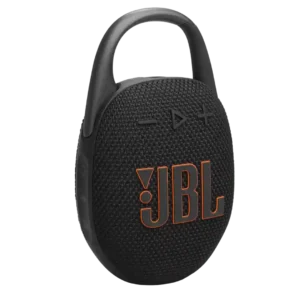
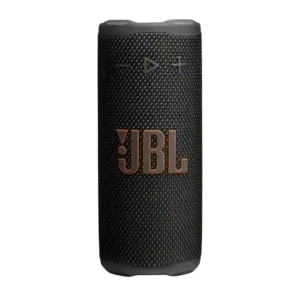
The JBL Portable app is generally straightforward and stable, but it is feature-light and required for key functions like Playtime Boost, stereo pairing, and deeper EQ control.
The JBL Portable app is generally described as easy to use and helpful for EQ, lighting, and firmware updates; one review notes the app may need updating to recognize the speaker.
Compatibility is best within JBL’s newer Auracast ecosystem; reviewers note limitations pairing with older JBL PartyBoost models and that stereo requires a matching Clip 5.
A recurring limitation is that Auracast models do not connect with older JBL speakers that rely on PartyBoost, which multiple reviews call out directly.
Battery life is commonly rated around 12 hours, with real-world tests near 11 to 11.5 hours at moderate volume; higher volume can cut that down, and Playtime Boost can extend runtime but thins bass.
Battery life is mixed: marketing claims are commonly cited (12 hours, or longer with PlayTime Boost), but real-world testing and anecdotes range from middling to strong depending on volume and lighting use.
Codec support is positioned as basic, with reviewers noting the lack of higher-bitrate Bluetooth codec options.
Codec support is repeatedly described as basic (SBC and AAC), with some comparisons pointing out competitors that offer higher-resolution codec options.
Connection stability is generally strong once paired, though one tester reported slow initial pairing with a phone before troubleshooting.
Where explicitly discussed, reviewers report stable Bluetooth performance without dropouts during typical use.
Bluetooth range is described as solid for typical portable use, holding up well when the source device is a reasonable distance away.
Full charging is described around roughly 2.5 to 3 hours, with some reviewers noting there is no fast-charging focus.
Where reported, a full charge is said to take around 3 hours, which is acceptable but not especially fast.
Several reviews describe the sound as coherent and enjoyable for casual listening, with enough presence to avoid sounding thin, despite its single-driver, mono nature.
Buttons are generally described as firm, intuitive, and easy to press, including when hands are wet.
Buttons are typically described as tactile and easy to use, with controls placed for quick access in the vertical orientation.
Design is seen as practical and more premium than earlier generations with lots of color options, but branding can feel bold and the shape does not stand upright easily.
Reviews consistently describe a tall, can-like, vertical design that is easy to stash in bottle pockets and looks purpose-built for travel. The styling and color options are generally praised, though some find the model redundant next to other JBL options.
Reviews consistently call out strong detail for the size, with clearer vocals and better instrument separation than prior models, while acknowledging mono playback limits spaciousness.
Detail is often praised relative to the speaker size, especially for vocals and overall clarity, though it is still seen as less nuanced than larger, higher-end portable speakers.
Most testers say it stays composed at high volume (often with little to no obvious distortion), though a few note treble can turn shrill or slight distortion can appear at extreme levels.
Most reviewers say it stays clean at typical listening levels, but distortion/clipping can appear in edge cases, particularly if you aggressively boost bass via the custom EQ.
Build impressions are rugged, with thicker rubber feet or padding and a durable shell intended to handle everyday knocks and outdoor use.
Multiple reviews frame it as shockproof or drop-resistant, with confidence it can survive real-world bumps and drops; some mention explicit drop claims/tests.
With IP67 dust protection, reviewers treat it as outdoor-ready and well-suited to dusty or sandy environments.
The IP68 rating is repeatedly highlighted, and reviewers treat it as reliably dustproof for outdoor use.
The app provides EQ presets and a customizable multi-band EQ, which many find helpful, although at least one review felt preset changes were subtle.
Reviews frequently praise the inclusion of presets plus a 7-band EQ for tuning. Some warn that extreme low-end boosting can introduce distortion or clipping on bass-heavy material.
Several reviews explicitly state the speaker does not float and will sink if dropped in water.
The tuning is generally balanced with punchy bass and clear highs for the size, but deep bass is naturally limited and Playtime Boost reduces low-end weight noticeably.
Tuning is generally considered good for size, but opinions diverge: some hear balanced, clear audio, while others note limited bass depth, varying treble emphasis, and a more mid-forward default presentation.
The built-in carabiner-style clip is a standout feature, with a taller or wider opening than before and a robust feel that makes it easy to hang on bags, bikes, and fixtures.
The built-in loop is useful for attaching to bags, but multiple reviewers criticize it as small or less versatile than alternatives (for example, a true carabiner-style design).
Inter-speaker connectivity is a major upgrade via Auracast, enabling linking with other compatible speakers and stereo pairing with a second Clip 5.
Auracast is a major highlight: reviewers report it works well for linking with other compatible JBL speakers to expand coverage and output.
Reviewers note low latency for typical phone video watching, though it is not positioned as a primary TV speaker.
One review claims latency is not an issue for watching videos, suggesting acceptable sync performance for casual A/V use.
The rear LED light is seen as a fun mood feature with app control and multiple modes, but it is not very bright, is not beat-synced, and its rear placement can be awkward when you want both the light and the best sound direction.
Across reviews, it gets impressively loud for a micro speaker and is easy to hear outdoors or over shower noise, but it can sound more crowded as you push toward maximum volume.
Across reviews, the Grip is repeatedly described as surprisingly loud for its size, capable of handling outdoor hangs and small-to-medium spaces at higher volume settings.
Auracast and stereo pairing are widely described as easy to use, but stereo pairing requires an identical second Clip 5 and some modes can reset EQ or stay mono.
For supported configurations, linking speakers is described as reliable, including stereo pairing with a second identical Grip and multi-speaker playback via Auracast.
Several reviews report multipoint use (two devices connected) so two people can take turns controlling playback.
One review explicitly notes multipoint pairing support, allowing connection to two devices.
Multiple reviews emphasize the forward, directional nature of the sound, and one notes that clarity can drop if the rear light faces you while the driver points away.
On-device controls are simple and mostly intuitive (volume, play/pause, pairing, Auracast), but some advanced features and configuration live in the app.
On-device controls are considered functional and familiar, including track navigation gestures (for example, multi-press controls) and dedicated pairing/power buttons.
One review explicitly notes you cannot use the USB-C port to charge other devices, so it does not function as a power bank.
Setup is typically quick and simple, with straightforward Bluetooth pairing; one review notes an occasional pairing hiccup that was resolved with a device restart.
Pairing and basic setup are described as straightforward, with familiar JBL controls and easy Bluetooth connection steps.
At least two reviews note that, due to the lack of a microphone, it cannot be used to summon a voice assistant from the speaker.
Multiple sources state there is no microphone, so it cannot be used for calls or speakerphone features.
Reviews clearly state there is no built-in microphone, so it cannot function as a speakerphone.
It uses simple LEDs for status (including low-battery warning), while the app can show a precise battery percentage.
At least one review notes helpful status indication behavior (for example, LED feedback for firmware updates), though some would prefer more at-a-glance battery signaling.
Out of the box it plays in mono, so left-right separation is limited; true stereo requires a second Clip 5, and multi-speaker linking can remain mono depending on mode.
One review highlights recycled materials and frames the lack of included USB-C cable as tied to reducing electronic waste, which supports a modest sustainability angle.
Charging is via USB-C and a cable is typically included, with the port dedicated to charging rather than audio input.
USB-C charging is standard and consistently noted. Some reviews point out the charging cable may not be included, and one mentions needing to let the port dry after wet use.
Most reviews view it as good value around the $80 price point (often discounted), though some competitors offer longer battery life or stronger EQ features for less.
Value is debated: some see it as a strong $100 ultra-portable option with ruggedness and volume, while others argue similarly priced or slightly more expensive rivals deliver better bass, features, or overall sound.
Voices come through clearly for podcasts and talk content, even in noisy environments like a shower, and the app includes a vocal-focused EQ option.
It carries an IP67 rating and is repeatedly used in showers and near water without issues, including brief submersion scenarios described by reviewers.
Waterproofing is a key strength across reviews, with frequent references to IP68 and worry-free use around showers, rain, and poolside conditions.
It is lightweight and easy to carry, but it is slightly bulkier than earlier versions, making pockets less comfortable; the clip reduces the need to pocket-carry it.
At about 385g, reviewers repeatedly call it lightweight and easy to carry around all day, especially for hikes, parks, and day trips.
There is no 3.5mm AUX input and the USB-C port is for charging only, so wired playback is not supported.
Multiple reviews state there is no 3.5mm AUX input, and some also note there is no wired USB audio option, limiting non-Bluetooth use cases.