Average score
P1
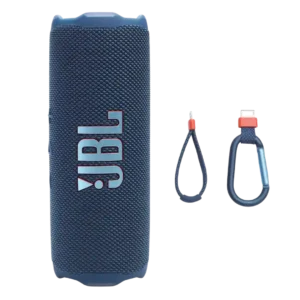
Product 1: JBL Flip 7 Portable Speaker
4.0
P2
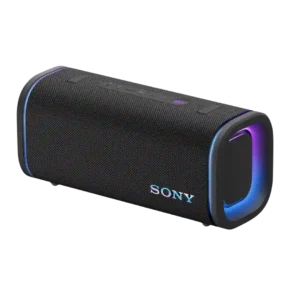
Product 2: Sony ULT Field 5 Speaker
3.9
Amplifier power requirements
P1Product 1: JBL Flip 7 Portable Speaker
No score yet
P2
Product 2: Sony ULT Field 5 Speaker
2.0
One reviewer links the Field 5’s limited output rating to reduced headroom and compression when volume is pushed high.
App reliability
P1
Product 1: JBL Flip 7 Portable Speaker
4.3
The companion app is generally viewed positively, with praise for stability, usefulness, and respect-worthy controls; PCMag found it bare bones but still usable.
P2
Product 2: Sony ULT Field 5 Speaker
3.6
Reviewers generally find Sony’s app useful and easy enough, but one review strongly criticizes the license, access, and update friction.
Audio format support
P1
Product 1: JBL Flip 7 Portable Speaker
4.0
Audio format support is a plus because USB-C can enable higher-resolution or lossless listening, though reviewers caution that the small mono speaker limits the payoff.
P2
Product 2: Sony ULT Field 5 Speaker
4.3
High-resolution LDAC support is treated as a strength for sound quality, with a close-range caveat for the best results.
Backwards compatibility
P1
Product 1: JBL Flip 7 Portable Speaker
1.9
Backwards compatibility is a clear weakness because reviewers repeatedly call out that Flip 7 cannot pair with older JBL PartyBoost speakers.
P2
Product 2: Sony ULT Field 5 Speaker
2.5
Party Connect gives the Field 5 useful Sony ecosystem support, but one reviewer calls out the inability to connect it to the ULT Field 1.
Battery life (if portable)
P1
Product 1: JBL Flip 7 Portable Speaker
3.9
Battery life is mixed: many reviewers found 14 hours or vacation-long use good, while standardized or high-volume testing produced shorter results and Playtime Boost trades away bass.
P2
Product 2: Sony ULT Field 5 Speaker
4.1
Battery life is widely viewed as strong for casual use, though reviewers repeatedly note that lights, ULT modes, and high volume shorten runtime.
Bluetooth codec support
P1
Product 1: JBL Flip 7 Portable Speaker
3.0
Codec support is mixed to weak: some sources criticize SBC-only support, while others note AAC/SBC is adequate for the product context.
P2
Product 2: Sony ULT Field 5 Speaker
4.5
LDAC and the SBC/AAC baseline are repeatedly praised, especially for higher-quality Bluetooth audio, with some range and battery tradeoffs.
Bluetooth connection stability
P1
Product 1: JBL Flip 7 Portable Speaker
4.8
Bluetooth stability is praised as stable, seamless, or hitch-free across several reviews.
P2
Product 2: Sony ULT Field 5 Speaker
4.5
Bluetooth stability is viewed positively, with reviewers citing a stable Bluetooth 5.3 connection and a rock-solid wireless experience.
Bluetooth range
P1
Product 1: JBL Flip 7 Portable Speaker
4.5
Range evidence is positive: one reviewer reported a strong Bluetooth range and another stayed connected around 50 meters away.
P2
Product 2: Sony ULT Field 5 Speaker
4.0
Bluetooth range is generally praised, but LDAC use brings a clear range tradeoff versus AAC/SBC.
Cabinet construction / bracing
P1
Product 1: JBL Flip 7 Portable Speaker
5.0
Reviewers who discussed construction praised the Flip 7 as solid, sturdy, and capable of handling real portable use.
P2
Product 2: Sony ULT Field 5 Speaker
4.5
The enclosure and materials earn strong marks for feeling solid, robust, and premium rather than cheap.
Charging time
P1
Product 1: JBL Flip 7 Portable Speaker
2.7
Charging time is a mild weakness because reviewers cite a 2.5-hour full recharge and no quick-charge support.
P2
Product 2: Sony ULT Field 5 Speaker
4.2
Quick charging is consistently useful, especially the 10-minute top-up claims, though one reviewer finds it less impressive than some rivals.
Cohesive presentation
P1
Product 1: JBL Flip 7 Portable Speaker
5.0
Cohesive presentation is praised by audio-focused reviews describing the Flip 7 as lively, uncluttered, confident, or more mature than older models.
P2
Product 2: Sony ULT Field 5 Speaker
4.3
The speaker is usually described as full, lively, and room-filling, with its bass-forward personality shaping the overall presentation.
Control button responsiveness
P1
Product 1: JBL Flip 7 Portable Speaker
4.5
On-unit buttons are praised as tactile or responsive where reviewers discussed them.
P2
Product 2: Sony ULT Field 5 Speaker
3.0
The ULT button feels satisfying, but the other rubberized buttons are less pleasing by comparison.
Design and aesthetics
P1
Product 1: JBL Flip 7 Portable Speaker
4.5
Design sentiment is mostly positive, with praise for rugged looks, compact styling, and color, though one reviewer said the aggressive casual design will not suit everyone.
P2
Product 2: Sony ULT Field 5 Speaker
4.2
Most reviewers like the rugged, premium look, while a few call the rectangular design plain or boring before the lights come on.
Detail retrieval
P1
Product 1: JBL Flip 7 Portable Speaker
3.6
Detail retrieval varies by reviewer: several praise strong detail, while others find little nuance or limited improvement over Bluetooth.
P2
Product 2: Sony ULT Field 5 Speaker
3.4
Detail retrieval is mixed: some ULT modes add clarity, but bass-heavy tuning can bury small details and cymbal sparkle.
Distortion at high volume
P1
Product 1: JBL Flip 7 Portable Speaker
3.8
High-volume distortion is split: some reviewers heard little or no distortion, while others found harshness, crackly highs, or bass buckling at louder settings.
P2
Product 2: Sony ULT Field 5 Speaker
4.4
Reviewers generally find distortion well controlled at high levels, though this does not eliminate compression or tonal imbalance.
Drop resistance durability
P1
Product 1: JBL Flip 7 Portable Speaker
4.8
Drop durability and ruggedness are strongly supported, with reviewers saying the speaker feels robust and survived or inspired confidence during rough use.
P2
Product 2: Sony ULT Field 5 Speaker
4.3
Durability is a strength, with reviewers praising rugged materials, protected radiators, and resistance to outdoor bumps and knocks.
Dust resistance rating
P1
Product 1: JBL Flip 7 Portable Speaker
5.0
Dust resistance earns positive evidence from IP68 and real-use comments that the fabric and sealed body handle dust and dirt well.
P2
Product 2: Sony ULT Field 5 Speaker
4.0
Dust protection is treated as part of the speaker’s rugged outdoor appeal, especially in IP67-focused reviews.
Dynamic headroom
P1
Product 1: JBL Flip 7 Portable Speaker
5.0
Dynamic headroom is praised by sound-focused reviews, especially for punch, rhythmic expression, and scale for the size.
P2
Product 2: Sony ULT Field 5 Speaker
3.9
ULT modes add energy, punch, and sound pressure, but limited headroom and compression appear when the speaker is pushed hard.
Energy efficiency
P1
Product 1: JBL Flip 7 Portable Speaker
3.5
Energy-related evidence centers on USB-C not draining the source device and Playtime Boost extending battery while reducing sound quality.
P2
Product 2: Sony ULT Field 5 Speaker
2.0
Party lighting is the clearest energy-efficiency complaint because it can sharply reduce playback time.
EQ customization
P1
Product 1: JBL Flip 7 Portable Speaker
4.3
EQ customization is a major strength; reviewers consistently praise the seven-band EQ as useful, impactful, and more flexible than previous Flip models.
P2
Product 2: Sony ULT Field 5 Speaker
3.5
The 10-band EQ is useful, but reviewers often note that it cannot fully recreate or fine-tune Sony’s ULT presets.
Everyday usability
P1
Product 1: JBL Flip 7 Portable Speaker
4.4
Everyday usability is a strength: reviewers describe it as easy to place, easy to start, and pleasant to use across home, travel, and outdoor settings.
P2
Product 2: Sony ULT Field 5 Speaker
4.5
The Field 5 works well for parties, yards, garages, and everyday outdoor use, as long as buyers accept its size and weight.
Frequency response balance
P1
Product 1: JBL Flip 7 Portable Speaker
4.3
Frequency balance receives broad praise for punch, bass, clarity, and balanced sound, but some reviewers found recessed mids, harsh treble, or midrange-heavy tuning.
P2
Product 2: Sony ULT Field 5 Speaker
3.8
The tonal balance is bass-forward and fun, but reviewers repeatedly flag recessed mids, thin highs, or muddy bass in some tracks.
Google
P1
Product 1: JBL Flip 7 Portable Speaker
5.0
Google Fast Pair earned a positive setup note because pairing with a Pixel phone was described as very simple.
P2
Product 2: Sony ULT Field 5 Speaker
4.5
Google Fast Pair is praised for making Android connection fast and uncomplicated.
Handle or strap quality
P1
Product 1: JBL Flip 7 Portable Speaker
4.5
The new PushLock loop/carabiner system is widely praised as useful, secure, and easier for bags, wrists, or outdoor clipping.
P2
Product 2: Sony ULT Field 5 Speaker
4.1
The strap is often considered useful, strong, and convenient, although some reviewers found it fiddly or annoying to attach or remove.
Inter-speaker connectivity
P1
Product 1: JBL Flip 7 Portable Speaker
4.2
Inter-speaker connectivity is useful and often easy with Auracast, though reviewers note limited receive behavior, exact-model stereo requirements, or less mature operation than older PartyBoost.
P2
Product 2: Sony ULT Field 5 Speaker
4.1
Party Connect and stereo pairing are valuable party features, but they keep users inside Sony’s ecosystem and add compatibility caveats.
Latency with TV (lip sync)
P1
Product 1: JBL Flip 7 Portable Speaker
2.6
Latency is a recurring caveat for Bluetooth video or gaming; USB-C can help, but reviewers still warned about lip-sync lag or missing low-latency modes.
P2
Product 2: Sony ULT Field 5 Speaker
5.0
One reviewer reports that latency is not an issue for watching videos on a phone.
LED lighting effects
P1Product 1: JBL Flip 7 Portable Speaker
No score yet
P2
Product 2: Sony ULT Field 5 Speaker
4.2
LED lighting is usually seen as classy, customizable, and worth using, though a few reviewers find it subtle or battery-draining.
Lighting effects
P1Product 1: JBL Flip 7 Portable Speaker
No score yet
P2
Product 2: Sony ULT Field 5 Speaker
4.0
The lighting often improves the otherwise plain design and party feel, but at least one reviewer finds it gimmicky.
Loudness / maximum volume
P1
Product 1: JBL Flip 7 Portable Speaker
4.8
Loudness is one of the strongest points; reviewers repeatedly call it very loud or louder than predecessors for its compact size.
P2
Product 2: Sony ULT Field 5 Speaker
4.6
Maximum volume is one of the strongest points, with many reviewers calling the speaker loud, room-filling, and party-ready.
Low-volume performance
P1
Product 1: JBL Flip 7 Portable Speaker
4.0
Low-volume performance is mixed: one reviewer found low-level separation weak, while others praised bass presence and no-distortion behavior even at low volume.
P2
Product 2: Sony ULT Field 5 Speaker
4.5
Low-volume performance gets direct praise from one reviewer who found 20% volume already sufficient at close range.
Multi-speaker pairing reliability
P1
Product 1: JBL Flip 7 Portable Speaker
4.8
Stereo or group pairing through the app is mostly smooth when supported, but stereo mode requires matching Flip 7 units.
P2
Product 2: Sony ULT Field 5 Speaker
4.8
Multi-speaker pairing is praised when using Sony Party Connect, especially for stable and easy syncing versus current Auracast experiences.
Multipoint connectivity
P1
Product 1: JBL Flip 7 Portable Speaker
4.2
Multipoint is mostly praised as fast or seamless, though one travel review found simultaneous device playback sometimes paused instead of switching smoothly.
P2
Product 2: Sony ULT Field 5 Speaker
4.2
Multipoint connectivity is useful for two people or devices sharing DJ duties without constant reconnecting.
Omnidirectional sound
P1Product 1: JBL Flip 7 Portable Speaker
No score yet
P2
Product 2: Sony ULT Field 5 Speaker
2.5
The Field 5 is not truly omnidirectional; reviewers note reduced expansiveness vertically and wish it offered 360-degree sound.
On-device controls
P1
Product 1: JBL Flip 7 Portable Speaker
4.3
On-device controls are viewed positively, with easy-to-use playback controls and added track-skip behavior noted.
P2
Product 2: Sony ULT Field 5 Speaker
3.5
On-device controls cover the basics and are easy to find, but button sounds and rubbery feel create some usability complaints.
Power bank function
P1
Product 1: JBL Flip 7 Portable Speaker
2.0
Power-bank function is a weakness because reviewers note the Flip 7 cannot charge a phone and one explicitly wanted that for emergencies.
P2
Product 2: Sony ULT Field 5 Speaker
4.4
The power-bank function is consistently treated as handy, practical, and useful for keeping a phone alive during playback.
Price / value for money
P1
Product 1: JBL Flip 7 Portable Speaker
4.2
Price/value sentiment is mostly positive at its launch or sale price, though a few reviewers framed the Flip 7 as a minor or more premium-priced upgrade.
P2
Product 2: Sony ULT Field 5 Speaker
3.9
Value depends on price: reviewers like it at sale or relative-to-rival pricing, but some call the MSRP steep or overpriced.
Privacy and data
P1Product 1: JBL Flip 7 Portable Speaker
No score yet
P2
Product 2: Sony ULT Field 5 Speaker
3.5
Privacy sentiment is mixed: no smart-speaker mic is a plus for one reviewer, while app access requests concern another.
Setup simplicity
P1
Product 1: JBL Flip 7 Portable Speaker
5.0
Setup and pairing are repeatedly described as simple, easy, or usable by almost anyone.
P2
Product 2: Sony ULT Field 5 Speaker
4.0
Setup can be easy for pairing and Party Connect, but Sony’s app update flow created friction in one review.
Smart features
P1
Product 1: JBL Flip 7 Portable Speaker
4.5
Smart-feature sentiment is positive around Auracast, lossless wired audio, EQ, and app-enabled features, with compatibility caveats covered separately.
P2
Product 2: Sony ULT Field 5 Speaker
3.4
Smart extras such as DJ controls, sound optimization, lighting, and app controls are feature-rich but sometimes gimmicky or unused.
Status indicators
P1
Product 1: JBL Flip 7 Portable Speaker
4.5
Status indicators receive positive evidence from a reviewer who found the visible battery percentage especially helpful in the app and on-device indicator.
P2
Product 2: Sony ULT Field 5 Speaker
4.5
The battery/status readout is a small but appreciated convenience.
Stereo imaging accuracy
P1
Product 1: JBL Flip 7 Portable Speaker
2.0
Stereo imaging is limited by the mono design; reviewers repeatedly note little soundstage unless another Flip 7 is added.
P2
Product 2: Sony ULT Field 5 Speaker
3.2
Stereo imaging is limited by the compact driver spacing, even though some reviewers hear a wider-than-box soundstage.
Subwoofer
P1
Product 1: JBL Flip 7 Portable Speaker
2.3
Low-bass/subwoofer capability is limited: reviewers note there is no subwoofer and the smallest low notes or low-end punch are not fully reproduced.
P2
Product 2: Sony ULT Field 5 Speaker
3.0
The speaker has real thump, but one reviewer stresses that it does not reach subwoofer-level rumble.
Surround sound simulation
P1Product 1: JBL Flip 7 Portable Speaker
No score yet
P2
Product 2: Sony ULT Field 5 Speaker
4.5
The wide, detached stage can feel surround-like for a speaker of this size.
USB-C charging
P1
Product 1: JBL Flip 7 Portable Speaker
2.3
USB-C charging is convenient, but reviewers criticize the missing cable and lack of quick-charge or included accessories.
P2
Product 2: Sony ULT Field 5 Speaker
4.5
USB-C charging is viewed positively, especially because the port does what reviewers expect and also supports related power features.
Value for money
P1
Product 1: JBL Flip 7 Portable Speaker
4.5
Overall value for money is strongly positive across reviews, with repeated no-brainer and good-buy language despite some cheaper competitors.
P2
Product 2: Sony ULT Field 5 Speaker
4.1
Reviewers see strong value when discounted or compared with smaller rivals, but cheaper alternatives still challenge it.
Voice clarity
P1
Product 1: JBL Flip 7 Portable Speaker
4.4
Voice clarity is generally positive, with several reviewers calling vocals clear or communicative, though one found vocals distant once bass entered.
P2
Product 2: Sony ULT Field 5 Speaker
3.4
Voice and vocal clarity are mixed: vocals can cut through, but heavy bass and high volume can push voices back or roughen them.
Water resistance rating
P1
Product 1: JBL Flip 7 Portable Speaker
4.9
Water and dust durability is a major strength, with repeated praise for IP68 readiness around pools, beaches, rain, sand, and travel.
P2
Product 2: Sony ULT Field 5 Speaker
4.4
Water resistance gives reviewers confidence around pools, rain, splashes, and outdoor use.
Weight convenience
P1
Product 1: JBL Flip 7 Portable Speaker
4.3
The Flip 7 is consistently treated as portable and compact, although one reviewer noted it has more heft than expected.
P2
Product 2: Sony ULT Field 5 Speaker
2.8
Weight is a repeated drawback; the speaker is portable with a strap, but several reviewers call it bulky or heavy.
Wired input
P1
Product 1: JBL Flip 7 Portable Speaker
3.9
USB-C wired audio is a valued addition and often easy to activate, but reviewers disagree on how much sonic improvement it delivers and one could not get it working.
P2
Product 2: Sony ULT Field 5 Speaker
4.4
The wired AUX input is considered a useful advantage, especially versus smaller or competing models that omit it.