Average score
P1
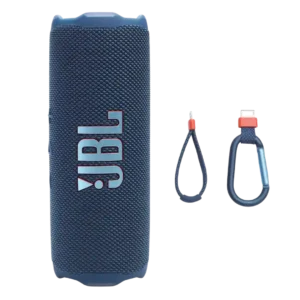
Product 1: JBL Flip 7 Portable Speaker
3.7
P2
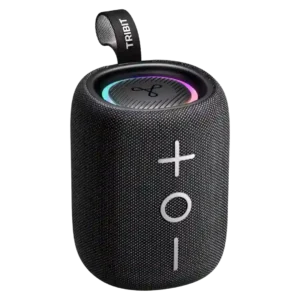
Product 2: Tribit StormBox Mini+ Bluetooth Speaker
3.8
App reliability
P1
Product 1: JBL Flip 7 Portable Speaker
4.1
The JBL Portable app is commonly described as stable and straightforward, adding speaker grouping, firmware updates, and EQ; a few call it bare-bones but functional.
P2
Product 2: Tribit StormBox Mini+ Bluetooth Speaker
3.7
The Tribit app is usually described as simple and functional for EQ, lighting control, and firmware, but not polished. A recurring complaint is that firmware updates or app behavior can be finicky for some users.
Audio format support
P1
Product 1: JBL Flip 7 Portable Speaker
3.9
USB-C wired playback is reported to support lossless/hi-res sources in several reviews, but some hear only subtle gains versus Bluetooth and one reviewer could not get USB audio working, making it somewhat setup-dependent.
P2Product 2: Tribit StormBox Mini+ Bluetooth Speaker
No score yetBackwards compatibility
P1
Product 1: JBL Flip 7 Portable Speaker
1.7
Backwards compatibility is a consistent negative: many sources state Flip 7 cannot pair with older PartyBoost/Flip generations, and stereo pairing requires another Flip 7.
P2Product 2: Tribit StormBox Mini+ Bluetooth Speaker
No score yetBattery life (if portable)
P1
Product 1: JBL Flip 7 Portable Speaker
3.8
Battery claims cluster around 14 hours (up to 16 with Playtime Boost), but real results vary widely by volume/EQ: some report multi-day casual use, while one standardized test measured about 6 hours at steady 80dB.
P2
Product 2: Tribit StormBox Mini+ Bluetooth Speaker
3.9
Battery life is usually framed as respectable rather than class-leading. Reviews commonly cite around a day of casual use, with several reporting roughly 9–13 hours depending on volume and whether lighting is enabled.
Bluetooth codec support
P1
Product 1: JBL Flip 7 Portable Speaker
2.7
Codec support is described as limited: several reviews say SBC-only, while a few mention AAC alongside SBC; there is no consistent report of higher-end codecs like aptX.
P2
Product 2: Tribit StormBox Mini+ Bluetooth Speaker
3.9
Codec support is commonly described as SBC and AAC, which is convenient for broad compatibility (including iPhone-friendly AAC). Several note the absence of higher-end codecs like aptX.
Bluetooth connection stability
P1
Product 1: JBL Flip 7 Portable Speaker
4.6
Bluetooth stability is widely praised, with most reporting solid connection in typical indoor/outdoor use.
P2
Product 2: Tribit StormBox Mini+ Bluetooth Speaker
4.4
Bluetooth stability is consistently rated as strong, with multiple reviewers reporting quick pairing, reliable reconnection, and few or no dropouts during typical indoor and outdoor use.
Bluetooth range
P1
Product 1: JBL Flip 7 Portable Speaker
4.4
Range impressions are positive, including reports of maintaining connection across large rooms and outdoor distances (one reviewer cites about 50 meters), though real range depends on environment.
P2
Product 2: Tribit StormBox Mini+ Bluetooth Speaker
4.1
Bluetooth range is generally described as strong for the class, with some citing around 30 meters / 100 feet under favorable conditions. Real-world walls still affect reach, but reviewers commonly report reliable coverage around a home or yard.
Charging time
P1
Product 1: JBL Flip 7 Portable Speaker
3.5
Multiple sources cite recharge time around 2.5 hours, with notes that there is no fast-charge feature and a charger/cable may not be included.
P2
Product 2: Tribit StormBox Mini+ Bluetooth Speaker
3.9
Charging time is frequently cited around 2.5 hours for a full charge. Some reviewers wish for a faster top-up feature, but overall recharge speed is treated as acceptable at the price.
Cohesive presentation
P1
Product 1: JBL Flip 7 Portable Speaker
4.5
Overall presentation is commonly described as energetic and composed for a compact portable, but dissenting takes call out midrange muddiness or less refined sound depending on genre and volume.
P2
Product 2: Tribit StormBox Mini+ Bluetooth Speaker
3.6
Overall cohesion is usually described as balanced and listenable across many genres for a budget mini speaker. The biggest threat to cohesion is when volume rises high, where some hear muddiness, thinning, or compression.
Control button responsiveness
P1
Product 1: JBL Flip 7 Portable Speaker
4.3
Physical controls are generally described as tactile and responsive, with a cleaner layout and backlit buttons on some controls improving usability.
P2
Product 2: Tribit StormBox Mini+ Bluetooth Speaker
4.2
Buttons are generally described as clicky, tactile, and easy to press. One recurring drawback is that the large front buttons may not be illuminated, making them harder to use in the dark compared with backlit controls.
Design and aesthetics
P1
Product 1: JBL Flip 7 Portable Speaker
4.1
Design feedback is largely positive (rugged, fun colors, familiar Flip shape), though a few describe the styling as casual or less elegant than some rivals.
P2
Product 2: Tribit StormBox Mini+ Bluetooth Speaker
4.1
Design is often described as premium-looking for the price, with a durable fabric wrap and rubberized end caps. Some call it derivative of JBL or UE styling, but most still view it as clean, practical, and attractive.
Detail retrieval
P1
Product 1: JBL Flip 7 Portable Speaker
3.4
Detail is often judged strong for a speaker this small, but several reviewers still note limited nuance and separation in busy tracks (especially orchestral/classical) compared with larger or stereo speakers.
P2
Product 2: Tribit StormBox Mini+ Bluetooth Speaker
4.0
Detail retrieval is commonly described as good for the price, with some reviewers impressed by how it handles vocals and lighter arrangements. Others note that top-end sparkle and fine texture can be reduced, especially at high volume or with dense mixes.
Distortion at high volume
P1
Product 1: JBL Flip 7 Portable Speaker
3.8
AI Sound Boost and the updated driver/tweeter are frequently credited with keeping distortion low, but multiple tests still note sibilance/harshness or occasional crackle when volume is pushed high.
P2
Product 2: Tribit StormBox Mini+ Bluetooth Speaker
3.2
High-volume performance is mixed: some reviewers hear distortion or compression as volume climbs (often around the upper range), while others report surprisingly low distortion for the size. Expect the cleanest sound at moderate listening levels.
Drop resistance durability
P1
Product 1: JBL Flip 7 Portable Speaker
4.5
Durability is a standout theme: reviewers emphasize reinforced bumpers/endcaps and commonly cite drop-proof claims around 1 meter onto hard surfaces.
P2
Product 2: Tribit StormBox Mini+ Bluetooth Speaker
4.6
Durability impressions are strong for the price: reviewers describe a robust build and at least one notes repeated drops without problems. The fabric-and-rubber construction is widely viewed as travel-friendly.
Dust resistance rating
P1
Product 1: JBL Flip 7 Portable Speaker
4.9
Dust resistance is consistently described as fully dustproof (often as part of IP68), positioning it as well-suited for sand, trails, and outdoor use.
P2
Product 2: Tribit StormBox Mini+ Bluetooth Speaker
2.0
Dust resistance is a clear weak spot because the speaker is not dust-rated. Some reviewers are comfortable using it outdoors, but multiple sources caution that beach sand and fine dust are the bigger risk compared with water.
Dynamic headroom
P1
Product 1: JBL Flip 7 Portable Speaker
4.2
Dynamic headroom is frequently praised, with reviewers noting it can be pushed louder than expected for the form factor, though some caution that tonality can harden at very high levels.
P2
Product 2: Tribit StormBox Mini+ Bluetooth Speaker
3.4
Dynamic headroom is limited by size and DSP behavior: several reviews describe compression, reduced dynamics, or a dip in quality when pushed loud. At moderate volumes, it is generally considered enjoyable and composed.
EQ customization
P1
Product 1: JBL Flip 7 Portable Speaker
4.3
The move to a 7-band EQ is a major usability win and is frequently praised; caveats include Playtime Boost disabling EQ adjustments and some complaints about not saving multiple custom profiles.
P2
Product 2: Tribit StormBox Mini+ Bluetooth Speaker
3.9
EQ customization is a key upgrade and is repeatedly mentioned as genuinely useful, often with 9-band custom EQ plus presets. Some wish for specific features like stronger bass modes, but the ability to tune and save settings is a strong value add.
Float capability
P1
Product 1: JBL Flip 7 Portable Speaker
4.0
One review claims the Flip 7 can float while playing, but this is not consistently verified across sources, so treat it as a nice-to-have rather than a core guarantee.
P2
Product 2: Tribit StormBox Mini+ Bluetooth Speaker
4.5
Float capability is reported by at least one reviewer who observed it floating (notably upside down). This is treated as a practical bonus for pool use rather than a core buying factor.
Frequency response balance
P1
Product 1: JBL Flip 7 Portable Speaker
3.8
Most reviewers hear punchy, fun tuning with good bass for the size, but some report a V-shaped balance (boosted bass/treble), midrange that can feel recessed or shouty, and thinner sound when Playtime Boost is enabled.
P2
Product 2: Tribit StormBox Mini+ Bluetooth Speaker
3.8
Frequency balance is generally praised as even and vocal-friendly for the price, though bass depth remains the common constraint of the small enclosure. Some reviews describe punchy bass for the size, while others find it thin or absent.
Google
P1
Product 1: JBL Flip 7 Portable Speaker
4.5
Android setup is described as especially easy thanks to Google Fast Pair, making initial connection quick for supported phones.
P2Product 2: Tribit StormBox Mini+ Bluetooth Speaker
No score yetHandle or strap quality
P1
Product 1: JBL Flip 7 Portable Speaker
4.3
The new PushLock loop/carabiner system is widely praised for portability and security, with most calling it a meaningful upgrade over the older simple loop.
P2
Product 2: Tribit StormBox Mini+ Bluetooth Speaker
4.3
The strap / lanyard is consistently described as useful for carrying, hanging, or clipping to a bag. It is commonly treated as a practical portability feature rather than a gimmick.
Inter-speaker connectivity
P1
Product 1: JBL Flip 7 Portable Speaker
4.2
Auracast is widely highlighted for linking compatible speakers (and two Flip 7s for stereo), though some note Auracast is used mainly for broadcasting and cannot bridge to older PartyBoost models.
P2
Product 2: Tribit StormBox Mini+ Bluetooth Speaker
4.4
Inter-speaker connectivity is broadly praised: multiple reviews describe stereo pairing as effective and easy enough, and several suggest buying two units is the best way to level up the experience. A key limitation is that wired AUX use can disable Bluetooth features like pairing.
Latency with TV (lip sync)
P1
Product 1: JBL Flip 7 Portable Speaker
2.6
Latency feedback is mixed: several reviewers note noticeable Bluetooth lag and no dedicated low-latency gaming mode, while others say it is fine for casual video; USB-C can reduce lag but may not eliminate it in every app.
P2Product 2: Tribit StormBox Mini+ Bluetooth Speaker
No score yetLighting effects
P1Product 1: JBL Flip 7 Portable Speaker
No score yet
P2
Product 2: Tribit StormBox Mini+ Bluetooth Speaker
3.6
No summary yet.
Loudness / maximum volume
P1
Product 1: JBL Flip 7 Portable Speaker
4.5
Nearly every reviewer calls the Flip 7 impressively loud for its size, often needing only mid-range volume levels for small rooms or outdoor hangs; several warn that pushing it hard can sound harsher.
P2
Product 2: Tribit StormBox Mini+ Bluetooth Speaker
3.7
Maximum volume is often described as more than enough for small rooms and intimate outdoor use, but not designed to cover big groups. Several reviews frame it as loud for its size, yet still not a true party speaker.
Low-volume performance
P1
Product 1: JBL Flip 7 Portable Speaker
3.0
Low-volume listening is generally described as enjoyable with audible bass presence, but some note separation improves at higher volumes and Playtime Boost changes the tonal balance noticeably.
P2
Product 2: Tribit StormBox Mini+ Bluetooth Speaker
4.0
Low-volume performance is generally solid, with multiple reviewers noting that it sounds best or most consistent at moderate levels. Some explicitly recommend keeping volume lower for the cleanest result.
Multi-speaker pairing reliability
P1
Product 1: JBL Flip 7 Portable Speaker
4.1
Auracast/Party Together multi-speaker grouping is generally described as easy and reliable with newer compatible JBL models, though a few note the older PartyBoost ecosystem can feel more mature and stable.
P2Product 2: Tribit StormBox Mini+ Bluetooth Speaker
No score yetMultipoint connectivity
P1
Product 1: JBL Flip 7 Portable Speaker
4.2
Multipoint is often reported as fast and seamless, but at least one reviewer experienced pausing instead of clean source switching when two paired devices played at once.
P2
Product 2: Tribit StormBox Mini+ Bluetooth Speaker
1.5
Multipoint support is called out as missing in at least one review, meaning it is best treated as a single-device speaker rather than something you can keep paired to multiple sources simultaneously.
Omnidirectional sound
P1Product 1: JBL Flip 7 Portable Speaker
No score yet
P2
Product 2: Tribit StormBox Mini+ Bluetooth Speaker
3.9
360-degree / omnidirectional coverage is debated: several reviewers report consistent sound around the speaker and like the dispersion, while others argue the 360 claim feels more like marketing and is less convincing in practice.
On-device controls
P1
Product 1: JBL Flip 7 Portable Speaker
4.0
On-speaker controls are generally straightforward and tactile (play/pause, volume, power, Bluetooth, Auracast); some reviewers also highlight new shortcuts like track navigation and the wired-audio activation via the play button.
P2
Product 2: Tribit StormBox Mini+ Bluetooth Speaker
4.1
On-device controls are widely considered straightforward and usable, with large, tactile buttons and dedicated power, Bluetooth, and lighting controls. Low-light usability varies depending on which buttons are illuminated.
Power bank function
P1
Product 1: JBL Flip 7 Portable Speaker
1.0
At least one reviewer explicitly notes you cannot use the Flip 7 as a power bank to charge your phone via USB-C.
P2Product 2: Tribit StormBox Mini+ Bluetooth Speaker
No score yetSetup simplicity
P1
Product 1: JBL Flip 7 Portable Speaker
4.4
Setup is repeatedly described as simple: power on, pair quickly (often aided by Fast Pair), and optionally use the app for deeper controls.
P2
Product 2: Tribit StormBox Mini+ Bluetooth Speaker
4.6
Setup is repeatedly characterized as low-maintenance, with quick pairing and reliable reconnection. Stereo pairing is also described as straightforward once you learn the button sequence.
Soundstage height
P1
Product 1: JBL Flip 7 Portable Speaker
1.8
Soundstage is commonly described as narrow due to mono playback; reviewers who test classical/orchestral especially note a confined presentation with instruments blending together.
P2Product 2: Tribit StormBox Mini+ Bluetooth Speaker
No score yetSpeakerphone quality
P1
Product 1: JBL Flip 7 Portable Speaker
1.0
Multiple sources explicitly say the Flip 7 lacks a microphone, so it cannot function as a speakerphone for calls.
P2
Product 2: Tribit StormBox Mini+ Bluetooth Speaker
3.5
Speakerphone quality is useful but inconsistent: some report clear calls at close range, while others describe the mic as mediocre or low-gain, requiring you to stay nearby for best results.
Status indicators
P1
Product 1: JBL Flip 7 Portable Speaker
4.5
Status feedback is generally good, including battery indicators on the speaker and in-app percentage readouts; some reviewers also mention warnings/indicators around charging when wet.
P2
Product 2: Tribit StormBox Mini+ Bluetooth Speaker
2.4
Status indicators are viewed as underdeveloped: at least one review notes no clear volume indicator and limited battery indication behavior on the device, even though some buttons may be illuminated for easier use in the dark.
Stereo imaging accuracy
P1
Product 1: JBL Flip 7 Portable Speaker
1.9
The Flip 7 is repeatedly described as a mono speaker with limited imaging; real stereo is possible only by pairing a second Flip 7.
P2
Product 2: Tribit StormBox Mini+ Bluetooth Speaker
3.9
Stereo imaging is limited on a single unit because the drivers are close together, so separation can feel modest. Pairing two units for true wireless stereo is consistently reported to improve width and channel separation.
Sustainability
P1
Product 1: JBL Flip 7 Portable Speaker
4.5
One review highlights the use of recycled materials (recycled plastics and fabric), suggesting JBL is making tangible moves toward more sustainable construction.
P2Product 2: Tribit StormBox Mini+ Bluetooth Speaker
No score yetUSB-C charging
P1
Product 1: JBL Flip 7 Portable Speaker
4.2
USB-C is the standard charging method and is treated as expected for the category; some reminders note you may need to let the port dry before charging after water exposure.
P2
Product 2: Tribit StormBox Mini+ Bluetooth Speaker
4.6
USB-C charging is consistently confirmed and treated as a modern convenience. Ports are typically behind a rubber cover that must be sealed for water resistance.
Value for money
P1
Product 1: JBL Flip 7 Portable Speaker
3.9
Most reviewers see strong value at the $149 price given the durability and sound, but a few highlight cheaper rivals that add speakerphone functions or higher-res Bluetooth codecs; sale pricing materially improves the value case.
P2
Product 2: Tribit StormBox Mini+ Bluetooth Speaker
4.4
Value for money is a standout theme: most reviews position it as one of the better $40-class speakers due to waterproofing, stereo pairing, and usable sound. A minority view is more negative when judging sound quality versus competitors like JBL at similar prices.
Voice assistant responsiveness
P1Product 1: JBL Flip 7 Portable Speaker
No score yet
P2
Product 2: Tribit StormBox Mini+ Bluetooth Speaker
3.4
Voice assistant access is supported via the speaker controls and phone integration, and reviewers report that it works, but loudness and responsiveness can vary. Some note assistant responses can be quieter than expected.
Voice clarity
P1Product 1: JBL Flip 7 Portable Speaker
No score yet
P2
Product 2: Tribit StormBox Mini+ Bluetooth Speaker
4.2
Voice and vocal clarity is a frequent positive point, especially for podcasts and vocal-forward tracks, with multiple reviewers noting clear mids. The clarity can soften when volume is pushed high or the mix is very dense.
Water resistance rating
P1
Product 1: JBL Flip 7 Portable Speaker
4.7
Most reviews cite an IP68 rating with submersion around 1.5 meters for 30 minutes; a couple sources mention IP67, but overall consensus is that water resistance is class-leading for the size.
P2
Product 2: Tribit StormBox Mini+ Bluetooth Speaker
4.6
IPX7 waterproofing is one of the most consistent strengths across reviews, with repeated mentions of shower, poolside, splashes, and even brief submersion scenarios without issue (when port covers are sealed).
Weight convenience
P1Product 1: JBL Flip 7 Portable Speaker
No score yet
P2
Product 2: Tribit StormBox Mini+ Bluetooth Speaker
3.5
No summary yet.
Wired input
P1
Product 1: JBL Flip 7 Portable Speaker
4.1
USB-C wired audio is a headline addition and is often described as easy to activate, but at least one reviewer reported they could not get wired audio working reliably on their devices.
P2
Product 2: Tribit StormBox Mini+ Bluetooth Speaker
4.5
Wired input availability is a highlight: multiple reviews mention a 3.5mm AUX input as a rare inclusion on a waterproof mini speaker, adding flexibility for devices that benefit from a cable. AUX input is appreciated for flexibility, but at least one review notes that using AUX disables the Bluetooth connection and can prevent stereo pairing, which limits how you can use wired sources.