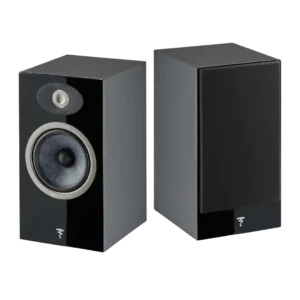
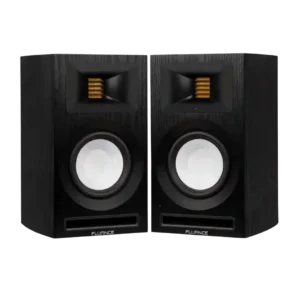
Aesthetic design / Finish options
P1
Product 1: Focal Theva N.1 Speakers
3.6
Finish and styling reactions are mixed: reviewers praised color choices, elegance, and convincing vinyl, but also called the finish merely OK or less premium than rivals.
P2
Product 2: Fluance Ri71 Reference Powered Bookshelf...
4.1
Reviewers generally liked the finish choices and living-room fit, especially walnut, though a few found the styling dated or visually specific.
Amplifier power requirements
P1
Product 1: Focal Theva N.1 Speakers
4.2
Most reviewers found the Theva No.1 easy to drive, with benign amplifier demands, though one noted it benefits from an amplifier with extra grunt and another heard gains with better amplification.
P2
Product 2: Fluance Ri71 Reference Powered Bookshelf...
4.5
Reviewers who discussed power felt the built-in amplification saved space and provided enough drive for the Ri71’s intended small-to-medium-room use.
Bluetooth connection stability
P1Product 1: Focal Theva N.1 Speakers
No score yet
P2
Product 2: Fluance Ri71 Reference Powered Bookshelf...
4.8
Bluetooth pairing and everyday wireless use were described as easy, reliable, or effortless across the supporting reviews.
Cabinet construction / bracing
P1
Product 1: Focal Theva N.1 Speakers
3.6
Cabinet impressions are generally solid but not luxurious; reviewers cited sturdy materials and reasonable solidity, while noting budget feel or slight cabinet-related coloration.
P2
Product 2: Fluance Ri71 Reference Powered Bookshelf...
4.2
Cabinet build was mostly praised as solid, dense, sturdy, or better than expected, with one reviewer calling the class-average construction less substantive.
Cohesive presentation
P1
Product 1: Focal Theva N.1 Speakers
4.4
Reviewers praised the speaker’s organized, coherent, fluid, and relaxed presentation across music, with the main character leaning smooth rather than aggressively analytical.
P2
Product 2: Fluance Ri71 Reference Powered Bookshelf...
4.3
Reviewers described the Ri71 as musically confident, cohesive, polished, and engaging, while one Bluetooth rock comparison produced a more mixed result.
Control button responsiveness
P1Product 1: Focal Theva N.1 Speakers
No score yet
P2
Product 2: Fluance Ri71 Reference Powered Bookshelf...
3.3
Button and knob response was split: one reviewer praised clicky positive remote buttons, while another disliked the feel and speed of the volume control.
Design and aesthetics
P1
Product 1: Focal Theva N.1 Speakers
4.1
Design feedback is mostly positive, with tasteful finishes, elegant looks, and a clean form factor, although several reviews describe the design as budget-conscious rather than premium.
P2
Product 2: Fluance Ri71 Reference Powered Bookshelf...
3.8
Design reactions were mixed-positive: several liked the attractive, functional look, while others called the finish old-fashioned or not visually subtle.
Detail retrieval
P1
Product 1: Focal Theva N.1 Speakers
4.2
Detail retrieval is a consistent strength, with reviewers hearing crisp percussion, clear treble, pronounced shifts, and detailed musical textures without consistently calling it ultra-revealing.
P2
Product 2: Fluance Ri71 Reference Powered Bookshelf...
4.6
Detail retrieval was one of the strongest themes, with reviewers repeatedly praising AMT treble clarity, nuance, texture, and high-frequency insight.
Dialogue clarity (for TV/soundbar use)
P1
Product 1: Focal Theva N.1 Speakers
4.6
Dialogue clarity is strongly praised in movie and TV use, with reviewers describing dialogue as clear, intelligible, and terrific.
P2
Product 2: Fluance Ri71 Reference Powered Bookshelf...
4.4
TV dialogue evidence was consistently positive, with speech described as centered, clear, intelligible, and easy to follow.
Distortion at high volume
P1
Product 1: Focal Theva N.1 Speakers
4.1
High-volume behavior is mostly composed and low in audible distortion, though reviewers noted low-frequency compression and some vocal energy or cabinet coloration at higher levels.
P2
Product 2: Fluance Ri71 Reference Powered Bookshelf...
3.8
Most reviewers found the Ri71 clean at normal-to-loud levels, but several noted honkiness, edge, harshness, or limits when pushed very hard.
Dynamic headroom
P1
Product 1: Focal Theva N.1 Speakers
4.5
Dynamic performance is a major strength: reviewers describe strong dynamic reach, unconstrained crescendos, punchy delivery, and lively movie impact.
P2
Product 2: Fluance Ri71 Reference Powered Bookshelf...
4.3
Dynamic range was generally praised as solid or very good for the class, especially within reasonable room size and volume expectations.
Frequency response balance
P1
Product 1: Focal Theva N.1 Speakers
4.1
Tonal balance is usually described as smooth, full, and even, but treble exposure and brightness with poor recordings keep it from being universally neutral.
P2
Product 2: Fluance Ri71 Reference Powered Bookshelf...
4.3
Frequency balance was widely described as neutral, well-balanced, controlled, and suited to many genres, with only minor caveats around bass or midrange voicing.
Home theater integration
P1
Product 1: Focal Theva N.1 Speakers
4.3
The Theva No.1 is viewed as a strong home theater option, especially as part of a surround setup, provided users add subwoofer support for deeper movie effects.
P2
Product 2: Fluance Ri71 Reference Powered Bookshelf...
4.3
Reviewers broadly supported the Ri71 as a TV/soundbar alternative, while still treating it as stereo enhancement rather than full surround home theater.
Inter-speaker connectivity
P1Product 1: Focal Theva N.1 Speakers
No score yet
P2
Product 2: Fluance Ri71 Reference Powered Bookshelf...
3.7
Inter-speaker setup evidence was mixed: standard wire and channel swapping were useful, but raw-wire handling drew criticism.
Loudness / maximum volume
P1
Product 1: Focal Theva N.1 Speakers
4.6
The speaker earns strong marks for loudness, with reviewers saying it plays loud, fills rooms easily, and can hit high peaks without obvious strain.
P2
Product 2: Fluance Ri71 Reference Powered Bookshelf...
4.2
Loudness was considered sufficient for small-to-medium rooms and TV use, though reviewers cautioned against expecting party-speaker output.
Low-volume performance
P1
Product 1: Focal Theva N.1 Speakers
3.1
Low-volume performance is mixed: one review says it loses balance when played quietly, another calls it average, while a third finds it engaging at virtually all volumes.
P2
Product 2: Fluance Ri71 Reference Powered Bookshelf...
4.5
Low-volume evidence was positive, noting retained body, presence, and detail in quieter listening or scenes.
Magnetic mounting
P1
Product 1: Focal Theva N.1 Speakers
4.2
Magnetic grille attachment is praised for a cleaner, more understated look, even though reviewers discuss it as grille integration rather than speaker wall mounting.
P2Product 2: Fluance Ri71 Reference Powered Bookshelf...
No score yetOmnidirectional sound
P1
Product 1: Focal Theva N.1 Speakers
4.5
Wide horizontal coverage is praised in one technical review, which says the speaker offers broad, balanced listening coverage without many bad seats.
P2
Product 2: Fluance Ri71 Reference Powered Bookshelf...
4.5
One measured/listening review praised wide, even coverage, supporting a broad listening area rather than a tiny sweet spot.
On-device controls
P1Product 1: Focal Theva N.1 Speakers
No score yet
P2
Product 2: Fluance Ri71 Reference Powered Bookshelf...
3.8
On-device controls were divisive: some found the top/rear volume control substantial and accessible, while others disliked its placement, speed, or learning curve.
optical
P1Product 1: Focal Theva N.1 Speakers
No score yet
P2
Product 2: Fluance Ri71 Reference Powered Bookshelf...
2.2
The missing optical input was one of the most repeated connectivity complaints, especially for older TVs, PCs, and comparison with related models.
Price
P1
Product 1: Focal Theva N.1 Speakers
3.6
Price reactions are mixed but lean positive: several reviewers call the performance attractive around $1,000, while others warn the price is competitive or potentially off-putting.
P2
Product 2: Fluance Ri71 Reference Powered Bookshelf...
4.4
Price evidence was strongly favorable overall, with reviewers calling the Ri71 affordable, competitive, or a bargain, though one said it was not a steal.
Setup simplicity
P1
Product 1: Focal Theva N.1 Speakers
4.2
Setup is generally easy and not especially fussy, though the rear port means the speaker benefits from space behind it and careful toe-in.
P2
Product 2: Fluance Ri71 Reference Powered Bookshelf...
4.8
Setup was consistently described as easy, straightforward, plug-and-play, dead simple, or hassle-free.
Stereo imaging accuracy
P1
Product 1: Focal Theva N.1 Speakers
4.5
Stereo imaging is one of the clearest strengths, with repeated praise for focused layering, center imaging, soundstage width/depth, and precise placement.
P2
Product 2: Fluance Ri71 Reference Powered Bookshelf...
4.5
Stereo imaging was repeatedly praised, with reviewers noting centered vocals, wide soundstage, precise placement, and convincing left-right motion.
Subwoofer
P1
Product 1: Focal Theva N.1 Speakers
3.3
Bass is respectable for a bookshelf speaker, but reviewers repeatedly recommend a subwoofer for deep bass, home theater impact, larger rooms, or bass-heavy music.
P2
Product 2: Fluance Ri71 Reference Powered Bookshelf...
4.3
Subwoofer support was considered valuable, both for deeper bass and for relieving the speakers of low-frequency strain.
Value for money
P1
Product 1: Focal Theva N.1 Speakers
4.4
Value sentiment is positive overall, with reviewers saying the speakers earn their price, offer strong performance near $1,000, and compare well against pricier alternatives.
P2
Product 2: Fluance Ri71 Reference Powered Bookshelf...
4.5
Value evidence was very strong overall, with reviewers repeatedly saying performance, features, and sound quality punch above the price, despite connectivity tradeoffs.
Voice clarity
P1
Product 1: Focal Theva N.1 Speakers
4.3
Vocal clarity is praised, with reviewers describing vocals as clear, articulate, commanding, and textured, though one notes room energy can rise at high volume.
P2
Product 2: Fluance Ri71 Reference Powered Bookshelf...
4.5
Voice clarity was praised in music and vocal-centric content, with vocals described as natural, clear, centered, and detailed.
Weight convenience
P1
Product 1: Focal Theva N.1 Speakers
4.1
Weight convenience is lightly but positively supported, with reviewers describing the speaker as lightweight and not too heavy.
P2
Product 2: Fluance Ri71 Reference Powered Bookshelf...
4.1
Reviewers who discussed size and weight found the speakers manageable for desks, stands, shelves, TV consoles, or ordinary living spaces.
Wired input
P1
Product 1: Focal Theva N.1 Speakers
2.0
Wired input usability has one clear complaint: a reviewer using banana plugs could not remove the binding-post caps and had to switch cables.
P2
Product 2: Fluance Ri71 Reference Powered Bookshelf...
3.7
Wired-input evidence was mixed: RCA/HDMI flexibility helped, but limited USB, optical, and broader digital input options were recurring drawbacks.