App reliability
P1
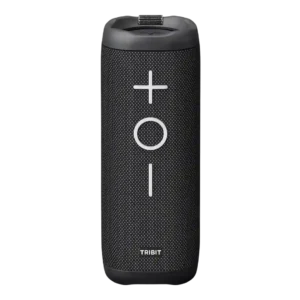
Product 1: Tribit StormBox 2 Bluetooth Speaker
4.0
The Tribit app is generally considered useful and easy enough for EQ changes, battery checks, and firmware updates. The downside is that it can feel basic or a little quirky, with a few reviewers noting bugs, missing options, or odd EQ behavior.
P2
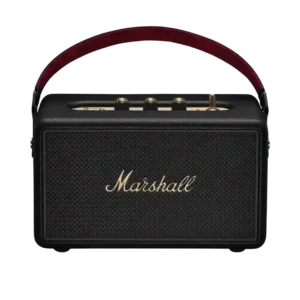
Product 2: Marshall Kilburn III Portable Bluetooth...
4.1
The Marshall app is generally viewed as useful for EQ, placement compensation, and battery features, but there are reports of occasional pairing/setup friction and some early-stage quirks around broadcast features.
Battery life (if portable)
P1
Product 1: Tribit StormBox 2 Bluetooth Speaker
4.5
Battery life is one of the StormBox 2's most consistent wins. Across reviews, real-world endurance generally lands around the 24-hour claim or close enough to feel excellent for the size and price, especially for outdoor use.
P2
Product 2: Marshall Kilburn III Portable Bluetooth...
4.9
Battery life is consistently described as class-leading around 50 hours, with several reviewers noting it lasts days to over a week in normal use and dramatically outclasses many rivals in this size.
Bluetooth codec support
P1Product 1: Tribit StormBox 2 Bluetooth Speaker
No score yet
P2
Product 2: Marshall Kilburn III Portable Bluetooth...
3.1
Codec support is repeatedly called basic, commonly described as SBC/AAC (and LC3 in some coverage), with reviewers noting the absence of higher-end options like LDAC or aptX Adaptive.
Bluetooth connection stability
P1
Product 1: Tribit StormBox 2 Bluetooth Speaker
4.7
Connection stability is praised across the reviews that address it. Pairing and playback are generally described as reliable, with Bluetooth 5.3 helping the speaker maintain a strong link to phones and other devices.
P2
Product 2: Marshall Kilburn III Portable Bluetooth...
4.6
Bluetooth stability is largely reported as solid and reliable, with few dropouts mentioned during typical use, though broadcast-style features are not always seamless depending on devices.
Bluetooth range
P1
Product 1: Tribit StormBox 2 Bluetooth Speaker
4.6
Bluetooth range is a clear strength. Reviewers repeatedly praised stable long-distance performance, with line-of-sight use described as strong and range claims generally holding up well in real use.
P2
Product 2: Marshall Kilburn III Portable Bluetooth...
4.4
Reported range aligns with typical expectations for the class, with at least one review noting it can exceed the stated 10m in real home use.
Charging time
P1
Product 1: Tribit StormBox 2 Bluetooth Speaker
2.7
Charging speed is one of the clearest drawbacks. Multiple reviewers call the roughly four-hour recharge slow, especially compared with how strong the battery life is once the speaker is topped up.
P2
Product 2: Marshall Kilburn III Portable Bluetooth...
4.2
Charging is often cited as around three hours with an appropriate USB-C PD charger and includes quick-charge style benefits, but several notes warn slower chargers can dramatically extend charge time.
Control button responsiveness
P1Product 1: Tribit StormBox 2 Bluetooth Speaker
No score yet
P2
Product 2: Marshall Kilburn III Portable Bluetooth...
4.7
Button and control responsiveness is consistently described as satisfying and tactile, with several reviews calling out the premium feel of toggles, knobs, and playback controls.
Design and aesthetics
P1
Product 1: Tribit StormBox 2 Bluetooth Speaker
4.1
Design impressions are mostly positive but not universally enthusiastic. Reviewers like the sturdy, practical form factor and easy portability, though some find the look generic, the casing a little cheap-looking, or the finish easy to mark up.
P2
Product 2: Marshall Kilburn III Portable Bluetooth...
4.8
Nearly every review highlights the signature Marshall amp-inspired look, premium materials, and tactile hardware controls as a major reason to buy, often calling it a statement piece for the home.
Detail retrieval
P1
Product 1: Tribit StormBox 2 Bluetooth Speaker
3.7
Detail retrieval is respectable for the price but not a category leader. Several reviews heard clear instruments and decent separation, while others said finer detail, air, and treble nuance fall behind better speakers or get blurred at higher output.
P2
Product 2: Marshall Kilburn III Portable Bluetooth...
4.4
Detail is widely considered strong for a portable speaker, with good separation and clarity across genres, though some commentary suggests top-end nuance and precision can trail the very best competitors in ideal listening positions.
Distortion at high volume
P1
Product 1: Tribit StormBox 2 Bluetooth Speaker
3.6
High-volume behavior is mixed. Some reviewers said it stays composed better than expected, but several others heard sibilance, strain, or bass limiting and compression when the speaker is pushed hard.
P2
Product 2: Marshall Kilburn III Portable Bluetooth...
4.7
Reviews frequently praise how well it controls distortion at higher volumes, with dynamic loudness and tuning keeping the sound from getting harsh or breaking up when pushed.
Drop resistance durability
P1Product 1: Tribit StormBox 2 Bluetooth Speaker
No score yet
P2
Product 2: Marshall Kilburn III Portable Bluetooth...
4.3
Build is often described as tank-like and sturdy, with reviewers suggesting it should handle everyday knocks and occasional falls better than many plastic-bodied competitors.
Dust resistance rating
P1
Product 1: Tribit StormBox 2 Bluetooth Speaker
2.4
Dust protection is a notable weak point because the speaker is waterproof but not dustproof. Several reviewers specifically warn that this makes it less ideal for beaches and other sandy environments.
P2
Product 2: Marshall Kilburn III Portable Bluetooth...
3.8
Dust resistance is tied to the IP54 rating and is framed as adequate for everyday outdoor use (patios, parks), but not a fully rugged, sand-and-submersion type rating.
EQ customization
P1
Product 1: Tribit StormBox 2 Bluetooth Speaker
4.4
EQ customization is a major plus. The app's custom EQ and presets are frequently highlighted as useful for dialing in bass, taming treble, or saving preferred profiles, even if the app itself is not perfect.
P2
Product 2: Marshall Kilburn III Portable Bluetooth...
4.5
EQ flexibility is frequently praised: users can tweak bass/treble with physical knobs and use app-based presets plus a multi-band EQ, with shortcuts like an M button for quick switching.
Frequency response balance
P1
Product 1: Tribit StormBox 2 Bluetooth Speaker
4.0
The overall tuning is widely seen as good for a budget portable speaker, with clear mids and decent bass weight. Still, the tonal balance is not universally loved, as some reviews found the treble pinchy, the sound slightly flat, or the presentation less balanced on detail-heavy music.
P2
Product 2: Marshall Kilburn III Portable Bluetooth...
4.5
Most coverage describes a lively, warm-leaning balance with strong bass and clear mids, though a few notes mention it can sound a bit bass-forward or have occasional mid/treble character that some listeners may want to EQ.
Handle or strap quality
P1
Product 1: Tribit StormBox 2 Bluetooth Speaker
3.7
The carrying strap gets mixed feedback. Some reviewers found it handy for carrying or hanging the speaker, but others wanted a longer, more versatile, or removable strap and viewed it as one of the weaker hardware details.
P2
Product 2: Marshall Kilburn III Portable Bluetooth...
4.7
The carry strap/handle is frequently praised for comfort and security, making the speaker easier to move around than some similarly heavy rivals.
Inter-speaker connectivity
P1
Product 1: Tribit StormBox 2 Bluetooth Speaker
4.6
Stereo pairing and dual-speaker use are widely praised. When two units are linked, reviewers say the setup sounds noticeably bigger, wider, and louder, making inter-speaker connectivity one of the best reasons to buy into the model.
P2Product 2: Marshall Kilburn III Portable Bluetooth...
No score yetLoudness / maximum volume
P1
Product 1: Tribit StormBox 2 Bluetooth Speaker
4.4
Reviews consistently describe the StormBox 2 as surprisingly loud for its size and price, with enough output for patios, parks, and small gatherings. It is strongest at moderate to moderately high volume, while a few reviewers noted it becomes less refined near the top of its range.
P2
Product 2: Marshall Kilburn III Portable Bluetooth...
4.7
The Kilburn III is repeatedly described as very loud for its class and capable of powering outdoor hangs or parties, with enough headroom to feel big in larger rooms.
Multi-speaker pairing reliability
P1Product 1: Tribit StormBox 2 Bluetooth Speaker
No score yet
P2
Product 2: Marshall Kilburn III Portable Bluetooth...
1.2
A frequent downside is the lack of native stereo pairing or a built-in multi-speaker ecosystem; Auracast is discussed as a workaround, but it depends on compatible sources and is not universally smooth yet.
Multipoint connectivity
P1Product 1: Tribit StormBox 2 Bluetooth Speaker
No score yet
P2
Product 2: Marshall Kilburn III Portable Bluetooth...
4.6
Multipoint capability is referenced as available in some coverage, supporting quick switching or pairing to two devices, though it is not the primary focus of most reviews.
Omnidirectional sound
P1
Product 1: Tribit StormBox 2 Bluetooth Speaker
4.2
Its 360-degree presentation is generally effective. Reviewers often note broad, room-friendly sound coverage and good consistency from different angles, though a few felt the orientation works better in some placements than others.
P2
Product 2: Marshall Kilburn III Portable Bluetooth...
4.5
Multiple reviewers confirm the 360-style presentation works well, maintaining a full sound as you move around the speaker, though a few describe it as not perfectly wraparound like some cylindrical rivals.
On-device controls
P1
Product 1: Tribit StormBox 2 Bluetooth Speaker
4.8
On-device controls are a standout strength. The oversized buttons are repeatedly described as intuitive, easy to find, and simple to use, which makes the speaker approachable even for less tech-savvy users.
P2
Product 2: Marshall Kilburn III Portable Bluetooth...
4.7
On-device controls are repeatedly praised as a major strength: tactile knobs, dedicated playback control, and shortcut buttons reduce reliance on the app and are easy for anyone to use.
Power bank function
P1Product 1: Tribit StormBox 2 Bluetooth Speaker
No score yet
P2
Product 2: Marshall Kilburn III Portable Bluetooth...
4.3
Power bank use is a highlighted perk, letting you charge a phone from the speaker, with at least one review noting you should pay attention to charge direction behavior depending on speaker power state.
Smart features
P1Product 1: Tribit StormBox 2 Bluetooth Speaker
No score yet
P2
Product 2: Marshall Kilburn III Portable Bluetooth...
2.1
Smart features are intentionally limited: reviews repeatedly note no Wi-Fi streaming and no voice assistant, with the app focused on sound shaping, placement compensation, and battery management.
Speakerphone quality
P1
Product 1: Tribit StormBox 2 Bluetooth Speaker
4.1
Speakerphone performance appears solid rather than exceptional. The built-in mic and calling support are appreciated, and the available impressions suggest calls are serviceable and better than expected for a speaker at this price.
P2
Product 2: Marshall Kilburn III Portable Bluetooth...
1.0
Several reviews explicitly note the lack of a built-in microphone, meaning it is not a good choice if you want speakerphone or hands-free calling features.
Value for money
P1
Product 1: Tribit StormBox 2 Bluetooth Speaker
4.7
Value for money is the product's strongest consensus advantage. Nearly every review frames the StormBox 2 as an easy recommendation at its street price because it gets unusually close to pricier rivals in core features and everyday performance.
P2
Product 2: Marshall Kilburn III Portable Bluetooth...
4.2
Value is generally considered good for buyers prioritizing design, battery, and big sound, but some reviewers still flag the price as premium given the lack of Wi-Fi, voice features, and stereo pairing.
Water resistance rating
P1
Product 1: Tribit StormBox 2 Bluetooth Speaker
4.4
Water resistance is reliably praised. Reviewers repeatedly cite the IPX7 rating as a real benefit for poolside, travel, and outdoor listening, even though it stops short of full dustproof protection.
P2
Product 2: Marshall Kilburn III Portable Bluetooth...
3.4
IP54 protection is generally seen as a welcome upgrade that handles splashes and light rain, but many reviewers still call it less rugged than IP67-style competitors for serious outdoor abuse.
Weight convenience
P1
Product 1: Tribit StormBox 2 Bluetooth Speaker
4.5
Portability is one of the speaker's strong suits. Multiple reviews call it easy to carry, light enough for day trips, and well suited to backpacks, cup holders, and casual travel.
P2
Product 2: Marshall Kilburn III Portable Bluetooth...
3.2
Multiple reviews call it heavy for true travel or backpack use, though the strap helps and most position it as portable around home, yard, or short trips rather than hiking gear.
Wired input
P1
Product 1: Tribit StormBox 2 Bluetooth Speaker
4.5
The included 3.5 mm AUX input is a meaningful plus in this class, especially because many competing speakers drop wired playback. Reviews treat its availability as a practical convenience rather than a headline feature.
P2
Product 2: Marshall Kilburn III Portable Bluetooth...
4.5
Reviews commonly note the presence of a 3.5mm AUX input as a useful fallback for wired listening and for sources that can benefit from a cable connection. Wired AUX use is generally described as a good alternative path for quality listening, with at least one review noting the signal still goes through internal processing rather than staying purely analog end-to-end.