The Tribit app is generally considered useful and easy enough for EQ changes, battery checks, and firmware updates. The downside is that it can feel basic or a little quirky, with a few reviewers noting bugs, missing options, or odd EQ behavior.
The JBL Portable app is generally straightforward and stable, but it is feature-light and required for key functions like Playtime Boost, stereo pairing, and deeper EQ control.
Compatibility is best within JBL’s newer Auracast ecosystem; reviewers note limitations pairing with older JBL PartyBoost models and that stereo requires a matching Clip 5.
Battery life is one of the StormBox 2's most consistent wins. Across reviews, real-world endurance generally lands around the 24-hour claim or close enough to feel excellent for the size and price, especially for outdoor use.
Battery life is commonly rated around 12 hours, with real-world tests near 11 to 11.5 hours at moderate volume; higher volume can cut that down, and Playtime Boost can extend runtime but thins bass.
Codec support is positioned as basic, with reviewers noting the lack of higher-bitrate Bluetooth codec options.
Connection stability is praised across the reviews that address it. Pairing and playback are generally described as reliable, with Bluetooth 5.3 helping the speaker maintain a strong link to phones and other devices.
Connection stability is generally strong once paired, though one tester reported slow initial pairing with a phone before troubleshooting.
Bluetooth range is a clear strength. Reviewers repeatedly praised stable long-distance performance, with line-of-sight use described as strong and range claims generally holding up well in real use.
Bluetooth range is described as solid for typical portable use, holding up well when the source device is a reasonable distance away.
Charging speed is one of the clearest drawbacks. Multiple reviewers call the roughly four-hour recharge slow, especially compared with how strong the battery life is once the speaker is topped up.
Full charging is described around roughly 2.5 to 3 hours, with some reviewers noting there is no fast-charging focus.
Buttons are generally described as firm, intuitive, and easy to press, including when hands are wet.
Design impressions are mostly positive but not universally enthusiastic. Reviewers like the sturdy, practical form factor and easy portability, though some find the look generic, the casing a little cheap-looking, or the finish easy to mark up.
Design is seen as practical and more premium than earlier generations with lots of color options, but branding can feel bold and the shape does not stand upright easily.
Detail retrieval is respectable for the price but not a category leader. Several reviews heard clear instruments and decent separation, while others said finer detail, air, and treble nuance fall behind better speakers or get blurred at higher output.
Reviews consistently call out strong detail for the size, with clearer vocals and better instrument separation than prior models, while acknowledging mono playback limits spaciousness.
High-volume behavior is mixed. Some reviewers said it stays composed better than expected, but several others heard sibilance, strain, or bass limiting and compression when the speaker is pushed hard.
Most testers say it stays composed at high volume (often with little to no obvious distortion), though a few note treble can turn shrill or slight distortion can appear at extreme levels.
Build impressions are rugged, with thicker rubber feet or padding and a durable shell intended to handle everyday knocks and outdoor use.
Dust protection is a notable weak point because the speaker is waterproof but not dustproof. Several reviewers specifically warn that this makes it less ideal for beaches and other sandy environments.
With IP67 dust protection, reviewers treat it as outdoor-ready and well-suited to dusty or sandy environments.
EQ customization is a major plus. The app's custom EQ and presets are frequently highlighted as useful for dialing in bass, taming treble, or saving preferred profiles, even if the app itself is not perfect.
The app provides EQ presets and a customizable multi-band EQ, which many find helpful, although at least one review felt preset changes were subtle.
The overall tuning is widely seen as good for a budget portable speaker, with clear mids and decent bass weight. Still, the tonal balance is not universally loved, as some reviews found the treble pinchy, the sound slightly flat, or the presentation less balanced on detail-heavy music.
The tuning is generally balanced with punchy bass and clear highs for the size, but deep bass is naturally limited and Playtime Boost reduces low-end weight noticeably.
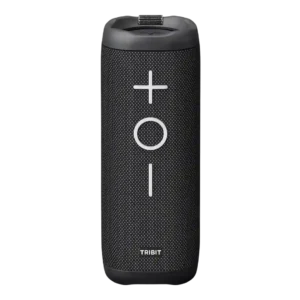
The carrying strap gets mixed feedback. Some reviewers found it handy for carrying or hanging the speaker, but others wanted a longer, more versatile, or removable strap and viewed it as one of the weaker hardware details.
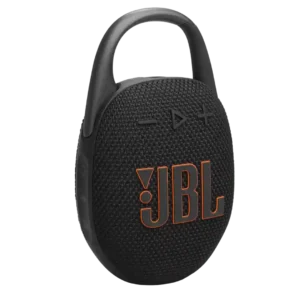
The built-in carabiner-style clip is a standout feature, with a taller or wider opening than before and a robust feel that makes it easy to hang on bags, bikes, and fixtures.
Stereo pairing and dual-speaker use are widely praised. When two units are linked, reviewers say the setup sounds noticeably bigger, wider, and louder, making inter-speaker connectivity one of the best reasons to buy into the model.
Inter-speaker connectivity is a major upgrade via Auracast, enabling linking with other compatible speakers and stereo pairing with a second Clip 5.
Reviewers note low latency for typical phone video watching, though it is not positioned as a primary TV speaker.
Reviews consistently describe the StormBox 2 as surprisingly loud for its size and price, with enough output for patios, parks, and small gatherings. It is strongest at moderate to moderately high volume, while a few reviewers noted it becomes less refined near the top of its range.
Across reviews, it gets impressively loud for a micro speaker and is easy to hear outdoors or over shower noise, but it can sound more crowded as you push toward maximum volume.
Auracast and stereo pairing are widely described as easy to use, but stereo pairing requires an identical second Clip 5 and some modes can reset EQ or stay mono.
Several reviews report multipoint use (two devices connected) so two people can take turns controlling playback.
Its 360-degree presentation is generally effective. Reviewers often note broad, room-friendly sound coverage and good consistency from different angles, though a few felt the orientation works better in some placements than others.
On-device controls are a standout strength. The oversized buttons are repeatedly described as intuitive, easy to find, and simple to use, which makes the speaker approachable even for less tech-savvy users.
On-device controls are simple and mostly intuitive (volume, play/pause, pairing, Auracast), but some advanced features and configuration live in the app.
Setup is typically quick and simple, with straightforward Bluetooth pairing; one review notes an occasional pairing hiccup that was resolved with a device restart.
Speakerphone performance appears solid rather than exceptional. The built-in mic and calling support are appreciated, and the available impressions suggest calls are serviceable and better than expected for a speaker at this price.
Multiple sources state there is no microphone, so it cannot be used for calls or speakerphone features.
It uses simple LEDs for status (including low-battery warning), while the app can show a precise battery percentage.
Out of the box it plays in mono, so left-right separation is limited; true stereo requires a second Clip 5, and multi-speaker linking can remain mono depending on mode.
Charging is via USB-C and a cable is typically included, with the port dedicated to charging rather than audio input.
Value for money is the product's strongest consensus advantage. Nearly every review frames the StormBox 2 as an easy recommendation at its street price because it gets unusually close to pricier rivals in core features and everyday performance.
Most reviews view it as good value around the $80 price point (often discounted), though some competitors offer longer battery life or stronger EQ features for less.
Voices come through clearly for podcasts and talk content, even in noisy environments like a shower, and the app includes a vocal-focused EQ option.
Water resistance is reliably praised. Reviewers repeatedly cite the IPX7 rating as a real benefit for poolside, travel, and outdoor listening, even though it stops short of full dustproof protection.
It carries an IP67 rating and is repeatedly used in showers and near water without issues, including brief submersion scenarios described by reviewers.
Portability is one of the speaker's strong suits. Multiple reviews call it easy to carry, light enough for day trips, and well suited to backpacks, cup holders, and casual travel.
It is lightweight and easy to carry, but it is slightly bulkier than earlier versions, making pockets less comfortable; the clip reduces the need to pocket-carry it.
The included 3.5 mm AUX input is a meaningful plus in this class, especially because many competing speakers drop wired playback. Reviews treat its availability as a practical convenience rather than a headline feature.
There is no 3.5mm AUX input and the USB-C port is for charging only, so wired playback is not supported.