Average score
P1
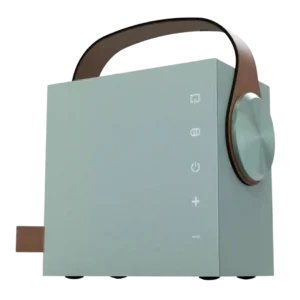
Product 1: Morel Biggie Portable Bluetooth Speaker
3.6
P2
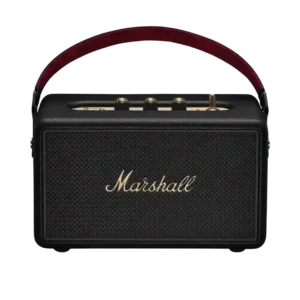
Product 2: Marshall Kilburn III Portable Bluetooth...
4.0
App reliability
P1Product 1: Morel Biggie Portable Bluetooth Speaker
No score yet
P2
Product 2: Marshall Kilburn III Portable Bluetooth...
4.0
App impressions are mostly positive when the Marshall app works, with useful EQ and firmware support, but one review had trouble finalizing the Kilburn III connection.
Audio format support
P1
Product 1: Morel Biggie Portable Bluetooth Speaker
2.0
Audio format support was criticized for lacking higher-resolution options that could improve playback.
P2
Product 2: Marshall Kilburn III Portable Bluetooth...
2.5
Audio format support is a limitation because reviewers point to missing USB Audio and missing hi-res Bluetooth codec support.
Battery life (if portable)
P1
Product 1: Morel Biggie Portable Bluetooth Speaker
4.1
Battery life was usually acceptable to strong, but not unanimous: several reviewers met or exceeded expectations, while others measured closer to 16-17 hours.
P2
Product 2: Marshall Kilburn III Portable Bluetooth...
4.9
Reviewers strongly agree battery life is a standout, repeatedly praising the 50-hour claim and multi-day real-world stamina, with one test reporting about 25 hours at moderate volume.
Bluetooth codec support
P1
Product 1: Morel Biggie Portable Bluetooth Speaker
2.0
Codec support was criticized because the speaker was said to rely on lossy SBC and ACC rather than higher-resolution options.
P2
Product 2: Marshall Kilburn III Portable Bluetooth...
2.5
Codec support is consistently treated as a limitation because reviewers note the lack of higher-resolution Bluetooth options such as LDAC or aptX Adaptive.
Bluetooth connection stability
P1
Product 1: Morel Biggie Portable Bluetooth Speaker
3.7
Bluetooth stability was mostly positive, but one review reported a notable Pixel pairing/connectivity problem.
P2
Product 2: Marshall Kilburn III Portable Bluetooth...
4.8
Bluetooth setup and stability are praised in the reviews that evaluate it, including easy pairing, a solid connection, and a simple pairing process.
Bluetooth range
P1
Product 1: Morel Biggie Portable Bluetooth Speaker
5.0
Bluetooth range was praised in real-world use, including through walls and across a long distance.
P2
Product 2: Marshall Kilburn III Portable Bluetooth...
5.0
The only opinionated range test is positive, with one reviewer saying the speaker exceeded the stated 10-meter range around the house.
Cabinet construction / bracing
P1
Product 1: Morel Biggie Portable Bluetooth Speaker
4.5
Cabinet construction was widely praised, with reviewers highlighting woodwork, impeccable engineering, and vibration control.
P2
Product 2: Marshall Kilburn III Portable Bluetooth...
4.9
Build quality is widely praised as solid, durable, and premium, with reviewers highlighting the substantial cabinet feel and sturdy hardware.
Charging time
P1
Product 1: Morel Biggie Portable Bluetooth Speaker
4.8
Charging speed was praised, especially the two-hour full charge and quick top-up capability.
P2
Product 2: Marshall Kilburn III Portable Bluetooth...
3.4
Charging is mixed: quick-charge support is appreciated, but reviewers also note three-hour full charges, much slower charging with weak adapters, and slower charging while playing music.
Cohesive presentation
P1
Product 1: Morel Biggie Portable Bluetooth Speaker
4.6
Cohesive presentation was mostly positive, particularly from reviewers who liked the tuned sound and overall musical experience.
P2
Product 2: Marshall Kilburn III Portable Bluetooth...
4.7
Across reviews, the Kilburn III is repeatedly described as energetic, room-filling, cohesive, and able to handle a wide variety of music well.
Control button responsiveness
P1
Product 1: Morel Biggie Portable Bluetooth Speaker
4.0
Button feel itself was praised as light, solid, and tactile.
P2
Product 2: Marshall Kilburn III Portable Bluetooth...
4.9
Physical controls are a major strength, with reviewers praising the knobs, switches, tactile buttons, and upgraded control layout.
Design and aesthetics
P1
Product 1: Morel Biggie Portable Bluetooth Speaker
4.8
Design and aesthetics were one of the strongest points, with reviewers praising the attractive finishes, classy look, and premium styling.
P2
Product 2: Marshall Kilburn III Portable Bluetooth...
4.9
Design is one of the strongest consensus points, with reviewers repeatedly praising the retro Marshall aesthetic, premium detailing, and statement-piece presence.
Detail retrieval
P1
Product 1: Morel Biggie Portable Bluetooth Speaker
3.9
Detail retrieval varied sharply: stereo-pair and hi-fi-focused reviews praised fine detail, while bass boom reduced subtlety in other tests.
P2
Product 2: Marshall Kilburn III Portable Bluetooth...
4.5
Detail retrieval is mostly praised for clarity and instrumental texture, though one review notes a small loss of upper-mid detail.
Dialogue clarity (for TV/soundbar use)
P1
Product 1: Morel Biggie Portable Bluetooth Speaker
4.0
One review found the speaker useful for TV in small spaces because dialogue stayed clear.
P2Product 2: Marshall Kilburn III Portable Bluetooth...
No score yetDistortion at high volume
P1
Product 1: Morel Biggie Portable Bluetooth Speaker
2.3
High-volume composure was mixed: one review praised freedom from annoying distortion in casual use, while others reported port chuffing or mild distortion when pushed.
P2
Product 2: Marshall Kilburn III Portable Bluetooth...
4.9
High-volume distortion control earns strong praise, with reviewers repeatedly saying the speaker stays clean or distortion-free when pushed loud.
Drop resistance durability
P1
Product 1: Morel Biggie Portable Bluetooth Speaker
2.0
Durability for rough handling was weakly rated because one reviewer warned against getting it dirty or banged around.
P2
Product 2: Marshall Kilburn III Portable Bluetooth...
3.5
Drop resistance receives limited support from one reviewer who did not test drops but judged the build likely to survive minor falls.
Dust resistance rating
P1Product 1: Morel Biggie Portable Bluetooth Speaker
No score yet
P2
Product 2: Marshall Kilburn III Portable Bluetooth...
3.9
Dust resistance is generally seen as improved and useful for sand, dirt, and outdoor use, though the IP54 rating is not framed as fully rugged.
Dynamic headroom
P1
Product 1: Morel Biggie Portable Bluetooth Speaker
4.5
Dynamic headroom was praised for punch, contrast, and useful dynamic range.
P2
Product 2: Marshall Kilburn III Portable Bluetooth...
5.0
Dynamic headroom is praised through reports of large-room output, energetic sound, and plenty of extra volume without losing control.
Energy efficiency
P1Product 1: Morel Biggie Portable Bluetooth Speaker
No score yet
P2
Product 2: Marshall Kilburn III Portable Bluetooth...
4.5
Energy efficiency is supported by one review's observation that the major runtime gain comes from surprisingly small battery-capacity growth.
EQ customization
P1
Product 1: Morel Biggie Portable Bluetooth Speaker
2.0
EQ customization was a weakness because reviewers wanted app or adjustable EQ control, especially given the bass balance.
P2
Product 2: Marshall Kilburn III Portable Bluetooth...
4.6
EQ customization is a clear strength, combining responsive bass/treble knobs with app presets, five-band EQ, placement compensation, and M-button customization.
Everyday usability
P1
Product 1: Morel Biggie Portable Bluetooth Speaker
4.0
Everyday use was easy indoors, but outdoor placement required care because of the lack of ruggedness.
P2
Product 2: Marshall Kilburn III Portable Bluetooth...
5.0
Everyday usability is praised because the analog controls are intuitive, easy to live with, and accessible to users without a learning curve.
Frequency response balance
P1
Product 1: Morel Biggie Portable Bluetooth Speaker
3.7
Frequency balance split reviewers: some heard flat, warm, well-controlled tuning, while others found the bass too forward or dominant.
P2
Product 2: Marshall Kilburn III Portable Bluetooth...
4.6
Frequency balance is mostly praised for tight bass, clear mids, and lively highs, though a few reviews find it somewhat bassy or middy in places.
Google
P1Product 1: Morel Biggie Portable Bluetooth Speaker
No score yet
P2
Product 2: Marshall Kilburn III Portable Bluetooth...
4.5
Google Fast Pair receives limited but positive mention as a useful setup convenience.
Handle or strap quality
P1
Product 1: Morel Biggie Portable Bluetooth Speaker
4.0
The handle was generally useful and practical, though one reviewer felt it dominated the design.
P2
Product 2: Marshall Kilburn III Portable Bluetooth...
4.8
The handle and strap are repeatedly praised as comfortable, secure, stylish, and helpful for moving a relatively heavy speaker.
Home theater integration
P1
Product 1: Morel Biggie Portable Bluetooth Speaker
4.0
Home theater integration was limited but plausible in small spaces, especially with wired input and stereo pairing.
P2
Product 2: Marshall Kilburn III Portable Bluetooth...
3.5
Home theater integration is speculative but positive in one review, which notes potential use as Bluetooth surround speakers with compatible Marshall soundbars.
Inter-speaker connectivity
P1
Product 1: Morel Biggie Portable Bluetooth Speaker
4.6
Inter-speaker connectivity was a major strength when two units were used, improving excitement, depth, and stereo presentation.
P2
Product 2: Marshall Kilburn III Portable Bluetooth...
1.9
Inter-speaker connectivity is a repeated weakness because reviewers criticize the lack of built-in multi-speaker systems, stereo pairing, or reliable Auracast-style pairing.
Latency with TV (lip sync)
P1
Product 1: Morel Biggie Portable Bluetooth Speaker
3.0
For TV use, one review warned that wired input is preferable to avoid Bluetooth audio lag.
P2Product 2: Marshall Kilburn III Portable Bluetooth...
No score yetLoudness / maximum volume
P1
Product 1: Morel Biggie Portable Bluetooth Speaker
4.2
Reviewers agreed the Biggie can play surprisingly large for its size, though one found that impact could become overbearing.
P2
Product 2: Marshall Kilburn III Portable Bluetooth...
4.8
Maximum loudness is a major strength, with reviewers describing it as loud, room-filling, party-ready, and in some cases too loud for an apartment.
Low-volume performance
P1
Product 1: Morel Biggie Portable Bluetooth Speaker
1.5
Low-volume listening was a clear weakness in one review because the lowest setting remained too loud and boomy.
P2
Product 2: Marshall Kilburn III Portable Bluetooth...
5.0
Low-volume performance is praised in the limited evidence available, especially for keeping richness, separation, and bass at modest listening levels.
Microphone
P1Product 1: Morel Biggie Portable Bluetooth Speaker
No score yet
P2
Product 2: Marshall Kilburn III Portable Bluetooth...
2.0
Microphone support is a weakness because reviewers explicitly point out the lack of a built-in mic or speakerphone capability.
Multi-speaker pairing reliability
P1
Product 1: Morel Biggie Portable Bluetooth Speaker
4.6
Pairing two units was described as straightforward or easy, and reviewers liked the stereo-pair concept.
P2
Product 2: Marshall Kilburn III Portable Bluetooth...
1.9
Multi-speaker pairing reliability is a weakness, with several reviewers criticizing missing stereo pairing, missing multi-speaker pairing, or glitchy connection behavior.
Omnidirectional sound
P1Product 1: Morel Biggie Portable Bluetooth Speaker
No score yet
P2
Product 2: Marshall Kilburn III Portable Bluetooth...
4.8
Omnidirectional sound is widely praised, with reviewers describing clear sound at every angle, no dead spots, and useful 360-degree coverage.
On-device controls
P1
Product 1: Morel Biggie Portable Bluetooth Speaker
2.8
On-device controls were divisive: they were straightforward once understood, but hidden buttons and antiquated controls frustrated some reviewers.
P2
Product 2: Marshall Kilburn III Portable Bluetooth...
4.9
On-device controls are one of the most praised usability features, especially the tactile knobs, playback toggle, power switch, and direct adjustments without relying on the app.
Power bank function
P1
Product 1: Morel Biggie Portable Bluetooth Speaker
3.0
Power-bank usefulness was mixed: one review called phone charging thoughtful, while another said it failed with a Pixel phone.
P2
Product 2: Marshall Kilburn III Portable Bluetooth...
4.6
The power-bank function is treated as a useful bonus, though one reviewer warns that charge direction can be confusing when the speaker is off.
Price / value for money
P1
Product 1: Morel Biggie Portable Bluetooth Speaker
4.1
Value opinions were divided by priorities: sound-focused reviewers called it a bargain or reasonable, while TechRadar found cheaper competitors stronger overall.
P2
Product 2: Marshall Kilburn III Portable Bluetooth...
4.0
Price/value is mixed-positive: reviewers call it expensive or pricier than predecessors, but many say the sound, features, and upgrades justify the cost.
Setup simplicity
P1
Product 1: Morel Biggie Portable Bluetooth Speaker
4.6
Basic Bluetooth setup was consistently described as simple and quick.
P2
Product 2: Marshall Kilburn III Portable Bluetooth...
5.0
Setup simplicity gets limited but strong praise, mainly through Google Fast Pair and straightforward Bluetooth pairing.
Smart assistant integration (Alexa
P1Product 1: Morel Biggie Portable Bluetooth Speaker
No score yet
P2
Product 2: Marshall Kilburn III Portable Bluetooth...
2.3
Smart assistant integration is weak because multiple reviews explicitly note the absence of voice assistants or voice control.
Smart features
P1
Product 1: Morel Biggie Portable Bluetooth Speaker
2.5
Smart features were intentionally minimal; some reviewers did not miss them, but others criticized the lack of app, Wi-Fi, and smart-home integration.
P2
Product 2: Marshall Kilburn III Portable Bluetooth...
2.2
Smart features are limited overall; reviewers note the lack of Wi-Fi, voice control, and broader smart-speaker functions, though the simple music-first approach appeals to some.
Speakerphone quality
P1Product 1: Morel Biggie Portable Bluetooth Speaker
No score yet
P2
Product 2: Marshall Kilburn III Portable Bluetooth...
2.0
Speakerphone quality cannot be praised because reviewers note the speaker lacks the built-in mic needed for hands-free calling.
Status indicators
P1
Product 1: Morel Biggie Portable Bluetooth Speaker
2.0
Status feedback drew criticism, especially the awkward and imprecise battery indicator.
P2
Product 2: Marshall Kilburn III Portable Bluetooth...
4.5
Status indicators are praised where discussed, especially the battery gauge and illuminated knob markers.
Stereo imaging accuracy
P1
Product 1: Morel Biggie Portable Bluetooth Speaker
5.0
Stereo imaging was a standout when two units were paired, with reviewers hearing clear placement, depth, and separation.
P2
Product 2: Marshall Kilburn III Portable Bluetooth...
3.9
Stereo imaging is mixed: reviewers like the wide and immersive presentation, but some note limited true stereo separation or asymmetry.
Subwoofer
P1Product 1: Morel Biggie Portable Bluetooth Speaker
No score yet
P2
Product 2: Marshall Kilburn III Portable Bluetooth...
4.8
Bass/subwoofer performance is strongly praised for resonance, rumble, and control, though some listeners may want to dial it down.
Surround sound simulation
P1Product 1: Morel Biggie Portable Bluetooth Speaker
No score yet
P2
Product 2: Marshall Kilburn III Portable Bluetooth...
3.0
Surround-style presentation is limited; the speaker creates an immersive wide field, but reviewers caution it is not true surround sound.
Sustainability
P1Product 1: Morel Biggie Portable Bluetooth Speaker
No score yet
P2
Product 2: Marshall Kilburn III Portable Bluetooth...
3.5
Sustainability has limited mixed support through the replaceable battery compartment, with uncertainty about replacement-battery availability.
USB-C charging
P1
Product 1: Morel Biggie Portable Bluetooth Speaker
4.5
USB-C charging was praised as convenient in the Absolute Sound review.
P2
Product 2: Marshall Kilburn III Portable Bluetooth...
4.4
USB-C support is praised for modern charging, fast-charging compatibility, and external-device charging, with some caveats around charger requirements.
Value for money
P1
Product 1: Morel Biggie Portable Bluetooth Speaker
3.3
General value was polarized, with one review criticizing the feature-to-price tradeoff and another praising the stereo setup capability.
P2
Product 2: Marshall Kilburn III Portable Bluetooth...
4.4
Value for money is mostly positive because reviewers often say the price is justified by sound, battery life, design, and upgrades, though one finds better value elsewhere.
Voice clarity
P1
Product 1: Morel Biggie Portable Bluetooth Speaker
4.5
Vocal clarity was praised in the midrange, especially around the vocal sweet spot.
P2
Product 2: Marshall Kilburn III Portable Bluetooth...
5.0
Vocal clarity is praised in music playback, with reviewers calling vocals clear, crisp, forward, textured, and easy to hear in dense mixes.
Water resistance rating
P1
Product 1: Morel Biggie Portable Bluetooth Speaker
2.0
Water resistance was a common limitation because reviewers repeatedly noted the lack of waterproofing or IP rating.
P2
Product 2: Marshall Kilburn III Portable Bluetooth...
3.7
Water resistance is mixed: IP54 is a meaningful improvement for splashes and rain, but reviewers repeatedly caution that it is not beach-rugged or IP67-level protection.
Weight convenience
P1
Product 1: Morel Biggie Portable Bluetooth Speaker
3.0
Weight convenience was mixed: one review called it manageable, but others felt it belonged on a desk or was too heavy for easy travel.
P2
Product 2: Marshall Kilburn III Portable Bluetooth...
3.2
Weight convenience is mixed: reviewers appreciate the strap and manageable carry feel, but repeatedly say it is hefty, backpack-unfriendly, or better for home/garden use.
Wi-Fi streaming reliability
P1Product 1: Morel Biggie Portable Bluetooth Speaker
No score yet
P2
Product 2: Marshall Kilburn III Portable Bluetooth...
2.0
Wi-Fi streaming is a weakness because reviewers note there is no Wi-Fi connection and say its absence is a shame at this price.
Wired input
P1
Product 1: Morel Biggie Portable Bluetooth Speaker
2.5
The wired input exists, but one review found it did not meaningfully improve sound quality over Bluetooth.
P2
Product 2: Marshall Kilburn III Portable Bluetooth...
4.0
Wired input receives limited positive support, with one reviewer calling the aux input a good alternative to missing high-quality wireless audio options.