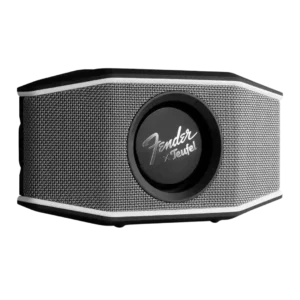
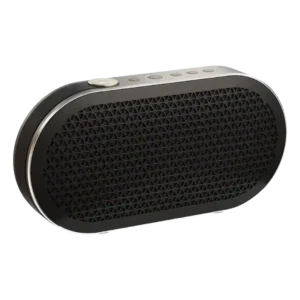
Average score
P1
Product 1: Fender x Teufel Rockster Go...
3.8
P2
Product 2: Dali Katch G2 Portable Speaker
3.9
App reliability
P1
Product 1: Fender x Teufel Rockster Go...
2.0
App reliability was poor in the one hands-on app test because the reviewer could not connect successfully enough to adjust EQ.
P2Product 2: Dali Katch G2 Portable Speaker
No score yetAudio format support
P1
Product 1: Fender x Teufel Rockster Go...
2.5
High-resolution audio-format support is limited, with Tom's Guide noting the lack of ALAC compatibility.
P2Product 2: Dali Katch G2 Portable Speaker
No score yetBattery life (if portable)
P1
Product 1: Fender x Teufel Rockster Go...
4.5
Battery life was one of the strongest points, with reviewers repeatedly praising long runtime or battery performance.
P2
Product 2: Dali Katch G2 Portable Speaker
5.0
Battery life is a standout strength, with 30 hours described as exemplary or whopping.
Bluetooth codec support
P1
Product 1: Fender x Teufel Rockster Go...
2.4
Codec support was a repeated limitation: reviewers noted AAC-only or missing aptX, LDAC, and other high-res Bluetooth options.
P2
Product 2: Dali Katch G2 Portable Speaker
4.2
Codec support is generally positive thanks to aptX HD, though reviewers note device support and that LDAC offers a higher maximum bitrate.
Bluetooth connection stability
P1
Product 1: Fender x Teufel Rockster Go...
4.7
Bluetooth stability was positive in the reviews that judged it, with strong signal and clean playback without interruptions.
P2Product 2: Dali Katch G2 Portable Speaker
No score yetBluetooth range
P1
Product 1: Fender x Teufel Rockster Go...
3.0
Only one reviewer judged range directly, calling it standard but not impressive at about 30 feet.
P2Product 2: Dali Katch G2 Portable Speaker
No score yetCabinet construction / bracing
P1
Product 1: Fender x Teufel Rockster Go...
4.5
Construction impressions were positive, with reviewers describing a rugged build and a well-built speaker.
P2
Product 2: Dali Katch G2 Portable Speaker
5.0
Build quality is a major strength, with reviewers praising the metal-enhanced construction and calling the construction quality superb.
Charging time
P1
Product 1: Fender x Teufel Rockster Go...
3.3
Charging time was mixed: one reviewer reported only a couple of hours, others found five hours or overnight charging slow, and another measured about three hours.
P2
Product 2: Dali Katch G2 Portable Speaker
4.0
Charging time is treated as acceptable, with one review saying two hours is not long to wait.
Cohesive presentation
P1
Product 1: Fender x Teufel Rockster Go...
4.8
One reviewer praised the cohesive presentation, saying bass, mids, highs, vocals, and instruments worked together rather than fighting.
P2
Product 2: Dali Katch G2 Portable Speaker
4.9
The presentation is praised as effortless, musically insightful, and capable of conveying a genuine sense of the music.
Control button responsiveness
P1
Product 1: Fender x Teufel Rockster Go...
4.5
Button responsiveness was positive where tested, with reviewers calling the controls responsive and easy to use.
P2
Product 2: Dali Katch G2 Portable Speaker
5.0
The physical buttons are praised as positively clicky and predictable.
Design and aesthetics
P1
Product 1: Fender x Teufel Rockster Go...
4.5
Design and aesthetics were one of the clearest strengths, with most reviewers praising the retro Fender look, though one disliked the odd appearance.
P2
Product 2: Dali Katch G2 Portable Speaker
4.6
Design is a major strength across reviews, described as stunning, classy, distinctive, and attractive even by a more critical reviewer.
Detail retrieval
P1
Product 1: Fender x Teufel Rockster Go...
3.9
Detail retrieval was mixed: some reviewers heard clean, layered, impressive sound, while others missed brilliance or found only decent clarity.
P2
Product 2: Dali Katch G2 Portable Speaker
4.7
Detail retrieval is one of the strongest sound traits, with reviews praising clarity, nuance, resolution, and extra sparkle.
Dialogue clarity (for TV/soundbar use)
P1
Product 1: Fender x Teufel Rockster Go...
2.5
Dialogue performance is a weak point for video use, with reviewers noting lost finer sounds or hard-to-catch dialogue when bass or surround effects intrude.
P2Product 2: Dali Katch G2 Portable Speaker
No score yetDistortion at high volume
P1
Product 1: Fender x Teufel Rockster Go...
4.0
High-volume behavior is mixed: several reviewers reported clean playback or little distortion, while PCMag and one YouTube reviewer heard low-frequency crackle or strain.
P2
Product 2: Dali Katch G2 Portable Speaker
2.0
High-volume behavior is the clearest sound weakness: one reviewer hears the bass loosen and another calls near-maximum pumping unlistenable.
Drop resistance durability
P1
Product 1: Fender x Teufel Rockster Go...
4.5
Durability evidence was strong, with reviewers trusting the speaker against drops, spills, accidents, and rough outdoor use.
P2Product 2: Dali Katch G2 Portable Speaker
No score yetDust resistance rating
P1
Product 1: Fender x Teufel Rockster Go...
4.8
Dust resistance was supported by outdoor testing where sand exposure was not a concern.
P2
Product 2: Dali Katch G2 Portable Speaker
1.3
Dust protection is weak because reviewers point to the lack of dust or IP-rated protection rather than rugged outdoor sealing.
Dynamic headroom
P1
Product 1: Fender x Teufel Rockster Go...
4.4
Dynamic performance was positive in the reviews that addressed it, especially at louder volumes where the speaker sounded bigger and more energetic.
P2
Product 2: Dali Katch G2 Portable Speaker
5.0
Dynamic ability is praised in one review that calls the speaker dynamic with tremendous resolution for Bluetooth.
EQ customization
P1
Product 1: Fender x Teufel Rockster Go...
2.2
EQ customization was a consistent weakness because reviewers lacked usable app controls, official EQ, or advanced settings.
P2
Product 2: Dali Katch G2 Portable Speaker
3.0
EQ control is mixed: the on-speaker EQ is easy, but the lack of app-based customization limits adjustment beyond the presets.
Everyday usability
P1
Product 1: Fender x Teufel Rockster Go...
4.4
Everyday usability was strong for casual music, outdoor use, travel, desk use, and room-filling listening, with limitations around advanced tuning.
P2
Product 2: Dali Katch G2 Portable Speaker
4.5
Everyday usability is helped by predictable controls and stable feet, making it easy to live with indoors.
Frequency response balance
P1
Product 1: Fender x Teufel Rockster Go...
4.1
Sound balance drew mostly positive reactions for clear mids, punchy bass, and good size-adjusted quality, but PCMag found harsh upper mids and MacSources noted bass dominance.
P2
Product 2: Dali Katch G2 Portable Speaker
4.0
Most reviewers hear a refined, balanced presentation with strong mids or bass for the size, but one review finds it thin and brittle above moderate volume.
Google
P1
Product 1: Fender x Teufel Rockster Go...
4.0
Google Fast Pair was confirmed in one review and treated as a convenient setup feature.
P2Product 2: Dali Katch G2 Portable Speaker
No score yetHandle or strap quality
P1
Product 1: Fender x Teufel Rockster Go...
4.4
The strap earned repeated praise for being sturdy, useful, durable, and secure.
P2
Product 2: Dali Katch G2 Portable Speaker
4.3
The pull-out handle improves carrying around the house or to parties, though one reviewer finds it clever but stiff.
Home theater integration
P1
Product 1: Fender x Teufel Rockster Go...
3.3
Home-theater integration is mixed: one reviewer loved the TV upgrade through USB-C, while another found it unsuitable for movies due to bass-heavy dialogue issues.
P2Product 2: Dali Katch G2 Portable Speaker
No score yetInter-speaker connectivity
P1
Product 1: Fender x Teufel Rockster Go...
3.8
Inter-speaker connectivity is useful but not frictionless: PCMag disliked the non-one-button setup, while another review praised the immersive multi-speaker potential.
P2
Product 2: Dali Katch G2 Portable Speaker
4.5
Stereo pairing is seen as useful enough to fill a large room when two units are used, although the cost of buying two remains a caveat elsewhere.
Latency with TV (lip sync)
P1
Product 1: Fender x Teufel Rockster Go...
4.5
One reviewer found video syncing and latency stable enough for YouTube clips.
P2
Product 2: Dali Katch G2 Portable Speaker
5.0
Bluetooth latency is strongly praised in the measurement-focused review, which calls its tested latency as good as it gets.
Loudness / maximum volume
P1
Product 1: Fender x Teufel Rockster Go...
4.1
Most reviewers found the small speaker louder and bigger-sounding than expected, though a few said it is not class-leading or less loud than expected.
P2
Product 2: Dali Katch G2 Portable Speaker
4.3
One review says the speaker can play incredibly loudly, while another finds the G2 only slightly louder than the original, so maximum-volume evidence is positive but not unanimous.
Low-volume performance
P1
Product 1: Fender x Teufel Rockster Go...
3.7
Low-volume performance is split, with one reviewer calling it meh, another praising clear vocals, and another liking its lower-volume quality.
P2
Product 2: Dali Katch G2 Portable Speaker
4.4
Low and normal-volume listening is strong, with reviewers praising normal listening levels and one saying the speaker makes more sense below 50 percent volume.
Microphone
P1
Product 1: Fender x Teufel Rockster Go...
1.5
The microphone score is low because OS Reviews noted the product has no built-in microphone.
P2Product 2: Dali Katch G2 Portable Speaker
No score yetMultipoint connectivity
P1
Product 1: Fender x Teufel Rockster Go...
4.5
One reviewer positively noted simultaneous connection to an iPhone and MacBook, supporting good multipoint usefulness.
P2Product 2: Dali Katch G2 Portable Speaker
No score yetOmnidirectional sound
P1
Product 1: Fender x Teufel Rockster Go...
4.5
One reviewer described the Dynamore effect as wrapping around the listener, supporting a convincing sense of broad sound.
P2
Product 2: Dali Katch G2 Portable Speaker
4.0
One review praises the sound as bigger than the enclosure with a big, open character.
On-device controls
P1
Product 1: Fender x Teufel Rockster Go...
2.5
On-device controls are functional but limited, with PCMag finding them restricted and less refined.
P2
Product 2: Dali Katch G2 Portable Speaker
4.5
The top-edge controls are easy to follow, supporting straightforward on-device operation.
Price / value for money
P1
Product 1: Fender x Teufel Rockster Go...
3.7
Price opinions were mixed-to-positive: several reviewers praised the sale price or value, while others thought competitors offered more or called it pricey.
P2
Product 2: Dali Katch G2 Portable Speaker
3.3
Price/value depends heavily on market: one review rejects the U.S. price, while another calls the £299 deal strong for a premium Bluetooth speaker.
Setup simplicity
P1
Product 1: Fender x Teufel Rockster Go...
4.8
Setup was consistently described as simple, fast, and low-friction across Bluetooth pairing and first use.
P2
Product 2: Dali Katch G2 Portable Speaker
4.3
Setup and operation are simple, with reviewers describing the speaker as intentionally straightforward and easy to use.
Smart features
P1
Product 1: Fender x Teufel Rockster Go...
2.0
Smart features are limited, with PCMag emphasizing the lack of advanced codec and control options.
P2
Product 2: Dali Katch G2 Portable Speaker
3.0
Smart features are intentionally minimal: the no-app approach is refreshing, but the reviewer also calls it a limitation.
Speakerphone quality
P1
Product 1: Fender x Teufel Rockster Go...
1.5
Speakerphone usefulness is poor because PCMag noted the missing microphone needed for speakerphone functionality.
P2Product 2: Dali Katch G2 Portable Speaker
No score yetStatus indicators
P1
Product 1: Fender x Teufel Rockster Go...
4.7
Status indicators were praised as clear and useful for charging, Bluetooth pairing, and battery checks.
P2Product 2: Dali Katch G2 Portable Speaker
No score yetStereo imaging accuracy
P1
Product 1: Fender x Teufel Rockster Go...
4.3
Dynamore and angled drivers generally helped stereo spread, with reviewers describing wider stereo separation and impressive separation for the size.
P2
Product 2: Dali Katch G2 Portable Speaker
4.4
Stereo cues are praised through stable separation and a clear left-right sense, though one review still criticizes the tonal balance.
Surround sound simulation
P1
Product 1: Fender x Teufel Rockster Go...
4.6
The Dynamore surround effect was widely praised for widening the presentation, though reviewers treated it as simulated rather than true surround.
P2Product 2: Dali Katch G2 Portable Speaker
No score yetSustainability
P1
Product 1: Fender x Teufel Rockster Go...
4.0
Sustainability evidence was limited but positive, with one reviewer praising eco-friendly, sturdy packaging.
P2Product 2: Dali Katch G2 Portable Speaker
No score yetUSB-C charging
P1
Product 1: Fender x Teufel Rockster Go...
4.6
USB-C was praised for practical charging and, in one review, simultaneous wired use while charging.
P2
Product 2: Dali Katch G2 Portable Speaker
2.0
USB-C charging is a weakness because the reviewer specifically notes the speaker does not charge over USB-C.
Value for money
P1
Product 1: Fender x Teufel Rockster Go...
4.3
Value for money was positive overall, especially at sale pricing, though one reviewer still framed the product as premium rather than cheap.
P2
Product 2: Dali Katch G2 Portable Speaker
3.2
Value evidence is split: £299 is praised as worthwhile, but one reviewer calls the speaker among the worst values he has heard.
Voice clarity
P1
Product 1: Fender x Teufel Rockster Go...
3.5
Voice clarity is usable but mixed: one reviewer praised clear vocals at any volume, while PCMag heard clear vocals that could become harsh.
P2
Product 2: Dali Katch G2 Portable Speaker
4.5
Vocal reproduction is supported by one review that describes the singer as smooth and instantly recognizable.
Water resistance rating
P1
Product 1: Fender x Teufel Rockster Go...
4.6
Water resistance was consistently viewed as a practical strength for outdoor, beach, weather, and rugged use.
P2
Product 2: Dali Katch G2 Portable Speaker
1.5
Water protection is a weakness across reviews: reviewers describe it as indoor-leaning, not beach-ready, and not IP/IPX rated.
Weight convenience
P1
Product 1: Fender x Teufel Rockster Go...
4.5
Reviewers agreed the speaker is easy to carry, citing light weight, backpack-friendly size, and a thin compact body.
P2
Product 2: Dali Katch G2 Portable Speaker
3.0
Portability is tempered by mass: reviewers call it heavy or brick-like even while praising its premium feel.
Wired input
P1
Product 1: Fender x Teufel Rockster Go...
2.0
Wired-input evidence is mostly negative because multiple reviewers missed a 3.5mm input, although other evidence supports USB-C charging and use separately.
P2
Product 2: Dali Katch G2 Portable Speaker
5.0
The AUX input is praised as a useful physical connection, especially for older or 3.5mm-equipped devices.