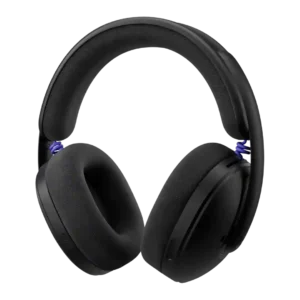
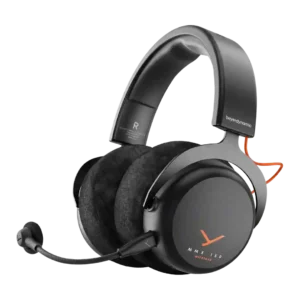
The G325 is explicitly described as not being a noise-canceling headset. Review coverage treats this as a deliberate omission rather than a hidden feature.
No review describes true ANC. Noise reduction is achieved through the closed-back seal (passive isolation) and an ambient/augmented mode, not active cancellation.
Logitech G Hub is generally seen as a good companion app, but not a feature-rich one for this headset. Reviewers appreciate its usefulness while noting that the G325 itself only exposes a modest set of software options.
Wireless-focused reviews describe a companion app that manages presets, EQ, button behavior, sidetone toggles, and power settings. Other reviews describe a no-software experience, implying feature depth may vary by model or connection path.
Latency performance is a clear strength for gaming use. Reviews that tested gameplay specifically report little to no lag, helping the headset feel responsive over wireless connections.
Wireless-focused reviews describe the low-latency dongle as subjectively delivering negligible lag between on-screen action and audio cues.
Bass is the most common audio compromise. It is usually described as restrained, light on sub-bass, or lacking slam, though one reviewer still found it punchy and fun for a budget headset.
Bass is the most divisive tuning element. Several reviews describe it as subdued or under-emphasized unless EQ/presets are used, while another review characterizes bass as strong; expectations and EQ use appear to drive the experience.
Battery life is usually reported around the low-to-mid 20-hour range, which aligns fairly well with Logitech's claim. That is good enough for regular use, but several reviewers note it is not class-leading.
Battery life is repeatedly framed as a strength: multiple reviews cite 50 hours, and one reviewer reports real-world estimates closer to roughly 68–71 hours at moderate volume.
Bluetooth performance is broadly positive. Reviewers describe pairing and day-to-day connection stability as reliable, with smooth switching and no major dropout complaints.
Bluetooth pairing and day-to-day stability are described as reliable, with quick connections and no major dropouts reported in the wireless-focused reviews.
Build quality is mixed. Many reviewers call the headset plasticky or cheap-feeling, but others find it sturdier than expected in actual handling, so the consensus is functional rather than premium.
Build impressions are split: several reviewers call the construction sturdy and dependable (often noting metal elements), while others describe the shell as lightweight or plasticky for the price.
Controls are one of the more consistently praised usability features. The buttons are distinct, tactile, and easy to locate by feel, though a few reviewers still prefer a volume wheel over the rocker.
The single wheel/button control scheme is viewed as intuitive (volume, mute, mode toggles), but some reviewers dislike that it feels clicky or that button/wheel noises can carry through the headset or mic.
Cables are often praised as thick/braided and durable, but one reviewer reports audible cable rub/microphonics in the earcups when the cable brushes clothing.
Charging impressions are positive where mentioned. Reviewers describe recharge times as reasonably quick, and one also highlights the optional 80% charge cap as a battery-health friendly touch.
Fast charging is called out as convenient, with a commonly cited example of about 15 minutes of charge yielding around five hours of use.
Clamp force is commonly described as just right for staying secure without squishing, though a minority note it can feel a little tight over extended wear.
Codec support is only lightly documented in the provided reviews: SBC and LC3 are explicitly mentioned, while higher-end codecs are not confirmed.
Long-session comfort is the standout strength across nearly every review. The G325 is repeatedly praised for disappearing on the head during extended work or gaming sessions.
Comfort is usually rated very high thanks to plush velour/memory-foam pads and balanced weight, but at least one reviewer with larger ears reports long-day discomfort from shallow, round cups that press on the ears.
Design is a major positive. Reviewers repeatedly praise the understated, stylish look and the more everyday-headphone vibe, with the color options helping it stand out without leaning too hard into flashy gamer styling.
Aesthetics lean gamer-forward (notably orange accents). Some reviewers like the sophisticated two-tone look, while others find it not discreet enough for everyday public use.
Detachable cables make it easier to swap devices and replace worn parts. Multiple reviews note that some features and controls are reduced or unavailable when using the analog 3.5mm path.
The detachable boom mic is consistently framed as a practical win, letting you remove it for music or when using a dedicated external mic.
The Lightspeed dongle is one of the headset's most dependable features. Reviews consistently describe it as stable, low-latency, and easy to use once connected.
The low-latency dongle is highlighted as a strong option for gaming, with reports of easy pairing and very responsive feel in play.
Most reviews praise the earcups for being soft, plush, and breathable, with the dual-layer memory foam earning especially positive comments. The main caveat is that one reviewer found the fabric slightly scratchy.
Pad material and plushness are praised, but cup depth/shape can be a comfort limiter for some users, with reports of ears touching drivers or being squeezed after long use.
Rotation is limited and sometimes absent in practice. This makes the headset a little less adaptable on the head and less convenient to store.
Cups are described as tilting to help achieve a seal, but not offering full swivel in at least one review.
EQ control is a real plus for the G325. Reviewers like having access to useful audio tweaks, with one specifically praising the full parametric EQ support in G Hub.
EQ customization is considered useful and often recommended, particularly for adding low-end presence if the stock tuning feels restrained.
Multiple reviews characterize the tuning as balanced, neutral, or flat, emphasizing accuracy over exaggerated bass or treble boosts.
Adjustment range is viewed positively where discussed. Reviewers say it accommodates different head sizes well and is easy to dial in.
Fit adjustment is described as straightforward with a wide range, making it easy to dial in height and seal even while wearing the headset.
Despite the lightweight construction, the frame is often described as flexible and surprisingly tolerant of twisting or bending. That gives the headset some welcome resilience even if it does not feel premium.
Hinges/yokes are generally presented as solid and confidence-inspiring, with no durability failures reported in the provided reviews.
The accessory bundle is basic but adequate. Reviews mention the dongle and charging cable as the essentials you need, with no notable extras and at least one complaint about the cable being short.
Included accessories are consistently described as practical for multi-device use, typically including a detachable mic and multiple cables; wireless-focused reviews also reference a low-latency dongle.
Separation and layering are described as strong, keeping dialogue, music, and effects distinct even in busy game mixes.
Multiple reviewers like the built-in mic because it stays out of the way, is always available, and makes the headset feel cleaner and more portable than boom-mic rivals. That convenience is real, but it comes with a clear quality tradeoff.
The AI noise reduction feature does not earn much confidence from the reviews that discuss it. Background noise still comes through too easily, so it helps less than the spec sheet suggests.
Noise reduction on the mic is repeatedly praised for rejecting keyboard clacks and room noise. A platform caveat appears in one review, where background reduction was less effective in a console test compared with PC.
Mic quality is the product's biggest recurring drawback. It is usually considered usable for Discord, meetings, or casual voice chat, but several reviews call it grainy, distant, tinny, or clearly below good boom-mic standards.
Microphone quality is a standout across reviews, with clear, natural voice capture that works well for team chat and work calls. One reviewer notes it can sound quieter on PlayStation than on PC.
Midrange performance is one of the headset's stronger audio traits. Voices, dialogue, and game cues come through clearly, helping speech and positional details stay easy to follow.
Midrange clarity is consistently a highlight, helping voices and key game cues cut through with definition and natural detail.
Multi-device compatibility is one of the G325's strongest practical advantages. Reviews consistently position it as a headset that works across several consoles, PC, and mobile devices, though exact Xbox and wired-use details vary by reviewer.
Across reviews, the headset is positioned as broadly compatible (PC, PlayStation, and mobile), with feature access varying by connection type. Xbox support is the least consistent in the provided reviews.
Multipoint is explicitly described as seamless in at least one review, letting the headset stay connected across devices without manual switching.
Passive isolation is light. Reviewers repeatedly mention hearing nearby people or household noise, and at least one notes that others can hear audio leaking out as well.
Passive isolation is generally described as good for voices and incidental noise, helped by thick pads and a solid seal, but it is less effective against constant low-frequency hum like engines or appliances.
The G325 is easy to carry because it is so light, but it is not especially travel-friendly in shape. Reviews mention that it does not fold down well and can feel bulky in a bag.
The included presets are viewed as sensible rather than transformative. Reviewers generally find the default or gaming-focused options more successful than bass-boost attempts.
Preset profiles are generally described as effective but subtle, offering practical tweaks for genres like shooters or action games rather than drastic changes.
Replaceable earpads/parts are repeatedly highlighted as a long-term value feature, making it easier to refresh comfort and maintain the headset over time.
Mic-monitoring/sidetone-style modes are mixed: one reviewer reports a noticeable hiss when enabled, while others focus on its usefulness rather than its noise floor.
Setup is mostly straightforward once the headset is in the right mode, especially over the dongle. A few reviewers still ran into avoidable confusion around Bluetooth versus Lightspeed behavior on PC.
Setup is generally described as straightforward and plug-and-play. The main complexity comes from choosing the connection type, since certain functions are reported to depend on USB power and/or the app.
Overall sound quality is consistently framed as good enough to genuinely enjoyable for casual gaming, but rarely exceptional. Reviewers like the clarity and usability in games more than they admire it for music or deep immersion.
Overall sound is described as detailed, clear, and immersive, with a more neutral/accurate tilt than bass-boosted consumer tuning, making it strong for competitive gaming and solid for general listening. Wired USB listening is sometimes described as a bit cleaner and less prone to interference than analog, and one review suggests wired USB can slightly tame problematic treble behavior.
The headset does a respectable job with stereo spread and positional cues in games. It is not described as huge or cinematic, but directionality is better than its budget tuning suggests.
Soundstage and positional imaging are repeatedly praised for being wide and precise, helping with directional cues like footsteps and gunfire.
Packaging gets positive marks for using less plastic and more cardboard or paper-based materials. It is a small but noticed win in the unboxing experience.
An ambient/augmented listening mode is described as convincing and genuinely useful for hearing the room or holding a conversation without removing the headset. Several reviews note this functionality depends on connection/power, and it is not a full-featured headphone-style transparency experience in every setup.
Treble is generally clear and crisp enough for footsteps, cues, and upper-range detail, but it does not deliver especially refined top-end extension. Reviewers see it as competent rather than class-leading.
Treble is described as lively and detailed, but some reviewers report occasional harshness or distortion depending on source and settings.
USB-C is central to the design for both charging/power and wired audio paths, and several reviews treat the USB connection as the primary way to unlock full functionality.
Maximum volume is a mild weakness in the coverage. A couple of reviewers note that the headset does not get especially loud, with Bluetooth use on Switch mentioned as notably quiet.
Maximum loudness is usually adequate, but at least one review reports controller/analog output being too quiet for proper immersion on some consoles.
At roughly 212g, the G325 is widely viewed as exceptionally light. That low weight is a major reason reviewers find it so easy to wear for hours.
The headset is repeatedly described as feeling light on the head (low-to-mid 300g range cited in some reviews), which supports long-session comfort.
Xbox results are inconsistent: at least one review reports USB not working on Xbox and low volume over controller analog, while other reviews claim Xbox compatibility. Treat Xbox support as connection-dependent and verify your intended setup.