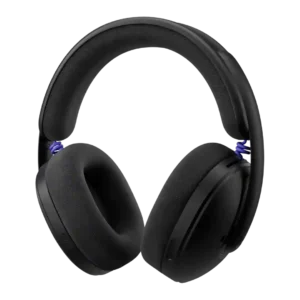
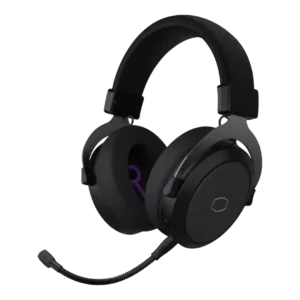
Average score
Logitech G325 Lightspeed Wireless Gaming Headset
3.9
Cooler Master CH351 Gaming Headset
3.4
Microphone noise reduction
Logitech G325 Lightspeed Wireless Gaming Headset
1.8
Microphone noise reduction disappointed reviewers who noted background noise or said software could not fix the low-quality mic.
Cooler Master CH351 Gaming Headset
5.0
Microphone noise rejection is a strength because nearby background noise was not picked up.
Equalizer customization
Logitech G325 Lightspeed Wireless Gaming Headset
3.9
EQ customization was a plus, especially because G Hub offered EQ and full parametric tuning, though one reviewer said the options were limited.
Cooler Master CH351 Gaming Headset
1.0
Equalizer customization is poor because the reviewer specifically criticizes the lack of a companion app for EQ tweaking.
Preset EQ profile quality
Logitech G325 Lightspeed Wireless Gaming Headset
3.9
Preset EQ was serviceable to good, with reviewers liking the default balance or recommending gaming presets over bass boost.
Cooler Master CH351 Gaming Headset
1.0
Preset EQ support is poor because the reviewer complains that the CH351 lacks Music, Movie or Game mode-style presets.
Weight comfort
Logitech G325 Lightspeed Wireless Gaming Headset
4.8
Weight comfort was excellent, with reviewers repeatedly describing the headset as impressively light, cloud-like, or easy to forget on the head.
Cooler Master CH351 Gaming Headset
2.0
Weight comfort is weak because the headset is described as being on the heavy side.
Comfort during long use
Logitech G325 Lightspeed Wireless Gaming Headset
4.7
Comfort was the clearest strength, with every review that addressed wear saying it stayed comfortable for long sessions or felt very light on the head.
Cooler Master CH351 Gaming Headset
2.0
Long-session comfort is weak because the reviewer felt pressure on the top of the head after about an hour.
Button control usability
Logitech G325 Lightspeed Wireless Gaming Headset
4.1
Physical controls were mostly well-liked for clear shapes, easy reach, and tactile feel, though some reviewers missed a volume wheel.
Cooler Master CH351 Gaming Headset
1.5
Controls are criticized as cluttered and unreliable, with buttons sometimes failing to register commands.
Bluetooth
Logitech G325 Lightspeed Wireless Gaming Headset
4.1
Bluetooth was generally reliable and easy, though one reviewer found the Switch Bluetooth experience quieter than expected.
Cooler Master CH351 Gaming Headset
1.5
Wireless connectivity is judged poorly because it did not work as intended and produced distracting static.
Software/setup simplicity
Logitech G325 Lightspeed Wireless Gaming Headset
3.6
Setup and software simplicity was mixed, with plug-and-play praise offset by one annoying PC setup experience and basic software comments.
Cooler Master CH351 Gaming Headset
1.0
Software support is weak because there is no app for customization.
App
Logitech G325 Lightspeed Wireless Gaming Headset
3.5
The app/software experience was useful but basic, with G Hub praised as helpful while another reviewer said it only covered the basics.
Cooler Master CH351 Gaming Headset
1.0
The CH351-specific review treats the missing companion app as a clear drawback because it prevents customization.
Value for money
Logitech G325 Lightspeed Wireless Gaming Headset
4.3
Value for money was strong overall, with reviewers calling it good value, affordable, competitive, or a standout budget buy.
Cooler Master CH351 Gaming Headset
2.0
Value is undermined because the reviewer still found it hard to recommend despite the low price.
Soundstage width
Logitech G325 Lightspeed Wireless Gaming Headset
2.6
Soundstage and immersion were limited; reviewers said it was not as immersive and could feel thin or hollow in more atmospheric games.
Cooler Master CH351 Gaming Headset
4.5
Soundstage is a strength, with the reviewer crediting its width for accurate sound reproduction.
Microphone
Logitech G325 Lightspeed Wireless Gaming Headset
2.7
Microphone performance was the biggest repeated drawback, ranging from decent for basic chat to mediocre, noisy, or genuinely below average.
Cooler Master CH351 Gaming Headset
4.5
The microphone is praised as working very well in the CH351-specific review.
Build quality
Logitech G325 Lightspeed Wireless Gaming Headset
2.7
Build quality was the most split physical trait: some reviewers found it robust and flexible, while others criticized plasticky, cheap, or creaky construction.
Cooler Master CH351 Gaming Headset
4.5
Build quality is praised, with the headset described as high-quality plastic with a soft-touch, premium finish.
Volume output
Logitech G325 Lightspeed Wireless Gaming Headset
2.7
Volume output leaned modest rather than loud, which one reviewer liked for safety while another found max volume underwhelming.
Cooler Master CH351 Gaming Headset
4.5
Volume output is strong for gameplay cues, with footsteps described as loud and clear.
Microphone quality for calls
Logitech G325 Lightspeed Wireless Gaming Headset
3.0
Call and chat mic quality was only serviceable, ranging from adequate or clear enough to basic and merely usable.
Cooler Master CH351 Gaming Headset
4.5
Call or voice capture quality is strong, with the microphone described as loud and clear.
Connectivity versatility
Logitech G325 Lightspeed Wireless Gaming Headset
4.1
Connectivity versatility was praised for easy switching and multiple modes, though the strongest praise came from casual multi-device use rather than power-user features.
Cooler Master CH351 Gaming Headset
3.0
Connectivity is mixed: the headset supports multiple connection options, but the reviewer says its strengths work best over aux.
Bass performance
Logitech G325 Lightspeed Wireless Gaming Headset
3.0
Bass was the most common audio weakness: reviewers heard usable bass, but several found it flat, not strong, or lacking in sub-bass impact.
Cooler Master CH351 Gaming Headset
4.0
Game effects such as distant chatter, explosions and bangs are described as clear, supporting strong bass-impact performance in gameplay.
Positional audio accuracy
Logitech G325 Lightspeed Wireless Gaming Headset
4.4
Positional audio was a strength for gaming, with reviewers hearing enemy direction, cues, and stereo placement clearly.
Cooler Master CH351 Gaming Headset
5.0
Positional audio is excellent because the reviewer could judge footstep distance and direction while playing.
Midrange clarity
Logitech G325 Lightspeed Wireless Gaming Headset
4.1
Midrange clarity was a strength overall, with voices, mids, and game cues described as clear, present, and sometimes the headset's best area.
Cooler Master CH351 Gaming Headset
4.5
Midrange dialogue clarity is praised because dialogue avoids the hollow or echoing character the reviewer dislikes elsewhere.
Sound quality
Logitech G325 Lightspeed Wireless Gaming Headset
3.6
Reviewers generally found the headset good enough for gaming and casual media, ranging from fantastic in-game audio to merely fine or adequate sound.
Cooler Master CH351 Gaming Headset
4.0
Core sound quality is praised, especially because games still sound great even without spatial audio enabled.
Ear cup padding quality
Logitech G325 Lightspeed Wireless Gaming Headset
4.3
Earcup padding was usually praised as soft, plush, breathable, and comfortable, though one reviewer found the fabric slightly less soft than premium options.
Cooler Master CH351 Gaming Headset
4.0
The earcups are a positive comfort point, with protein leather pads described as comfy.
Maximum volume clarity
Logitech G325 Lightspeed Wireless Gaming Headset
3.8
Clarity at higher or normal volume was generally acceptable, with reviewers noting that quality did not suffer and louder playback stayed clear.
Cooler Master CH351 Gaming Headset
4.0
Loud effects are reported clearly, supporting good clarity during louder in-game moments.
Design and Aesthetics
Logitech G325 Lightspeed Wireless Gaming Headset
4.5
Design was a major positive, with reviewers praising the understated, colorful, sleek look that feels less like a typical gamer headset.
Cooler Master CH351 Gaming Headset
4.5
The design earns praise for fun colorways, especially the macaron teal-and-pink finish.
Battery
Logitech G325 Lightspeed Wireless Gaming Headset
3.8
Battery life was acceptable to good for casual use, around 20 to 25 hours, but several reviewers said it was only okay compared with longer-lasting rivals.
Cooler Master CH351 Gaming HeadsetNo score yet
Built-in DAC and hi-res playback
Logitech G325 Lightspeed Wireless Gaming Headset
3.6
Hi-res or 24-bit support was treated as a small plus, but one reviewer questioned how much it matters in everyday listening.
Cooler Master CH351 Gaming HeadsetNo score yet
Cable quality
Logitech G325 Lightspeed Wireless Gaming Headset
3.0
Cable quality/length was only lightly covered; one reviewer called the included USB-A to USB-C cable fairly short.
Cooler Master CH351 Gaming HeadsetNo score yet
Charging
Logitech G325 Lightspeed Wireless Gaming Headset
4.5
Charging was received positively where discussed, with reviewers saying it charged rapidly or did not take long.
Cooler Master CH351 Gaming HeadsetNo score yet
Clamping force comfort
Logitech G325 Lightspeed Wireless Gaming Headset
2.8
Clamping force was a tradeoff: low pressure helped comfort but made the headset feel less sturdy and immersive to one reviewer.
Cooler Master CH351 Gaming HeadsetNo score yet
Console compatibility limitations
Logitech G325 Lightspeed Wireless Gaming Headset
2.5
Console compatibility had an Xbox caveat in one review because the Lightspeed dongle was said not to work on Xbox consoles.
Cooler Master CH351 Gaming HeadsetNo score yet
Detachable microphone convenience
Logitech G325 Lightspeed Wireless Gaming HeadsetNo score yet
Cooler Master CH351 Gaming Headset
4.5
The detachable mic is treated as convenient, particularly because it can be removed for easier transport.
Dongle
Logitech G325 Lightspeed Wireless Gaming Headset
4.5
The dongle experience was strong, with plug-and-play setup, stable connections, and no reported latency through Lightspeed in tested use.
Cooler Master CH351 Gaming HeadsetNo score yet
Ear cup swivel/rotation range
Logitech G325 Lightspeed Wireless Gaming Headset
2.3
Cup movement was a limitation, with reviewers criticizing the lack of cup flexibility or rotation for fit and storage.
Cooler Master CH351 Gaming HeadsetNo score yet
Fit/seal reliability
Logitech G325 Lightspeed Wireless Gaming Headset
4.3
Fit reliability was positive overall, with reviewers saying it sat comfortably, fit different heads, and stayed on securely enough.
Cooler Master CH351 Gaming HeadsetNo score yet
Footstep sound level scaling feature
Logitech G325 Lightspeed Wireless Gaming HeadsetNo score yet
Cooler Master CH351 Gaming Headset
5.0
Footstep scaling is a standout because the reviewer could judge which footsteps were closest and farthest away.
Frequency response accuracy
Logitech G325 Lightspeed Wireless Gaming HeadsetNo score yet
Cooler Master CH351 Gaming Headset
4.5
Frequency accuracy is praised through the reviewer’s judgment that the headset produces nearly every sound accurately.
Headband adjustability
Logitech G325 Lightspeed Wireless Gaming Headset
4.5
Headband adjustment was praised for range and ease, with reviewers noting it could fit different head sizes and adjust conveniently.
Cooler Master CH351 Gaming HeadsetNo score yet
Instrument separation
Logitech G325 Lightspeed Wireless Gaming Headset
3.7
Detail separation was mixed, with one reviewer hearing new small details, another praising clean soundscapes, and another finding subtle details mushy.
Cooler Master CH351 Gaming HeadsetNo score yet
Integrated microphone
Logitech G325 Lightspeed Wireless Gaming Headset
4.1
The integrated microphone helped usability and style by staying unobtrusive and always available, even though mic quality itself was not a strength.
Cooler Master CH351 Gaming HeadsetNo score yet
Multi-platform compatibility
Logitech G325 Lightspeed Wireless Gaming Headset
4.5
Multi-platform compatibility was a consistent strength, with reviewers highlighting easy use across consoles, PC, and other devices.
Cooler Master CH351 Gaming HeadsetNo score yet
Multipoint connectivity reliability
Logitech G325 Lightspeed Wireless Gaming Headset
2.0
Multipoint reliability was weak because one reviewer found that Lightspeed and Bluetooth had to be chosen separately rather than used together.
Cooler Master CH351 Gaming HeadsetNo score yet
Noise isolation (passive)
Logitech G325 Lightspeed Wireless Gaming Headset
2.5
Passive isolation was weak by closed-headset standards, letting partners, kids, and surrounding activity remain audible; one reviewer saw this as useful awareness.
Cooler Master CH351 Gaming HeadsetNo score yet
Packaging quality
Logitech G325 Lightspeed Wireless Gaming Headset
4.3
Packaging drew positive comments for reduced plastic, cardboard cushioning, helpful opening cues, and efficient waste-conscious presentation.
Cooler Master CH351 Gaming HeadsetNo score yet
Portability/foldability
Logitech G325 Lightspeed Wireless Gaming Headset
3.3
Portability was mixed: one reviewer liked it as a backpack headset, while another found it bulky and not easy to store.
Cooler Master CH351 Gaming HeadsetNo score yet
Sound leakage
Logitech G325 Lightspeed Wireless Gaming Headset
2.0
Sound leakage was a problem in the one review that covered it, with nearby listeners able to hear playback at half volume.
Cooler Master CH351 Gaming HeadsetNo score yet
Spatial audio
Logitech G325 Lightspeed Wireless Gaming HeadsetNo score yet
Cooler Master CH351 Gaming Headset
5.0
Spatial audio is one of the clearest strengths and is described as making games sound fantastic.
Stability
Logitech G325 Lightspeed Wireless Gaming Headset
4.4
Stability was positive where discussed, with reviewers reporting a stable connection and enough physical security to avoid slipping.
Cooler Master CH351 Gaming HeadsetNo score yet
Sustainability materials
Logitech G325 Lightspeed Wireless Gaming Headset
4.3
Sustainability materials were noted positively in packaging, with reviewers calling out reduced plastic and packaging waste.
Cooler Master CH351 Gaming HeadsetNo score yet
Treble clarity
Logitech G325 Lightspeed Wireless Gaming Headset
3.9
Treble was usually clear and lively, though one review described the tuning as balanced rather than sharp or heavy.
Cooler Master CH351 Gaming HeadsetNo score yet
USB-C
Logitech G325 Lightspeed Wireless Gaming Headset
4.0
USB-C was useful in one review because it enabled wired use through the left earcup.
Cooler Master CH351 Gaming HeadsetNo score yet
Wireless latency
Logitech G325 Lightspeed Wireless Gaming Headset
5.0
Wireless latency was excellent in the reviews that tested it, with no lag or latency reported during play.
Cooler Master CH351 Gaming HeadsetNo score yet
Xbox compatibility
Logitech G325 Lightspeed Wireless Gaming Headset
3.8
Xbox compatibility was mixed: one review praised Xbox support through compatibility, while another warned the Lightspeed dongle did not work on Xbox consoles.
Cooler Master CH351 Gaming HeadsetNo score yet