Average score
P1
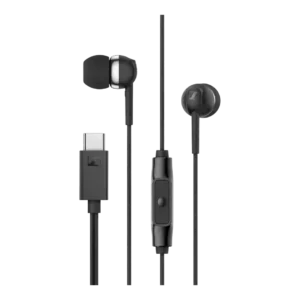
Product 1: Sennheiser CX 80U Wired Earbuds
4.0
P2
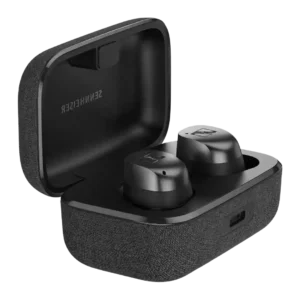
Product 2: Sennheiser Momentum True Wireless 4...
4.3
Active noise cancellation
P1Product 1: Sennheiser CX 80U Wired Earbuds
No score yet
P2
Product 2: Sennheiser Momentum True Wireless 4...
4.2
ANC performance is widely considered good to very good, especially for steady low-frequency noise (commutes, travel). Multiple sources still rank Sony or Bose as stronger overall, with some higher-frequency or sudden sounds bleeding through. Reviews highlight flexible ANC control via the app, including adaptive behavior and anti-wind options. The tradeoff is that some modes can reduce cancellation strength compared with a full-max setting.
Android compatibility
P1
Product 1: Sennheiser CX 80U Wired Earbuds
4.7
USB-C compatibility is a clear strength, with successful use on Android phones in both reviews and no reported compatibility issues.
P2
Product 2: Sennheiser Momentum True Wireless 4...
4.5
Android compatibility is frequently highlighted as the best match for this product, since Android devices can access more codecs and future-facing features. Most reports describe stable performance on Android, with fewer issues than on iOS in some tests.
App
P1
Product 1: Sennheiser CX 80U Wired Earbuds
1.2
There is no companion app, which is typical for wired earbuds but still limits customization and feature depth.
P2
Product 2: Sennheiser Momentum True Wireless 4...
4.5
The Smart Control app is widely praised for depth and polish, offering fit tests, customization, updates, and sound tools. The main critique is that it can feel feature-dense or that certain controls (like EQ depth) could be more advanced.
aptX
P1Product 1: Sennheiser CX 80U Wired Earbuds
No score yet
P2
Product 2: Sennheiser Momentum True Wireless 4...
4.7
aptX support (including Adaptive/Lossless on compatible devices) is frequently praised as a differentiator for Android users. Several reviewers also note that audible gains can be subtle versus AAC, and depend heavily on phone support and content quality.
Audio-video sync accuracy
P1Product 1: Sennheiser CX 80U Wired Earbuds
No score yet
P2
Product 2: Sennheiser Momentum True Wireless 4...
4.4
For video and casual gaming, sync and latency are generally reported as good, aided by low-latency modes and modern Bluetooth. Competitive gaming may still benefit from dedicated dongle-based solutions, but most users should find A/V sync acceptable.
Bass performance
P1
Product 1: Sennheiser CX 80U Wired Earbuds
4.3
Bass is punchy, agile, and clean rather than bloated, but both reviews suggest the very lowest bass lacks some rumble and weight.
P2
Product 2: Sennheiser Momentum True Wireless 4...
4.6
Bass is repeatedly described as deep, punchy, and well controlled, adding weight without drowning details. Some listeners feel the stock bass tilt is more consumer-friendly than neutral, and prefer trimming it via EQ.
Battery
P1Product 1: Sennheiser CX 80U Wired Earbuds
No score yet
P2
Product 2: Sennheiser Momentum True Wireless 4...
4.4
Battery life is typically around 7 to 7.5 hours per charge in many tests, with ANC reducing runtime in some reports. With the case, total endurance is commonly cited around 30 hours, which is competitive for the premium class.
Bluetooth
P1Product 1: Sennheiser CX 80U Wired Earbuds
No score yet
P2
Product 2: Sennheiser Momentum True Wireless 4...
4.5
Bluetooth stability is generally strong, with several reviewers noting fewer dropouts and good on-the-go continuity. A few reports mention iPhone-related cutouts or codec-dependent behavior (e.g., stereo-to-mono at distance with high-res modes).
Build quality
P1
Product 1: Sennheiser CX 80U Wired Earbuds
4.5
Build quality is viewed positively, with one review specifically calling it impressive for such an inexpensive wired model.
P2
Product 2: Sennheiser Momentum True Wireless 4...
4.6
Build quality is commonly described as solid and durable, with premium materials and a robust case. Overall impressions point to a flagship-level fit and finish.
Built-in DAC and hi-res playback
P1
Product 1: Sennheiser CX 80U Wired Earbuds
4.9
One review specifically highlights the integrated DAC and 24-bit/96kHz playback support as a real value-add for budget wired listening.
P2Product 2: Sennheiser Momentum True Wireless 4...
No score yetButton control usability
P1
Product 1: Sennheiser CX 80U Wired Earbuds
3.5
The in-line controls are easy to press and responsive, but overall functionality is basic and volume adjustment is a notable limitation.
P2Product 2: Sennheiser Momentum True Wireless 4...
No score yetCable quality
P1
Product 1: Sennheiser CX 80U Wired Earbuds
3.5
The cable looks slim and tidy, but the non-flat design can bunch up and tangle in a pocket.
P2Product 2: Sennheiser Momentum True Wireless 4...
No score yetCarry case quality
P1Product 1: Sennheiser CX 80U Wired Earbuds
No score yet
P2
Product 2: Sennheiser Momentum True Wireless 4...
4.5
Case quality is consistently rated premium, with a fabric exterior and solid feel. The main knock is size rather than materials or durability.
Charging
P1Product 1: Sennheiser CX 80U Wired Earbuds
No score yet
P2
Product 2: Sennheiser Momentum True Wireless 4...
4.5
Charging is a strong point: USB-C and Qi wireless charging are standard, and fast top-ups are commonly quoted around 8 to 10 minutes for about an hour of playback. Battery-protection and intelligent charging modes trade speed and max capacity for longevity.
Codec support
P1Product 1: Sennheiser CX 80U Wired Earbuds
No score yet
P2
Product 2: Sennheiser Momentum True Wireless 4...
4.7
Codec support is a major selling point, repeatedly cited as future-proof: Bluetooth 5.4 with broad codec options, plus LE Audio/LC3 and Auracast support via updates depending on source device. iPhone users are largely limited to AAC, reducing the practical benefit.
Comfort during long use
P1
Product 1: Sennheiser CX 80U Wired Earbuds
4.7
Comfort is one of the strongest recurring themes, with both reviews describing long listening sessions as easy and irritation-free.
P2
Product 2: Sennheiser Momentum True Wireless 4...
4.3
Comfort is commonly rated high for a premium TWS, with stable in-ear fit for long listening. The buds are physically large, and some users with small ears or very long sessions report fatigue or pressure over time.
Design and Aesthetics
P1
Product 1: Sennheiser CX 80U Wired Earbuds
3.9
The CX 80U looks understated and practical overall, with one reviewer liking the classy silver accents while another found the design too plain to stand out.
P2
Product 2: Sennheiser Momentum True Wireless 4...
4.4
Design is repeatedly described as premium and stylish, with new colorways and a recognizable Momentum look. Many reviews note the external design is very similar to the prior generation, so upgrades are mostly internal.
Ear tip size options
P1
Product 1: Sennheiser CX 80U Wired Earbuds
4.4
Multiple eartip sizes help users dial in both comfort and seal, which directly supports the earbuds' fit and passive isolation.
P2
Product 2: Sennheiser Momentum True Wireless 4...
4.5
Multiple ear tip sizes and fin options are a recurring positive, supporting both comfort and isolation. Some reviewers still struggle to get a consistent seal due to tip shape or softness, so fit can be somewhat ear-dependent.
Equalizer customization
P1
Product 1: Sennheiser CX 80U Wired Earbuds
1.1
There is effectively no EQ customization here, so users cannot tailor the sound profile beyond tip choice and source settings.
P2
Product 2: Sennheiser Momentum True Wireless 4...
4.4
EQ tools are considered effective for shaping the sound, and many reviewers recommend using them to tailor bass or clarity. A few power users want a more advanced EQ than the built-in 5-band option and report limitations or compression when pushing bands.
Find My
P1Product 1: Sennheiser CX 80U Wired Earbuds
No score yet
P2
Product 2: Sennheiser Momentum True Wireless 4...
2.1
Find-my style tracking and precision locating are not emphasized, and multiple reviewers note it is not on the same level as Apple ecosystem tracking. If you often misplace earbuds, this is a weaker point versus AirPods.
Frequency response accuracy
P1
Product 1: Sennheiser CX 80U Wired Earbuds
4.4
Reviewers consistently describe the tuning as balanced and accurate for the price, with natural vocals, convincing tonal balance, and good detail retrieval.
P2
Product 2: Sennheiser Momentum True Wireless 4...
4.0
Measured/tonal accuracy is broadly good, but several reviewers note a mild upper-mid/high underemphasis that can read as less crisp detail out of the box. Personalization tools and EQ can compensate, and many still find the tuning musically pleasing.
Included accessories
P1
Product 1: Sennheiser CX 80U Wired Earbuds
3.7
The accessory bundle is basic but useful, mainly centered on extra eartips rather than premium extras.
P2
Product 2: Sennheiser Momentum True Wireless 4...
4.5
Included accessories are typically appreciated, especially the multiple ear tip sizes and stabilizing fins plus USB-C cable. This variety helps users find a better seal and fit.
Instrument separation
P1
Product 1: Sennheiser CX 80U Wired Earbuds
4.2
Layering and separation are generally good for a budget model, though one review noted that mids are not as distinctly separated as on pricier alternatives.
P2
Product 2: Sennheiser Momentum True Wireless 4...
4.6
Instrument separation and imaging are strong, with reviewers frequently noting easy placement of instruments and clean layering. This is a recurring reason these are favored for immersive music listening.
Integrated microphone
P1
Product 1: Sennheiser CX 80U Wired Earbuds
3.8
An in-line mic is included for calls and voice use, but it feels more functional than premium.
P2Product 2: Sennheiser Momentum True Wireless 4...
No score yetMaximum volume clarity
P1
Product 1: Sennheiser CX 80U Wired Earbuds
4.7
At higher listening levels, the earbuds stay controlled and avoid the harsh or tinny edge that often hurts cheap wired earbuds.
P2
Product 2: Sennheiser Momentum True Wireless 4...
4.6
At higher listening levels, clarity is usually maintained, and multiple sources note low distortion or clean playback. The main caveat is that pushing volume higher to overcome outside noise is not ideal for hearing health.
Microphone noise reduction
P1Product 1: Sennheiser CX 80U Wired Earbuds
No score yet
P2
Product 2: Sennheiser Momentum True Wireless 4...
3.7
Noise reduction for calls is inconsistent across reviews. Wind remains the most common weakness, and some tests report background noise suppression that is less reliable than top competitors.
Microphone quality for calls
P1
Product 1: Sennheiser CX 80U Wired Earbuds
3.0
Mic performance is acceptable but not exceptional, with decent vocal clarity offset by noticeable static in one review.
P2
Product 2: Sennheiser Momentum True Wireless 4...
3.9
Call mic quality is mixed: many find it fine in quiet to moderate settings, and some report clear voice pickup. Others rate it below class leaders, especially outdoors, with processing artifacts or inconsistent clarity in noisy streets.
Midrange clarity
P1
Product 1: Sennheiser CX 80U Wired Earbuds
4.4
Mids are clear and robust, especially for vocals and acoustic material, though they do not reach the finesse of more expensive earbuds.
P2
Product 2: Sennheiser Momentum True Wireless 4...
4.5
Midrange is generally praised for natural vocals and good presence, often cited as a key strength. A few reviewers note an upper-mid dip or a darker voicing out of the box that can reduce perceived clarity until adjusted.
Multi-platform compatibility
P1
Product 1: Sennheiser CX 80U Wired Earbuds
4.7
Cross-device compatibility is excellent for a wired USB-C model, with smooth use reported on phones, tablets, and laptops.
P2
Product 2: Sennheiser Momentum True Wireless 4...
4.1
Multi-platform use is generally good across phones and computers, but the experience is not equal across ecosystems. iPhone works reliably for basics, yet the most compelling codec and feature benefits largely land on compatible Android devices.
Multipoint connectivity reliability
P1Product 1: Sennheiser CX 80U Wired Earbuds
No score yet
P2
Product 2: Sennheiser Momentum True Wireless 4...
4.5
Multipoint is supported and usually works as expected for switching between two devices. Some reviewers note occasional quirks or platform-specific issues, but overall reliability is viewed as solid after firmware updates.
Noise isolation (passive)
P1
Product 1: Sennheiser CX 80U Wired Earbuds
4.4
Passive isolation is a standout strength, with the seal doing a surprisingly strong job of reducing office chatter and everyday outside noise.
P2
Product 2: Sennheiser Momentum True Wireless 4...
4.5
Passive isolation is strong when the seal is right, helped by multiple ear tip sizes and stabilizing fins. A few users report seal sensitivity depending on ear shape and tip stiffness, which can impact both sound and ANC.
Portability/foldability
P1Product 1: Sennheiser CX 80U Wired Earbuds
No score yet
P2
Product 2: Sennheiser Momentum True Wireless 4...
3.7
Portability is good in-pocket for the earbuds themselves, but the fabric case is frequently described as chunky. Several reviewers accept the size as a premium tradeoff, while others prefer smaller cases for everyday carry.
Preset EQ profile quality
P1Product 1: Sennheiser CX 80U Wired Earbuds
No score yet
P2
Product 2: Sennheiser Momentum True Wireless 4...
4.5
Sound Personalization and presets are often highlighted as genuinely useful, helping users correct tonal preferences and automate settings via Sound Zones. Results depend on user patience and ear fit, but most find the feature worthwhile.
Sensors
P1Product 1: Sennheiser CX 80U Wired Earbuds
No score yet
P2
Product 2: Sennheiser Momentum True Wireless 4...
4.6
Sensors such as in-ear detection are generally reported as accurate and convenient, reliably pausing and resuming playback. This contributes to the overall flagship feel and day-to-day ease of use.
Software/setup simplicity
P1
Product 1: Sennheiser CX 80U Wired Earbuds
5.0
Setup is about as simple as it gets: plug in the USB-C connector and start listening with no app, pairing, or extra steps required.
P2
Product 2: Sennheiser Momentum True Wireless 4...
4.3
Setup is usually straightforward, and firmware updates address some early quirks; most reviewers describe smooth pairing and daily use. A minority report pairing oddities, platform glitches, or UI annoyances that prevent a flawless experience.
Sound quality
P1
Product 1: Sennheiser CX 80U Wired Earbuds
4.7
Sound quality is the main reason to buy the CX 80U, with both reviews describing it as unusually refined, detailed, and balanced for the price. The wired USB-C path delivers clean, detailed playback and is a big part of why these earbuds outperform many cheap rivals.
P2
Product 2: Sennheiser Momentum True Wireless 4...
4.6
Across reviews, sound quality is a standout: rich, detailed, and engaging with a spacious presentation. A minority find the stock tuning a bit warm/dark or slightly lacking upper-mid or top-end bite, but EQ and Sound Personalization can dial in clarity.
Soundstage width
P1
Product 1: Sennheiser CX 80U Wired Earbuds
4.4
The presentation has more openness and spatial breathing room than expected at this price, helping the earbuds sound immersive rather than cramped.
P2
Product 2: Sennheiser Momentum True Wireless 4...
4.6
Soundstage is consistently reported as wide and immersive for true wireless, with a strong sense of space. Some describe it as more expansive than key rivals, while others call it excellent but not the most out-of-head possible.
Spatial audio
P1Product 1: Sennheiser CX 80U Wired Earbuds
No score yet
P2
Product 2: Sennheiser Momentum True Wireless 4...
2.0
Spatial audio features are not a focus here, and multiple sources note the lack of built-in spatial audio/head tracking compared with some rivals. For listeners who prioritize immersive spatial modes, this can be a deciding drawback.
Stability
P1
Product 1: Sennheiser CX 80U Wired Earbuds
4.6
With the right eartips, the earbuds stay in place well enough for desk use and walking.
P2
Product 2: Sennheiser Momentum True Wireless 4...
4.4
Stability is generally strong, with fins helping keep the earbuds secure during movement and even light workouts. A small subset report fit/seal challenges that can make them feel less locked-in.
Touch control responsiveness
P1Product 1: Sennheiser CX 80U Wired Earbuds
No score yet
P2
Product 2: Sennheiser Momentum True Wireless 4...
4.5
Touch controls are generally described as responsive and customizable, with quick mode switching. Some users simply dislike touch input or note occasional mis-triggers in wet conditions, but responsiveness itself is usually strong.
Transparency mode quality
P1Product 1: Sennheiser CX 80U Wired Earbuds
No score yet
P2
Product 2: Sennheiser Momentum True Wireless 4...
4.3
Transparency is often described as natural and adjustable, with some calling it among the best they have used. A minority report slight hiss/white noise or say it could be more lifelike compared with Apple or Bose in certain environments.
Treble clarity
P1
Product 1: Sennheiser CX 80U Wired Earbuds
4.7
Treble is vivid and expressive without turning harsh, which helps preserve detail and a sense of space.
P2
Product 2: Sennheiser Momentum True Wireless 4...
4.5
Treble is typically smooth, airy, and non-fatiguing, with sparkle that avoids harshness. The main criticism is that the highest frequencies can feel slightly tamed or recessed for listeners who want extra bite and air.
USB-C
P1
Product 1: Sennheiser CX 80U Wired Earbuds
4.9
USB-C is a major advantage here, making the earbuds feel current and widely usable across modern devices.
P2
Product 2: Sennheiser Momentum True Wireless 4...
4.5
USB-C charging is standard and frequently mentioned, though some note the case port placement is unconventional. In practice, wired charging is easy, and most emphasis is on the convenience of pairing USB-C with Qi wireless charging.
Volume output
P1Product 1: Sennheiser CX 80U Wired Earbuds
No score yet
P2
Product 2: Sennheiser Momentum True Wireless 4...
4.1
Volume output is generally adequate, but at least one test found the earbuds on the quieter side, sometimes needing near-max volume for certain tracks. Most listening impressions still describe the presentation as full and satisfying at normal levels.
Water/sweat resistance rating
P1
Product 1: Sennheiser CX 80U Wired Earbuds
1.2
No water-resistance rating is highlighted, so these are a poor fit for buyers who need workout or rain-friendly earbuds.
P2
Product 2: Sennheiser Momentum True Wireless 4...
4.4
The IP54 rating is frequently mentioned as a meaningful upgrade, making them suitable for workouts, rain, and dust exposure. They are not designed for submersion, so they remain a splash and sweat solution rather than a swim option.
Weight comfort
P1
Product 1: Sennheiser CX 80U Wired Earbuds
4.7
The earbuds are very light, which contributes to their easy long-session comfort and unobtrusive feel.
P2
Product 2: Sennheiser Momentum True Wireless 4...
4.0
Weight is noticeable for some: a few reviews describe them as heavy or fatiguing after hours, while others find the distribution and fins keep them comfortable. Comfort varies significantly by ear shape and tip choice.