Average score
P1
Product 1: Gadhouse Wesley Retro Headphones
4.0
P2
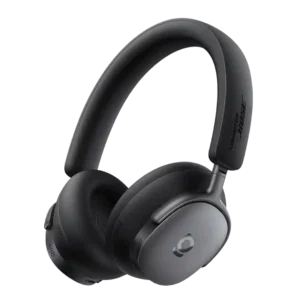
Product 2: Baseus Inspire XH1 Headphones
4.1
Active noise cancellation
P1
Product 1: Gadhouse Wesley Retro Headphones
1.0
ANC is not part of the Wesley package; coverage explicitly frames active noise cancellation as absent, so buyers should not expect active hush from this retro wired design.
P2
Product 2: Baseus Inspire XH1 Headphones
3.7
ANC performance is good for the price but inconsistent: it can handle commuting and steady background noise well, yet frequent flyers note it falls short against top-tier models on airplane engine rumble. Noise control is highly adjustable in the app, with adaptive and scenario-based modes plus multiple levels, though button toggling can be less direct than app control.
Android compatibility
P1Product 1: Gadhouse Wesley Retro Headphones
No score yet
P2
Product 2: Baseus Inspire XH1 Headphones
4.4
Compatibility with Android is strong, including full app support and access to LDAC and other toggles on supported phones.
App
P1Product 1: Gadhouse Wesley Retro Headphones
No score yet
P2
Product 2: Baseus Inspire XH1 Headphones
4.2
The Baseus app is mostly praised as clean and easy, with useful controls and updates, but a few reports mention freezing or crashing when using custom EQ.
Audio-video sync accuracy
P1
Product 1: Gadhouse Wesley Retro Headphones
4.8
Its wired connection is presented as low-latency and free of the Bluetooth delay issues that can throw off lip-sync or gaming timing.
P2
Product 2: Baseus Inspire XH1 Headphones
4.1
Low-latency features are mentioned (including a low-latency mode and published latency figures), and reviewers generally position it as suitable for video and gaming at this price.
Bass performance
P1
Product 1: Gadhouse Wesley Retro Headphones
2.9
Bass is adequate for casual listening but loses control as volume rises, with the clearest hands-on review calling out muddiness and low-end smearing.
P2
Product 2: Baseus Inspire XH1 Headphones
4.4
Bass is a standout: reviewers repeatedly call it deep, punchy, and well controlled, especially with bass-boost options, though some feel the default tuning can lean too bassy.
Battery
P1Product 1: Gadhouse Wesley Retro Headphones
No score yet
P2
Product 2: Baseus Inspire XH1 Headphones
4.8
Battery life is a standout, with many citing week-like stamina; real-world endurance drops with ANC, LDAC, or DSP features but remains class-leading.
Bluetooth
P1Product 1: Gadhouse Wesley Retro Headphones
No score yet
P2
Product 2: Baseus Inspire XH1 Headphones
4.5
Bluetooth stability is widely reported as reliable with strong range and few dropouts during normal use.
Build quality
P1
Product 1: Gadhouse Wesley Retro Headphones
4.1
Construction looks simple but respectable for the price, with a stainless steel or robust headband noted alongside very light materials rather than heavy premium heft.
P2
Product 2: Baseus Inspire XH1 Headphones
4.2
Most reviews describe above-average build for the price with a premium look and feel, but a few call the construction cost-effective or note wobble at the cup transitions.
Built-in DAC and hi-res playback
P1
Product 1: Gadhouse Wesley Retro Headphones
4.6
Multiple sources highlight 48kHz lossless playback over USB-C as a useful modern upgrade on an otherwise old-school wired design.
P2Product 2: Baseus Inspire XH1 Headphones
No score yetButton control usability
P1
Product 1: Gadhouse Wesley Retro Headphones
4.5
Inline controls are consistently described as easy, tactile, and intuitive for playback, track skipping, and everyday use.
P2
Product 2: Baseus Inspire XH1 Headphones
4.2
Physical buttons are generally well liked for being easy to find and clicky, but a few users find the track-skip mapping or volume stepping unintuitive.
Cable quality
P1
Product 1: Gadhouse Wesley Retro Headphones
2.6
The fixed 1.5 meter cable fits the retro concept but is also the biggest ergonomic drawback, with tangling and cumbersome handling called out.
P2
Product 2: Baseus Inspire XH1 Headphones
3.1
Accessory cable quality is uneven: the included aux cable is criticized as cheap by some, while the USB-C cable and case are more positively received.
Carry case quality
P1Product 1: Gadhouse Wesley Retro Headphones
No score yet
P2
Product 2: Baseus Inspire XH1 Headphones
4.6
The carry case is consistently praised as sturdy and premium-feeling, especially for the price.
Charging
P1
Product 1: Gadhouse Wesley Retro Headphones
5.0
Because the Wesley is fully wired, there is nothing to charge; several pieces frame that as a real convenience for commuting and plug-and-play use.
P2
Product 2: Baseus Inspire XH1 Headphones
4.7
Charging is fast via USB-C, with multiple reviews highlighting a quick-charge that provides many hours of playback from a short top-up.
Clamping force comfort
P1
Product 1: Gadhouse Wesley Retro Headphones
4.5
Available hands-on impressions suggest an easy, non-fatiguing fit rather than an overly tight clamp, helping comfort over longer sessions.
P2
Product 2: Baseus Inspire XH1 Headphones
4.2
Clamping force tends to be gentle, which helps comfort, but can reduce stability for workouts or lots of movement.
Codec support
P1Product 1: Gadhouse Wesley Retro Headphones
No score yet
P2
Product 2: Baseus Inspire XH1 Headphones
4.4
Codec support includes SBC/AAC and LDAC, and reviewers note audible improvements with higher-quality modes when the source device supports them.
Comfort during long use
P1
Product 1: Gadhouse Wesley Retro Headphones
4.8
Comfort is one of the product's clearest strengths thanks to its light build and soft foam pads, with multiple reviews describing it as easy to wear for extended listening.
P2
Product 2: Baseus Inspire XH1 Headphones
4.2
Long-session comfort is a strength for many thanks to plush pads and gentle clamp, though heat buildup, glasses pressure, or internal mic contact can appear after an hour or two.
Design and Aesthetics
P1
Product 1: Gadhouse Wesley Retro Headphones
4.9
Retro styling is the Wesley's standout trait, repeatedly positioned as a nostalgic statement piece that channels Walkman-era fashion.
P2
Product 2: Baseus Inspire XH1 Headphones
4.2
Design is widely seen as modern and Bose-inspired with a premium look, though personal taste varies and a few find the styling less appealing.
Ear cup padding quality
P1
Product 1: Gadhouse Wesley Retro Headphones
4.8
The foam pads are described as soft and squishy, supporting the headphone's strong comfort story even if they are not plush modern luxury pads.
P2
Product 2: Baseus Inspire XH1 Headphones
4.4
Earcup padding is repeatedly described as soft, deep, and comfortable, but can run warm and lead to sweat during extended wear.
Ear cup swivel/rotation range
P1Product 1: Gadhouse Wesley Retro Headphones
No score yet
P2
Product 2: Baseus Inspire XH1 Headphones
4.1
The cups fold and swivel for fit and storage, offering useful articulation, but some units feel overly loose in their movement.
Equalizer customization
P1Product 1: Gadhouse Wesley Retro Headphones
No score yet
P2
Product 2: Baseus Inspire XH1 Headphones
4.3
EQ customization is a highlight with multiple presets, an 8-band EQ, and some personalization tools, though stability of custom EQ varies by reviewer.
Find My
P1Product 1: Gadhouse Wesley Retro Headphones
No score yet
P2
Product 2: Baseus Inspire XH1 Headphones
4.2
Some reviewers highlight a Find My or last-known-location feature in the app as a helpful extra.
Headband adjustability
P1
Product 1: Gadhouse Wesley Retro Headphones
4.5
The adjustable sizing system appears straightforward and functional, with sliders and a snug fit mentioned in coverage.
P2
Product 2: Baseus Inspire XH1 Headphones
4.6
Headband adjustment is smooth and offers a good fit range, including for smaller heads; a few reviewers mention the headband finish can tug hair slightly.
Hinge durability
P1Product 1: Gadhouse Wesley Retro Headphones
No score yet
P2
Product 2: Baseus Inspire XH1 Headphones
3.6
Hinge/joint impressions are mixed: some reviewers worry about looseness or wobble, while others report controlled resistance; long-term durability remains the main question mark.
Included accessories
P1
Product 1: Gadhouse Wesley Retro Headphones
4.7
Accessory support is better than expected for the price, with 3.5mm, 6.35mm, and USB-C connection options regularly highlighted.
P2
Product 2: Baseus Inspire XH1 Headphones
4.4
Included accessories are solid for the price (case and cables), but some wish the aux cable were higher quality and that more adapters were included.
Instrument separation
P1
Product 1: Gadhouse Wesley Retro Headphones
3.3
Separation is passable at moderate levels but weakens noticeably when mixes get busier or volume climbs.
P2
Product 2: Baseus Inspire XH1 Headphones
3.6
Instrument separation is decent and enjoyable for casual use, but multiple reviews note it is not as cleanly layered as higher-end headphones.
Integrated microphone
P1
Product 1: Gadhouse Wesley Retro Headphones
4.1
An inline mic is consistently included for calls and basic voice use, though the coverage says more about availability than exceptional call performance.
P2Product 2: Baseus Inspire XH1 Headphones
No score yetLDAC
P1Product 1: Gadhouse Wesley Retro Headphones
No score yet
P2
Product 2: Baseus Inspire XH1 Headphones
4.4
LDAC is available via the Baseus app on compatible devices and can add detail and a more relaxed sound, but iOS users cannot benefit from LDAC.
Maximum volume clarity
P1
Product 1: Gadhouse Wesley Retro Headphones
2.2
High-volume performance is the product's clearest weakness, with sound becoming muddy and less separated when pushed.
P2
Product 2: Baseus Inspire XH1 Headphones
4.1
When pushed loud, several reviewers report the XH1 stays relatively composed without harsh distortion, though this is not a universally tested point.
Microphone noise reduction
P1Product 1: Gadhouse Wesley Retro Headphones
No score yet
P2
Product 2: Baseus Inspire XH1 Headphones
4.2
Microphone noise reduction is frequently praised for suppressing street and café noise, but very loud environments can cause the processing to fade the speaker’s voice.
Microphone quality for calls
P1Product 1: Gadhouse Wesley Retro Headphones
No score yet
P2
Product 2: Baseus Inspire XH1 Headphones
4.1
Call quality is generally above average for the class, with voices coming through clearly, though a few listeners report slight digitization or only average mic tone.
Midrange clarity
P1
Product 1: Gadhouse Wesley Retro Headphones
4.1
Vocals and mids come through more cleanly than the rest of the range, making speech and vocal-forward tracks a relative strength.
P2
Product 2: Baseus Inspire XH1 Headphones
4.0
Midrange is generally clear with good vocal presence, but several reviewers describe slightly recessed vocals or midrange veiling when ANC is enabled.
Multi-platform compatibility
P1
Product 1: Gadhouse Wesley Retro Headphones
4.6
With included adapters and standard wired connections, the Wesley is framed as easy to use across phones, laptops, music players, and older audio gear.
P2
Product 2: Baseus Inspire XH1 Headphones
4.3
The XH1 works across phones and computers via Bluetooth and analog input, but wired mode is best treated as an emergency option and there is no USB audio.
Multipoint connectivity reliability
P1Product 1: Gadhouse Wesley Retro Headphones
No score yet
P2
Product 2: Baseus Inspire XH1 Headphones
4.3
Multipoint is commonly supported and works well for switching between devices, with few complaints about reliability.
Noise isolation (passive)
P1Product 1: Gadhouse Wesley Retro Headphones
No score yet
P2
Product 2: Baseus Inspire XH1 Headphones
3.8
Passive isolation varies with fit: some report a good seal and useful isolation, while at least one reviewer found surprisingly weak passive isolation.
Portability/foldability
P1
Product 1: Gadhouse Wesley Retro Headphones
2.8
The headphones are light and not bulky, but portability is undercut by the long fixed cable and lack of a carry case.
P2
Product 2: Baseus Inspire XH1 Headphones
4.1
Fold-flat and fold-in portability is convenient and the included case helps, though one review notes space savings are not the best among folding designs.
Preset EQ profile quality
P1Product 1: Gadhouse Wesley Retro Headphones
No score yet
P2
Product 2: Baseus Inspire XH1 Headphones
4.2
Preset profiles (especially the Sound by Bose tuning) are often described as well balanced, but noise modes and DSP features can audibly change tonal balance.
Replaceable earpads
P1Product 1: Gadhouse Wesley Retro Headphones
No score yet
P2
Product 2: Baseus Inspire XH1 Headphones
4.5
Replaceable earpads are explicitly mentioned in at least one major review, which helps long-term ownership.
Sensors
P1Product 1: Gadhouse Wesley Retro Headphones
No score yet
P2
Product 2: Baseus Inspire XH1 Headphones
2.4
Sensor features are inconsistent in coverage: several reviewers note missing wear sensors/auto-pause, while at least one review claims wear detection is present via the feature set.
Smudge resistance
P1Product 1: Gadhouse Wesley Retro Headphones
No score yet
P2
Product 2: Baseus Inspire XH1 Headphones
4.5
Matte materials and finishes are repeatedly noted for resisting fingerprints and hiding smudges better than glossy plastics.
Software/setup simplicity
P1
Product 1: Gadhouse Wesley Retro Headphones
4.8
Battery-free, app-free, firmware-free operation makes the Wesley extremely simple to use: plug it in and go.
P2
Product 2: Baseus Inspire XH1 Headphones
4.2
Setup is straightforward with quick pairing and an intuitive app; a few control quirks exist but most find daily operation simple.
Sound quality
P1
Product 1: Gadhouse Wesley Retro Headphones
3.9
Overall sound lands in the decent-but-not-audiophile camp: fine for casual listening and clear vocals, but not consistently refined or competitive with stronger sound-focused rivals. The wired setup brings dependable low-latency listening and potentially cleaner lossless playback, but the sonic payoff still depends on expectations because the tuning remains modest.
P2
Product 2: Baseus Inspire XH1 Headphones
4.2
Across reviews, sound quality is strong for the price with a warm, Bose-leaning tuning that works well for everyday listening, though it cannot match flagship detail retrieval or realism. Wired listening works as a backup when the headphones are powered off, but several reviewers say it sounds thin or tinny compared with powered wireless use.
Soundstage width
P1
Product 1: Gadhouse Wesley Retro Headphones
2.8
At least one hands-on review found the presentation somewhat hollow and not especially spacious, so staging is not a major selling point.
P2
Product 2: Baseus Inspire XH1 Headphones
3.6
Soundstage is typically moderate rather than expansive; some call it fairly wide for the price, while others describe an in-your-head presentation compared with premium rivals.
Spatial audio
P1Product 1: Gadhouse Wesley Retro Headphones
No score yet
P2
Product 2: Baseus Inspire XH1 Headphones
3.0
Dolby/Spatial modes are frequently criticized as gimmicky or even harmful to sound quality, though a minority find them acceptable for casual immersion.
Sustainability materials
P1Product 1: Gadhouse Wesley Retro Headphones
No score yet
P2
Product 2: Baseus Inspire XH1 Headphones
4.0
Several reviews mention vegan or faux-leather materials on the headband and pads, with no major concerns raised.
Transparency mode quality
P1Product 1: Gadhouse Wesley Retro Headphones
No score yet
P2
Product 2: Baseus Inspire XH1 Headphones
3.5
Transparency mode is polarizing: some reviewers praise a natural, clear passthrough, while others hear hiss or over-amplification, and some note feature limits like no transparency during calls.
Treble clarity
P1
Product 1: Gadhouse Wesley Retro Headphones
3.8
Treble is generally clear enough for casual use, though it does not fully escape the broader softness and muddiness heard at higher volumes.
P2
Product 2: Baseus Inspire XH1 Headphones
3.7
Treble is usually clean but often described as slightly subdued or lacking sparkle; EQ tweaks can add brightness, but some still want more extension.
USB-C
P1
Product 1: Gadhouse Wesley Retro Headphones
4.6
USB-C support is a major practical plus, letting the Wesley connect to modern devices while still keeping its wired retro identity.
P2
Product 2: Baseus Inspire XH1 Headphones
4.0
USB-C is used for charging, but multiple reviews call out the lack of USB-C audio.
Volume output
P1Product 1: Gadhouse Wesley Retro Headphones
No score yet
P2
Product 2: Baseus Inspire XH1 Headphones
3.8
Volume output is mixed: a few reviewers want more headroom or smoother steps, while others find it plenty loud for daily use.
Water/sweat resistance rating
P1Product 1: Gadhouse Wesley Retro Headphones
No score yet
P2
Product 2: Baseus Inspire XH1 Headphones
4.5
At least one major review cites an IP66 rating, which is unusually rugged for over-ear headphones, though comfort-first clamping makes them less ideal for intense workouts.
Weight comfort
P1
Product 1: Gadhouse Wesley Retro Headphones
4.8
At roughly 105 grams, the Wesley is unusually light for an over-ear, and that featherweight feel is repeatedly praised.
P2
Product 2: Baseus Inspire XH1 Headphones
4.1
At roughly 275 g, weight comfort is generally good for over-ears, though a few note it is slightly heavier than top Sony/Bose models.