Average score
P1
Product 1: Gadhouse Wesley Retro Headphones
4.0
P2
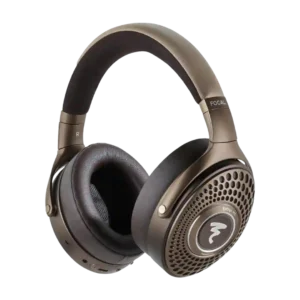
Product 2: Focal Bathys MG Wireless Headphones
4.1
Active noise cancellation
P1
Product 1: Gadhouse Wesley Retro Headphones
1.0
ANC is not part of the Wesley package; coverage explicitly frames active noise cancellation as absent, so buyers should not expect active hush from this retro wired design.
P2
Product 2: Focal Bathys MG Wireless Headphones
4.0
ANC is good to very good and clearly improved over the original, but the consensus is that Sony and Bose still cancel more noise overall, especially in the mids. The three-mode ANC system gives useful control with Silent, Soft, and Transparency options, even though there is no true ANC-off mode.
Android compatibility
P1Product 1: Gadhouse Wesley Retro Headphones
No score yet
P2
Product 2: Focal Bathys MG Wireless Headphones
4.0
Android support is straightforward, with repeated references to Android compatibility in specs, pairing, and app support.
App
P1Product 1: Gadhouse Wesley Retro Headphones
No score yet
P2
Product 2: Focal Bathys MG Wireless Headphones
3.9
The Focal & Naim app is useful for basics like ANC, EQ, personalization, lighting, and battery view, but several reviewers find it limited or occasionally glitchy.
aptX
P1Product 1: Gadhouse Wesley Retro Headphones
No score yet
P2
Product 2: Focal Bathys MG Wireless Headphones
4.2
aptX support is a clear plus and is repeatedly listed as part of the headphone's strong everyday wireless feature set.
Audio-video sync accuracy
P1
Product 1: Gadhouse Wesley Retro Headphones
4.8
Its wired connection is presented as low-latency and free of the Bluetooth delay issues that can throw off lip-sync or gaming timing.
P2Product 2: Focal Bathys MG Wireless Headphones
No score yetBass performance
P1
Product 1: Gadhouse Wesley Retro Headphones
2.9
Bass is adequate for casual listening but loses control as volume rises, with the clearest hands-on review calling out muddiness and low-end smearing.
P2
Product 2: Focal Bathys MG Wireless Headphones
4.4
Bass is generally praised for depth, slam, texture, and control, though several reviewers note the default tuning can run a little warm, boomy, or heavy before EQ.
Battery
P1Product 1: Gadhouse Wesley Retro Headphones
No score yet
P2
Product 2: Focal Bathys MG Wireless Headphones
4.3
Battery life is solid rather than class-leading, with the commonly cited 30-hour Bluetooth figure generally holding up well in real use. Battery replacement appears possible through Focal service rather than as a user-swappable design, offering some serviceability without true end-user replaceability.
Bluetooth
P1Product 1: Gadhouse Wesley Retro Headphones
No score yet
P2
Product 2: Focal Bathys MG Wireless Headphones
4.3
Bluetooth performance is usually stable with fast pairing and dependable everyday use, but a few reports mention quirks rather than flawless behavior.
Build quality
P1
Product 1: Gadhouse Wesley Retro Headphones
4.1
Construction looks simple but respectable for the price, with a stainless steel or robust headband noted alongside very light materials rather than heavy premium heft.
P2
Product 2: Focal Bathys MG Wireless Headphones
4.8
Build quality is one of the strongest consensus positives, with premium materials, excellent finishing, and solid construction throughout.
Built-in DAC and hi-res playback
P1
Product 1: Gadhouse Wesley Retro Headphones
4.6
Multiple sources highlight 48kHz lossless playback over USB-C as a useful modern upgrade on an otherwise old-school wired design.
P2
Product 2: Focal Bathys MG Wireless Headphones
4.8
The built-in DAC and hi-res USB playback are among the headphone's clearest differentiators, and many reviewers treat DAC mode as a headline feature.
Button control usability
P1
Product 1: Gadhouse Wesley Retro Headphones
4.5
Inline controls are consistently described as easy, tactile, and intuitive for playback, track skipping, and everyday use.
P2
Product 2: Focal Bathys MG Wireless Headphones
4.5
Physical controls are a strength, with tactile buttons and switches that are generally easier to trust than touch panels.
Cable quality
P1
Product 1: Gadhouse Wesley Retro Headphones
2.6
The fixed 1.5 meter cable fits the retro concept but is also the biggest ergonomic drawback, with tangling and cumbersome handling called out.
P2
Product 2: Focal Bathys MG Wireless Headphones
4.3
The included cables are generally described as acceptable to durable, even if they are not luxurious extras.
Carry case quality
P1Product 1: Gadhouse Wesley Retro Headphones
No score yet
P2
Product 2: Focal Bathys MG Wireless Headphones
4.4
The carry case is repeatedly praised as protective, slim, and premium, even if a few users still find it bulky in a bag.
Charging
P1
Product 1: Gadhouse Wesley Retro Headphones
5.0
Because the Wesley is fully wired, there is nothing to charge; several pieces frame that as a real convenience for commuting and plug-and-play use.
P2
Product 2: Focal Bathys MG Wireless Headphones
4.4
Fast charging is a practical plus, with the widely repeated 15-minute top-up for roughly five hours of playback.
Clamping force comfort
P1
Product 1: Gadhouse Wesley Retro Headphones
4.5
Available hands-on impressions suggest an easy, non-fatiguing fit rather than an overly tight clamp, helping comfort over longer sessions.
P2
Product 2: Focal Bathys MG Wireless Headphones
4.5
Clamp is generally better judged than on the original Bathys, feeling secure without being overly oppressive for most listeners.
Codec support
P1Product 1: Gadhouse Wesley Retro Headphones
No score yet
P2
Product 2: Focal Bathys MG Wireless Headphones
3.3
Codec support is serviceable rather than cutting-edge: aptX and aptX Adaptive are welcome, but multiple reviews call out the lack of broader premium codec coverage.
Comfort during long use
P1
Product 1: Gadhouse Wesley Retro Headphones
4.8
Comfort is one of the product's clearest strengths thanks to its light build and soft foam pads, with multiple reviews describing it as easy to wear for extended listening.
P2
Product 2: Focal Bathys MG Wireless Headphones
4.6
Long-session comfort is one of the Bathys MG's most consistent wins, with many reviewers praising fatigue-free wear over flights, workdays, or extended listening.
Design and Aesthetics
P1
Product 1: Gadhouse Wesley Retro Headphones
4.9
Retro styling is the Wesley's standout trait, repeatedly positioned as a nostalgic statement piece that channels Walkman-era fashion.
P2
Product 2: Focal Bathys MG Wireless Headphones
4.7
Design is a major selling point, with the chestnut finish, leather, metal accents, and illuminated logo giving the Bathys MG a clearly luxurious identity.
Detachable cable convenience
P1Product 1: Gadhouse Wesley Retro Headphones
No score yet
P2
Product 2: Focal Bathys MG Wireless Headphones
4.4
The included 3.5mm and USB-C wired options add real convenience for travel, desk use, and higher-quality listening beyond Bluetooth.
Ear cup padding quality
P1
Product 1: Gadhouse Wesley Retro Headphones
4.8
The foam pads are described as soft and squishy, supporting the headphone's strong comfort story even if they are not plush modern luxury pads.
P2
Product 2: Focal Bathys MG Wireless Headphones
4.7
Softer, more supple pads are a meaningful upgrade, improving comfort, seal, and overall premium feel.
Ear cup swivel/rotation range
P1Product 1: Gadhouse Wesley Retro Headphones
No score yet
P2
Product 2: Focal Bathys MG Wireless Headphones
3.5
The cups offer enough articulation to sit comfortably and fold flat, but the headphone is not especially compact and does not fold into a tighter travel shape.
Equalizer customization
P1Product 1: Gadhouse Wesley Retro Headphones
No score yet
P2
Product 2: Focal Bathys MG Wireless Headphones
3.9
EQ is helpful and usable, but the five-band structure is repeatedly described as limited compared with fuller parametric options.
Frequency response accuracy
P1Product 1: Gadhouse Wesley Retro Headphones
No score yet
P2
Product 2: Focal Bathys MG Wireless Headphones
4.7
Reviewers consistently describe the tonal balance as natural, balanced, or close to reference in the better presets, with cleaner frequency relationships than the original Bathys.
Headband adjustability
P1
Product 1: Gadhouse Wesley Retro Headphones
4.5
The adjustable sizing system appears straightforward and functional, with sliders and a snug fit mentioned in coverage.
P2
Product 2: Focal Bathys MG Wireless Headphones
4.2
The headband and slider system is easy to adjust and feels premium, helping users dial in fit without fuss.
Hinge durability
P1Product 1: Gadhouse Wesley Retro Headphones
No score yet
P2
Product 2: Focal Bathys MG Wireless Headphones
4.5
The yokes and hinge-related hardware are widely described as sturdy, well finished, and built to last.
Included accessories
P1
Product 1: Gadhouse Wesley Retro Headphones
4.7
Accessory support is better than expected for the price, with 3.5mm, 6.35mm, and USB-C connection options regularly highlighted.
P2
Product 2: Focal Bathys MG Wireless Headphones
4.2
The included bundle is straightforward but useful, typically covering the hard case plus 3.5mm and USB-C cables.
Instrument separation
P1
Product 1: Gadhouse Wesley Retro Headphones
3.3
Separation is passable at moderate levels but weakens noticeably when mixes get busier or volume climbs.
P2
Product 2: Focal Bathys MG Wireless Headphones
4.8
Instrument separation is frequently singled out as excellent, with strong channel separation, precise placement, and the ability to keep dense mixes organized.
Integrated microphone
P1
Product 1: Gadhouse Wesley Retro Headphones
4.1
An inline mic is consistently included for calls and basic voice use, though the coverage says more about availability than exceptional call performance.
P2
Product 2: Focal Bathys MG Wireless Headphones
4.2
The built-in mic setup is a practical part of the package, handling calls, assistants, and ANC duties without standing out as a weak point.
LDAC
P1Product 1: Gadhouse Wesley Retro Headphones
No score yet
P2
Product 2: Focal Bathys MG Wireless Headphones
1.5
LDAC is a notable omission and one of the most commonly cited feature complaints at this price.
Maximum volume clarity
P1
Product 1: Gadhouse Wesley Retro Headphones
2.2
High-volume performance is the product's clearest weakness, with sound becoming muddy and less separated when pushed.
P2
Product 2: Focal Bathys MG Wireless Headphones
4.0
At louder playback levels the Bathys MG generally stays composed and detailed, but some reviewers still hear treble edge on bright material, so max-volume behavior is good rather than perfect.
Microphone noise reduction
P1Product 1: Gadhouse Wesley Retro Headphones
No score yet
P2
Product 2: Focal Bathys MG Wireless Headphones
4.2
The microphone array does a respectable job suppressing background noise and keeping speech intelligible, though wind and harsher noise are not fully erased.
Microphone quality for calls
P1Product 1: Gadhouse Wesley Retro Headphones
No score yet
P2
Product 2: Focal Bathys MG Wireless Headphones
4.2
Call quality is generally solid, with voices coming through clearly and naturally even if the very best Sony-style call performance is still a step ahead.
Midrange clarity
P1
Product 1: Gadhouse Wesley Retro Headphones
4.1
Vocals and mids come through more cleanly than the rest of the range, making speech and vocal-forward tracks a relative strength.
P2
Product 2: Focal Bathys MG Wireless Headphones
4.6
Midrange performance is a major strength, delivering clear, rich, weighty instruments and improved vocal/instrument resolution over the original, even if a few reviewers wanted vocals pushed further forward.
Multi-platform compatibility
P1
Product 1: Gadhouse Wesley Retro Headphones
4.6
With included adapters and standard wired connections, the Wesley is framed as easy to use across phones, laptops, music players, and older audio gear.
P2
Product 2: Focal Bathys MG Wireless Headphones
4.4
The Bathys MG works broadly across phones, computers, tablets, and wired sources, making it easy to use across mixed-device setups.
Multipoint connectivity reliability
P1Product 1: Gadhouse Wesley Retro Headphones
No score yet
P2
Product 2: Focal Bathys MG Wireless Headphones
4.2
Multipoint is supported and often works well, though several reviewers mention occasional switching quirks that keep it from feeling completely polished.
Noise isolation (passive)
P1Product 1: Gadhouse Wesley Retro Headphones
No score yet
P2
Product 2: Focal Bathys MG Wireless Headphones
4.1
Passive isolation benefits from the over-ear seal and softer pads, though seal sensitivity with glasses is noted by at least one reviewer and total isolation still leans on ANC.
Portability/foldability
P1
Product 1: Gadhouse Wesley Retro Headphones
2.8
The headphones are light and not bulky, but portability is undercut by the long fixed cable and lack of a carry case.
P2
Product 2: Focal Bathys MG Wireless Headphones
4.2
Portability is decent for a premium over-ear: the headphone folds flat and the revised case is slimmer, but it still is not a truly compact travel design.
Preset EQ profile quality
P1Product 1: Gadhouse Wesley Retro Headphones
No score yet
P2
Product 2: Focal Bathys MG Wireless Headphones
4.4
Preset profiles, especially Dynamic, are viewed positively and can materially improve tonal balance depending on listener taste.
Replaceable earpads
P1Product 1: Gadhouse Wesley Retro Headphones
No score yet
P2
Product 2: Focal Bathys MG Wireless Headphones
4.3
Replaceable earpads are explicitly mentioned and add welcome long-term serviceability.
Sensors
P1Product 1: Gadhouse Wesley Retro Headphones
No score yet
P2
Product 2: Focal Bathys MG Wireless Headphones
2.0
Convenience sensors are sparse, with at least one reviewer specifically calling out the lack of wear detection.
Sidetone adjustment quality
P1Product 1: Gadhouse Wesley Retro Headphones
No score yet
P2
Product 2: Focal Bathys MG Wireless Headphones
3.9
Sidetone adjustment is present in the app, but it is not explored deeply enough in reviews to suggest anything beyond basic usefulness.
Software/setup simplicity
P1
Product 1: Gadhouse Wesley Retro Headphones
4.8
Battery-free, app-free, firmware-free operation makes the Wesley extremely simple to use: plug it in and go.
P2
Product 2: Focal Bathys MG Wireless Headphones
4.0
Setup is usually straightforward, but the app and feature set are not always as polished or flexible as the best consumer-audio ecosystems.
Sound quality
P1
Product 1: Gadhouse Wesley Retro Headphones
3.9
Overall sound lands in the decent-but-not-audiophile camp: fine for casual listening and clear vocals, but not consistently refined or competitive with stronger sound-focused rivals. The wired setup brings dependable low-latency listening and potentially cleaner lossless playback, but the sonic payoff still depends on expectations because the tuning remains modest.
P2
Product 2: Focal Bathys MG Wireless Headphones
4.7
Across the file, the Bathys MG is repeatedly described as one of the best-sounding wireless headphones available, with standout refinement, detail, dynamics, and realism. Wired listening is a real strength, especially in USB-DAC mode, with reviewers repeatedly hearing cleaner, higher-resolution playback than over standard Bluetooth.
Soundstage width
P1
Product 1: Gadhouse Wesley Retro Headphones
2.8
At least one hands-on review found the presentation somewhat hollow and not especially spacious, so staging is not a major selling point.
P2
Product 2: Focal Bathys MG Wireless Headphones
4.5
For a closed-back wireless design, the Bathys MG earns unusually strong soundstage marks, with convincing width, layering, and better spatial openness than most ANC rivals.
Spatial audio
P1Product 1: Gadhouse Wesley Retro Headphones
No score yet
P2
Product 2: Focal Bathys MG Wireless Headphones
1.5
Spatial audio is absent, and several reviewers explicitly note that Focal prioritized core sound over that feature.
Stability
P1Product 1: Gadhouse Wesley Retro Headphones
No score yet
P2
Product 2: Focal Bathys MG Wireless Headphones
3.6
Fit stability is mostly good for seated use and commuting, but a few comments suggest movement-related thumping or shifting during more active use.
Sustainability materials
P1Product 1: Gadhouse Wesley Retro Headphones
No score yet
P2
Product 2: Focal Bathys MG Wireless Headphones
4.5
The packaging and material story show some environmental consideration, including recycled or FSC-style materials in the box and presentation.
Touch control responsiveness
P1Product 1: Gadhouse Wesley Retro Headphones
No score yet
P2
Product 2: Focal Bathys MG Wireless Headphones
1.5
There are no touch controls here, so anyone wanting swipe gestures or tap controls will not find them.
Transparency mode quality
P1Product 1: Gadhouse Wesley Retro Headphones
No score yet
P2
Product 2: Focal Bathys MG Wireless Headphones
4.3
Transparency mode is considered effective and natural enough for conversations and situational awareness without removing the headphones.
Treble clarity
P1
Product 1: Gadhouse Wesley Retro Headphones
3.8
Treble is generally clear enough for casual use, though it does not fully escape the broader softness and muddiness heard at higher volumes.
P2
Product 2: Focal Bathys MG Wireless Headphones
4.3
Treble is mostly clear, smooth, and detailed, but a few reviewers hear some edge or heat up top, especially on bright recordings or at louder levels.
USB-C
P1
Product 1: Gadhouse Wesley Retro Headphones
4.6
USB-C support is a major practical plus, letting the Wesley connect to modern devices while still keeping its wired retro identity.
P2
Product 2: Focal Bathys MG Wireless Headphones
4.7
USB-C is central to the product experience, handling charging and the high-value DAC mode for higher-resolution wired playback.
Voice assistant integration
P1Product 1: Gadhouse Wesley Retro Headphones
No score yet
P2
Product 2: Focal Bathys MG Wireless Headphones
4.3
Voice assistant access is built in and works as expected through the dedicated button and supported platforms.
Weight comfort
P1
Product 1: Gadhouse Wesley Retro Headphones
4.8
At roughly 105 grams, the Wesley is unusually light for an over-ear, and that featherweight feel is repeatedly praised.
P2
Product 2: Focal Bathys MG Wireless Headphones
4.2
At about 350g the Bathys MG is not especially light, but most reviewers still find the weight well managed and comfortable in practice.