Average score
P1
Product 1: Gadhouse Wesley Retro Headphones
4.0
P2
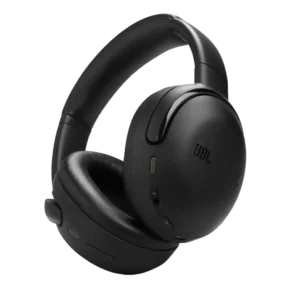
Product 2: JBL Tour One M3 Headphones
4.2
3.5mm analog input availability
P1Product 1: Gadhouse Wesley Retro Headphones
No score yet
P2
Product 2: JBL Tour One M3 Headphones
4.7
Analog input was well supported through included 3.5mm-to-USB-C or AUX-to-USB-C options and analog audio support.
Active noise cancellation
P1
Product 1: Gadhouse Wesley Retro Headphones
1.0
ANC is not part of the Wesley package; coverage explicitly frames active noise cancellation as absent, so buyers should not expect active hush from this retro wired design.
P2
Product 2: JBL Tour One M3 Headphones
4.2
ANC was widely praised as strong and travel-ready, but reviewers disagreed on whether it truly matches Bose or Sony class leaders.
Advanced software features
P1Product 1: Gadhouse Wesley Retro Headphones
No score yet
P2
Product 2: JBL Tour One M3 Headphones
4.7
Advanced features were a recurring strength, spanning Auracast, volume limiting, spatial audio, app controls, and adaptive processing.
Aesthetics / discreet profile
P1Product 1: Gadhouse Wesley Retro Headphones
No score yet
P2
Product 2: JBL Tour One M3 Headphones
4.1
The profile was generally discreet or understated rather than flashy, which some reviewers appreciated.
ANC background noise level
P1Product 1: Gadhouse Wesley Retro Headphones
No score yet
P2
Product 2: JBL Tour One M3 Headphones
4.7
ANC background noise was low, with reviewers noting high ANC scores and near-silent operation without hiss.
ANC effect on sound signature
P1Product 1: Gadhouse Wesley Retro Headphones
No score yet
P2
Product 2: JBL Tour One M3 Headphones
3.8
One review noted that bass sounded tighter with noise reduction turned off, showing ANC can affect the sound signature.
ANC sound impact on audio
P1Product 1: Gadhouse Wesley Retro Headphones
No score yet
P2
Product 2: JBL Tour One M3 Headphones
4.3
ANC generally did not harm the sound, and one review even preferred the tuning with noise cancelling on.
Android compatibility
P1Product 1: Gadhouse Wesley Retro Headphones
No score yet
P2
Product 2: JBL Tour One M3 Headphones
4.4
Android compatibility was supported through Google Fast Pair, Google Audio Switch, and quick Android pairing.
App
P1Product 1: Gadhouse Wesley Retro Headphones
No score yet
P2
Product 2: JBL Tour One M3 Headphones
4.6
The JBL Headphones app was widely praised for depth and customization, though one reviewer found the many options potentially overwhelming.
Audio-video sync accuracy
P1
Product 1: Gadhouse Wesley Retro Headphones
4.8
Its wired connection is presented as low-latency and free of the Bluetooth delay issues that can throw off lip-sync or gaming timing.
P2
Product 2: JBL Tour One M3 Headphones
4.7
Latency and sync were generally praised, especially with the Smart Tx and video use.
Auto-play/wear detection
P1Product 1: Gadhouse Wesley Retro Headphones
No score yet
P2
Product 2: JBL Tour One M3 Headphones
4.3
Wear detection and auto play/pause were present, though reliability varied across reviewers.
Auto on/off reliability
P1Product 1: Gadhouse Wesley Retro Headphones
No score yet
P2
Product 2: JBL Tour One M3 Headphones
4.5
Auto-off behavior was positive, with evidence that the headphones or Smart Tx shut down when idle to preserve battery.
Bass performance
P1
Product 1: Gadhouse Wesley Retro Headphones
2.9
Bass is adequate for casual listening but loses control as volume rises, with the clearest hands-on review calling out muddiness and low-end smearing.
P2
Product 2: JBL Tour One M3 Headphones
4.1
Bass was often described as punchy, deep, rich, or musical, but a few reviewers found the stock sub-bass boomy or underwhelming.
Battery
P1Product 1: Gadhouse Wesley Retro Headphones
No score yet
P2
Product 2: JBL Tour One M3 Headphones
4.8
Battery life was one of the strongest consensus wins, with reviewers citing 40 hours with ANC and up to 70 hours without.
Bluetooth
P1Product 1: Gadhouse Wesley Retro Headphones
No score yet
P2
Product 2: JBL Tour One M3 Headphones
4.1
Bluetooth performance included strong range in one test but also a weaker-than-expected range report from another reviewer.
Bluetooth version
P1Product 1: Gadhouse Wesley Retro Headphones
No score yet
P2
Product 2: JBL Tour One M3 Headphones
4.5
Bluetooth 5.3 was repeatedly identified as the wireless version in review evidence.
Build quality
P1
Product 1: Gadhouse Wesley Retro Headphones
4.1
Construction looks simple but respectable for the price, with a stainless steel or robust headband noted alongside very light materials rather than heavy premium heft.
P2
Product 2: JBL Tour One M3 Headphones
3.5
Build quality was mixed: reviewers liked the light, durable feel in use but often noted cheap-feeling plastic at the price.
Built-in DAC and hi-res playback
P1
Product 1: Gadhouse Wesley Retro Headphones
4.6
Multiple sources highlight 48kHz lossless playback over USB-C as a useful modern upgrade on an otherwise old-school wired design.
P2
Product 2: JBL Tour One M3 Headphones
4.7
Built-in DAC and hi-res wired playback were consistently praised through USB-C, analog, LDAC, and wired high-resolution use.
Button control usability
P1
Product 1: Gadhouse Wesley Retro Headphones
4.5
Inline controls are consistently described as easy, tactile, and intuitive for playback, track skipping, and everyday use.
P2
Product 2: JBL Tour One M3 Headphones
4.4
Physical buttons and mixed controls were generally easy to use and appreciated for volume, ANC, pairing, and playback.
Cable quality
P1
Product 1: Gadhouse Wesley Retro Headphones
2.6
The fixed 1.5 meter cable fits the retro concept but is also the biggest ergonomic drawback, with tangling and cumbersome handling called out.
P2Product 2: JBL Tour One M3 Headphones
No score yetCarry case quality
P1Product 1: Gadhouse Wesley Retro Headphones
No score yet
P2
Product 2: JBL Tour One M3 Headphones
4.5
The case was generally liked for slimness, compactness, accessory storage, and travel-friendly details.
Charging
P1
Product 1: Gadhouse Wesley Retro Headphones
5.0
Because the Wesley is fully wired, there is nothing to charge; several pieces frame that as a real convenience for commuting and plug-and-play use.
P2
Product 2: JBL Tour One M3 Headphones
4.7
Charging was praised for quick top-ups and roughly two-hour full recharges in multiple reviews.
Clamping force comfort
P1
Product 1: Gadhouse Wesley Retro Headphones
4.5
Available hands-on impressions suggest an easy, non-fatiguing fit rather than an overly tight clamp, helping comfort over longer sessions.
P2
Product 2: JBL Tour One M3 Headphones
4.3
Clamping force was mostly judged comfortable and not overly tight, though one ANC-sensitive reviewer felt pressure.
Codec support
P1Product 1: Gadhouse Wesley Retro Headphones
No score yet
P2
Product 2: JBL Tour One M3 Headphones
4.7
Codec support was repeatedly praised for SBC, AAC, LC3, and LDAC coverage.
Comfort during long use
P1
Product 1: Gadhouse Wesley Retro Headphones
4.8
Comfort is one of the product's clearest strengths thanks to its light build and soft foam pads, with multiple reviews describing it as easy to wear for extended listening.
P2
Product 2: JBL Tour One M3 Headphones
4.6
Long-use comfort was one of the strongest points, with many reviewers wearing them for hours or flights without major pain.
Connectivity options
P1Product 1: Gadhouse Wesley Retro Headphones
No score yet
P2
Product 2: JBL Tour One M3 Headphones
4.9
Connectivity options were a standout strength, with reviewers emphasizing USB-C, analog audio, Bluetooth, Smart Tx, and broad device compatibility.
Design and Aesthetics
P1
Product 1: Gadhouse Wesley Retro Headphones
4.9
Retro styling is the Wesley's standout trait, repeatedly positioned as a nostalgic statement piece that channels Walkman-era fashion.
P2
Product 2: JBL Tour One M3 Headphones
4.1
Design reactions were mixed between attractive, understated styling and a somewhat unremarkable plastic look.
Dongle
P1Product 1: Gadhouse Wesley Retro Headphones
No score yet
P2
Product 2: JBL Tour One M3 Headphones
4.3
The Smart Tx transmitter was the most debated feature: many loved its flexibility, while some called it niche, losable, or unnecessary.
Durability over time
P1Product 1: Gadhouse Wesley Retro Headphones
No score yet
P2
Product 2: JBL Tour One M3 Headphones
4.2
Durability evidence was positive but limited, with reviewers mentioning no damage after testing and a rugged-feeling structure.
Ear cup padding quality
P1
Product 1: Gadhouse Wesley Retro Headphones
4.8
The foam pads are described as soft and squishy, supporting the headphone's strong comfort story even if they are not plush modern luxury pads.
P2
Product 2: JBL Tour One M3 Headphones
4.7
Earcup padding was repeatedly called soft, plush, deep, or comfortable, supporting long sessions.
Ear cup swivel/rotation range
P1Product 1: Gadhouse Wesley Retro Headphones
No score yet
P2
Product 2: JBL Tour One M3 Headphones
4.4
One reviewer specifically noted fully rotating earcups that help around-the-neck use.
Ecosystem integration
P1Product 1: Gadhouse Wesley Retro Headphones
No score yet
P2
Product 2: JBL Tour One M3 Headphones
4.3
Ecosystem integration evidence centered on Google Fast Pair and Google Audio Switch support.
Equalizer customization
P1Product 1: Gadhouse Wesley Retro Headphones
No score yet
P2
Product 2: JBL Tour One M3 Headphones
4.5
EQ customization was a major strength, with reviewers praising detailed multiband or 10/12-band adjustment and meaningful sound changes.
Features at launch
P1Product 1: Gadhouse Wesley Retro Headphones
No score yet
P2
Product 2: JBL Tour One M3 Headphones
4.6
Launch feature coverage was strong, with reviewers emphasizing a broad set of cutting-edge features at release.
Find My
P1Product 1: Gadhouse Wesley Retro Headphones
No score yet
P2
Product 2: JBL Tour One M3 Headphones
4.5
Find My support was explicitly listed among the advanced features.
Frequency response accuracy
P1Product 1: Gadhouse Wesley Retro Headphones
No score yet
P2
Product 2: JBL Tour One M3 Headphones
4.2
Frequency balance was described as relatively natural or balanced, though one reviewer characterized the tone as neutral-dark.
Headband adjustability
P1
Product 1: Gadhouse Wesley Retro Headphones
4.5
The adjustable sizing system appears straightforward and functional, with sliders and a snug fit mentioned in coverage.
P2
Product 2: JBL Tour One M3 Headphones
4.1
Headband adjustability was adequate to good, though one review warned that smaller heads may struggle with fit.
Headband padding quality
P1Product 1: Gadhouse Wesley Retro Headphones
No score yet
P2
Product 2: JBL Tour One M3 Headphones
4.4
Headband padding was generally comfortable and supportive, with repeated mentions of cushioning or even weight distribution.
Immersive audio quality
P1Product 1: Gadhouse Wesley Retro Headphones
No score yet
P2
Product 2: JBL Tour One M3 Headphones
4.6
Immersive audio was praised for movies and spatial effects, especially by reviewers focused on travel entertainment.
Included accessories
P1
Product 1: Gadhouse Wesley Retro Headphones
4.7
Accessory support is better than expected for the price, with 3.5mm, 6.35mm, and USB-C connection options regularly highlighted.
P2
Product 2: JBL Tour One M3 Headphones
4.8
Included accessories were generous, including USB-C, 3.5mm, USB-A adapters, airplane adapters, cases, and storage pockets.
Instrument separation
P1
Product 1: Gadhouse Wesley Retro Headphones
3.3
Separation is passable at moderate levels but weakens noticeably when mixes get busier or volume climbs.
P2
Product 2: JBL Tour One M3 Headphones
4.2
Instrument separation was a repeat strength, with reviewers hearing clean spacing and distinct instrumentation.
Integrated microphone
P1
Product 1: Gadhouse Wesley Retro Headphones
4.1
An inline mic is consistently included for calls and basic voice use, though the coverage says more about availability than exceptional call performance.
P2
Product 2: JBL Tour One M3 Headphones
4.6
Integrated microphones were clearly present, with review evidence citing eight microphones or four per earcup.
LDAC
P1Product 1: Gadhouse Wesley Retro Headphones
No score yet
P2
Product 2: JBL Tour One M3 Headphones
4.7
LDAC support was a recurring strength and was tied to better-resolution Bluetooth listening in several reviews.
LE Audio readiness
P1Product 1: Gadhouse Wesley Retro Headphones
No score yet
P2
Product 2: JBL Tour One M3 Headphones
4.5
LE Audio and Auracast readiness were major future-facing strengths, enabling LC3 and shared audio use cases.
Maximum volume clarity
P1
Product 1: Gadhouse Wesley Retro Headphones
2.2
High-volume performance is the product's clearest weakness, with sound becoming muddy and less separated when pushed.
P2
Product 2: JBL Tour One M3 Headphones
2.6
High-volume composure was a concern in one review, where the treble became unruly and the presentation flattened.
Microphone noise reduction
P1Product 1: Gadhouse Wesley Retro Headphones
No score yet
P2
Product 2: JBL Tour One M3 Headphones
4.7
Microphone noise reduction was a clear strength, with reviewers highlighting wind, road, and background-noise handling.
Microphone quality for calls
P1Product 1: Gadhouse Wesley Retro Headphones
No score yet
P2
Product 2: JBL Tour One M3 Headphones
4.4
Call quality drew consistent praise for clear voices, with one review only calling the microphones acceptable rather than exceptional.
Midrange clarity
P1
Product 1: Gadhouse Wesley Retro Headphones
4.1
Vocals and mids come through more cleanly than the rest of the range, making speech and vocal-forward tracks a relative strength.
P2
Product 2: JBL Tour One M3 Headphones
4.0
Midrange comments were mostly positive for clear vocals and detail, with some criticism that voices could be more natural or full-bodied.
Multi-platform compatibility
P1
Product 1: Gadhouse Wesley Retro Headphones
4.6
With included adapters and standard wired connections, the Wesley is framed as easy to use across phones, laptops, music players, and older audio gear.
P2
Product 2: JBL Tour One M3 Headphones
4.8
Multi-platform use was supported through gaming handhelds and laptops via the transmitter.
Multipoint connectivity reliability
P1Product 1: Gadhouse Wesley Retro Headphones
No score yet
P2
Product 2: JBL Tour One M3 Headphones
4.0
Multipoint and switching features are present, but evidence was mixed because one reviewer reported stuttering during multipoint use.
Noise isolation (passive)
P1Product 1: Gadhouse Wesley Retro Headphones
No score yet
P2
Product 2: JBL Tour One M3 Headphones
4.4
Passive isolation was helped by the earcups, with reviewers noting strong isolation even before ANC was engaged.
Overall recommendation
P1Product 1: Gadhouse Wesley Retro Headphones
No score yet
P2
Product 2: JBL Tour One M3 Headphones
4.4
Overall recommendations were positive, especially for travelers, Auracast adopters, and buyers who value flexibility.
Portability/foldability
P1
Product 1: Gadhouse Wesley Retro Headphones
2.8
The headphones are light and not bulky, but portability is undercut by the long fixed cable and lack of a carry case.
P2
Product 2: JBL Tour One M3 Headphones
4.7
Portability was strong because the headphones fold or collapse into compact travel cases.
Premium feel
P1Product 1: Gadhouse Wesley Retro Headphones
No score yet
P2
Product 2: JBL Tour One M3 Headphones
2.9
Premium feel was a weak spot, with reviewers saying the headphones lacked the polish or expensive feel of rivals.
Preset EQ profile quality
P1Product 1: Gadhouse Wesley Retro Headphones
No score yet
P2
Product 2: JBL Tour One M3 Headphones
3.6
Preset EQ reactions were mixed: some liked Studio, Jazz, or well-engineered presets, while others disliked or found some presets boomy.
Replaceable earpads
P1Product 1: Gadhouse Wesley Retro Headphones
No score yet
P2
Product 2: JBL Tour One M3 Headphones
1.8
Earpad replaceability was a weakness, with one review stating the cups do not pop off.
Sidetone adjustment quality
P1Product 1: Gadhouse Wesley Retro Headphones
No score yet
P2
Product 2: JBL Tour One M3 Headphones
4.4
Sidetone and voice-awareness controls were supported, allowing users to hear more or less of their own voice.
Smart listening features
P1Product 1: Gadhouse Wesley Retro Headphones
No score yet
P2
Product 2: JBL Tour One M3 Headphones
4.3
Smart listening features such as Smart Talk, adaptive ANC, and personalized hearing profiles were useful, though TalkThru lag was noted.
Smart Pause performance
P1Product 1: Gadhouse Wesley Retro Headphones
No score yet
P2
Product 2: JBL Tour One M3 Headphones
3.4
Smart Pause performance was mixed, with one reviewer calling auto-pause trigger-happy while another found auto play/pause supported.
Software/setup simplicity
P1
Product 1: Gadhouse Wesley Retro Headphones
4.8
Battery-free, app-free, firmware-free operation makes the Wesley extremely simple to use: plug it in and go.
P2
Product 2: JBL Tour One M3 Headphones
3.0
Setup simplicity was mixed for Auracast because non-JBL device pairing involved apps and troubleshooting.
Sound quality
P1
Product 1: Gadhouse Wesley Retro Headphones
3.9
Overall sound lands in the decent-but-not-audiophile camp: fine for casual listening and clear vocals, but not consistently refined or competitive with stronger sound-focused rivals. The wired setup brings dependable low-latency listening and potentially cleaner lossless playback, but the sonic payoff still depends on expectations because the tuning remains modest.
P2
Product 2: JBL Tour One M3 Headphones
4.3
Reviewers generally found the sound enjoyable, clear, and detailed, though a few called the stock tuning imperfect or below stronger rivals.
Soundstage width
P1
Product 1: Gadhouse Wesley Retro Headphones
2.8
At least one hands-on review found the presentation somewhat hollow and not especially spacious, so staging is not a major selling point.
P2
Product 2: JBL Tour One M3 Headphones
4.1
Soundstage was usually described as spacious or expansive, though one reviewer found it less evocative than competitors.
Spatial audio
P1Product 1: Gadhouse Wesley Retro Headphones
No score yet
P2
Product 2: JBL Tour One M3 Headphones
4.1
Spatial audio and head tracking were often seen as immersive for movies, though some reviewers found the effect echoey or not to their taste.
Stability
P1Product 1: Gadhouse Wesley Retro Headphones
No score yet
P2
Product 2: JBL Tour One M3 Headphones
4.3
Fit stability was positive in one review, where the clamping was snug enough to feel secure while walking.
Touch control responsiveness
P1Product 1: Gadhouse Wesley Retro Headphones
No score yet
P2
Product 2: JBL Tour One M3 Headphones
3.5
Touch controls were divisive: some found them responsive, while others reported sensitivity, limited customization, or inconsistent behavior.
Transparency mode quality
P1Product 1: Gadhouse Wesley Retro Headphones
No score yet
P2
Product 2: JBL Tour One M3 Headphones
4.3
Transparency and ambient modes were mostly useful and natural, though one review noted hiss and another saw the feature set as stronger than pure naturalness.
Travel friendliness
P1Product 1: Gadhouse Wesley Retro Headphones
No score yet
P2
Product 2: JBL Tour One M3 Headphones
4.9
Travel friendliness was a core strength thanks to comfort, battery life, Smart Tx, case design, and airplane use.
Treble clarity
P1
Product 1: Gadhouse Wesley Retro Headphones
3.8
Treble is generally clear enough for casual use, though it does not fully escape the broader softness and muddiness heard at higher volumes.
P2
Product 2: JBL Tour One M3 Headphones
4.0
Treble was praised for sparkle, air, and clarity, but several reviewers noted brightness or forwardness that could become edgy.
USB-C
P1
Product 1: Gadhouse Wesley Retro Headphones
4.6
USB-C support is a major practical plus, letting the Wesley connect to modern devices while still keeping its wired retro identity.
P2
Product 2: JBL Tour One M3 Headphones
4.6
USB-C support was clear across the headphones and Smart Tx, including charging, wired playback, and device connection.
Value for money
P1Product 1: Gadhouse Wesley Retro Headphones
No score yet
P2
Product 2: JBL Tour One M3 Headphones
4.1
Value opinions were mixed: some reviewers saw strong value, while others thought the price or transmitter premium was hard to justify.
Voice assistant integration
P1Product 1: Gadhouse Wesley Retro Headphones
No score yet
P2
Product 2: JBL Tour One M3 Headphones
4.2
Voice assistant access was supported through press-and-hold controls in one review.
Voice prompts/feedback
P1Product 1: Gadhouse Wesley Retro Headphones
No score yet
P2
Product 2: JBL Tour One M3 Headphones
3.3
Feedback and prompts were useful for confirming touches, but some reviewers found the beeps or voice prompts loud or annoying.
Water/sweat resistance rating
P1Product 1: Gadhouse Wesley Retro Headphones
No score yet
P2
Product 2: JBL Tour One M3 Headphones
1.8
Reviewers repeatedly noted the absence of an official water or ingress-protection rating.
Wear detection auto-pause
P1Product 1: Gadhouse Wesley Retro Headphones
No score yet
P2
Product 2: JBL Tour One M3 Headphones
2.8
Wear-detection auto-pause could miss removal events, as one review found podcasts continued playing after the headphones were taken off.
Wear detection performance
P1Product 1: Gadhouse Wesley Retro Headphones
No score yet
P2
Product 2: JBL Tour One M3 Headphones
2.5
Wear detection performance had a notable criticism, with auto-pause described as too trigger-happy in one flight-use review.
Weight comfort
P1
Product 1: Gadhouse Wesley Retro Headphones
4.8
At roughly 105 grams, the Wesley is unusually light for an over-ear, and that featherweight feel is repeatedly praised.
P2
Product 2: JBL Tour One M3 Headphones
4.5
Low weight helped comfort, with reviewers repeatedly noting the light plastic build and minimal head fatigue.
Wind noise handling
P1Product 1: Gadhouse Wesley Retro Headphones
No score yet
P2
Product 2: JBL Tour One M3 Headphones
4.4
Wind handling was repeatedly praised for calls, outdoor use, and noise control.