Average score
P1
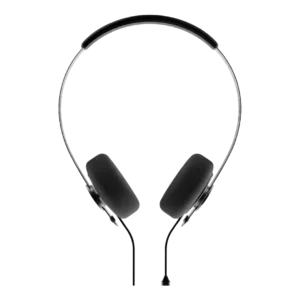
Product 1: Gadhouse Wesley Retro Headphones
4.0
P2
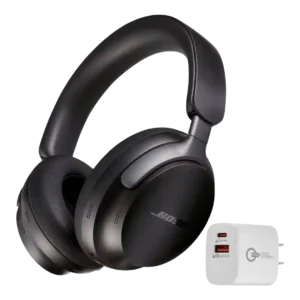
Product 2: Bose QuietComfort Ultra Wireless Headphones
4.0
Active noise cancellation
P1
Product 1: Gadhouse Wesley Retro Headphones
1.0
ANC is not part of the Wesley package; coverage explicitly frames active noise cancellation as absent, so buyers should not expect active hush from this retro wired design.
P2
Product 2: Bose QuietComfort Ultra Wireless Headphones
4.8
ANC is consistently described as class-leading, excelling on planes, trains, and busy streets; a few note rare odd behavior with extremely loud peaks. Noise canceling is highly adjustable through modes and a 10-step slider, often with wind control, but several reviewers dislike the lack of a true ANC-off state.
Android compatibility
P1Product 1: Gadhouse Wesley Retro Headphones
No score yet
P2
Product 2: Bose QuietComfort Ultra Wireless Headphones
3.7
Android works well for basics, but best codec features depend on compatible Snapdragon hardware and may fall back to AAC on some popular phones.
App
P1Product 1: Gadhouse Wesley Retro Headphones
No score yet
P2
Product 2: Bose QuietComfort Ultra Wireless Headphones
3.9
The Bose Music app is easy to navigate for modes, updates, and basic customization, but power users may find it simpler than competing apps.
aptX
P1Product 1: Gadhouse Wesley Retro Headphones
No score yet
P2
Product 2: Bose QuietComfort Ultra Wireless Headphones
4.0
aptX Adaptive/Lossless is a notable perk for supported phones, but real-world availability varies and some reviews warn of inconsistent handset support.
Audio-video sync accuracy
P1
Product 1: Gadhouse Wesley Retro Headphones
4.8
Its wired connection is presented as low-latency and free of the Bluetooth delay issues that can throw off lip-sync or gaming timing.
P2Product 2: Bose QuietComfort Ultra Wireless Headphones
No score yetBass performance
P1
Product 1: Gadhouse Wesley Retro Headphones
2.9
Bass is adequate for casual listening but loses control as volume rises, with the clearest hands-on review calling out muddiness and low-end smearing.
P2
Product 2: Bose QuietComfort Ultra Wireless Headphones
4.0
Bass is strong and punchy; fans call it controlled and fun, while detractors describe it as too heavy or less controlled without EQ.
Battery
P1Product 1: Gadhouse Wesley Retro Headphones
No score yet
P2
Product 2: Bose QuietComfort Ultra Wireless Headphones
3.5
Battery life is typically described as mid-pack (around 24 hours), with Immersive Audio often cutting it to roughly 18 hours; some find it acceptable, others call it a weakness.
Bluetooth
P1Product 1: Gadhouse Wesley Retro Headphones
No score yet
P2
Product 2: Bose QuietComfort Ultra Wireless Headphones
4.3
Bluetooth connection is generally stable with good range, with occasional reports of finickiness on some computers.
Build quality
P1
Product 1: Gadhouse Wesley Retro Headphones
4.1
Construction looks simple but respectable for the price, with a stainless steel or robust headband noted alongside very light materials rather than heavy premium heft.
P2
Product 2: Bose QuietComfort Ultra Wireless Headphones
3.3
Build is seen as solid but not the most premium; a few report rattles or long-term wear concerns, while others find it durable enough for daily travel.
Built-in DAC and hi-res playback
P1
Product 1: Gadhouse Wesley Retro Headphones
4.6
Multiple sources highlight 48kHz lossless playback over USB-C as a useful modern upgrade on an otherwise old-school wired design.
P2Product 2: Bose QuietComfort Ultra Wireless Headphones
No score yetButton control usability
P1
Product 1: Gadhouse Wesley Retro Headphones
4.5
Inline controls are consistently described as easy, tactile, and intuitive for playback, track skipping, and everyday use.
P2
Product 2: Bose QuietComfort Ultra Wireless Headphones
3.9
Controls mix physical buttons with a touch strip; many like the simple layout, but some dislike multi-press functions and loud button clicks.
Cable quality
P1
Product 1: Gadhouse Wesley Retro Headphones
2.6
The fixed 1.5 meter cable fits the retro concept but is also the biggest ergonomic drawback, with tangling and cumbersome handling called out.
P2Product 2: Bose QuietComfort Ultra Wireless Headphones
No score yetCarry case quality
P1Product 1: Gadhouse Wesley Retro Headphones
No score yet
P2
Product 2: Bose QuietComfort Ultra Wireless Headphones
4.5
The hard, zippered carrying case is frequently praised as compact and protective, usually including storage for cables and accessories.
Charging
P1
Product 1: Gadhouse Wesley Retro Headphones
5.0
Because the Wesley is fully wired, there is nothing to charge; several pieces frame that as a real convenience for commuting and plug-and-play use.
P2
Product 2: Bose QuietComfort Ultra Wireless Headphones
4.2
Charging performance is strong, with fast-charge claims commonly cited and the ability to top up quickly for a few hours of listening.
Clamping force comfort
P1
Product 1: Gadhouse Wesley Retro Headphones
4.5
Available hands-on impressions suggest an easy, non-fatiguing fit rather than an overly tight clamp, helping comfort over longer sessions.
P2
Product 2: Bose QuietComfort Ultra Wireless Headphones
4.6
Clamping force is usually described as gentle and well-judged; the comfort-focused clamp can reduce stability for vigorous movement.
Codec support
P1Product 1: Gadhouse Wesley Retro Headphones
No score yet
P2
Product 2: Bose QuietComfort Ultra Wireless Headphones
4.3
Codec support centers on SBC/AAC plus Snapdragon Sound with aptX Adaptive/Lossless on compatible devices; Bluetooth 5.3 and LE Audio readiness are mentioned, though rollout varies.
Comfort during long use
P1
Product 1: Gadhouse Wesley Retro Headphones
4.8
Comfort is one of the product's clearest strengths thanks to its light build and soft foam pads, with multiple reviews describing it as easy to wear for extended listening.
P2
Product 2: Bose QuietComfort Ultra Wireless Headphones
4.8
Long-wear comfort is a standout: lightweight feel, soft cushioning, and glasses-friendly fit make it easy to wear for hours.
Design and Aesthetics
P1
Product 1: Gadhouse Wesley Retro Headphones
4.9
Retro styling is the Wesley's standout trait, repeatedly positioned as a nostalgic statement piece that channels Walkman-era fashion.
P2
Product 2: Bose QuietComfort Ultra Wireless Headphones
3.9
Design is understated and modern with premium touches, but several reviewers call it low-key and wish it stood out more.
Ear cup padding quality
P1
Product 1: Gadhouse Wesley Retro Headphones
4.8
The foam pads are described as soft and squishy, supporting the headphone's strong comfort story even if they are not plush modern luxury pads.
P2
Product 2: Bose QuietComfort Ultra Wireless Headphones
4.1
Ear pads are widely praised as plush, but some long-term use reports mention compression/divots and concerns about thin pleather longevity.
Equalizer customization
P1Product 1: Gadhouse Wesley Retro Headphones
No score yet
P2
Product 2: Bose QuietComfort Ultra Wireless Headphones
2.9
EQ is available but limited (often described as a 3-band slider with modest sensitivity), so deep tuning is not a strength.
Headband adjustability
P1
Product 1: Gadhouse Wesley Retro Headphones
4.5
The adjustable sizing system appears straightforward and functional, with sliders and a snug fit mentioned in coverage.
P2
Product 2: Bose QuietComfort Ultra Wireless Headphones
4.4
Headband adjustment is smooth and fits a wide range of head sizes, helping distribute pressure for comfort.
Hinge durability
P1Product 1: Gadhouse Wesley Retro Headphones
No score yet
P2
Product 2: Bose QuietComfort Ultra Wireless Headphones
4.0
The dual-hinge folding design improves packability; most find it sturdy, though pinch points and occasional rattles are mentioned.
Included accessories
P1
Product 1: Gadhouse Wesley Retro Headphones
4.7
Accessory support is better than expected for the price, with 3.5mm, 6.35mm, and USB-C connection options regularly highlighted.
P2Product 2: Bose QuietComfort Ultra Wireless Headphones
No score yetInstrument separation
P1
Product 1: Gadhouse Wesley Retro Headphones
3.3
Separation is passable at moderate levels but weakens noticeably when mixes get busier or volume climbs.
P2
Product 2: Bose QuietComfort Ultra Wireless Headphones
4.5
Separation and imaging are strong, but a few sources mention channel matching or processing can affect spatial cues.
Integrated microphone
P1
Product 1: Gadhouse Wesley Retro Headphones
4.1
An inline mic is consistently included for calls and basic voice use, though the coverage says more about availability than exceptional call performance.
P2Product 2: Bose QuietComfort Ultra Wireless Headphones
No score yetMaximum volume clarity
P1
Product 1: Gadhouse Wesley Retro Headphones
2.2
High-volume performance is the product's clearest weakness, with sound becoming muddy and less separated when pushed.
P2
Product 2: Bose QuietComfort Ultra Wireless Headphones
4.6
Clarity generally holds up at higher volumes, with multiple reviewers noting strong detail retention when turned up.
Microphone noise reduction
P1Product 1: Gadhouse Wesley Retro Headphones
No score yet
P2
Product 2: Bose QuietComfort Ultra Wireless Headphones
4.0
Noise reduction for calls is often effective in busy environments, but some tests still capture background announcements or office noise.
Microphone quality for calls
P1Product 1: Gadhouse Wesley Retro Headphones
No score yet
P2
Product 2: Bose QuietComfort Ultra Wireless Headphones
4.0
Call quality reviews are mixed: some describe it as excellent with clear voice pickup, while others report graininess, robotic tone, or dropouts in meetings.
Midrange clarity
P1
Product 1: Gadhouse Wesley Retro Headphones
4.1
Vocals and mids come through more cleanly than the rest of the range, making speech and vocal-forward tracks a relative strength.
P2
Product 2: Bose QuietComfort Ultra Wireless Headphones
4.4
Midrange is generally clear and present, though some note it can sit behind the bass depending on track and tuning.
Multi-platform compatibility
P1
Product 1: Gadhouse Wesley Retro Headphones
4.6
With included adapters and standard wired connections, the Wesley is framed as easy to use across phones, laptops, music players, and older audio gear.
P2
Product 2: Bose QuietComfort Ultra Wireless Headphones
4.5
Cross-platform use is strong overall, working well with iOS, Android, and computers for everyday listening.
Multipoint connectivity reliability
P1Product 1: Gadhouse Wesley Retro Headphones
No score yet
P2
Product 2: Bose QuietComfort Ultra Wireless Headphones
4.3
Multipoint is supported and usually reliable, enabling easy switching between phone and laptop; switching behavior can be manual depending on use.
Noise isolation (passive)
P1Product 1: Gadhouse Wesley Retro Headphones
No score yet
P2
Product 2: Bose QuietComfort Ultra Wireless Headphones
4.4
Large, plush pads create a strong seal that boosts passive isolation and supports the overall noise-reduction performance.
Portability/foldability
P1
Product 1: Gadhouse Wesley Retro Headphones
2.8
The headphones are light and not bulky, but portability is undercut by the long fixed cable and lack of a carry case.
P2
Product 2: Bose QuietComfort Ultra Wireless Headphones
4.6
Fold-up-and-flat portability is a key advantage, helping the headphones and case take up less space than some rivals.
Preset EQ profile quality
P1Product 1: Gadhouse Wesley Retro Headphones
No score yet
P2
Product 2: Bose QuietComfort Ultra Wireless Headphones
3.3
Preset EQ profiles exist (for example bass/treble focused presets), but the selection and granularity are limited compared with rivals.
Replaceable earpads
P1Product 1: Gadhouse Wesley Retro Headphones
No score yet
P2
Product 2: Bose QuietComfort Ultra Wireless Headphones
4.6
Earpads are removable/replaceable according to at least one review, which is a plus for long-term maintenance, though long-term pad wear and compression are still discussed.
Sensors
P1Product 1: Gadhouse Wesley Retro Headphones
No score yet
P2
Product 2: Bose QuietComfort Ultra Wireless Headphones
4.4
Sensors enable wear detection, auto-pause/resume, and sleep/auto-off behavior that helps conserve battery, though detection can feel slow for some.
Smudge resistance
P1Product 1: Gadhouse Wesley Retro Headphones
No score yet
P2
Product 2: Bose QuietComfort Ultra Wireless Headphones
2.8
The black finish can show fingerprints and smudges more than lighter colorways.
Software/setup simplicity
P1
Product 1: Gadhouse Wesley Retro Headphones
4.8
Battery-free, app-free, firmware-free operation makes the Wesley extremely simple to use: plug it in and go.
P2
Product 2: Bose QuietComfort Ultra Wireless Headphones
4.0
Setup is generally straightforward with fast pairing on supported devices; a few note slower on-head detection or reconnection in daily use.
Sound quality
P1
Product 1: Gadhouse Wesley Retro Headphones
3.9
Overall sound lands in the decent-but-not-audiophile camp: fine for casual listening and clear vocals, but not consistently refined or competitive with stronger sound-focused rivals. The wired setup brings dependable low-latency listening and potentially cleaner lossless playback, but the sonic payoff still depends on expectations because the tuning remains modest.
P2
Product 2: Bose QuietComfort Ultra Wireless Headphones
4.3
Overall sound is widely described as rich, detailed, and engaging with a bass-forward tilt; some reviewers still prefer more neutral or more detailed rivals.
Soundstage width
P1
Product 1: Gadhouse Wesley Retro Headphones
2.8
At least one hands-on review found the presentation somewhat hollow and not especially spacious, so staging is not a major selling point.
P2
Product 2: Bose QuietComfort Ultra Wireless Headphones
4.3
Soundstage is above average for closed-back ANC headphones, and Immersive Audio can widen it further with varying success.
Spatial audio
P1Product 1: Gadhouse Wesley Retro Headphones
No score yet
P2
Product 2: Bose QuietComfort Ultra Wireless Headphones
3.0
Immersive/spatial audio can widen the presentation for some content, but many find it inconsistent or overly processed and note the battery hit.
Stability
P1Product 1: Gadhouse Wesley Retro Headphones
No score yet
P2
Product 2: Bose QuietComfort Ultra Wireless Headphones
2.8
Stability on the head is excellent for desk and travel use, but some reviewers report slipping/falling during dynamic workouts or bending.
Touch control responsiveness
P1Product 1: Gadhouse Wesley Retro Headphones
No score yet
P2
Product 2: Bose QuietComfort Ultra Wireless Headphones
4.1
The touch volume strip/slider is often described as responsive and easy by feel, though some users report accidental volume jumps.
Transparency mode quality
P1Product 1: Gadhouse Wesley Retro Headphones
No score yet
P2
Product 2: Bose QuietComfort Ultra Wireless Headphones
4.7
Transparency/Aware mode is repeatedly praised as natural and low-hiss, close to AirPods Max quality and especially useful for office awareness.
Treble clarity
P1
Product 1: Gadhouse Wesley Retro Headphones
3.8
Treble is generally clear enough for casual use, though it does not fully escape the broader softness and muddiness heard at higher volumes.
P2
Product 2: Bose QuietComfort Ultra Wireless Headphones
4.3
Treble is typically detailed and crisp without harshness, though a few describe it as slightly distant or affected by processing.
USB-C
P1
Product 1: Gadhouse Wesley Retro Headphones
4.6
USB-C support is a major practical plus, letting the Wesley connect to modern devices while still keeping its wired retro identity.
P2
Product 2: Bose QuietComfort Ultra Wireless Headphones
2.6
USB-C is charging-only; lack of USB-C digital audio passthrough is a repeated complaint for a flagship-priced model.
Voice assistant integration
P1Product 1: Gadhouse Wesley Retro Headphones
No score yet
P2
Product 2: Bose QuietComfort Ultra Wireless Headphones
4.0
Voice assistant access is typically supported via a customizable shortcut, making hands-free control convenient for many users.
Volume output
P1Product 1: Gadhouse Wesley Retro Headphones
No score yet
P2
Product 2: Bose QuietComfort Ultra Wireless Headphones
4.8
Maximum volume output is described as very loud with ample headroom.
Water/sweat resistance rating
P1Product 1: Gadhouse Wesley Retro Headphones
No score yet
P2
Product 2: Bose QuietComfort Ultra Wireless Headphones
1.1
There is no IP rating, and multiple reviews advise against heavy sweat or rain exposure despite the headphones handling normal daily use.
Weight comfort
P1
Product 1: Gadhouse Wesley Retro Headphones
4.8
At roughly 105 grams, the Wesley is unusually light for an over-ear, and that featherweight feel is repeatedly praised.
P2
Product 2: Bose QuietComfort Ultra Wireless Headphones
4.7
Weight is generally considered light for the class (around 250g), contributing to reduced fatigue over long sessions.