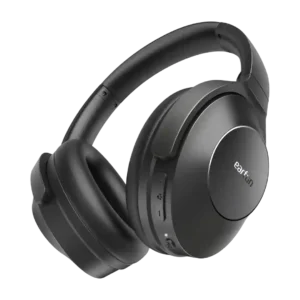
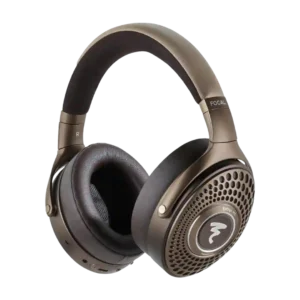
Average score
P1
Product 1: EarFun Wave Life Wireless Headphones
3.1
P2
Product 2: Focal Bathys MG Wireless Headphones
3.9
3.5mm analog input availability
P1
Product 1: EarFun Wave Life Wireless Headphones
0.0
There is no 3.5mm analog input; wired listening is described as USB-C rather than a normal headphone cable.
P2
Product 2: Focal Bathys MG Wireless Headphones
4.9
The 3.5mm analog input is widely confirmed and valued as a rare wired option, though the headphones still require power.
Active noise cancellation
P1
Product 1: EarFun Wave Life Wireless Headphones
2.8
ANC is widely discussed but rarely praised as excellent; reviewers generally found it acceptable for low-frequency noise and limited for traffic, voices, or stronger expectations.
P2
Product 2: Focal Bathys MG Wireless Headphones
3.7
ANC is generally considered good and improved, but not class-leading; reviewers repeatedly say Bose and Sony still cancel more aggressively.
Advanced software features
P1
Product 1: EarFun Wave Life Wireless Headphones
4.1
Advanced software support is strong, with hearing tests, sound profiles, custom controls, and app-based features repeatedly mentioned.
P2
Product 2: Focal Bathys MG Wireless Headphones
4.5
Advanced software features are useful but focused, led by Mimi personalization, app tuning, and hearing-profile adjustment.
Aesthetics / discreet profile
P1
Product 1: EarFun Wave Life Wireless Headphones
3.0
The profile is discreet but plain, with black-only styling and a generic look.
P2
Product 2: Focal Bathys MG Wireless Headphones
4.3
The headphones look distinctive and premium, but reviewers disagree on discretion because the styling can be showy.
ANC background noise level
P1
Product 1: EarFun Wave Life Wireless Headphones
2.6
ANC reduces some low-frequency noise but struggles with chatter, traffic, or busier environments across several reviews.
P2
Product 2: Focal Bathys MG Wireless Headphones
3.7
ANC background suppression is good but incomplete, with recurring comments that some external noise still gets through.
ANC effect on sound signature
P1Product 1: EarFun Wave Life Wireless Headphones
No score yet
P2
Product 2: Focal Bathys MG Wireless Headphones
4.9
Reviewers repeatedly note that ANC modes do not noticeably alter the sound signature, which is a major strength.
ANC sound impact on audio
P1Product 1: EarFun Wave Life Wireless Headphones
No score yet
P2
Product 2: Focal Bathys MG Wireless Headphones
4.9
ANC is praised for preserving sound quality and avoiding obvious sonic shifts when modes change.
Android compatibility
P1
Product 1: EarFun Wave Life Wireless Headphones
4.5
Android compatibility is directly supported through the EarFun Audio app availability on Android and iOS.
P2
Product 2: Focal Bathys MG Wireless Headphones
4.8
Android compatibility is supported through the Focal app and assistant ecosystem references.
App
P1
Product 1: EarFun Wave Life Wireless Headphones
4.1
The EarFun app is consistently viewed as useful, easy to navigate, and important for improving or customizing the headphones.
P2
Product 2: Focal Bathys MG Wireless Headphones
3.6
The app is useful but mixed: it supports setup, EQ, ANC, lighting, and personalization, yet several reviewers call it limited or glitchy.
aptX
P1Product 1: EarFun Wave Life Wireless Headphones
No score yet
P2
Product 2: Focal Bathys MG Wireless Headphones
4.4
aptX and aptX Adaptive support are repeatedly confirmed and treated as useful for higher-quality Bluetooth playback.
Audio-video sync accuracy
P1
Product 1: EarFun Wave Life Wireless Headphones
4.1
Low-latency and audio-video sync evidence is positive overall, with reviewers reporting game mode, low latency, or no noticeable delay.
P2
Product 2: Focal Bathys MG Wireless Headphones
4.5
aptX Adaptive is credited with low latency, making wireless playback more suitable when timing matters.
Auracast support
P1Product 1: EarFun Wave Life Wireless Headphones
No score yet
P2
Product 2: Focal Bathys MG Wireless Headphones
1.0
Auracast is not supported, and one reviewer explicitly flags its absence alongside LC3.
Auto-play/wear detection
P1
Product 1: EarFun Wave Life Wireless Headphones
0.0
Wear detection or auto-play behavior is missing, with one reviewer saying the headphones do not automatically pause.
P2
Product 2: Focal Bathys MG Wireless Headphones
1.0
Auto-play and wear detection are absent according to a reviewer, so this feature scores poorly.
Auto on/off reliability
P1Product 1: EarFun Wave Life Wireless Headphones
No score yet
P2
Product 2: Focal Bathys MG Wireless Headphones
4.5
Standby behavior is praised in one review for helping the battery last through real-world use.
Bass performance
P1
Product 1: EarFun Wave Life Wireless Headphones
3.6
Bass is one of the most discussed traits, ranging from powerful and enjoyable to overemphasized, muddy, or bloated depending on reviewer and tuning.
P2
Product 2: Focal Bathys MG Wireless Headphones
4.3
Bass is broadly praised for depth, control, texture, and impact, though a few reviewers found the default low end somewhat boomy or heavy until adjusted.
Battery
P1
Product 1: EarFun Wave Life Wireless Headphones
4.4
Battery life is a clear strength, with repeated support for 60 hours without ANC and around 37 hours with ANC.
P2
Product 2: Focal Bathys MG Wireless Headphones
4.0
Battery life is generally solid around 30 hours over Bluetooth ANC, though some reviewers expected more at this price.
Bluetooth
P1
Product 1: EarFun Wave Life Wireless Headphones
4.4
Bluetooth performance is a strength overall, with reviewers citing long range, stable connections, and Bluetooth 5.x support.
P2
Product 2: Focal Bathys MG Wireless Headphones
4.1
Bluetooth performance is solid overall, with 5.2-era wireless support, stable pairing, and multi-device convenience called out in several reviews.
Bluetooth version
P1
Product 1: EarFun Wave Life Wireless Headphones
4.4
Most reviews cite Bluetooth 5.4, with one citing Bluetooth 5.3; overall, the evidence supports a modern Bluetooth version.
P2
Product 2: Focal Bathys MG Wireless Headphones
3.9
Bluetooth version evidence centers on Bluetooth 5.2; reviewers note it is functional but not cutting edge.
Build quality
P1
Product 1: EarFun Wave Life Wireless Headphones
2.9
Build quality is mixed: some reviewers found solid construction for the price, while others criticized plastic, rough edges, or flimsiness.
P2
Product 2: Focal Bathys MG Wireless Headphones
4.9
Build quality is consistently praised, with reviewers pointing to premium materials, sturdy construction, and precise finishing.
Built-in DAC and hi-res playback
P1
Product 1: EarFun Wave Life Wireless Headphones
3.6
Hi-res or wired playback evidence is mixed: USB-C lossless and hi-res playback are supported, but one reviewer found wired playback worse.
P2
Product 2: Focal Bathys MG Wireless Headphones
5.0
The built-in DAC is one of the most praised features, enabling USB-C high-resolution listening up to 24-bit/192kHz.
Button control usability
P1
Product 1: EarFun Wave Life Wireless Headphones
3.9
Button controls are mostly useful and tactile, although one review thought the controls felt cheap.
P2
Product 2: Focal Bathys MG Wireless Headphones
4.5
Physical button controls are a strength, with reviewers praising simple, tactile, reliable control layouts.
Cable quality
P1
Product 1: EarFun Wave Life Wireless Headphones
1.5
Cable quality is a weakness: reviewers described the bundled USB-C cable as very short, thick, or awkward.
P2
Product 2: Focal Bathys MG Wireless Headphones
3.3
Cable impressions are mixed: some reviewers call the included cables acceptable or durable, while others found them basic for the price.
Carry case quality
P1
Product 1: EarFun Wave Life Wireless Headphones
0.2
Carry case quality scores poorly because reviewers repeatedly state that no carrying case, pouch, or bag is included.
P2
Product 2: Focal Bathys MG Wireless Headphones
4.3
The carry case is generally praised as protective, slim, rigid, or practical, though one reviewer found the case large.
Charging
P1
Product 1: EarFun Wave Life Wireless Headphones
4.2
Charging is well supported through USB-C and quick-charge claims, though cable length or quality can be a drawback.
P2
Product 2: Focal Bathys MG Wireless Headphones
4.8
Fast charging is consistently praised, with several reviewers confirming about five hours from a 15-minute charge.
Clamping force comfort
P1Product 1: EarFun Wave Life Wireless Headphones
No score yet
P2
Product 2: Focal Bathys MG Wireless Headphones
4.4
Clamp is generally seen as improved and comfortable, with softer pads helping seal and reduce pressure.
Codec support
P1
Product 1: EarFun Wave Life Wireless Headphones
3.8
Codec support is disputed: one review notes only AAC/SBC and no high-fidelity codecs, while another reports LDAC support.
P2
Product 2: Focal Bathys MG Wireless Headphones
3.6
Codec support is adequate with SBC, AAC, aptX, and aptX Adaptive, but reviewers criticize the lack of newer or higher-end codec options.
Comfort during long use
P1
Product 1: EarFun Wave Life Wireless Headphones
4.4
Comfort is one of the strongest areas, with reviewers repeatedly praising long-wear comfort and low fatigue.
P2
Product 2: Focal Bathys MG Wireless Headphones
4.5
Long-session comfort is a consistent strength, with reviewers praising softer pads, better distribution, and hours of wearability.
Connectivity options
P1
Product 1: EarFun Wave Life Wireless Headphones
4.1
Connectivity options are good for the price thanks to Bluetooth multipoint, USB-C wired playback, and pass-through or ANC modes.
P2
Product 2: Focal Bathys MG Wireless Headphones
4.9
Connectivity is a standout strength with Bluetooth, 3.5mm analog, and USB-C DAC modes repeatedly praised.
Design and Aesthetics
P1
Product 1: EarFun Wave Life Wireless Headphones
3.1
Design is functional but plain: some reviewers liked the budget-friendly design, while others found it generic or forgettable.
P2
Product 2: Focal Bathys MG Wireless Headphones
4.7
Design and aesthetics receive strong praise for the chestnut/bronze finish, premium styling, and distinctive Focal look.
Detachable cable convenience
P1Product 1: EarFun Wave Life Wireless Headphones
No score yet
P2
Product 2: Focal Bathys MG Wireless Headphones
5.0
The included detachable 3.5mm cable gives the headphones a convenient wired-listening option.
Durability over time
P1
Product 1: EarFun Wave Life Wireless Headphones
2.0
One review raises a durability-over-time concern by warning that scratches may appear quickly with bag use.
P2
Product 2: Focal Bathys MG Wireless Headphones
4.7
Durability impressions are positive where discussed, especially around construction, yokes, and long-term material confidence.
Ear cup padding quality
P1
Product 1: EarFun Wave Life Wireless Headphones
4.1
Ear cup padding is consistently positive, with foam, memory foam, and soft cushions repeatedly called comfortable.
P2
Product 2: Focal Bathys MG Wireless Headphones
4.5
The ear pads receive strong praise for softness, compliance, memory foam, and plush comfort.
Ear cup swivel/rotation range
P1
Product 1: EarFun Wave Life Wireless Headphones
4.1
Ear cup movement is strong, with several reviews describing 90-degree swivel, rotation, or folding behavior.
P2
Product 2: Focal Bathys MG Wireless Headphones
3.5
The earcups fold flat rather than compactly inward, which limits folding convenience.
Earpad noise
P1Product 1: EarFun Wave Life Wireless Headphones
No score yet
P2
Product 2: Focal Bathys MG Wireless Headphones
5.0
The headphones are praised as free from creaks and weird noises, supporting a quiet physical build.
Equalizer customization
P1
Product 1: EarFun Wave Life Wireless Headphones
4.1
EQ customization is a major strength, with repeated support for custom EQ, sliders, and a 10-band or graphic equalizer.
P2
Product 2: Focal Bathys MG Wireless Headphones
3.4
EQ customization is useful but not deep; reviewers repeatedly want more bands or parametric controls.
Features at launch
P1
Product 1: EarFun Wave Life Wireless Headphones
4.0
One review frames the launch feature set as strong for the price, delivering most core features at a lower cost.
P2
Product 2: Focal Bathys MG Wireless Headphones
3.5
Feature coverage is viewed as mostly complete but not exhaustive at the premium price.
Frequency response accuracy
P1
Product 1: EarFun Wave Life Wireless Headphones
2.3
Frequency response evidence is polarized, from clean and controlled in one review to distorted or lacking dynamics in another.
P2
Product 2: Focal Bathys MG Wireless Headphones
4.6
The Bathys MG is frequently described as balanced, coherent, smooth, and neutral-leaning, especially with Dynamic EQ enabled.
Headband adjustability
P1
Product 1: EarFun Wave Life Wireless Headphones
4.0
The headband adjustment is supported by one review noting a metal slider with good range.
P2
Product 2: Focal Bathys MG Wireless Headphones
4.0
The extendable headband is clearly marked and helps with fit orientation.
Headband padding quality
P1
Product 1: EarFun Wave Life Wireless Headphones
3.7
Headband padding is supported by comments about pleather or memory-foam padding that contributes to comfort.
P2
Product 2: Focal Bathys MG Wireless Headphones
4.2
Headband padding and upper materials are praised, though one reviewer wanted a wider strap for better weight distribution.
Hinge durability
P1
Product 1: EarFun Wave Life Wireless Headphones
3.2
Hinge and flex durability evidence is mixed but generally acceptable, from concerns about flimsiness to solid hinges and little creaking.
P2
Product 2: Focal Bathys MG Wireless Headphones
4.5
The aluminum and magnesium yoke design is described as built to last.
Immersive audio quality
P1
Product 1: EarFun Wave Life Wireless Headphones
3.5
One reviewer praised the headphones for picking out subtle gameplay sounds, suggesting passable immersive performance for gaming.
P2
Product 2: Focal Bathys MG Wireless Headphones
4.6
Immersive audio is a major theme, with reviewers describing cinematic staging, depth, and engaging presentation.
Included accessories
P1
Product 1: EarFun Wave Life Wireless Headphones
2.0
Included accessories are minimal, usually limited to a USB-C cable, documentation, and no case.
P2
Product 2: Focal Bathys MG Wireless Headphones
4.1
Included accessories are straightforward: reviewers repeatedly mention a case plus USB-C and 3.5mm cables, with mixed cable-quality opinions.
Instrument separation
P1
Product 1: EarFun Wave Life Wireless Headphones
2.7
Instrument separation is mixed: ZDNET praised discernible sounds, but PCMag and Tom's Guide found details lost or buried.
P2
Product 2: Focal Bathys MG Wireless Headphones
4.8
Instrument placement and separation are a major strength, with reviewers hearing clearer layering, precise imaging, and distinct channel separation.
Integrated microphone
P1
Product 1: EarFun Wave Life Wireless Headphones
3.8
Integrated microphones are confirmed across multiple reviews, typically as four built-in or AI-assisted mics.
P2
Product 2: Focal Bathys MG Wireless Headphones
4.3
The integrated microphone system is well documented, with reviewers referencing multiple mics, beamforming, and built-in call support.
LDAC
P1
Product 1: EarFun Wave Life Wireless Headphones
5.0
One review specifically credits LDAC support with enabling high-quality wireless streaming.
P2
Product 2: Focal Bathys MG Wireless Headphones
1.3
LDAC is a repeated omission; several reviewers explicitly say it is missing and wish it had been included at this price.
LE Audio readiness
P1Product 1: EarFun Wave Life Wireless Headphones
No score yet
P2
Product 2: Focal Bathys MG Wireless Headphones
1.3
LE Audio readiness is weak because reviewers call out missing Bluetooth LE, LC3, or Auracast.
Maximum volume clarity
P1
Product 1: EarFun Wave Life Wireless Headphones
3.2
Maximum-volume clarity receives mixed support, with some reviewers reporting clean playback and others hearing distortion or amplified flaws.
P2
Product 2: Focal Bathys MG Wireless Headphones
4.5
One reviewer found the headphones stayed clean and organized even at higher volumes during dense tracks.
Microphone noise reduction
P1
Product 1: EarFun Wave Life Wireless Headphones
3.2
Microphone noise handling is present and sometimes effective, but reviewers also heard room echo, sibilance fuzziness, or only moderate background suppression.
P2
Product 2: Focal Bathys MG Wireless Headphones
4.3
Microphone noise handling is considered effective enough for calls, with reviewers noting reduced background disruption and voice isolation.
Microphone quality for calls
P1
Product 1: EarFun Wave Life Wireless Headphones
3.4
Call quality is generally serviceable to good, with several reviewers reporting clear speech and others noting fuzziness, echo, or limited nuance.
P2
Product 2: Focal Bathys MG Wireless Headphones
4.2
Call quality is generally good, with clear voice pickup and usable performance in everyday noise.
Midrange clarity
P1
Product 1: EarFun Wave Life Wireless Headphones
3.2
Midrange performance is mixed: some reviewers heard clear vocals or adjustable mids, while others found vocals muted, recessed, or muffled.
P2
Product 2: Focal Bathys MG Wireless Headphones
4.6
The midrange is usually described as clearer, richer, and more nuanced than the original Bathys, though one review found vocals somewhat recessed.
Multi-platform compatibility
P1
Product 1: EarFun Wave Life Wireless Headphones
4.0
Multi-platform use is supported by pairing across phones, laptops, tablets, iPhone, MacBook, and Android devices.
P2
Product 2: Focal Bathys MG Wireless Headphones
4.8
Multi-platform use is strong, with reviewers referencing iOS, Android, laptops, tablets, phones, and broad device compatibility.
Multipoint connectivity reliability
P1
Product 1: EarFun Wave Life Wireless Headphones
4.3
Multipoint support is consistently mentioned and generally reliable, with some minor app-side friction in one review.
P2
Product 2: Focal Bathys MG Wireless Headphones
4.1
Multipoint is valued, but reliability is mixed: some reviews praise it while one reviewer reports switching quirks between devices.
Noise isolation (passive)
P1
Product 1: EarFun Wave Life Wireless Headphones
1.0
Passive isolation is weak in the Tom's Guide review, where environmental noise became more obvious in Normal mode.
P2
Product 2: Focal Bathys MG Wireless Headphones
3.5
Passive isolation is not positioned as a standout feature, but one reviewer notes relying on the natural isolation in normal use.
Overall recommendation
P1
Product 1: EarFun Wave Life Wireless Headphones
3.5
Recommendations are split: several reviewers call them strong budget buys, while others advise looking elsewhere because of sound or ANC limitations.
P2
Product 2: Focal Bathys MG Wireless Headphones
4.6
Overall recommendations are very positive for buyers who prioritize premium wireless sound, though reviewers frequently qualify that praise with price caveats.
Portability/foldability
P1
Product 1: EarFun Wave Life Wireless Headphones
3.7
Portability benefits from folding and swiveling cups, but the lack of a case limits travel confidence.
P2
Product 2: Focal Bathys MG Wireless Headphones
3.8
Portability is helped by a slimmer case, but the headphones only fold flat and are not ultra-compact.
Premium feel
P1
Product 1: EarFun Wave Life Wireless Headphones
3.4
Premium feel is mixed: some reviewers were impressed for the price, while others emphasized plastic or less premium construction.
P2
Product 2: Focal Bathys MG Wireless Headphones
4.9
Premium feel is a major strength, with leather, magnesium, aluminum, finish, and ownership experience repeatedly highlighted.
Preset EQ profile quality
P1
Product 1: EarFun Wave Life Wireless Headphones
3.7
Preset EQ quality is mixed: reviewers liked the variety but some presets were too quiet or less useful than custom tuning.
P2
Product 2: Focal Bathys MG Wireless Headphones
4.5
Preset EQ quality is a strength, especially Dynamic mode, which reviewers describe as more neutral, balanced, or Harman-like.
Replaceable earpads
P1Product 1: EarFun Wave Life Wireless Headphones
No score yet
P2
Product 2: Focal Bathys MG Wireless Headphones
4.3
Replaceable earpads are confirmed and valued, though replacement pads are not included.
Sensors
P1
Product 1: EarFun Wave Life Wireless Headphones
1.0
Sensor support appears limited because one review states the headphones do not automatically pause.
P2Product 2: Focal Bathys MG Wireless Headphones
No score yetSidetone adjustment quality
P1Product 1: EarFun Wave Life Wireless Headphones
No score yet
P2
Product 2: Focal Bathys MG Wireless Headphones
4.0
Sidetone adjustment is available in the app, but reviewer evidence on its quality is limited.
Smart listening features
P1
Product 1: EarFun Wave Life Wireless Headphones
4.0
Smart listening features are represented by hearing tests, sound-profile tools, and app-based calibration rather than advanced ecosystem features.
P2
Product 2: Focal Bathys MG Wireless Headphones
4.4
Smart listening features center on Mimi hearing personalization, EQ presets, ANC modes, and hearing-profile tailoring.
Smart Pause performance
P1
Product 1: EarFun Wave Life Wireless Headphones
0.0
Smart Pause performance is absent in the review evidence, with one reviewer stating the headphones do not auto-pause.
P2
Product 2: Focal Bathys MG Wireless Headphones
1.0
Smart pause is not supported because reviewers explicitly note the lack of wear detection.
Smudge resistance
P1
Product 1: EarFun Wave Life Wireless Headphones
1.5
One review notes poor resistance to visible dust on the buttons.
P2Product 2: Focal Bathys MG Wireless Headphones
No score yetSoftware/setup simplicity
P1
Product 1: EarFun Wave Life Wireless Headphones
3.8
Setup and software use are mostly straightforward, though one review noted app connection fussiness.
P2
Product 2: Focal Bathys MG Wireless Headphones
4.5
Setup simplicity is helped by Google Fast Pair in the review that directly mentions it.
Sound quality
P1
Product 1: EarFun Wave Life Wireless Headphones
3.3
Reviewer evidence is sharply split: several reviewers found the sound fun or very good after EQ, while PCMag and Tom's Guide criticized the default tuning and overall fidelity.
P2
Product 2: Focal Bathys MG Wireless Headphones
4.8
Reviewers consistently describe the Bathys MG as a top-tier wireless headphone for sound quality, with especially strong praise for its refined, detailed, audiophile-style presentation.
Soundstage width
P1
Product 1: EarFun Wave Life Wireless Headphones
2.7
Soundstage is inconsistent, with some reviewers calling it constrained while others heard a decent or spacious presentation for the price.
P2
Product 2: Focal Bathys MG Wireless Headphones
4.3
The soundstage is repeatedly described as spacious or immersive for closed-back wireless headphones, though not as open as true open-back designs.
Spatial audio
P1Product 1: EarFun Wave Life Wireless Headphones
No score yet
P2
Product 2: Focal Bathys MG Wireless Headphones
1.0
Spatial audio is explicitly absent, so this is not a strength of the Bathys MG.
Stability
P1
Product 1: EarFun Wave Life Wireless Headphones
4.2
Connection stability is generally good, with reviewers reporting largely reliable switching, rock-solid stability, and uninterrupted multipoint use.
P2
Product 2: Focal Bathys MG Wireless Headphones
3.5
Stability is mixed: the fit can stay firmly in place, but some reviewers mention movement or thumping while walking or running.
Sustainability and repairability
P1Product 1: EarFun Wave Life Wireless Headphones
No score yet
P2
Product 2: Focal Bathys MG Wireless Headphones
4.0
Repairability and sustainability evidence is limited, but one reviewer notes FSC-certified environmentally conscious packaging.
Sustainability materials
P1Product 1: EarFun Wave Life Wireless Headphones
No score yet
P2
Product 2: Focal Bathys MG Wireless Headphones
4.5
Sustainability materials evidence comes from FSC-certified, environmentally friendly packaging material.
Touch control responsiveness
P1Product 1: EarFun Wave Life Wireless Headphones
No score yet
P2
Product 2: Focal Bathys MG Wireless Headphones
1.0
There are no touch controls, which some reviewers present as a deliberate move toward reliable physical operation rather than touch responsiveness.
Transparency mode quality
P1
Product 1: EarFun Wave Life Wireless Headphones
3.0
Transparency or ambient mode is usable but uneven, ranging from natural enough for conversation to average, boosted, or not very effective.
P2
Product 2: Focal Bathys MG Wireless Headphones
4.2
Transparency mode is viewed positively, with reviewers saying it lets voices and surroundings come through clearly when needed.
Travel friendliness
P1
Product 1: EarFun Wave Life Wireless Headphones
3.0
Travel friendliness is limited by the lack of a pouch or case despite foldable design.
P2
Product 2: Focal Bathys MG Wireless Headphones
4.3
Travel friendliness is strong thanks to comfort, battery life, wired/DAC options, and a practical case, though not everyone loves the size.
Treble clarity
P1
Product 1: EarFun Wave Life Wireless Headphones
3.1
Treble impressions vary from clear and crisp after tuning to lacking brightness, messy top notes, or excessive tinniness.
P2
Product 2: Focal Bathys MG Wireless Headphones
4.3
Treble earns praise for clarity, shimmer, and smoothness, but several reviewers note occasional sharpness or stridency with bright material.
USB-C
P1
Product 1: EarFun Wave Life Wireless Headphones
4.0
USB-C is a notable feature for charging and, in several reviews, wired audio playback or hi-res playback.
P2
Product 2: Focal Bathys MG Wireless Headphones
4.9
USB-C is central to the product, serving charging and high-resolution DAC-mode listening.
Value for money
P1
Product 1: EarFun Wave Life Wireless Headphones
3.9
Value is one of the strongest themes, although the value score drops in reviews that disliked the sound quality.
P2
Product 2: Focal Bathys MG Wireless Headphones
3.3
Value is the main tradeoff: reviewers like the performance and luxury but repeatedly stress the very high price.
Voice assistant integration
P1Product 1: EarFun Wave Life Wireless Headphones
No score yet
P2
Product 2: Focal Bathys MG Wireless Headphones
4.1
Voice assistant support is present through native assistants such as Google Assistant, Alexa, Siri, or the player’s assistant.
Voice prompts/feedback
P1
Product 1: EarFun Wave Life Wireless Headphones
4.0
Voice prompt feedback is configurable in the app, including language changes.
P2
Product 2: Focal Bathys MG Wireless Headphones
4.3
Voice feedback is described as refined and non-intrusive in one review, while another notes simple tones instead of spoken prompts.
Volume output
P1
Product 1: EarFun Wave Life Wireless Headphones
3.5
Volume output is adequate for some reviewers but a concern for others, especially when EQ changes reduced loudness or Bluetooth volume felt limited.
P2
Product 2: Focal Bathys MG Wireless Headphones
4.5
Reviewers like the finer 3dB volume increments and dynamic range, which make level setting more precise than on the original model.
Wear detection auto-pause
P1
Product 1: EarFun Wave Life Wireless Headphones
0.0
Wear detection auto-pause is not present according to one review.
P2
Product 2: Focal Bathys MG Wireless Headphones
1.0
Wear-detection auto-pause is absent because the headphones lack wear detection.
Wear detection performance
P1
Product 1: EarFun Wave Life Wireless Headphones
0.0
Wear detection performance is effectively absent because the headphones do not auto-pause when removed.
P2
Product 2: Focal Bathys MG Wireless Headphones
1.0
Wear detection performance is poor because the feature is not present.
Weight comfort
P1
Product 1: EarFun Wave Life Wireless Headphones
4.2
Weight comfort is favorable, with multiple reviewers describing the headphones as light or breezy around 254-264g.
P2
Product 2: Focal Bathys MG Wireless Headphones
3.8
Weight comfort is mostly positive despite the 350g mass; reviewers say the headphones balance well, though some wanted better distribution.
Wind noise handling
P1
Product 1: EarFun Wave Life Wireless Headphones
2.8
Wind handling is limited, with one review calling it ineffective and another only calling it decent.
P2
Product 2: Focal Bathys MG Wireless Headphones
3.0
Wind handling for calls is not class-leading; one review says wind and high-pitched noise come through more easily than on Sony.