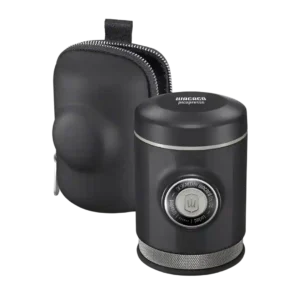
The accessory kit is one of the Picopresso's strongest advantages. Reviews repeatedly praise the included tamper, funnel, case, brush, shower screen, and distribution tools, especially because the pieces nest neatly inside the brewer, though some users found the scoop, WDT tool, or extra covers less useful than the core items.
Included accessories and bundled tools (such as baskets, portafilter, milk pitcher, and cleaning items) are generally viewed as sufficient to start brewing immediately. Serious hobbyists may still add their own tools, but the out-of-box kit is usually described as complete.
The central marketing claim holds up well: reviewers consistently say the Picopresso can produce real espresso with crema and serious flavor, not just a strong coffee concentrate. The only caveat is that results depend on good technique, grinder quality, and proper preheating.
This is a fully manual product with no app, wireless features, or digital controls. Reviewers frame that lack of smart functionality as part of the Picopresso's simple travel-friendly design rather than a missing convenience feature.
Connectivity is mostly about convenience rather than remote control: Wi-Fi enables firmware updates and some smart behavior, and several reviewers like that no dedicated app is required. Those wanting deep app features may find it minimal, but updates and stability benefits are appreciated.
Setup is logical once learned, but the workflow is undeniably involved. Reviewers describe a multi-step process with dosing, distribution, tamping, preheating, pre-infusion, and hand pumping, so beginners should expect a learning curve and some early frustration.
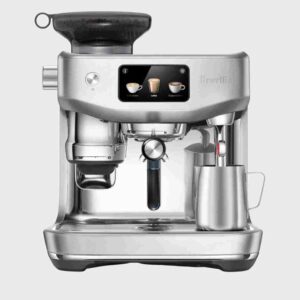
Setup is widely described as quick and guided, with touchscreen onboarding and step-by-step prompts getting most users brewing fast. Some calibration and dialing-in is still required, but the process is generally presented as approachable for beginners.
Automation is essentially absent. The Picopresso depends on manual pumping, manual timing, and manual puck prep, so there is little to help beginners beyond the included accessories and general instructions.
Automation is a headline feature: touchscreen guidance, built-in dialing help, one-touch workflows, and assisted routines make it easy to produce consistent drinks. Some users find the reminders/prompts a bit frequent, but overall the automation is seen as a key reason to buy.
The Picopresso has no boiler system at all. Multiple reviews explicitly note that you must bring your own boiling water, which keeps the product compact and simple but removes the thermal convenience of electric espresso machines.
Multiple reviews note it is not a traditional dual-boiler setup, so it cannot brew and steam simultaneously in the classic sense. Fast switching, queueing, and strong heating mitigate the limitation for most households, but dual-boiler fans still see it as a compromise.
Brewing performance is impressive for the size, but consistency depends on technique. Reviews say it can pull excellent shots once dialed in, yet grind, dose, water temperature, and pump rhythm all have a major effect on repeatability.
Most reviewers highlight stable extractions and repeatable results, helped by real-time guidance and fast thermal recovery. Some mention early-unit quirks, splatter, or first-shot inconsistency, but overall consistency is a standout for a guided, built-in-grinder machine.
Build quality gets near-unanimous praise. Reviewers describe the brewer as sturdy, premium-feeling, and durable enough for frequent travel, with especially positive comments about the metal basket, solid threaded parts, and rugged protective case.
Most reviews describe a premium look and sturdy feel, reinforced by the machine’s weight and stainless styling. A few raise concerns about smaller components feeling less robust or about long-term serviceability/repair complexity, so durability impressions are positive but not unanimous.
Because it uses no power cable, plug, or battery, cable management is a non-issue. That fully cordless design is a real convenience advantage for travel, packing, and cramped setups.
Capacity is strong for such a small manual brewer. Reviews repeatedly highlight the 18-gram basket and double-shot output, but it is still a single-serve device with limited water volume and no real batch capability.
The water reservoir is commonly described as generous and convenient to access (including front-fill designs in several reviews). Despite that, some users report high water usage and frequent tray/tank attention, so day-to-day capacity feels good but not hands-off.
The Picopresso is ground-coffee only. Multiple reviews explicitly say there is no pod or capsule option, which makes it less convenient for some travelers but more serious as a true espresso tool.
The brewer works directly over a cup, but handling is not especially refined. Some reviewers note balancing awkwardness, no integrated stand in the base package, and no included cup, so cup setup feels more improvised than polished.
Cup clearance and tray management are recurring pain points: several reviews mention a drip tray that fills quickly and occasional splash/spill moments. While functional, it often requires more frequent emptying and attention than buyers expect at this price.
This is one of the Picopresso's biggest wins. Reviewers repeatedly describe it as exceptionally compact, portable, and cleverly self-contained, though two-handed pumping, hot surfaces, and small-part management slightly reduce ergonomic ease.
Design is often praised for smart usability touches like a responsive touchscreen and (in some reviews) wheels for moving a heavy unit. The main downside is footprint and heft: it can dominate countertop space and demands a dedicated spot.
Common complaints center on heat and fiddliness rather than structural failure. Reviewers mention a hot exterior after preheating, a top lid that can be finicky, many small parts to manage, and a workflow that can get messy if anything is misaligned.
Commonly cited flaws include grinder mess/static, occasional splatter or splash, frequent drip-tray emptying, and the lack of brew-and-steam-at-once operation. These issues rarely stop reviewers from enjoying the machine, but they come up often enough to be worth planning around.
Espresso quality is the headline feature. Across written and video reviews, users describe rich body, dense texture, syrupy shots, strong aroma, and convincing crema, with several saying it rivals far larger and more expensive home machines once dialed in.
Across reviews, shot quality is consistently described as cafe-level with rich flavor and strong crema. A few reviewers note first-shot variability if the portafilter is cold and occasional temperature limitations with very light roasts, but most report excellent results once dialed in.
The 52mm non-pressurized basket is a major upgrade over older Wacaco models and is central to the Picopresso's shot quality. Reviewers value the bottomless-style feedback and more professional workflow, while also noting that the basket is less forgiving with poor puck prep.
The Picopresso is highly grinder-dependent. Reviews repeatedly say a capable espresso grinder and careful dosing matter a lot, and while the included funnel and tools help, this brewer does not hide poor grind quality or sloppy puck prep.
The integrated grinder and volume-based dosing system earns praise for convenience and helpful grind guidance. Common critiques include mess/static, limited upgradeability since the grinder is built in, and the hassle of swapping beans (for decaf or variety) with a single-hopper workflow.
The tamper and funnel arrangement is widely praised for making tamping easier and more repeatable. Several reviewers specifically call out how the design helps center the tamp and keeps the process neater than expected for a small portable brewer.
Automatic tamping and guided puck prep are frequently called out as a major convenience win that reduces learning curve and speeds workflow. The main tradeoff is reduced manual control, with a few reviewers preferring traditional tamping or noting that auto settings can require tweaking.
There is no onboard heating element. Reviewers consistently remind buyers that the Picopresso cannot heat water for you, so boiling water must come from a kettle, stove, or other external source.
Heating performance is consistently praised for rapid warm-up and strong steam capability, enabled by the fast-heating system. A minority note temperature concerns for very light roasts or prefer the behavior of dual-boiler machines, but most call the heat performance excellent.
Cold extraction/cold brew modes are seen as a fun, usable option that can produce tasty drinks, especially over ice. Multiple reviewers note it can land closer to cool/tepid than truly cold and flavor can vary by bean, but most still call the results enjoyable and easy to replicate.
Mess-free disposal is not a strength. Grounds can spill during prep, some reviewers found spent pucks awkward to remove without a normal portafilter setup, and cleanup often involves more wiping and rinsing than a convenience-focused machine.
Used-puck handling is mixed: pucks can come out relatively dry, but multiple reviewers mention they can be stubborn to knock out and the workflow can still be a bit messy. A knock box helps, and some wish for a cleaner, more effortless ejection.
Milk functionality is absent. Reviews explicitly state that the Picopresso cannot steam or froth milk, so latte and cappuccino drinkers need separate tools or a different machine.
Milk performance is strong overall, with multiple reviewers impressed by steam power and manual steaming capability. Auto-milk features are convenient, but several note the automatic texture can skew frothier than latte-art microfoam, making manual steaming the better choice for enthusiasts.
Overall user experience is excellent for people who enjoy the ritual of espresso and weaker for people who want convenience. Most reviewers love the compactness, quality, and reward of good shots, but many also stress the learning curve, manual effort, and mess.
Overall experience is strongly positive for users who want an easy, guided path to high-quality espresso. Reviewers emphasize the intuitive touchscreen, fast workflows, and reduced learning curve, while noting tradeoffs like size, price, and occasional mess or maintenance interruptions.
The Picopresso shows strong enthusiast popularity. Reviews mention dedicated community interest, favorable comparisons across portable espresso discussions, and repeated best-in-class framing among travel espresso makers.
The hand-pump system can create excellent extraction pressure, but consistency is limited by the user. Reviewers say pump speed and force clearly affect the shot, which is part of the appeal for hobbyists but a source of variability for others.
Recognition is better than average for such a niche product. Reviews specifically cite award recognition, including Red Dot design mention, and the brewer is consistently treated as a standout portable espresso option by specialty coffee reviewers.
Storage convenience is thoughtfully designed. Reviewers note that the folding scoop stores inside the brewer, though the scoop itself is not a favorite tool and feels less essential than the funnel or tamper.
Shot pulling itself can be fairly quick once everything is ready, but total time-to-cup depends on preheating, grinding, and cleanup. Several reviewers say it is slower than convenience brewers yet still fast enough to feel worthwhile when the workflow is learned.
Speed is a major strength: near-instant heat-up, quick transitions between brewing and steaming, and short time-to-cup workflows are repeatedly praised. Even without a true dual-boiler workflow, the fast switching and queueing features keep drinks moving quickly.
Value is widely viewed as strong because the Picopresso delivers real espresso at a much lower cost and size than most capable alternatives. Still, some reviewers think it is expensive for a travel-first manual device, especially once you add a grinder and scale.
Value is debated because the price is firmly premium. Many reviewers justify it by the speed, guidance, and cafe-like results, but others argue similarly priced setups can offer more manual control or true dual-boiler capability, making the cost hard to swallow for hobbyists.
Warranty coverage is a modest positive. Multiple reviews mention a two-year warranty, and while customer support is not deeply stress-tested across the set, the overall confidence level around brand backing is decent.
Warranty/support mentions are generally reassuring, with several reviewers citing multi-year coverage depending on region/retailer and positive replacement experiences. Still, a few voices flag that long-term repairs and parts/service logistics could matter given the machine’s complexity and price.
Maintenance is generally easy because the parts disassemble and rinse quickly, but water handling requires care. Reviewers frequently mention the need for thorough preheating, externally boiled water, and occasional descaling awareness in hard-water environments.
Maintenance is generally viewed as straightforward thanks to guided cleaning prompts, rinse cycles, and on-screen how-tos. Several reviewers still note frequent drip-tray emptying and regular routines (purges/backflush), and a few wish for better spill/tray sensing, but the process feels beginner-friendly.