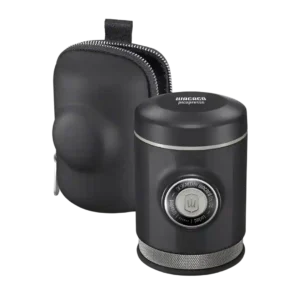
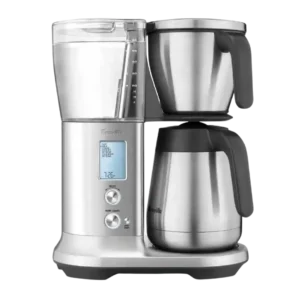
The accessory kit is one of the Picopresso's strongest advantages. Reviews repeatedly praise the included tamper, funnel, case, brush, shower screen, and distribution tools, especially because the pieces nest neatly inside the brewer, though some users found the scoop, WDT tool, or extra covers less useful than the core items.
The included baskets, filters, scoop, and water-hardness tools add real versatility, but several reviewers disliked that the pour-over adapter is separate or not bundled on all versions.
The central marketing claim holds up well: reviewers consistently say the Picopresso can produce real espresso with crema and serious flavor, not just a strong coffee concentrate. The only caveat is that results depend on good technique, grinder quality, and proper preheating.
Most reviewers felt the brewer broadly delivers on its premium positioning, especially around flexibility and batch quality, though some thought the long feature list overstates how useful every mode really is.
This is a fully manual product with no app, wireless features, or digital controls. Reviewers frame that lack of smart functionality as part of the Picopresso's simple travel-friendly design rather than a missing convenience feature.
This is one of the brewer's clearest strengths. Reviewers repeatedly praised the smart control set, especially adjustable temperature, bloom, flow rate, presets, auto start, and intuitive LCD navigation.
Setup is logical once learned, but the workflow is undeniably involved. Reviewers describe a multi-step process with dosing, distribution, tamping, preheating, pre-infusion, and hand pumping, so beginners should expect a learning curve and some early frustration.
Setup is not difficult, but it is longer and more involved than a basic drip machine because of initial cleaning, water-hardness setup, and learning the controls.
Automation is essentially absent. The Picopresso depends on manual pumping, manual timing, and manual puck prep, so there is little to help beginners beyond the included accessories and general instructions.
Automation is strong for this class. Auto start, water-hardness calibration, timers, reminders, small-batch adjustments, and preset brew logic make the machine feel unusually intelligent for a drip brewer.
The Picopresso has no boiler system at all. Multiple reviews explicitly note that you must bring your own boiling water, which keeps the product compact and simple but removes the thermal convenience of electric espresso machines.
Brewing performance is impressive for the size, but consistency depends on technique. Reviews say it can pull excellent shots once dialed in, yet grind, dose, water temperature, and pump rhythm all have a major effect on repeatability.
Brewing performance is consistently excellent. Reviewers repeatedly praised stable brew temperatures, even extraction, and the ability to produce high-quality coffee across both preset and custom modes.
Build quality gets near-unanimous praise. Reviewers describe the brewer as sturdy, premium-feeling, and durable enough for frequent travel, with especially positive comments about the metal basket, solid threaded parts, and rugged protective case.
Build quality is widely seen as premium, sturdy, and substantial. Multiple reviewers describe it as tank-like or espresso-machine-like, with only a few caveats around specific parts on certain versions.
Because it uses no power cable, plug, or battery, cable management is a non-issue. That fully cordless design is a real convenience advantage for travel, packing, and cramped setups.
Capacity is strong for such a small manual brewer. Reviews repeatedly highlight the 18-gram basket and double-shot output, but it is still a single-serve device with limited water volume and no real batch capability.
Its large 12-cup or roughly 60-ounce capacity is a major advantage, especially for families, entertaining, and small office use, while still remaining capable of smaller brews.
The Picopresso is ground-coffee only. Multiple reviews explicitly say there is no pod or capsule option, which makes it less convenient for some travelers but more serious as a true espresso tool.
The brewer works directly over a cup, but handling is not especially refined. Some reviewers note balancing awkwardness, no integrated stand in the base package, and no included cup, so cup setup feels more improvised than polished.
The carafe system is generally well liked for secure pouring, thermal heat retention, and drip-lock behavior, though some reviews mention weight, leftover liquid, or weaker-than-expected heat retention versus top rivals.
This is one of the Picopresso's biggest wins. Reviewers repeatedly describe it as exceptionally compact, portable, and cleverly self-contained, though two-handed pumping, hot surfaces, and small-part management slightly reduce ergonomic ease.
The brewer looks premium and has a strong interface, but it is undeniably large and can feel bulky on tighter counters. Ergonomics are good overall, just not especially compact.
Common complaints center on heat and fiddliness rather than structural failure. Reviewers mention a hot exterior after preheating, a top lid that can be finicky, many small parts to manage, and a workflow that can get messy if anything is misaligned.
The most common flaws are the fixed water tank, large size, accessory gaps, some cleanup nuisance around the basket area, occasional noise, and a few interface or program quirks.
Espresso quality is the headline feature. Across written and video reviews, users describe rich body, dense texture, syrupy shots, strong aroma, and convincing crema, with several saying it rivals far larger and more expensive home machines once dialed in.
Even though this is a drip brewer rather than an espresso machine, beverage quality scores strongly. Most reviewers describe the coffee as flavorful, balanced, smooth, and often close to specialty pour-over quality when dialed in.
The 52mm non-pressurized basket is a major upgrade over older Wacaco models and is central to the Picopresso's shot quality. Reviewers value the bottomless-style feedback and more professional workflow, while also noting that the basket is less forgiving with poor puck prep.
Filter flexibility is a real asset. Reviewers liked the included cone and flat-bottom options, reusable filter support, and the ability to match basket style to batch size, though cleaning the multi-part basket can be fussy.
The Picopresso is highly grinder-dependent. Reviews repeatedly say a capable espresso grinder and careful dosing matter a lot, and while the included funnel and tools help, this brewer does not hide poor grind quality or sloppy puck prep.
The tamper and funnel arrangement is widely praised for making tamping easier and more repeatable. Several reviewers specifically call out how the design helps center the tamp and keeps the process neater than expected for a small portable brewer.
There is no onboard heating element. Reviewers consistently remind buyers that the Picopresso cannot heat water for you, so boiling water must come from a kettle, stove, or other external source.
Heating performance is one of the brewer's biggest advantages. Reviews consistently highlight precise temperature control, fast heat-up, and strong stability throughout the brew cycle.
Cold brew and over-ice functions are useful extras for many owners and work well for occasional specialty drinks, but a few reviewers considered them secondary or somewhat gimmicky compared with the main hot-brew strengths.
Mess-free disposal is not a strength. Grounds can spill during prep, some reviewers found spent pucks awkward to remove without a normal portafilter setup, and cleanup often involves more wiping and rinsing than a convenience-focused machine.
Milk functionality is absent. Reviews explicitly state that the Picopresso cannot steam or froth milk, so latte and cappuccino drinkers need separate tools or a different machine.
Overall user experience is excellent for people who enjoy the ritual of espresso and weaker for people who want convenience. Most reviewers love the compactness, quality, and reward of good shots, but many also stress the learning curve, manual effort, and mess.
Overall user experience is very positive. Most reviewers found the machine rewarding to use day to day once set up, especially if they value flexibility, though it is not as effortless as a very simple brewer.
The Picopresso shows strong enthusiast popularity. Reviews mention dedicated community interest, favorable comparisons across portable espresso discussions, and repeated best-in-class framing among travel espresso makers.
The brewer shows strong enthusiast credibility. Reviewers mention repeated recommendations, use by roasters at events, and standout status in broader best-of testing.
As a pot brewer, it performs extremely well. Full-pot brewing, batch consistency, and multi-user convenience are recurring positives, and several reviewers specifically recommend it for households or office-style use.
The hand-pump system can create excellent extraction pressure, but consistency is limited by the user. Reviewers say pump speed and force clearly affect the shot, which is part of the appeal for hobbyists but a source of variability for others.
The pump-driven flow control is consistently described as precise and stable, helping the machine manage bloom, flow rate, and extraction more accurately than simpler mechanical brewers.
Recognition is better than average for such a niche product. Reviews specifically cite award recognition, including Red Dot design mention, and the brewer is consistently treated as a standout portable espresso option by specialty coffee reviewers.
Recognition is excellent. The brewer is repeatedly cited as meeting or targeting SCA standards, and that certification-level performance is central to its reputation.
Storage convenience is thoughtfully designed. Reviewers note that the folding scoop stores inside the brewer, though the scoop itself is not a favorite tool and feels less essential than the funnel or tamper.
Shot pulling itself can be fairly quick once everything is ready, but total time-to-cup depends on preheating, grinding, and cleanup. Several reviewers say it is slower than convenience brewers yet still fast enough to feel worthwhile when the workflow is learned.
Speed is strong for a feature-rich brewer. Most reviewers found it fast enough for daily use and competitive with other premium batch brewers, even if some runs are not class-leading.
Value is widely viewed as strong because the Picopresso delivers real espresso at a much lower cost and size than most capable alternatives. Still, some reviewers think it is expensive for a travel-first manual device, especially once you add a grinder and scale.
Value is good for buyers who will use the flexibility, batch capacity, and precision, but the premium price makes less sense for casual drinkers who just want a simple pot of coffee.
Warranty coverage is a modest positive. Multiple reviews mention a two-year warranty, and while customer support is not deeply stress-tested across the set, the overall confidence level around brand backing is decent.
Warranty and support are a weaker area than pure brewing performance. The standard warranty is shorter than some rivals, and a few reviews raise concerns about parts availability or customer-service confidence.
Maintenance is generally easy because the parts disassemble and rinse quickly, but water handling requires care. Reviewers frequently mention the need for thorough preheating, externally boiled water, and occasional descaling awareness in hard-water environments.
Water management is thoughtful overall, with hardness testing, descale reminders, and straightforward routine cleaning, but the fixed reservoir and some basket-cleaning chores reduce convenience.