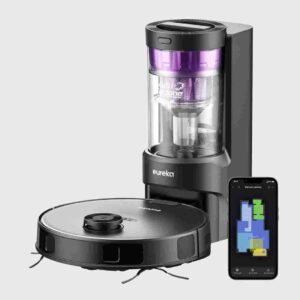
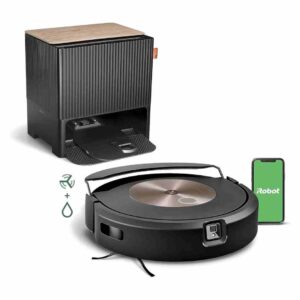
Eureka e10s Robot Vacuum
Where It Has the Edge
No clear scored advantage over the other product.
No clear scored advantage over the other product.
Design is frequently praised: the dock’s wood-look top and furniture-like footprint blend into living spaces better than many rivals. A minority dislike the faux-wood finish or find the dock less attractive in person.
Smart features cover the basics: scheduling, room selection, no-go zones, and carpet mode; AI object recognition is not a strength, and some users note occasional app quirks.
App and automation are feature-rich: schedules, zones, room-specific routines, dirt-prioritization, and voice assistant support are widely praised. Common nitpicks include occasional connectivity hiccups, confusing menu choices, and missing real-time map progress in some experiences.
Blowback and scattering are usually controlled, with some reviewers noting it avoids flinging small particles. However, the side brush can flick larger debris around, and a few tests report scattered grains on hard floors.
Transitions over rugs are usually manageable and carpet mode helps; thick fringes, edges, and clutter still increase the chance of snags or stalls.
Rug handling is usually good, especially because the retracting mop prevents wet pads from dragging onto carpets. Still, the mop arm can occasionally catch on rug edges/corners, and very thick or tricky rugs may need keep-out or no-mop zoning.
Setup is usually quick: unbox, charge, and connect the app; occasional friction comes from Wi-Fi pairing or dialing in maps and no-go zones.
Setup is typically quick and well-guided through the app, with packaging and quick-start materials helping. Initial mapping can take multiple runs, and a few users report early hiccups aligning the robot on the dock or connecting to Wi-Fi.
The robot is described as responsive to obstructions, stopping or rerouting around people/pets and common objects. It’s not perfect in every edge case, but it tends to avoid creating bigger messes when something blocks its path.
Battery life is commonly praised for the class, with long runs and reliable recharging; performance varies by suction mode and carpet use.
Battery performance is generally strong for large-area runs, often finishing typical floors without intervention and returning to recharge as needed. Charging can feel slow for some users, but recharge-and-resume behavior is reliable in most accounts.
Bagless self-empty is a major plus, with an easy-to-dump canister and no recurring bag purchases; capacity is fine for routine upkeep but still benefits from regular emptying and cleaning.
The bagged dock system is praised for cleanliness and low-touch disposal, typically lasting weeks to around two months depending on shedding and home size. Internal bin is small but rarely needs manual emptying thanks to frequent auto-empty cycles.
Build quality feels decent for a budget robot with a compact dock and generally solid plastics; not everyone expects years of abuse, but it does not come across as flimsy.
Build quality is generally described as solid with removable, serviceable parts. Some mention cosmetic scuffing during early mapping runs from gentle bumping, but no widespread structural issues are reported in these reviews.
High-pile and shag carpet performance is limited; when discussed, reviewers treat it as a weak spot for this budget robot.
High-pile/shag carpets are a weak spot for the vacuum-only model in one review, with quick tangling/stalling in long fibers. For homes with lots of high-pile, expectations should be tempered or zones configured to avoid problem rugs.
Low-pile rugs and basic carpet maintenance are usually fine, but it is not a deep-clean replacement.
Low-pile carpet pickup is generally very good, handling daily hair and debris well. Some users still notice occasional leftover strands on rugs and may choose extra passes for a more thorough finish.
No summary yet.
When mentioned, child lock is treated as a useful safety and accidental-start feature, but it is not a major buying driver.
Most reviewers report normal operation without frequent clogs, though hair and heavier debris still require periodic brush and channel cleaning.
In comparisons, it often punches above its price on mapping and everyday pickup, but falls behind pricier models on avoidance, deep carpet, and more polished software.
Comparisons usually place the j9+/Combo j9+ among the best for vacuuming and obstacle avoidance, with advantages over older Roombas. Several reviewers note that top hybrid competitors can outperform it in deep scrubbing or self-maintenance features.
Controls are straightforward through the app and onboard buttons; the UI is functional rather than polished, and a few users mention quirks when maps or settings reset.
Controls are straightforward: the app handles most functions, with a simple on-robot button for start/pause and basic status lights. Some reviewers wish for richer in-app live tracking and clearer guidance in the manual/owner docs.
Corner reach is average for a single side brush; it cleans along edges reasonably but may leave tight corners untouched.
Corner cleaning is a known limitation: as a round robot with a single side brush, it can miss tight corners or smear debris in corner flour-style tests. Edges and open perimeters are better than sharp corners.
Crevice and groove pickup is repeatedly called out as improved versus older Roombas, aided by stronger suction and the dual rubber rollers. It performs well on seams and along transitions in testing.
Docking and auto-empty are generally convenient, though some mention occasional docking misses or emptying quirks; the bagless design is appreciated but noisy.
Auto-empty docking is consistently reliable, with the robot returning to empty and resume without much user intervention. Bagged disposal keeps the process clean, and many users report weeks of hands-free vacuuming before needing to swap the bag.
Dock emptying volume is inconsistent across reviewers: some describe it as very loud, while others find it comparatively quieter and less high-pitched than older Roombas. Either way, the empty cycle is brief and can be scheduled around quiet hours.
For dried-on stains, SmartScrub/back-and-forth motions improve results and can remove many common spots like dried juice, litter prints, and tracked-in dirt. Very sticky food or heavy buildup may still require manual spot work or a pad change afterward.
Day-to-day use is easy once mapped thanks to simple scheduling and hands-off emptying; occasional app/map hiccups are the main friction.
Day-to-day use is strongly praised once maps are set: scheduling, recharge-and-resume, hands-free emptying, and reliable obstacle avoidance reduce babysitting. Early learning runs can require a bit of attention, but it becomes largely set-and-forget.
Edge cleaning is good for a round robot but not flawless: it follows baseboards well in open areas yet can leave debris along edges and misses some grime in tight perimeter spots, especially during mopping.
Edge tracking is generally competent with decent wall and baseboard coverage, though not as tight or consistent as premium bots.
Bagless emptying reduces day-to-day mess, but auto-empty and dumping the canister can still create a dust plume for some users.
App-based maintenance reminders for filters help keep performance consistent, with clear prompts on when to replace. Filters still require planned replenishment since they aren’t washable.
Filtration is basic but serviceable with routine filter cleaning; bagless emptying can kick up some dust if you are sensitive.
Dust containment is generally solid, helped by a sealed, bagged dock and replaceable filters. Filters are not washable and need periodic replacement, but most reviewers report clean handling with minimal dust mess.
Hair pickup on carpet is adequate for maintenance, but long hair and dense pet hair can require follow-up passes.
Carpet hair pickup is strong in many reports, though a few users still see stray hairs on low-pile rugs and may prefer an extra pass for perfection. Overall it’s above average for daily maintenance.
Hard-floor hair pickup is a consistent strength, especially for pets and long human hair. A few mention the occasional hair clump, but overall results are strong with minimal leftover hairballs.
Hair-wrap resistance is mixed: some tests show partial tangling (often on bearings or ends) even when pickup is good, so regular brush checks are part of ownership.
Dual rubber rollers reduce tangling compared with bristle rollers, and several reviewers report noticeably less hair wrap. Some periodic hair removal is still needed, especially in heavy-shedding homes.
Fine dust pickup is generally acceptable for routine cleaning, though some tests suggest it may take an extra pass for powdery debris.
Fine dust pickup on hard floors is consistently reported as excellent, including flour/sand-style tests in some reviews. Multiple passes can further improve results, especially on carpet fine-particle stress tests.
Does well with everyday crumbs and larger debris in many tests, but can scatter or leave some heavier items like litter depending on settings and brush contact.
Large debris pickup is strong overall, though a few note the side brush can flick bigger bits around before they’re captured. In most homes it handles cereal, kibble, and tracked-in debris well, with occasional stragglers in corners.
For the budget tier, the bagless self-empty dock and mop-lift feature feel unusually advanced even if the rest of the system stays fairly simple.
The combo design is seen as meaningfully innovative: the fully retracting mop arm reduces carpet-wetting risk, and the auto-fill dock adds true hands-free mopping convenience. It’s less novel on pad washing, where competitors often do more.
Low-profile claims are helped by a compact body, but the LiDAR turret adds height; it fits under many pieces, yet some low-clearance furniture can block it.
The low-profile body helps it fit under more furniture than bulkier rivals, improving coverage in real homes. Dock size is still substantial, but the robot’s height is generally a plus.
Expect standard upkeep: brush and roller cleaning, filter maintenance, and periodic dock/bin cleaning; hair tangles can make maintenance more frequent.
Maintenance is moderate: the bagged dock reduces daily hassle, but mop pads still require manual washing/swapping and parts like filters/brushes need periodic attention. Several reviewers call the pad-care step the main ongoing chore.
LiDAR mapping is a highlight, with fast mapping and efficient room coverage; a few reviewers warn that moving the robot or errors can cause map confusion or resets.
Mapping and pathing are generally systematic and thorough, with efficient row cleaning once the home is learned. Initial mapping is sometimes slow or clumsy compared to LiDAR bots, and a few tests note slightly longer overall run times than some competitors.
Mop lift is a standout feature at this price, raising the pad slightly over low-pile rugs to reduce wetting while vacuuming.
The retracting mop mechanism is a defining strength, reliably keeping carpets dry by fully lifting/stowing the pad on top of the robot. It enables true vacuum-and-mop-in-one-run behavior without worrying about damp rugs.
Mopping is best for light everyday refreshes with limited scrubbing and stain removal; reviewers expecting true mop results often come away disappointed.
Mopping is generally effective for routine upkeep, with smart back-and-forth scrubbing helping on stains. It can struggle with sticky messes and heavy grime compared with spinning/vibrating pad competitors, and edges/corners remain challenging.
Robot running noise is usually described as moderate-to-quiet, but the self-empty cycle is widely called loud and attention-grabbing.
Noise is a mixed bag: in-room vacuuming is often described as noticeable but tolerable, while auto-emptying can be loud for some. A few reviewers found the empty cycle quieter than other robots, but others measured/mentioned it as disruptive.
Obstacle avoidance is basic and often described as bumper-based; cords, small items, and pet waste are common failure points.
Obstacle avoidance is a defining strength: the camera-based system reliably dodges cords, toys, shoes, and pet waste in most tests, and often outperforms rival bots in clutter. It’s not flawless, but it dramatically reduces stuck events and accidental messes versus non-vision robots.
Ongoing costs are a real factor: bags, filters, brushes, and occasional pads add recurring spend. The upside is the bagged system is clean and parts are widely available, but budget-minded buyers should plan for replenishment.
Overall, it is a good budget mapped cleaner with a convenient bagless dock, held back by basic obstacle avoidance and only light-duty mopping.
Generally handles pet fur and dander on hard floors and rugs, but is not a safe choice for homes with pet mess risks; several reviewers note litter or larger pet debris can be left behind or pushed around.
Pet households benefit from strong poop/pet-waste avoidance, plus reliable hair pickup on hard floors and rugs. Multiple reviews highlight the pet waste guarantee as a key confidence booster in cluttered homes.
Most reviews frame the E10s as strong value in the budget class thanks to LiDAR mapping and a self-empty dock; value drops if you expect premium avoidance or strong mopping.
Value is polarizing: most agree performance and automation are premium, but the MSRP feels steep and many recommend waiting for sales. Those upgrading from older Roombas or prioritizing obstacle avoidance are more likely to feel it’s worth the spend.
Privacy controls are a recurring discussion point because the robot uses a camera for navigation and obstacle recognition. Reviews note opt-in options and iRobot’s stated controls/encryption, but some users may still prefer a non-camera approach depending on comfort.
Many reviews cite long runtimes (sometimes around 180 minutes claimed), helping it finish larger areas in fewer sessions. In higher suction modes, runtime drops as expected; most treat turbo as a spot tool rather than an all-home default.
Runtime is generally strong for a premium robot, commonly around two hours in everyday use, with recharge-and-resume covering larger spaces. Expect longer total job times when both vacuuming and mopping, or when using max power/two-pass settings.
Mopping can leave light streaking or uneven wetness on hard floors, reinforcing that it is a light-mop system.
Residue and streaking are usually minor, but some reviewers notice occasional streaks or sticky patches after messy tests like jam/jelly. Regular pad washing and appropriate water/solution settings help reduce visible streaking.
Getting stuck is a recurring theme around cords, clutter, and tight furniture; virtual walls help, but it still benefits from some pre-tidying.
Stuck events are infrequent once maps and keep-out zones are tuned, but the robot can still snag on bath mats, high-pile rugs, tight gaps, or situations where the mop arm can’t retract cleanly. Overall, it improves after the first few runs.
Suction is generally solid for the price (often cited around 4,000Pa), with acceptable day-to-day pickup; some tests note it can need extra passes on heavier debris or deeper carpet.
Across reviews, suction is a standout: strong pickup on hard floors and carpet, with smart boost behavior and fewer repeat passes than older Roombas. A few testers still rate raw power a step behind the most aggressive premium competitors, but most call it top-tier for daily debris.
Works well in apartments and smaller layouts thanks to mapping and a compact dock; larger, cluttered homes may see more rescues and refills.
Reliability feedback is mixed: many units run fine once set up, but there are reports of map resets, getting stuck, and occasional defect or return experiences.
Reliability feedback is mostly positive over weeks of use, but a few reviews mention glitches (unfinished jobs, mode misbehavior) and at least one report of a defective unit that required replacement. Keeping receipts for early runs is commonly advised.
Can reach under many couches and beds, but the LiDAR turret means clearance matters and some low furniture may be off-limits.
Under-furniture reach is good thanks to the low profile and persistent navigation, with multiple reviewers noting it cleans under beds, desks, and tables. Very low clearances still depend on your furniture height.
Auto-fill dock is a major convenience, with many citing weeks of mopping before refills in average use. A few find the reservoir awkward to handle/refill, but the concept and day-to-day automation score highly.