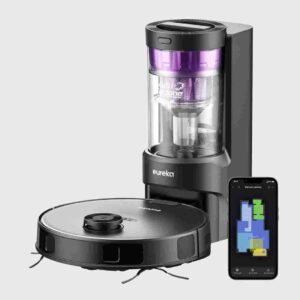
Eureka e10s Robot Vacuum
Where It Has the Edge
No clear scored advantage over the other product.
No clear scored advantage over the other product.
Accessory coverage is mixed: one review notes an included cleanser sample, while another says spare mop rollers, side brushes, and extra bags are not included.
Reviewers consistently describe strong threshold handling, including 24 mm barrier crossing and a four-wheel adaptive chassis design for room-to-room movement.
The design is repeatedly described as refined, modern, and more attractive than generic robot vacuums, with textured finishes that reduce visible smudging.
Smart features cover the basics: scheduling, room selection, no-go zones, and carpet mode; AI object recognition is not a strength, and some users note occasional app quirks.
Smart features are a strength, with app controls, mapping, no-go zones, voice assistant support, Matter support, and automation features reported across reviews.
Blast Airflow is described as helping stabilize suction and push hair or fibers away from the roller, supporting both cleaning and anti-tangle performance.
Transitions over rugs are usually manageable and carpet mode helps; thick fringes, edges, and clutter still increase the chance of snags or stalls.
Area rug handling is generally competent, but one reviewer calls thicker rugs a mixed case even though the robot can climb onto them and boost suction.
Setup is usually quick: unbox, charge, and connect the app; occasional friction comes from Wi-Fi pairing or dialing in maps and no-go zones.
Setup is consistently described as easy, with several reviewers saying the robot can be unboxed, connected, mapped, and ready quickly.
Battery life is commonly praised for the class, with long runs and reliable recharging; performance varies by suction mode and carpet use.
Charging is a standout feature, with multiple reviews citing rapid 10% top-ups in about three minutes and usefulness for larger homes.
Bagless self-empty is a major plus, with an easy-to-dump canister and no recurring bag purchases; capacity is fine for routine upkeep but still benefits from regular emptying and cleaning.
The docked dust bag and auto-empty system are viewed positively for hygiene and long intervals, though owners still need bags and station space.
Build quality feels decent for a budget robot with a compact dock and generally solid plastics; not everyone expects years of abuse, but it does not come across as flimsy.
Build quality appears solid in hands-on use, with sturdy wheels and confident floor transitions noted in the AndroidGuys review.
High-pile and shag carpet performance is limited; when discussed, reviewers treat it as a weak spot for this budget robot.
High-pile or deep carpet cleaning is a limitation: one reviewer still prefers an upright for ground-in dirt, and another measured below-average embedded-debris scores.
Low-pile rugs and basic carpet maintenance are usually fine, but it is not a deep-clean replacement.
Low-pile and standard carpet pickup is described as strong enough for embedded hair, with another review showing fine carpet powder picked up after several rounds.
When mentioned, child lock is treated as a useful safety and accidental-start feature, but it is not a major buying driver.
Most reviewers report normal operation without frequent clogs, though hair and heavier debris still require periodic brush and channel cleaning.
Debris-prevention design gets positive evidence from the front-caster comb, which is described as lowering the chance of stuck debris.
In comparisons, it often punches above its price on mapping and everyday pickup, but falls behind pricier models on avoidance, deep carpet, and more polished software.
Comparative evidence is mostly favorable, especially versus the M14 Plus and pricier flagship competitors, though lab-style airflow results are only slightly above average.
Controls are straightforward through the app and onboard buttons; the UI is functional rather than polished, and a few users mention quirks when maps or settings reset.
The user interface is described as clean and practical, with map, battery, quick controls, room and zone cleaning, and no-go zone controls.
Corner reach is average for a single side brush; it cleans along edges reasonably but may leave tight corners untouched.
Corner cleaning is mixed: reviewers appreciate improved reach, but round-robot geometry and edge/corner testing still leave room for improvement.
Docking and auto-empty are generally convenient, though some mention occasional docking misses or emptying quirks; the bagless design is appreciated but noisy.
Docking and auto-empty reliability is positive in the AndroidGuys review, which reports no clogging or emptying failures during testing.
Dock noise is the clearest day-to-day sound complaint; auto-emptying is reported as loud, though brief.
Dried-on stain handling is one of the strongest areas, with coffee, sticky messes, ketchup, mud, and other dried stains cleaned in tests.
Day-to-day use is easy once mapped thanks to simple scheduling and hands-off emptying; occasional app/map hiccups are the main friction.
Ease of use is strong, with reviewers emphasizing hand-off cleaning, low effort, and simple app/setup interactions.
Edge and baseboard cleaning is better than basic round robots but not perfect, with side brush and extending roller evidence balanced by room for stronger edge work.
Edge tracking is generally competent with decent wall and baseboard coverage, though not as tight or consistent as premium bots.
Edge-following and edge reach receive broad support through TrueEdge, wall/baseboard cleaning, mop extension, and skirt/toe-kick cleaning evidence.
Bagless emptying reduces day-to-day mess, but auto-empty and dumping the canister can still create a dust plume for some users.
Emptying and mess control are helped by auto-emptying and sealed bags, reducing dust contact compared with bagless canisters.
Filtration is basic but serviceable with routine filter cleaning; bagless emptying can kick up some dust if you are sensitive.
Dust containment is supported by a station filter described as stopping dust from going back into the air.
Floor drying is strong: multiple reviews cite slightly damp floors, less residue, quick drying, or polished-looking dry results.
The floorhead and roller system use a long roller, many nozzles, and constant flushing, supporting the mopping system's cleaning effectiveness.
Floor finish after mopping is positive in the few reviews that address it directly, with no visible stain and polished-looking floors.
Fresh spill pickup is strong in reviewer tests with Coke and barbecue sauce, where liquids and thicker messes were cleaned easily.
Hair-removal channel issues were not observed in scored reviews; reviewers generally report no tangles or reduced maintenance rather than channel problems.
Hair pickup on carpet is adequate for maintenance, but long hair and dense pet hair can require follow-up passes.
Hair pickup on carpets is supported indirectly by embedded-hair rug testing and anti-tangle roller evidence, but hard numeric carpet-hair results are limited.
Hair pickup is consistently positive across salon clippings, piles of hair, cat hair, and pet-focused testing.
Hair-wrap resistance is mixed: some tests show partial tangling (often on bearings or ends) even when pickup is good, so regular brush checks are part of ownership.
Hair-wrap resistance is a major strength, with repeated reports of no tangles, near-zero hair wrapping, and a cleaner brush after hair tests.
Fine dust pickup is generally acceptable for routine cleaning, though some tests suggest it may take an extra pass for powdery debris.
Fine dust pickup is strong on hard floors and everyday debris, though some reviews discuss it together with pet hair and crumbs rather than as a separate lab metric.
Does well with everyday crumbs and larger debris in many tests, but can scatter or leave some heavier items like litter depending on settings and brush contact.
Large debris intake is strong in tests with crumbs, coffee grounds, larger debris, and bigger snacks.
Lighting evidence is limited but positive, with RGB night illumination described as helping navigation in darker spaces.
Heated water and warm/hot-air drying are repeatedly tied to the station's mop-washing and odor-prevention process.
For the budget tier, the bagless self-empty dock and mop-lift feature feel unusually advanced even if the rest of the system stays fairly simple.
Innovation evidence is strong, including CES recognition and meaningful upgrades over prior models in suction, noise, automation, and mopping.
Family and kid-fit evidence is positive where reviewers discuss safe navigation, busy homes, toddlers, and kid-related messes.
Large debris handling is broadly positive, with crumbs, larger debris, snacks, and mixed hard-floor/carpet debris picked up well.
Low-profile claims are helped by a compact body, but the LiDAR turret adds height; it fits under many pieces, yet some low-clearance furniture can block it.
The low-profile body is a practical strength, with reviewers noting sofa/low-furniture access and a 95 mm body without a top module.
Expect standard upkeep: brush and roller cleaning, filter maintenance, and periodic dock/bin cleaning; hair tangles can make maintenance more frequent.
Maintenance is low-effort but not maintenance-free; reviews mention weekly checks, consumables, and possible higher roller-mop maintenance in pet-heavy homes.
Maneuverability is strong, with smooth navigation, floor transitions, threshold crossing, and stable movement reported across reviews.
LiDAR mapping is a highlight, with fast mapping and efficient room coverage; a few reviewers warn that moving the robot or errors can cause map confusion or resets.
Mapping and path efficiency are positive, with accurate segmentation, fast scanning, and orderly navigation reported.
Mop lift is a standout feature at this price, raising the pad slightly over low-pile rugs to reduce wetting while vacuuming.
The mop-lifting system is well supported, with repeated 15 mm lift claims to protect rugs and carpets while vacuuming.
Mopping is best for light everyday refreshes with limited scrubbing and stain removal; reviewers expecting true mop results often come away disappointed.
Mopping is a standout feature, with reviewers praising the active roller, scrubbing, self-cleaning, stain removal, and clean floor results.
Robot running noise is usually described as moderate-to-quiet, but the self-empty cycle is widely called loud and attention-grabbing.
Noise is generally controlled during standard cleaning, but high suction and dock operations are louder; several reviews still describe quieter operation than expected.
Obstacle avoidance is basic and often described as bumper-based; cords, small items, and pet waste are common failure points.
Obstacle avoidance is strong overall, with shoes, cords, straps, toys, pet bowls, furniture, and low-light situations handled well, though not flawlessly.
Odor control is positive because drying and dirty-water handling are repeatedly tied to preventing musty smells, odors, and buildup.
Long-term ownership cost is a caveat because dust bags, filters, and brushes add consumable expense over time.
Overall cleaning convenience is high, with reviewers repeatedly emphasizing hands-off operation, automation, and fewer manual chores.
Durability evidence is early but mostly positive; one review finds nothing fragile, while another notes long-term data is still forming.
Overall, it is a good budget mapped cleaner with a convenient bagless dock, held back by basic obstacle avoidance and only light-duty mopping.
Overall opinion is strongly positive across reviews, with clear recommendations and praise for feature breadth, value, and convenience.
Generally handles pet fur and dander on hard floors and rugs, but is not a safe choice for homes with pet mess risks; several reviewers note litter or larger pet debris can be left behind or pushed around.
Pet-readiness is strong because reviewers emphasize pet hair pickup, anti-tangle brushing, obstacle detection around pet items, and low maintenance for pet homes.
Most reviews frame the E10s as strong value in the budget class thanks to LiDAR mapping and a self-empty dock; value drops if you expect premium avoidance or strong mopping.
Price and value are strong, especially at discounted launch pricing, though list price is described as steeper by at least one reviewer.
Many reviews cite long runtimes (sometimes around 180 minutes claimed), helping it finish larger areas in fewer sessions. In higher suction modes, runtime drops as expected; most treat turbo as a spot tool rather than an all-home default.
Runtime evidence is positive for large-area coverage and quick recharge, but max-suction carpet use can reduce coverage.
Scratch resistance is mixed: a soft felt edge is meant to protect furniture, but one reviewer noticed scratches on the robot's top cover.
Self-cleaning is a major strength, with mop washing, scrubbing, drying, tray rinsing, and auto-emptying described across reviews.
The liquid system is strong, with clean water tanks, dirty water tanks, and a dedicated cleaning solution tank used for both mopping and roller cleaning.
Stair cleaning remains a weakness because a robot vacuum cannot handle stairs, and one reviewer still uses an upright for that job.
Station footprint is mixed: some reviewers praise the slimmer or compact dock, while another says it still needs space and is not ideal for cramped entries.
Mopping can leave light streaking or uneven wetness on hard floors, reinforcing that it is a light-mop system.
Streaking and residue are well controlled, with reviewers reporting no streaking, no smeared residue, and less water left behind.
Getting stuck is a recurring theme around cords, clutter, and tight furniture; virtual walls help, but it still benefits from some pre-tidying.
Stuck resistance is positive overall, with stable mapping and room-to-room movement, though cords and loose objects remain a realistic risk.
Suction is generally solid for the price (often cited around 4,000Pa), with acceptable day-to-day pickup; some tests note it can need extra passes on heavier debris or deeper carpet.
Suction and airflow are headline strengths, though one instrumented review shows that very high Pascal ratings do not guarantee best-in-class deep-carpet results.
Heavy-duty suitability is good for daily household grime and some tough messes, but deep manual cleaning remains necessary for the hardest carpet jobs.
Works well in apartments and smaller layouts thanks to mapping and a compact dock; larger, cluttered homes may see more rescues and refills.
Small-space suitability is mixed because the station is described as compact by some, but still not ideal for very cramped apartments.
Reliability feedback is mixed: many units run fine once set up, but there are reports of map resets, getting stuck, and occasional defect or return experiences.
Reliability evidence is mixed: scheduling worked well in one review, but broader brand feedback raised app, navigation, and support concerns.
Surface safety is positive where discussed, with carpet avoidance and a soft felt edge intended to reduce wetting and furniture scratches.
Can reach under many couches and beds, but the LiDAR turret means clearance matters and some low furniture may be off-limits.
Under-furniture pickup is a practical strength thanks to a low body and lack of a top protrusion, allowing access under couches, beds, and sofas.
Value-for-money is one of the strongest themes, with reviewers repeatedly connecting advanced features to lower-than-flagship pricing.
Versatility is strong because reviewers tested vacuuming and mopping across hard floors, rugs, carpet, pets, stains, and smart-home workflows.
Water tank usability is positive overall, though owners still refill clean water and empty dirty water depending on cleaning frequency.