Included extras mentioned in the reviews include ceramic mugs, paper filters, takeaway cups with lids, a scoop, and a descaling sachet, giving the machine a solid starter bundle.
Included and built-in accessories are a major theme: small-batch insert, reversible drip tray/riser, scoop, and removable sprayhead/shower screen are repeatedly noted as practical, not gimmicky.
The review set is mixed here: one reviewer says the machine turned out to be as advertised overall, while another specifically disputes the anti-drip claim based on real use.
Marketing and performance claims around SCA-style temperature and brew-time targets are mostly supported by reviewer testing and certification references. One lab-style review notes an average brew temperature slightly below a commonly cited target minimum, suggesting performance can sit near the lower edge depending on measurement method.
Setup is repeatedly described as extremely simple, centered on adding coffee and water and using a single button or switch.
Setup and first-time use are generally described as straightforward, with clear instructions and an intuitive toggle between carafe and small-batch modes. The simplicity is frequently highlighted as a morning-friendly design choice.
Reviewers consistently describe it as an automated pour-over style brewer with push-button operation and automatic shutoff after the brew cycle.
Automation is focused on brew-process assists (bloom/pre-infusion, drip-stop/sneak-a-cup behavior, and a clean/descale mode) rather than scheduling. The big repeated limitation is no programmable auto-start timer.
Across the supported reviews, brewing performance is a major strength, with coffee described as balanced, smooth, rich, or consistently good.
Across sources, the brewer is repeatedly described as producing smooth, well-extracted, consistently good drip coffee, including better-than-average small batches using the insert. A minority note small caveats like occasional brew-bed quirks or needing minor technique tweaks for peak results.
Build impressions are strong, with reviewers highlighting durable materials, handmade construction, high-quality parts, and long-service expectations backed by replaceable parts or warranty coverage.
Build quality is generally described as sturdy and well-made, with solid plastics, good hinges, and a durable feel in daily handling. Reviewers often contrast it favorably against flimsier drip machines.
Only limited cable details are mentioned, such as a roughly 36-inch power cord in one hands-on review. No strong opinions on storage or routing are provided overall, suggesting an average experience.
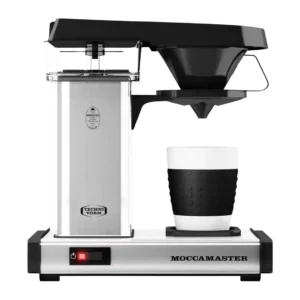
The Cup-One is clearly positioned as a true single-cup brewer. Reviews repeatedly describe a roughly 10 to 12 ounce capacity, which suits solo use well but limits flexibility for larger servings.
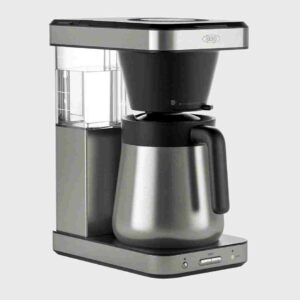
Capacity is consistently stated as 8 cups/40 oz (with 5 oz per cup), which works well for small-to-medium households and still supports single-serve style brewing. Some reviewers consider it small if you routinely want larger pots for groups.
Several reviews praise the machine for avoiding pods and K-Cups in favor of ground coffee and paper filters, though one review notes the need for specific size #1 filters.
Several reviews position the brewer as a practical alternative to pod machines because it handles small batches well, but it still relies on paper filters and benefits from fresh-ground coffee. Some call out that small-batch filters can be pricier as an ongoing consumable.
The brewer is designed to work directly with your own cup, and one review notes enough clearance for a carafe as well. A removable drip area is also mentioned.
The thermal carafe is widely praised for clean pouring and practical handling, and the reversible drip tray/riser is called out as genuinely useful for mugs and travel cups. A few nitpicks appear: occasional splatter in some single-serve setups and a carafe that can be hard to fully empty or drain.
Design and footprint are widely praised. Reviewers call it attractive, iconic, slim, streamlined, and counter-friendly, although one review says the height can prevent it from fitting under cupboards.
Most reviews describe a compact footprint, minimal controls, and an overall easy-to-live-with form factor that fits under cabinets. Common negatives include a rear, non-removable reservoir for filling, requests for metric markings, and occasional annoyance with end-of-brew beeping.
The main issues raised are post-brew dripping, occasional funneling or tunneling, limited feature set, imperfect water dispersion, and a small outlet hole that can clog.
Recurring design complaints include the rear, non-removable reservoir, the lack of programmability, and minor annoyances such as loud beeps or small-batch splatter in certain setups. A few sources mention edge-case batch-size switching can be tricky without minor dialing-in.
Even though this is not an espresso machine, beverage-quality comments are strongly positive in the supported reviews, with coffee described as delicious, smooth, coffee-shop-like, or café-quality.
The reviews consistently note that the machine uses size #1 paper filters. Reviewers also mention included filters and biodegradable paper filters as positives, though the size is less common than standard alternatives.
Filter flexibility is a strength for many (standard flat-bottom for large batches plus a Kalita 185-style solution for small batches), but a few reviewers dislike the unique sizing or mention limited options and higher ongoing cost for Kalita-style filters.
Temperature control is repeatedly tied to the machine’s copper heating or boiler element, with multiple reviews emphasizing stable brewing temperatures in the ideal coffee-brewing range.
Power is explicitly stated as 1400 watts in at least one hands-on review and is associated with quick heating and maintaining target brewing temperatures. Other sources focus more on temperature stability than wattage itself.
Milk-focused features are not part of the Cup-One experience. One review explicitly points out the absence of a milk frother.
Overall user experience trends strongly positive, with reviewers highlighting simplicity, low fuss, satisfying day-to-day use, and the convenience of getting a good cup without much effort.
Overall experience is broadly positive: simple controls, consistent output, and easy day-to-day use are repeated themes, with some reviewers also praising quiet operation. The main tradeoff cited is missing convenience features like an auto-start timer.
The product is described as sought after, widely known, and repeatedly surfaced by best-of review coverage for solo coffee drinkers.
It is frequently cited as a staple in best-of roundups and buying guides, implying strong category recognition. One video review suggests it feels like a sleeper pick, but the broader set of sources still portrays it as widely recommended.
One review makes clear that this model has no pot or warming tray and is designed to brew directly into your own mug.
Thermal-carafe performance is a consistent highlight: multiple sources say it keeps coffee hot for hours and avoids the stale or bitter flavors associated with hot plates. This is repeatedly framed as a key reason to prefer it over glass-carafe warming-plate designs.
One review explicitly says the brewer meets SCA temperature standards in the 195 to 204 range.
Reviews frequently emphasize Specialty Coffee Association certification or Golden Cup-style standards as a major differentiator, used to justify temperature and brew-time performance claims.
Speed is a consistent positive. Across the reviews, brew times are commonly described as roughly three to five minutes, with several reviewers emphasizing quick morning use.
Brew times are typically described in the fast range, often around 3–6 minutes depending on batch size, with small-batch cycles commonly finishing quickly. Some note a short extra drip period after the cycle completes.
Value is mixed. Some reviewers say the machine is expensive for a one-cup brewer, while another argues the higher upfront cost can pay off over time compared with capsule-based systems.
Price is commonly framed as mid-tier (often around $170–$200), viewed as strong value for cup quality but still expensive compared with basic drip machines. Several sources suggest it is best bought on sale if budget is tight.
Warranty coverage is a standout positive. Multiple reviews mention a five-year warranty, and some also note repairability or available spare parts.
A 2-year warranty is mentioned in multiple reviews and is generally seen as appropriate for the category. Direct customer-support experiences are not deeply detailed in the provided sources.
Maintenance is described as straightforward. Reviews mention regular descaling, removable parts, and included or recommended descaling products to keep performance stable.
Maintenance is generally portrayed as manageable: removable sprayhead for cleaning, dishwasher-safe components in some writeups, and a dedicated clean/descale cycle. Downsides include a long descaling run time in at least one test and the non-removable reservoir in others.