Reviews describe auto-detection as reliable for walks and runs and able to recognize many workout types, though one reviewer treats it more as a convenience backup than a substitute for manually choosing the exact workout.
Reviewers described passive or retroactive auto-tracking as useful for walks and missed workouts, but support is limited and one review said the feature missed a walk.
Reviews highlight lots of available apps, including media and fitness options, and portray the Wear OS app catalog as broad enough to add meaningful utility to the watch.
Reviewers consistently praised Play Store breadth and said the watch has the main apps most Android users are likely to want.
The band system is easy to swap, stays secure in daily wear, and is described as robust, though one review notes that genuine replacement bands are expensive.
The included band drew the most criticism in this set, with reviewers calling it dull or overly fiddly rather than premium.
Battery life is consistently one of the watch’s strongest traits, with reviewers reporting anything from roughly 35–36 hours under heavier use to multiple days in lighter real-world use.
Battery life is usually around 1.5 to 2+ days, with several 45mm reviews beating Google’s estimate, while the 41mm model remains shorter-lived.
Blood oxygen tracking is widely available as part of the sensor package, but one long-term review says the SpO2 readings tend to run low, so confidence in the metric is mixed.
SpO2 tracking is part of the standard Fitbit health suite, but reviewers focused more on its inclusion than on deep performance testing.
The display’s brightness is a standout strength in the review that directly measures it, with the screen described as exceptionally bright.
The 3,000-nit screen was repeatedly described as much brighter and easier to use outdoors.
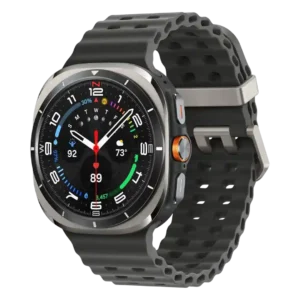
Reviews describe the chassis as rugged and premium, with a solid case that fits the Ultra’s outdoor positioning.
Reviewers liked the aluminum construction and generally said the watch feels polished and premium.
The Quick button gets positive marks for usefulness and shortcut flexibility, but other reviews dislike the overall button layout or want better workout-time control behavior.
The crown and side button are functional and tactile, though one review noted the thinner side button feels less substantial.
Reviews confirm that the watch supports speaker-and-mic calling, but they focus more on availability and setup than on deep call-quality analysis.
Calls are possible and sometimes clear enough, but speaker output is still a weak point for noisy environments.
Calorie data is present, but confidence was mixed because one reviewer found burn estimates too high and another found calorie tracking redundant.
Wireless charging is a plus, but convenience is undercut by Samsung’s decision to omit the wall charging block in the box.
The new side dock is widely seen as easier and more reliable than older Pixel Watch chargers, though a few reviewers still wanted a sturdier stand.
Charging looks decent rather than class-leading, with one review citing about 95 minutes for a full charge and another showing a meaningful top-up during a short morning routine.
Fast charging is one of the clearest upgrades, with multiple reviews confirming roughly 50% in about 15 minutes.
Running Coach is the standout coaching feature, with reviews describing personalized plans, helpful guidance, and useful support for improving pace or distance.
AI coaching sounds promising, but reviews often treated it as early, region-limited, or still rolling out, with Premium gating as a caveat.
Comfort is generally good for a large watch thanks to the straps and wrist feel, but reviewers who prefer smaller watches still notice the size and weight.
Despite the thicker domed design, reviewers generally found the watch comfortable for long daily wear and even sleep.
Setup and app integration are smooth, but Samsung’s split between Galaxy Wearable and Samsung Health remains a mild annoyance.
Fitbit app feedback was mostly positive for clarity and ease of use, but the split between apps and Premium gates still bothered some reviewers.
Samsung Wallet or Pay access is readily available from the watch and is framed as convenient for payments on the go.
Google Wallet was described as reliable and straightforward to use from the watch.
The watch works with Android phones beyond Samsung, but the best experience is still framed as being inside Samsung’s own ecosystem, and iPhone compatibility is off the table.
Compatibility is good across Android phones, but iPhone support is absent and flexibility outside Android remains limited.
Customization is a major strength, with repeated praise for editable widgets, watch faces, colors, fonts, and shortcut layouts.
There is good tile, settings, and watch-face customization, though not every reviewer loved the defaults.
The display is repeatedly described as large, vibrant, detailed, and excellent to look at, making it one of the clearest strengths in the review set.
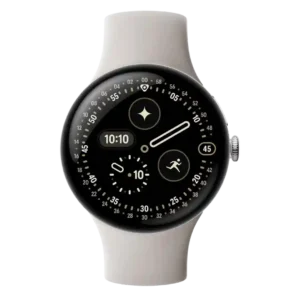
The domed Actua 360 display is the standout feature, repeatedly described as striking, immersive, and among the best on a smartwatch.
The Ultra’s rugged build and durability are repeated positives, with both spec-focused and long-term reviews reinforcing its tough-watch positioning.
Early durability impressions are encouraging, with several reviewers reporting minimal wear, though some still expect the exposed glass to pick up scratches over time.
ECG is supported and easy to access, but Samsung-specific limitations still apply for some advanced health functions.
ECG support is available and clearly surfaced in reviews, but it was not deeply validated against medical references here.
Fit is polarizing: larger-wrist users like the substantial case, while others call it bulky or simply too big.
Both sizes appear wearable, with reviewers saying the case sits well on the wrist, though size preference still matters.
General fitness tracking is reviewed positively overall, with one reviewer saying it matched a Garmin closely, but the scientific review still frames it as good enough rather than class-leading.
Across mainstream workouts, reviewers generally found exercise tracking accurate, responsive, and detailed.
GPS performance is usually described as accurate or very good for normal use, but the scientific review says it is not perfect and trails stronger sports-watch options.
GPS performance is mostly strong with dual-band support, but a few reviews still noted isolated edge-case issues.
The dedicated scientific review judges the overall health-and-sports tracking package as acceptable rather than elite, with clear room for improvement versus stronger competitors.
Reviewers who cross-checked against Oura or other wearables generally found the broader health data aligned well.
Heart-rate tracking is solid for running in several reviews, but the scientific review stops short of calling it best-in-class.
Heart-rate tracking ranged from good to excellent overall, though one run-focused review found it more ballpark than pinpoint.
LTE availability is a clear Ultra advantage, with reviewers appreciating phone-free use and noting that LTE is standard on this model.
LTE models enabled phone-free use, and at least one reviewer reported no connection drops during testing.
Titanium construction and premium materials are central to the Ultra’s identity and are repeatedly cited as meaningful differentiators.
Aluminum and Gorilla Glass materials feel solid, though they are not positioned as the most rugged option in the class.
Navigation is serviceable and helped by touch and haptics, but several reviews still miss a true rotating control or want better workout-time interactions.
Navigation is easy, with smooth menu scrolling, clear tiles, and large touch targets.
Music access is integrated into the interface, with reviewers noting Spotify-aware controls and quick access from the watch.
The move to 64GB is one of the clearest 2025 upgrades and is repeatedly framed as useful for storing music, podcasts, or other offline content directly on the watch.
One UI Watch and One UI 8 are portrayed as feature-rich and modern, with newer software bringing visible interface changes and new capabilities.
Wear OS 6 and Google’s Pixel-specific presentation were widely praised for polish and cohesion.
Outdoor readability is a clear strength, with multiple reviews saying the screen stays readable in bright sun.
Outdoor legibility is a real strength thanks to the brighter screen.
Setup is described as immediate and hassle-free in the review that directly covers pairing.
The recovery-style insight layer exists, but the long-term review says the recommendations often feel off or unhelpful.
Readiness and related recovery signals were useful reminders for pacing effort, even if they were not always perfect.
One review notes occasional display interruptions, suggesting that everyday reliability is good but not flawless.
Day-to-day stability looks good overall, with reviewers reporting few crashes and solid long-term behavior.
Safety-minded setup options and the built-in siren add real appeal for outdoor-focused users.
Satellite SOS, fall/crash features, and other safety tools add meaningful coverage, though fall detection did not trigger in every anecdotal case.
Multiple reviews call out the lack of size choice, noting that the watch comes only in a single 47mm configuration.
The 41mm and 45mm options give buyers a real choice between size and battery life instead of a single compromise fit.
Sleep tracking is useful but mixed: some reviews call the stages relatively accurate, while others say certain sleep metrics still miss obvious awake time.
Sleep tracking was usually described as accurate or close to competing wearables, though a few reviewers noted occasional quirks.
Notifications are easy to access from the main interface and behave like a normal smartwatch strength.
Notifications are rich and often easy to act on, but haptics, missing previews, and uneven smart replies kept them from feeling flawless.
The Ultra is consistently described as feature-packed, combining fitness tools with everyday smart features like calls, texts, and assistant access.
Core smartwatch features are broad and competitive, covering tasks like messaging, maps, payments, and voice assistance well.
Day-to-day performance is smooth in the review that directly comments on software behavior, with fast app launches and fluid operation.
Day-to-day performance is consistently smooth and snappy, with only minor slowdowns or early glitches mentioned.
One detailed long-term review found step counts spot-on in normal walking, while also noting that locked-arm situations can reduce accuracy.
Step tracking looks strong in normal use, with one manual count test landing very close, though edge cases can still affect results.
Stress and body-response features remain one of the weaker areas because reviewers found the output hard to interpret or not very actionable.
Design reactions are mixed: some reviewers like the rugged adventure look and color options, while others find the watch too big or not especially attractive.
The rounded pebble-like design remains one of the watch’s most distinctive strengths.
Third-party fitness and media apps are part of the appeal, with examples like Spotify, Strava, Map My Run, and Hole19 explicitly mentioned.
Third-party app coverage is strong, with reviewers repeatedly highlighting the main Android and fitness apps.
Touch response is quick in normal use, but water can still interfere with touch input.
The updated UI is generally viewed as more functional and easier to organize, though some reviewers still think Samsung’s visual design language looks odd or over-layered.
The Material 3 Expressive interface is colorful, cohesive, and especially well matched to the round screen.
Value is the biggest caveat. Reviews repeatedly say the watch is hard to justify at launch price unless you specifically want the Ultra’s rugged build, LTE, or extra storage.
Same pricing as last generation helps value, though Fitbit Premium still adds some friction.
Gemini and voice-assistant access are treated as genuinely useful additions, especially for quick hands-free interactions from the wrist.
Gemini is one of the better watch assistants right now, especially with raise-to-talk, but false activations and occasional misses remain.
Watch faces are a standout strength, with repeated praise for variety, aesthetics, and customization depth.
Watch-face selection is decent and improved, though some reviewers wanted more faces that truly exploit the curved display.
Reviews consistently frame the watch as well-suited to water exposure, with strong resistance credentials and real-world confidence for wet conditions.
Water resistance and water lock coverage are solid on paper and in light real-world use, though open-water sport depth is limited.
Wellness features like Energy Score, guidance, and metric explanations add context, but some reviewers feel parts of the insight layer are generic or gimmicky.
Fitbit’s contextual presentation of readiness, trends, and daily guidance was often seen as useful and easy to understand.
Workout support is broad, with reviewers describing lots of trackable activities and something for nearly everyone.
The watch covers a broad range of sports and workout types, even if some niche or gym-specific gaps remain.