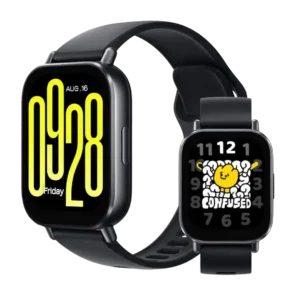
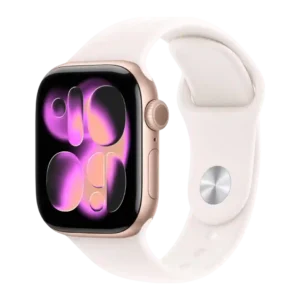
Auto-detection is limited to simple activities, but reviewers did note the watch can recognize basic exercise like walking without a manual start.
The watch can automatically start tracking activity after several minutes, which adds convenience for casual workouts.
The watch leans on Mi Fitness and can link with common fitness services, giving it a modest but usable app ecosystem rather than a broad one.
One review emphasizes the App Store's huge variety, reinforcing Apple's lead in smartwatch app breadth.
Band feedback is mixed: the strap material is decent and soft enough, but several reviewers disliked the awkward fastening design.
At least one reviewer says the sport band held up well over time.
Battery life is a clear strength, with most reviewers reporting about a week to roughly two weeks depending on usage, even if claims looked optimistic.
Battery life is the biggest upgrade: reviews repeatedly cite longer runtimes, with many seeing about a day to a day and a half and some closer to two days.
Blood oxygen tracking is widely available and repeatedly mentioned as a core health feature, with some reviewers finding readings close to comparison devices.
Reviews highlight that blood oxygen sensing is back, restoring a health feature reviewers considered important.
Bluetooth connectivity supports calls and watch-to-phone features, and one reviewer specifically reported stable connection behavior.
Bluetooth 5.3 support is present, giving the watch a modern baseline for wireless accessories.
Screen brightness is usable, and one written review praised auto-brightness, but multiple video reviewers complained about missing automatic brightness control.
The screen's improved brightness earns specific praise, helping it stand out within the lineup.
Build quality is acceptable for the price, though the case is clearly plastic and premium feel is limited.
Build quality looks solid overall, with reviewers praising the scratch-resistant glass and neat, polished construction.
The single side button is consistently described as useful and straightforward for power, home, or app-list access.
Physical controls are well executed, with responsive hardware buttons and practical shortcuts from the side button.
Bluetooth calling is one of the standout smartwatch features, though speaker quality and assistant-related call workflows still come with compromises.
Call handling is strong, with call screening features and clear voice pickup even in noisy environments.
Calorie tracking is present as part of the watch's daily activity stats, but reviewers treated it as a basic metric rather than a standout feature.
Charging is simple thanks to the magnetic charger design, though it still uses a proprietary cable instead of wireless charging.
The improved endurance and fast top-ups make charging easier to fit around daily routines.
Charging speed is described as decent rather than class-leading, with one reviewer citing a full charge in about 80 minutes.
Fast charging is another strong point, with quick top-ups restoring meaningful battery in short sessions.
Coaching-style features are light but present through items like Vitality Score and VO2 Max-related readouts rather than deep guided training.
Workout Buddy adds motivation and spoken guidance, but reviewers see it as helpful in spots rather than a must-have coaching tool.
Comfort is generally good because the watch is light, but strap design can make wearing it less convenient than it should be.
Comfort is a consistent plus, with reviewers calling the watch slim, light, and easy to wear for long stretches or overnight.
Mi Fitness gets positive feedback for being user-friendly, data-rich, and modern-looking despite the budget positioning.
The companion experience is functional but fragmented, with one reviewer disliking the need to manage features across three apps.
There is no NFC payment support, so contactless payments are a clear omission.
Apple Pay is explicitly praised as a favorite everyday convenience on the watch.
The watch was explicitly reported to work with both Android phones and iPhones.
Cross-platform compatibility is poor because the watch is framed as a better fit for iPhone users than Android users.
Customization is respectable for a budget watch, with configurable tiles, widgets, and some watch-face tweaking.
Watch faces can be customized with different looks and complications.
Display impressions are mixed: the big screen is easy to read and sometimes crisp, but the LCD panel lacks the contrast and premium look of AMOLED rivals.
Display quality is a standout, with a bright wide-angle OLED panel and strong readability.
Durability is mixed because the TPU strap material is durable, but reviewers also raised concerns about plastic lugs and long-term wear.
Durability improves meaningfully with the tougher glass, and several reviewers report little to no scratching during testing.
Reviews consistently note ECG support and explicitly mention that the watch can perform ECG checks.
Fit is generally comfortable, though the large case can look or feel tall on smaller wrists.
Fit gets positive marks thanks to balanced sizing and case proportions that work well for day-and-night wear.
One written review directly credited the accelerometer and workout setup with helping the user track activity accurately.
One review directly says fitness tracking is accurate, continuing Apple's strong baseline for everyday workout metrics.
GPS is a major compromise because the watch lacks built-in GPS and instead depends on the phone for route-based workout data.
GPS performance is described as excellent overall, with strong real-world tracking for most runners despite the lack of dual-frequency GPS.
Health tracking as a whole is better than expected for the price, with reviewers calling the sensor package solid for general monitoring.
One review says the watchOS 26 health updates are useful and clinically validated, supporting confidence in the overall health-tracking package.
Heart rate tracking is one of the stronger sensor areas, with reviewers calling it better than expected and broadly in line with reference devices.
Multiple reviews describe heart-rate tracking as a standout, with lab praise, near-matched comparison results, and only minor warm-up variance.
Cellular connectivity improves with the move to 5G on supported models, giving faster and more capable untethered use.
Materials are functional rather than premium, centered on plastic construction and TPU strap components.
Case material choices include recycled aluminum and titanium, giving the watch premium-feeling material options.
Menus and on-watch navigation are easy enough to use, with reviewers calling the structure simple and straightforward.
Navigation is described as straightforward, with crown and screen controls making core menus easy to learn.
Music controls are available for phone playback from the watch.
Music handling is flexible during workouts, including options to set media or let Apple choose it for you.
The watch does not provide onboard storage for audio files.
The quoted 64GB storage gives the watch enough onboard space for apps and media.
The software experience is basic but usable, with a lightweight feel rather than a premium one.
watchOS 26 is described as polished, seamless, and feature-rich, giving the Series 11 a refined day-to-day software experience.
Outdoor visibility is good enough at high brightness, with reviewers saying the display stayed readable outside.
Direct-sunlight readability is strong thanks to the 2,000-nit display.
Pairing and day-to-day connection behavior were mostly positive once Mi Fitness was set up.
Setup and pairing are described as quick and easy.
Recovery-style metrics exist in a limited form through features like Vitality Score, giving some post-activity insight without advanced coaching depth.
Recovery guidance is a weak spot, with reviewers calling out the lack of a daily readiness or recovery score.
One reviewer explicitly reported stable connection behavior with no obvious syncing problems in day-to-day use.
Reviewers describe the Series 11 as stable, dependable, and reliable for regular use and run tracking.
Safety tools like Fall Detection, Crash Detection, and other watch-based protections remain an important part of the package.
The Series 11's 42mm and 46mm sizes give shoppers useful choice for different wrist sizes and preferences.
Sleep tracking is feature-complete for the class, with REM and nap detection mentioned, and at least one reviewer called the accuracy pretty good.
Reviews say sleep tracking aligns reasonably well with comparison devices and remains one of the stronger parts of the Apple Watch experience.
Notifications are dependable and customizable, but reply support is limited or absent depending on the reviewer and use case.
Notification handling is flexible, with wrist gestures making alerts easier to manage from the watch itself.
For a budget model, the watch offers a surprisingly broad feature set including calls, Alexa support, and extras like remote camera control.
Reviews describe a wide feature set spanning calls, apps, vitals, and phone-centric tools like Hold Assist and screening.
Software smoothness is a plus, with repeated mentions of smooth transitions, animations, and low lag.
Reviewers say performance is buttery smooth, with fast app launches and fluid swiping.
Step counting got a positive single-review mention, with no obvious pedometer issues reported.
Stress tracking is included as part of the standard health suite and is presented as a built-in wellness feature.
Styling is decent for the price, but several reviewers still thought the plastic-heavy design looked obviously budget-oriented.
The design is widely liked for its clean, familiar, and refined look, even if it changes very little from Series 10.
Third-party app support is limited to links with external fitness services rather than true installable app support on the watch.
Third-party sports app support is a strength, with reviewers specifically calling out capable apps like WorkOutDoors.
Touch responsiveness was directly praised in the written review.
One review says the touchscreen experience feels smooth and fluid.
The interface is easy to understand and offers useful widget organization, even if it remains fairly basic.
The interface is praised for being clean and attractive, while larger buttons improve everyday usability.
Value is one of the watch's strongest arguments thanks to the very low price, though at least one comparison reviewer felt spending a little more buys a noticeably better upgrade.
Value is mixed: some reviewers call it a strong middle-ground buy, while others say the SE 3 or discounted older models can make more financial sense.
Voice assistant support is inconsistent: some reviews mention Alexa, but availability, reliability, and spoken responses are limited.
Watch-face selection is a plus overall, though storage and customization limits keep it from feeling unlimited.
Reviews like the new Flow and other faces, noting strong visual style even if some faces are less practical at a glance.
Water resistance is strong on paper at 5 ATM or equivalent pressure ratings, even if workout support for water activities is inconsistent.
Water resistance remains solid for everyday exercise and sweat exposure, with WR50 and IP-rated protection still in place.
Wellness features go beyond raw stats with sleep charts, recommendations, body-battery-style readouts, and similar overview tools.
Reviews highlight sleep score and hypertension alerts as useful wellness additions that surface clearer, more actionable health feedback.
There is no built-in Wi-Fi support.
Reviews note dual-band Wi-Fi support and 2.4GHz/5GHz compatibility, which improves wireless flexibility.
Workout variety is a real strength, with reviewers repeatedly mentioning large sport-mode counts and broad activity coverage.
The workout app supports dozens of workout types, giving the Series 11 broad exercise coverage.