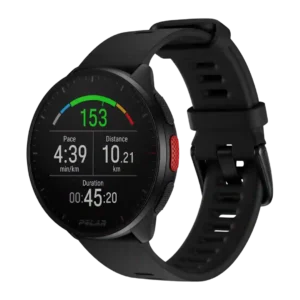
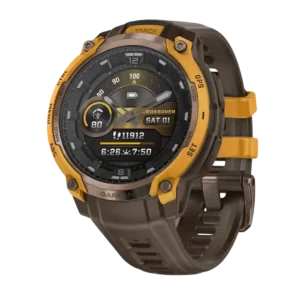
Automatic workout detection is specifically missed, making this one of the thinner fitness conveniences here.
Polar’s broader app ecosystem is a clear plus, with Flow depth and wider platform connections adding value.
Band quality is good for the class, with comfortable silicone and a better feel than the price suggests.
The included silicone strap is simple but well executed, with little left to complain about.
Battery life is a clear plus at roughly 5–6 days or 35 hours of GPS use, though sleep tracking and heavier use can cut into it.
Battery life is strong by smartwatch standards, but the AMOLED model loses some of the Instinct line’s extreme endurance, especially under long GPS use.
The oximeter is mentioned as one of the metrics that could provide helpful insights, but it was not explored in depth.
Bluetooth syncing works, but the behavior feels less seamless because syncing is tied to manual steps.
Brightness is a strong point, especially outdoors and in direct light.
Brightness is strong enough for direct sunlight according to the hands-on video.
Build quality is solid for the price, even if it does not feel especially premium.
The case construction combines fiber-reinforced polymer and steel, giving it a rugged feel.
Physical buttons are mostly praised for crisp, grippy control, though one reviewer found them less clickable than expected.
Physical buttons suit the rugged design, but not everyone found them ideal; some praise the setup while others call the buttons fiddly.
Call handling is effectively absent because the watch has no speaker or microphone.
Call handling is basic but useful: incoming calls can be viewed on the wrist.
Calories are included among the core training metrics and seem useful within the run-data screens.
Charging convenience is weaker because the watch uses a proprietary magnetic charger and cable arrangement.
Charging is helped by Garmin’s familiar cross-compatible cable and easy top-off routines.
One reviewer specifically praised charging speed.
A full charge from zero takes less than two hours.
Coaching features are strong for the price, with Fitness Tests and FitSpark adding useful guided training support.
Garmin includes coaching-oriented tools such as sleep coaching, training load focus, and daily recommendations tied to sleep and Body Battery.
Comfort is a clear strength thanks to the light, unobtrusive design.
Despite its bulk, reviewers say the watch is fairly light and wearable once adjusted.
The companion app offers deep training data and useful analysis, but several reviewers found it overwhelming at first.
Garmin Connect is described as expanding the watch into a more capable performance tool.
Contactless payments are not supported because NFC for mobile payments is absent.
Garmin Pay is available, giving the watch workable tap-to-pay support.
Flow works on both iOS and Android, giving the watch solid cross-platform support.
Customization is a strength across data displays, sport modes, and configurable widgets.
The watch offers a customizable screen and dynamic watch-face behavior that repositions complications around the hands.
Display quality is good overall thanks to the clear color MIP screen, though the small viewing area and bezel draw criticism.
The AMOLED upgrade is one of the product’s biggest wins, with multiple reviews praising readability, color, and the step up from the older screen.
One review specifically describes the design as robust enough for years of wear and tear.
Durability is a consistent strength, with scratch resistance, rugged materials, and positive feedback after rough use.
Fit is very good and secure, with multiple reviewers saying the watch disappears on the wrist.
The standard strap offers broad wrist accommodation through generous sizing holes.
Core fitness tracking is described as solid and very good, with the watch handling the basics well.
Activity tracking was described as pristine in real-world testing, even across long remote hikes.
GPS performance is mixed: several reviews praise the tracking, but others report slow locks, hit-or-miss accuracy, or occasional glitches.
GPS is described as multiband and very accurate in use, with quick locks and pristine tracking during remote hikes.
One review says the watch’s heart rate and sleep data are accurate, pointing to dependable overall health monitoring.
During 24/7 wear, sleep tracking and Body Battery lined up with real-world experience, suggesting the broader health readouts felt trustworthy in use.
Heart-rate accuracy is a recurring strength, though one first-run test saw an elevated max reading and another reviewer noted occasional quirks.
Heart rate readings were described as working brilliantly and generally staying beat-for-beat with other premium watches.
Materials feel practical and durable enough, but the mostly plastic build can also come across as basic or toy-like.
Sapphire over the display and the upgraded case materials make the hardware feel premium and scratch resistant.
Menu navigation can feel unintuitive, with some data buried in places that take time to learn.
Navigation is workable and can become second nature, but multiple reviews still describe it as slower and less intuitive than the best alternatives.
Phone music controls are widely supported and generally useful, though one review found setup clunky.
You cannot store music locally, but phone music controls are available.
There is no built-in music storage, so audio still depends on your phone.
One review explicitly says you cannot load music onto the watch, so onboard storage is missing.
The operating system is simple and focused rather than advanced, which helps some use cases but limits others.
The software presentation is praised for showing data in a non-overwhelming way.
Outdoor visibility is consistently praised as excellent or absolutely fine.
The display remained easy to read in rain, sun, dawn, dusk, and night.
Pairing and sync are functional, but the manual sync requirement makes the experience less polished.
Recovery tools like training readiness, Nightly Recharge, cardio load, and sleep-based guidance are repeatedly highlighted as valuable.
Recovery guidance was useful enough to flag missed training balance, including advice that the tester was short on high-aerobic work.
Reliability takes a hit from one reported pool-swim crash that left the unit unresponsive.
Reviewers describe the watch as dependable in use, with impact correction for the hands and no issues reported in field testing.
Safety features are limited, though one review notes a back-to-the-start mode.
Safety-related tools include abnormal heart-rate alerts and a bright flashlight that was described as strong enough to help navigate trails.
Only one strap size option is mentioned, so size choice appears limited.
Sleep tracking is generally described as accurate and useful, though one reviewer noted a couple of odd nights.
Sleep tracking was described as spot-on during long-distance hiking use.
Phone notifications are available, but support is basic and can feel limited or annoying depending on setup.
Notifications are supported, with reviewers noting the hands move aside for them and that texts and calls can be viewed on the wrist.
Smartwatch extras are present but basic, covering things like weather, notifications, and music control without feeling especially advanced.
Across all reviews, the watch is portrayed as a full-featured smartwatch with health metrics, GPS navigation, training tools, and everyday connected features.
Menu and screen response are repeatedly described as snappy, helped by the faster processor.
The hybrid system is said to work seamlessly, helping the analog-digital concept feel polished.
Step counting was largely in line with comparison devices, though one review noted some distance disparity from step data.
Stress tracking is present as part of Garmin’s stress and energy management tools, alongside related health alerts.
The design is generally liked for being slim, understated, or attractive, even if it stays fairly basic.
The hybrid analog look is a major draw, with reviewers repeatedly calling it cool, premium, and visually distinctive.
Third-party service support is strong where discussed, especially with Strava and other running platforms.
There is no touchscreen, so touch responsiveness is not part of the experience.
There is no touchscreen here, so touch response is absent rather than merely mediocre.
The interface works, but some reviewers found it poorly explained and not especially user-friendly.
The analog-digital interface is widely praised for keeping the hands out of the way and making the hybrid concept feel coherent.
Value for money is one of the watch’s biggest strengths, with repeated praise for how much it offers around the $200 mark.
Multiple reviews say the watch feels expensive for what it offers, even if its unusual hybrid design softens the blow for the right buyer.
Watch-face options are a highlight, with multiple designs and custom graphics that make good use of the hands and AMOLED screen.
Water resistance looks adequate for swimming, rain, and general wet conditions rather than deeper adventure use.
At 100 meters, water resistance is solid for swimming and general adventure use, though not pitched for scuba.
Wellness features like sleep metrics, training load, physio data, and broader life tracking are consistently seen as helpful.
Body Battery and the morning report were highlighted as useful wellness cues that matched how the tester actually felt.
Wi‑Fi is absent.
Workout variety is a major strength, with repeated praise for multisport coverage, triathlon support, and large sport-mode libraries.
Reviewers repeatedly say the activity list is huge, covering standard sports, niche modes, and numerous water options.