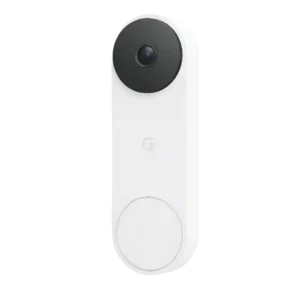
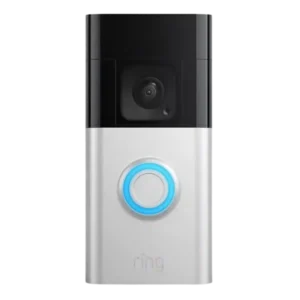
Gemini features are a major draw for this doorbell, with richer descriptions, search, and familiar-face tools, but reviews were split on how consistently accurate the AI felt.
The Google Home app is a clear strength thanks to intuitive controls, guided setup, and smooth firmware/setup handling.
The Ring app is consistently described as polished, fast and feature-rich, with an easy timeline/history experience and lots of settings. Criticisms include paywalled features and occasional quirks like lower-quality downloaded clips or firmware/setting limitations on older models.
Two-way audio is consistently usable, with clear visitor voices and reliable conversation quality across reviews.
Two-way talk is mostly rated clear and loud, with some praise for noise handling, but a few reviewers report delayed or muffled audio in certain situations or on older battery models.
Google Home automation adds practical flexibility, including motion-triggered actions with other smart devices.
Automation and ecosystem hooks (linked Ring devices, Alexa routines, and in some cases IFTTT) are commonly cited as a major strength, especially for homes already using Ring/echo hardware.
Google speakers and Nest Hub displays integrate well for announcements, live view, and voice interaction.
Battery life varies widely by settings and activity: reviewers cite anything from about a month in busy scenarios to multiple months, with strong results when tuned carefully. Swappable batteries and spare packs are repeatedly recommended to avoid downtime.
Bird's Eye View is mentioned mainly as a missing or hoped-for feature in this model, not a proven benefit in real-world use.
The doorbell works with existing wired chimes and Google speakers/displays, though there is no included standalone chime.
Chime options are flexible: you can use Ring Chime devices and Alexa/Echo speakers/displays for announcements, and wired chimes can work when hardwired in some setups.
Buyers get three finish choices, and reviewers consistently noted the available color options.
The Neighbors/community features are described as socially complicated, with concerns about misuse and profiling; value depends heavily on your comfort with neighborhood sharing.
Multiple reviews say the box includes the core mounting and wiring accessories needed for installation.
Status LEDs and button lighting provide clear visual feedback for setup and recording states.
The app exposes at least a basic low-bandwidth mode, giving some control over data use.
Package monitoring is a real feature here, with reviewers noting package detection and accurate delivery callouts.
Package monitoring benefits a lot from the head-to-toe view, keeping many deliveries in frame and enabling package alerts. However, reliability varies with placement, shadows and package size, and some reviewers want better differentiation (delivered vs removed).
Design is one of the most consistently praised aspects, with reviewers describing the doorbell as especially attractive and premium-looking.
The design is broadly seen as familiar and inoffensive, though some call it chunky or visually dated, and opinions on the fisheye look are mixed.
Included wedges, mounting plates, and install accessories help adapt the doorbell to different mounting situations.
Familiar-face detection can be impressive when it works, but at least one review still saw recognition misses.
The square 1:1 framing and wide field of view give a broad head-to-toe porch view, with several reviewers praising better left-right coverage and package visibility.
The head-to-toe 150° x 150° framing is repeatedly called the standout upgrade, helping you see visitors plus the doorstep area for deliveries. Older wide-but-short Ring views are criticized for cutting off packages at your feet.
Installation is widely praised, especially the app guidance and the easy upgrade path for existing Nest owners.
No summary yet.
Wired responsiveness is a real upgrade in use, with one reviewer calling the faster screen load a major improvement.
Some reviews highlight Ring's past and ongoing controversies around police partnerships and access to footage, framing it as a key trust consideration for buyers who prioritize civil-liberties privacy.
Reviewers noted only mild barrel or fisheye distortion, and generally treated it as an acceptable tradeoff for wider framing.
The expanded field of view brings visible fisheye/barrel effects and some corner vignetting in multiple reviews; most say it is acceptable for doorbell-distance subjects but reduces clarity toward the edges or farther away.
The status light can be adjusted between high, auto, and low.
Night performance is a strong point, with good contrast and visibly better low-light clarity than older Nest models.
Infrared night vision is generally described as reliable and clear for close-range activity, while color night vision is more mixed: it can help with some ambient light, but some reviewers see limited color benefit or motion ghosting/pixelation in darker scenes.
Motion alerts were described as quick and accurate in testing.
Motion detection and camera wake are usually fast and dependable, with frequent mentions of quick alerting and early capture compared to older Ring battery doorbells. A few note occasional missed notifications or the inherent limitation of battery units without pre-roll.
Shared access is described as straightforward, letting households add additional users without sharing a single login.
Alerts are usually fast and detailed, but one review found Gemini-written descriptions inaccurate enough to weaken trust.
Notifications are frequently described as fast, with rich previews/snapshots viewed as highly actionable. A couple reviews mention rare notification misses, but overall speed and timeliness are a consistent win.
Recognition of people, pets, vehicles, and packages is treated as one of the standout detection strengths.
No summary yet.
Ongoing ownership cost is a weak point because the best Gemini and history features push buyers toward pricey monthly plans.
Ongoing costs are a recurring concern because key features and cloud history sit behind a subscription, especially if you scale to multiple cameras. Some reviewers find the pricing acceptable within the Ring ecosystem, but many flag it as the biggest downside.
At least one review directly frames the doorbell as a strong home-security device that adds reassurance.
Several reviewers describe the doorbell as genuinely stress-reducing, thanks to fast alerts, the ability to check live view remotely, and better visibility of the doorstep and packages.
Users can personalize zoom defaults, themes, and other behavior more than with a bare-bones video doorbell.
Being wired limits flexibility somewhat, but reviewers confirm compatibility with standard doorbell transformers and even plug-in adapters.
Power flexibility is a plus: you can run it purely on battery or connect to existing doorbell wiring for trickle charging, though wiring does not turn it into a true always-on wired doorbell with pre-roll benefits.
One review explicitly notes some pre-recording before detected motion events.
The Battery Doorbell Plus is repeatedly criticized for lacking pre-roll, which can miss the very start of an event; some reviewers suggest considering other Ring models if pre-roll is a must. Older Ring battery models with pre-roll are viewed as helpful but sometimes low quality or buggy.
Hardware value is generally good for buyers who want a premium Google doorbell, but subscription pricing weakens the value story.
Value perceptions vary: many like the feature set (head-to-toe view, fast alerts, Alexa integration) at its typical sale price, while others call it expensive once subscription costs are factored in or when compared to local-storage rivals.
The app includes straightforward privacy control such as turning the camera off when needed.
Privacy controls (two-factor authentication, privacy zones, disabling audio recording and access management) are frequently praised as strong and easy to use. Separately, broader Ring privacy concerns are raised by some reviewers, especially around surveillance implications.
Pre-recorded replies are handy and easy to trigger, but the fixed message set is limited because custom responses are not available.
Quick Replies/Smart Responses are viewed as handy for deliveries and missed-door moments, especially with selectable delays and voicemail-style handling. Some reviewers wish they could record fully custom replies.
Quiet time is easy to set and can mute ringing for up to three hours.
Motion/alert snoozing and scheduling are repeatedly mentioned as practical ways to reduce notification overload during busy periods or specific times of day.
Reviewers broadly recommend it for buyers who want a premium Google-first video doorbell, with clear caveats around subscriptions and ecosystem fit.
Free event history is more generous than some rivals, and premium tiers add longer clips and 24/7 history, but local recording is absent.
Recording quality and timeline browsing are generally strong once enabled, with useful filtering and download/share tools. A few reviewers note occasional skipped/stopped recordings or quality loss when exporting/downloading clips.
Core operation felt dependable in testing, with quick detection and working voice/display integrations.
No summary yet.
The doorbell fits best inside Google’s ecosystem, but reviewers note Google’s broader security stack is less complete than some rivals.
Integration within the wider Ring security ecosystem (linking cameras, alarms, and multi-device workflows) is frequently cited as a practical advantage for existing Ring households.
The wired third gen is relatively slim and slightly smaller than the battery model it resembles.
Integration is strongest with Google and basic Alexa support, while HomeKit-style flexibility is absent.
Smart-home compatibility skews heavily toward Amazon: Alexa integration (Echo speakers and Echo Show live view) is repeatedly praised as best-in-class. Many reviewers also note it does not support Google Assistant/HomeKit, and Matter support is not present in the cited reviews.
Rich preview notifications can surface the event visually without needing to open the app first.
Snapshot capture is repeatedly mentioned as useful for filling in gaps between motion events, with adjustable intervals (hourly to more frequent). More frequent snapshots are consistently framed as a battery tradeoff.
Cloud-only storage and the lack of local storage are repeated complaints across reviews.
Storage is cloud-based; without a plan you mainly get live view and alerts, while recordings/history require Ring Protect. Lack of local storage is a common knock compared with competitors.
Subscriptions unlock many of the most appealing features, and several reviews call the pricing expensive or frustrating.
Ring Protect is repeatedly described as effectively required for the full experience (recordings, rich notifications, person/package alerts, longer history), which turns the doorbell into a recurring-cost product for many buyers.
As a doorbell it can feel like a complete package, but Google’s missing wider sensor and monitoring pieces keep the broader system from feeling fully rounded.
Included security hardware adds a basic tamper-resistance step during installation.
Theft protection features (blacklisting/reporting and replacement in some accounts) plus security screws are framed as practical deterrents, though physical removal is still possible with tools.
The third gen looks like a worthwhile upgrade mainly for better video, wider framing, and an easy swap-in installation path.
As an upgrade, the Plus is most often justified by the head-to-toe view, higher resolution and improved day-to-day usability (packages, speed, battery). Upgraders from recent Ring models are sometimes less convinced, but first-time buyers are frequently steered toward it.
Reviews consistently describe sharp, detailed 2K footage, with meaningful clarity gains over prior Nest models.
Most reviews praise the 1536p square video as a real step up from older 1080p Ring battery models, with clear daytime detail and easy identification close to the door. A few note that the wide 1:1 framing spreads pixels out, so distant clarity is only average compared to narrower views.
Users can save or download clips, with longer exports available on premium plans.
Sharing/downloading clips is convenient in-app and via web dashboards, but at least one reviewer notes exported/downloaded clips can look worse than playback inside the app.
The hardware is built for outdoor use, with IP65 protection and a defined cold-to-hot operating range.
Temperature and weather handling are generally presented as suitable for typical outdoor use, with specific operating ranges cited in at least one review.
Review evidence points to fast loading and stable live access, though range itself was not deeply tested.
Multiple sources call out 2.4GHz-only Wi-Fi as a limitation (no 5GHz), though range and stability are generally fine on 2.4GHz and can be improved with accessories like a Chime Pro/Wi-Fi extender.
Motion and activity zones are available and easy to configure.
Custom motion zones and a dedicated package zone are a common strength, helping exclude streets/neighbors while focusing on the porch and delivery area. Privacy zones are also widely used to mask parts of the view.