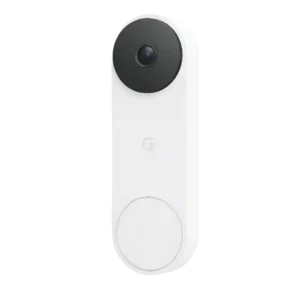
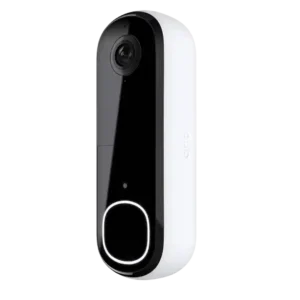
Gemini features are a major draw for this doorbell, with richer descriptions, search, and familiar-face tools, but reviews were split on how consistently accurate the AI felt.
AI-driven features like smart alerts and object classification are a key strength when enabled, but they are typically subscription-gated.
The Google Home app is a clear strength thanks to intuitive controls, guided setup, and smooth firmware/setup handling.
The Arlo Secure app is feature-rich (modes, settings, live view, snapshots), but it can have a learning curve and some reviewers report occasional hangs or glitches.
Two-way audio is consistently usable, with clear visitor voices and reliable conversation quality across reviews.
Two-way talk is widely reported as clear with good noise handling, though a few users mention occasional talkback or microphone connection glitches.
Google Home automation adds practical flexibility, including motion-triggered actions with other smart devices.
IFTTT support and routines (for example, smart lights reacting to a press) enable flexible automations beyond basic alerts.
Google speakers and Nest Hub displays integrate well for announcements, live view, and voice interaction.
The doorbell can run directly on Wi-Fi, but hub/base station integration may be required for certain setups (for example, Apple Home or local storage) and this varies by configuration and model notes.
Battery life depends heavily on traffic; real-world reports hover around about a month in busy use, and the non-removable battery means removing the unit to recharge unless hardwired.
The doorbell works with existing wired chimes and Google speakers/displays, though there is no included standalone chime.
An indoor chime is not typically included; users either wire into an existing chime or add an Arlo Chime 2 for indoor ringing.
Buyers get three finish choices, and reviewers consistently noted the available color options.
Multiple reviews say the box includes the core mounting and wiring accessories needed for installation.
The box generally includes mounting hardware, wedge/angle brackets, a release pin, and a USB-C cable, but you may need your own power adapter and an indoor chime is typically separate.
Status LEDs and button lighting provide clear visual feedback for setup and recording states.
Hardware controls are straightforward with a large illuminated button and status indicators, plus app controls for mute, snapshots, and manual recording.
The app exposes at least a basic low-bandwidth mode, giving some control over data use.
Package monitoring is a real feature here, with reviewers noting package detection and accurate delivery callouts.
Package handling benefits from the wide view, package detection (when available), and quick replies that help manage deliveries, but detection is often tied to the subscription.
Design is one of the most consistently praised aspects, with reviewers describing the doorbell as especially attractive and premium-looking.
The design is generally viewed as sleek and minimal, but the body is also described as bulky compared with slimmer competitors.
Included wedges, mounting plates, and install accessories help adapt the doorbell to different mounting situations.
Familiar-face detection can be impressive when it works, but at least one review still saw recognition misses.
The square 1:1 framing and wide field of view give a broad head-to-toe porch view, with several reviewers praising better left-right coverage and package visibility.
The 180-degree, 1:1 head-to-toe framing is a standout and helps cover the porch and doorstep, though the wide view can introduce a fisheye feel.
Installation is widely praised, especially the app guidance and the easy upgrade path for existing Nest owners.
No summary yet.
Wired responsiveness is a real upgrade in use, with one reviewer calling the faster screen load a major improvement.
Responsiveness is usually strong (especially the call-style ring), but some note slight live-view lag, clip loading delays, or rare freezes; upgrades from older Arlo doorbells improve perceived lag.
Reviewers noted only mild barrel or fisheye distortion, and generally treated it as an acceptable tradeoff for wider framing.
Lens distortion is the main downside of the extreme wide-angle view; some call it mild edge curvature, while others describe heavy bulbous distortion.
The status light can be adjusted between high, auto, and low.
Night performance is a strong point, with good contrast and visibly better low-light clarity than older Nest models.
Black-and-white IR night vision is generally usable, but several reviewers note dimmer scenes, motion blur, or a lower night frame rate and there is no color night vision.
Motion alerts were described as quick and accurate in testing.
Motion detection is typically fast and reliable with few false alerts when tuned, though a couple of comparisons describe it as slightly slower than top competitors. Customization includes sensitivity tuning and (with subscription) activity zones; some reviewers want deeper control and note limitations in disabling or reshaping detection behavior.
Alerts are usually fast and detailed, but one review found Gemini-written descriptions inaccurate enough to weaken trust.
Alerts are commonly described as quick and dependable, and previews can be very useful, but some users report occasional delays or failed clip loads in the app.
Recognition of people, pets, vehicles, and packages is treated as one of the standout detection strengths.
Smart recognition (people, packages, animals, vehicles) is viewed as helpful and often accurate when enabled, but it is usually locked behind the subscription.
Ongoing ownership cost is a weak point because the best Gemini and history features push buyers toward pricey monthly plans.
Ongoing costs can be meaningful because the subscription is treated as essential for recordings and advanced alerts, and higher tiers add monitoring or emergency-response extras.
At least one review directly frames the doorbell as a strong home-security device that adds reassurance.
Users can personalize zoom defaults, themes, and other behavior more than with a bare-bones video doorbell.
Call-style answering is a signature feature and is widely praised for getting you into two-way talk quickly compared with standard push-only workflows.
Being wired limits flexibility somewhat, but reviewers confirm compatibility with standard doorbell transformers and even plug-in adapters.
Power flexibility is a core plus: battery operation for easy installs and optional wiring for continuous charging and traditional doorbell compatibility.
One review explicitly notes some pre-recording before detected motion events.
Hardware value is generally good for buyers who want a premium Google doorbell, but subscription pricing weakens the value story.
Hardware pricing is often described as reasonable and frequently discounted, but overall value depends on whether you accept subscription costs and the wide-angle tradeoffs.
The app includes straightforward privacy control such as turning the camera off when needed.
Pre-recorded replies are handy and easy to trigger, but the fixed message set is limited because custom responses are not available.
Canned responses and quick replies (for example, asking a courier to leave a package) are repeatedly called practical for day-to-day door use.
Quiet time is easy to set and can mute ringing for up to three hours.
A Silent Mode/quiet setting can disable calls and chimes, making it easier to reduce interruptions while keeping the camera available.
Reviewers broadly recommend it for buyers who want a premium Google-first video doorbell, with clear caveats around subscriptions and ecosystem fit.
Reviews often recommend it for buyers who prioritize ultra-wide coverage and fast alerts, but caution it is less appealing if you want to avoid subscriptions.
Free event history is more generous than some rivals, and premium tiers add longer clips and 24/7 history, but local recording is absent.
The doorbell records on motion and presses, but viewing/saving event history is commonly subscription-dependent and playback can sometimes take a few seconds to load.
Core operation felt dependable in testing, with quick detection and working voice/display integrations.
Core doorbell functions are generally stable, but several reviews mention app hangs, clip loading issues, or occasional audio/talkback glitches that affect reliability.
The doorbell fits best inside Google’s ecosystem, but reviewers note Google’s broader security stack is less complete than some rivals.
Integration with the broader Arlo security ecosystem (tags/fobs, security system compatibility, optional monitoring) is a differentiator for existing Arlo households.
A built-in siren is available in-app as a deterrent feature, with reviewers generally treating it as a useful extra rather than a daily-use tool.
The wired third gen is relatively slim and slightly smaller than the battery model it resembles.
Several reviewers call it bulkier than average, which can be an issue on narrow door frames even though the larger button is easy to press.
Integration is strongest with Google and basic Alexa support, while HomeKit-style flexibility is absent.
Alexa and Google integrations are consistently supported, and IFTTT is frequently mentioned; Apple Home/HomeKit support appears limited or hub-dependent depending on setup.
Rich preview notifications can surface the event visually without needing to open the app first.
Snapshots and animated/rich previews are highlighted as convenient for triage, though previews are often among the features locked behind the subscription.
Cloud-only storage and the lack of local storage are repeated complaints across reviews.
Recording storage is primarily cloud-based and commonly tied to the subscription; local storage is not standard and is only mentioned via optional Arlo hubs/base stations.
Subscriptions unlock many of the most appealing features, and several reviews call the pricing expensive or frustrating.
Arlo Secure is repeatedly described as close to required for recordings, previews, activity zones, and smart detection; without it, functionality is much more basic.
As a doorbell it can feel like a complete package, but Google’s missing wider sensor and monitoring pieces keep the broader system from feeling fully rounded.
Included security hardware adds a basic tamper-resistance step during installation.
The third gen looks like a worthwhile upgrade mainly for better video, wider framing, and an easy swap-in installation path.
Compared with earlier Arlo doorbells, reviewers describe meaningful gains in resolution and day-to-day responsiveness, though some software quirks remain.
Reviews consistently describe sharp, detailed 2K footage, with meaningful clarity gains over prior Nest models.
Most reviews praise sharp 2K HDR footage and useful zoom in daylight, but the ultra-wide lens can look soft or bulbous in some scenes and night footage can appear choppier.
Users can save or download clips, with longer exports available on premium plans.
The hardware is built for outdoor use, with IP65 protection and a defined cold-to-hot operating range.
The doorbell is positioned for outdoor use with weather resistance and wide operating temperatures, with no major durability complaints across reviews.
Review evidence points to fast loading and stable live access, though range itself was not deeply tested.
Motion and activity zones are available and easy to configure.
Activity zones can reduce false alerts and focus on the doorstep, but they are often paywalled and some reviews describe the controls as not as deep as they want.