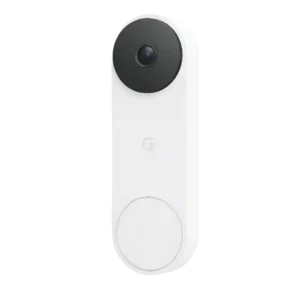
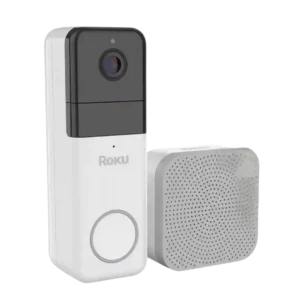
Gemini features are a major draw for this doorbell, with richer descriptions, search, and familiar-face tools, but reviews were split on how consistently accurate the AI felt.
AI-style smart alerts are repeatedly referenced (people, packages, pets, vehicles). Reviews generally frame these as subscription features rather than fully available for free.
The Google Home app is a clear strength thanks to intuitive controls, guided setup, and smooth firmware/setup handling.
The Roku Smart Home app is described as guided and easy for setup, with clear access to live view, events, and many settings. One review notes some setup guides miss minor details, but overall usability is praised.
Two-way audio is consistently usable, with clear visitor voices and reliable conversation quality across reviews.
Two-way audio is described as clear in hands-on use, and demos show easy muting/unmuting and basic audio controls across app/TV experiences.
Google Home automation adds practical flexibility, including motion-triggered actions with other smart devices.
Automation flexibility is limited outside major assistants: reviews highlight no IFTTT compatibility and no HomeKit support, even though Alexa/Google voice support is present.
Google speakers and Nest Hub displays integrate well for announcements, live view, and voice interaction.
Battery life is commonly stated as roughly 3–6 months depending on use, with at least one hands-on report showing minimal drain in the first week. Charging is shown as micro USB, and one written review warns the battery is non-removable and may degrade over time.
The doorbell works with existing wired chimes and Google speakers/displays, though there is no included standalone chime.
The chime is repeatedly described as loud and easy to customize (volume and tones). One demo highlights many selectable chime sounds and quick pairing.
Buyers get three finish choices, and reviewers consistently noted the available color options.
Multiple reviews say the box includes the core mounting and wiring accessories needed for installation.
Unboxing content shows a straightforward bundle that includes the doorbell, chime, mounting accessories, adhesive/tape, tools, and a charging cable, supporting a quick start experience.
Status LEDs and button lighting provide clear visual feedback for setup and recording states.
Controls and indicators show up across app/TV: battery percentage, quality/bitrate indicators, a chime status light, and TV remote options for muting and managing camera settings/lists.
The app exposes at least a basic low-bandwidth mode, giving some control over data use.
A setup demo shows bitrate/bytes-per-second indicators and HD vs SD options, implying some user control over streaming quality and bandwidth tradeoffs, but also notes the system relies on a solid internet connection.
Package monitoring is a real feature here, with reviewers noting package detection and accurate delivery callouts.
Package detection/alerts are repeatedly mentioned as available smart alerts, but largely positioned as subscription features rather than free-tier basics.
Design is one of the most consistently praised aspects, with reviewers describing the doorbell as especially attractive and premium-looking.
Included wedges, mounting plates, and install accessories help adapt the doorbell to different mounting situations.
Familiar-face detection can be impressive when it works, but at least one review still saw recognition misses.
The square 1:1 framing and wide field of view give a broad head-to-toe porch view, with several reviewers praising better left-right coverage and package visibility.
Coverage is a strong point: reviews call out an ultrawide, head-to-toe style view, a 1:1 framing approach, and a broad 150-degree field of view on the wireless model.
Installation is widely praised, especially the app guidance and the easy upgrade path for existing Nest owners.
No summary yet.
Wired responsiveness is a real upgrade in use, with one reviewer calling the faster screen load a major improvement.
Event delay is a recurring theme: reviews note that subscription access can remove delays, while the free tier can involve meaningful delays/cooldowns between events.
Reviewers noted only mild barrel or fisheye distortion, and generally treated it as an acceptable tradeoff for wider framing.
A fisheye/wider-angle view mode is shown as an option to capture more on the sides, trading a more distorted wide-angle look for extra coverage.
The status light can be adjusted between high, auto, and low.
Night performance is a strong point, with good contrast and visibly better low-light clarity than older Nest models.
Night vision is consistently included (IR and, in one review, color night vision). Performance is described as usable at night with ambient lighting, though one review notes a tiny built-in LED is not very helpful for lighting visitors.
Motion alerts were described as quick and accurate in testing.
Motion and sound detection are described as working reliably in demos and written testing, but event handling can feel restricted without a subscription due to cooldown/delay behaviors. Customization options include sensitivity levels, choosing all motion vs smart detection categories, recording cooldown behavior, and maximum clip-length controls.
Alerts are usually fast and detailed, but one review found Gemini-written descriptions inaccurate enough to weaken trust.
Notifications are available on phone and Roku TV, including a TV pop-up with a quick image. Multiple reviews mention delays/cooldowns without a subscription and better immediacy when subscribed.
Recognition of people, pets, vehicles, and packages is treated as one of the standout detection strengths.
Smart detections (people and other object categories) are repeatedly referenced as available, but typically tied to the Roku Smart Home subscription rather than the free tier.
Ongoing ownership cost is a weak point because the best Gemini and history features push buyers toward pricey monthly plans.
Ongoing costs are driven by Roku Smart Home subscription pricing, with reviews citing monthly/annual plans and an expanded tier for many cameras, which can change the total cost of ownership meaningfully.
At least one review directly frames the doorbell as a strong home-security device that adds reassurance.
Users can personalize zoom defaults, themes, and other behavior more than with a bare-bones video doorbell.
Personalization is a strength: reviewers and demos mention chime tone/volume options, notification choices, overlays like timestamp/logo, WDR toggles, and night-vision settings.
Being wired limits flexibility somewhat, but reviewers confirm compatibility with standard doorbell transformers and even plug-in adapters.
Power flexibility is highlighted via separate wired vs wireless models, and demos note the wireless model can run on battery or be connected to existing doorbell wiring depending on the install path.
One review explicitly notes some pre-recording before detected motion events.
Hardware value is generally good for buyers who want a premium Google doorbell, but subscription pricing weakens the value story.
Reviews frame Roku’s doorbells as competitively priced and a strong value for Roku households, with the main value caveat being that key features are paywalled behind the subscription.
The app includes straightforward privacy control such as turning the camera off when needed.
Pre-recorded replies are handy and easy to trigger, but the fixed message set is limited because custom responses are not available.
Quiet time is easy to set and can mute ringing for up to three hours.
No summary yet.
Reviewers broadly recommend it for buyers who want a premium Google-first video doorbell, with clear caveats around subscriptions and ecosystem fit.
Free event history is more generous than some rivals, and premium tiers add longer clips and 24/7 history, but local recording is absent.
Recording is described as cloud-clip based, often short-duration clips with retention windows tied to subscription. Without a subscription, reviews note snapshot-only behavior and delays that reduce the usefulness of event history.
Core operation felt dependable in testing, with quick detection and working voice/display integrations.
The doorbell fits best inside Google’s ecosystem, but reviewers note Google’s broader security stack is less complete than some rivals.
Roku ecosystem integration is a standout differentiator: reviews show on-TV notifications with a snapshot, the Roku Cameras TV app for live viewing, and tight compatibility with other Roku smart home products.
The wired third gen is relatively slim and slightly smaller than the battery model it resembles.
Size is discussed as a practical consideration: the wireless unit is described as larger than the wired model, while another review calls the wireless design compact and easy to place.
Integration is strongest with Google and basic Alexa support, while HomeKit-style flexibility is absent.
Alexa and Google Assistant support are mentioned across reviews, while Apple HomeKit support is explicitly called out as missing.
Rich preview notifications can surface the event visually without needing to open the app first.
Snapshot behavior shows up in two ways: written coverage notes snapshots-only without a subscription, and TV alerts/demos show a quick image preview accompanying doorbell notifications.
Cloud-only storage and the lack of local storage are repeated complaints across reviews.
Local storage is consistently described as unavailable; event recordings live in the cloud with stated retention windows and manual downloading as the only way to keep long-term backups.
Subscriptions unlock many of the most appealing features, and several reviews call the pricing expensive or frustrating.
A subscription is repeatedly described as necessary to unlock cloud recording and smart alerts/detections, with free trials included but a real paywall once trials end.
As a doorbell it can feel like a complete package, but Google’s missing wider sensor and monitoring pieces keep the broader system from feeling fully rounded.
Included security hardware adds a basic tamper-resistance step during installation.
The third gen looks like a worthwhile upgrade mainly for better video, wider framing, and an easy swap-in installation path.
Reviews consistently describe sharp, detailed 2K footage, with meaningful clarity gains over prior Nest models.
The wireless Roku doorbell is repeatedly described as 1440p and produces clear, detailed footage in real-world demo shots (shade, sun, and night).
Users can save or download clips, with longer exports available on premium plans.
The hardware is built for outdoor use, with IP65 protection and a defined cold-to-hot operating range.
Weather resistance is specifically noted with an IP65 rating, positioning it as suitable for typical outdoor conditions.
Review evidence points to fast loading and stable live access, though range itself was not deeply tested.
Connectivity is described as 2.4 GHz Wi-Fi for both models, with the wireless version also supporting 5 GHz in one review. Placement guidance (keeping chime and doorbell relatively close) is emphasized in a setup demo.
Motion and activity zones are available and easy to configure.