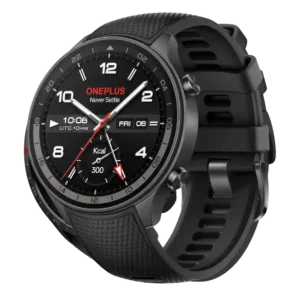
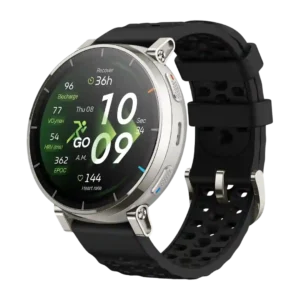
Auto-detection is available for common activities, but reviewers note it is not fully hands-off because some modes may need to be enabled first.
Auto-detection is mixed: one review reports recognition for 25 strength movements and 8 sports, while another explicitly notes missing automatic workout detection.
Wear OS and Play Store access give the watch a strong app ecosystem with Google services and many familiar third-party options.
One reviewer highlights access to more than 400 apps, indicating a broader app catalog than the price suggests.
The silicone band is generally comfortable and practical, though several reviewers found it less plush or premium than the band on the pricier Watch 2.
Battery life is one of the watch’s standout strengths, with reviewers repeatedly calling it class-leading for Wear OS and reporting multi-day use.
Battery life is a recurring strength, with 12-day typical-use claims and real-world reports ranging from strong week-plus use to shorter endurance under heavier testing.
SpO2 tracking is included and useful for overnight breathing-related monitoring, though at least one reviewer found readings relatively slow.
Blood oxygen monitoring is repeatedly listed among the watch’s core all-day health sensors.
Bluetooth support handles pairing and calls, but range and connection stability are not flawless in every review.
Bluetooth phone linkage is supported for core smartwatch functions such as calls and syncing.
Brightness is strong for the class, with 1,000-nit high-brightness support, though a few reviewers still wanted more punch in harsh sunlight.
Screen brightness is praised across reviews, with multiple mentions of strong clarity and easy visibility in bright conditions.
Build quality is solid for a midrange watch, with reviewers praising the lighter aluminum body even if it feels less premium than stainless steel.
Build quality is framed as premium for the price, with repeated mentions of stainless steel, sapphire protection, and a durable feel.
The physical controls are easy to learn and useful for workouts and shortcuts, but the lack of a functional crown limits tactile navigation.
The four-button layout is consistently highlighted as a practical control advantage, especially during workouts or sweaty use.
Bluetooth calling works and is serviceable for quick conversations, but audio clarity and speaker volume are only average.
Reviews describe wrist-based calling support over Bluetooth as part of the watch’s smart feature set.
Calorie tracking is present and useful for basic workout logging, but at least one reviewer found calorie estimates somewhat low or inconsistent.
Fast charging helps everyday convenience, but the magnetic puck and required cable/brick setup drew some complaints.
Charging speed is excellent, with repeated reports of roughly one-hour full charges and meaningful top-ups in short sessions.
Coaching features are helpful rather than advanced, with running-form tips, guided breathing, and recovery-oriented workout context.
Coaching features are a major selling point, with Zepp Coach, guided workouts, structured plans, and beginner-friendly training support mentioned across reviews.
The lighter case improves comfort, especially for daily wear, but the watch can still feel bulky on smaller wrists.
Comfort is a strong point for everyday running use, with reviewers calling out the watch’s light feel and approachable presentation.
OHealth is easy enough to use for basics, but multiple reviewers describe it as limited, underpowered, or less polished than rival apps.
The Zepp companion app is generally well received for detail, clarity, and practical presentation of health and training data.
Google Wallet support is a clear plus, making tap-to-pay easy and reliable for users who want contactless payments on the wrist.
Contactless payments are supported, though one review notes bank support can still be limited in some regions.
Compatibility is broad across Android phones, but the watch does not support iPhones and lacks true cross-platform reach.
Cross-platform support exists, but reviewers note smoother integration can vary by phone and some features are platform-specific.
Customization is strong, with adjustable tiles, many watch faces, and broad Wear OS personalization options.
Customization is supported through adjustable training plans and user-tailored screens or levels.
Display quality is very good overall, with a sharp, colorful AMOLED panel that feels premium for the price.
Display quality earns consistent praise for a bright, sharp AMOLED presentation that looks more premium than the price suggests.
Durability is decent for normal use thanks to IP68 and 5ATM protection, but the cheaper materials and missing military-grade rating lower confidence for rough use.
Durability is supported mainly by sapphire-glass protection and repeated references to a robust, scratch-resistant build.
ECG is not available, and several reviewers specifically call out the lack of this feature versus competing watches.
Fit depends heavily on wrist size: the lower weight helps, but the large case still works better on medium to larger wrists.
Fit is positively described, with at least one reviewer specifically saying the watch fits very well on wrist.
Fitness tracking is solid for casual and intermediate users, though it does not consistently match the best dedicated fitness watches or Apple-level precision.
General fitness tracking is described as accurate in broad use, including positive feedback on activity tracking and gym performance.
GPS performance is one of the stronger fitness traits, with dual-band support and mostly accurate route and distance tracking across reviews.
GPS performance is usually described as good or accurate in typical conditions, but not class-leading for tougher trail or dense-cover scenarios.
Health tracking is competent for core metrics, but reviewers repeatedly describe it as basic, simplified, or something to treat with modest caution.
Heart-rate tracking is improved versus past OnePlus efforts and often close to reference devices, though it is not perfect in every workout scenario.
Heart-rate accuracy is mixed: some reviewers saw notable issues, while others found results much stronger or close to chest-strap readings.
LTE or eSIM support is a major omission on the global model, leaving the watch dependent on your phone for most connectivity needs.
Materials are acceptable for the price, but aluminum and less-premium glass are clear downgrades from the Watch 2’s more upscale build.
Materials quality stands out for the price thanks to repeated references to sapphire glass and stainless steel components.
Menu navigation is generally straightforward and quick, though a few reviewers found the app menu or swipe-heavy design less elegant than a crown-based system.
Menu navigation is functional but not fully streamlined, with one reviewer calling out extra steps to reach some mapping tools.
Music controls are useful enough for workouts and casual listening, including track changes and general playback handling from the wrist.
Music controls are present as part of the everyday smartwatch feature set.
The 32GB storage is generous for the class and supports offline music downloads and other local content well.
Onboard storage is a clear feature, with 4GB used for maps, playlists, podcasts, and other offline content.
The Wear OS and RTOS combination works smoothly and gives the watch a polished, efficient day-to-day operating-system experience.
The Zepp OS experience is presented as familiar and serviceable, with standard Amazfit behavior and features.
Outdoor visibility is good overall, with most reviewers finding the screen readable outside despite a few brightness-related caveats in very strong sun.
Outdoor visibility is a strong suit, with reviewers specifically noting easy readability outdoors and in bright sun.
Pairing and setup are usually simple, but switching phones or moving the watch between devices is less seamless than it should be.
Pairing appears straightforward, with at least one reviewer describing setup as quick and successful.
Recovery insights are present through rest suggestions and recovery-oriented running metrics, giving runners some actionable post-workout context.
Recovery insights are a repeated theme, including rest guidance, recovery indicators, and post-workout recovery estimates.
Reliability is mixed: many reviewers found the watch dependable, but others noted bugs, wake issues, or occasional tracking annoyances.
Safety coverage is basic: there is SOS support, but reviewers repeatedly note the lack of fall detection and other more advanced safety tools.
Size choice is a weak point because the watch effectively comes in one large format, with no smaller option for tighter wrists.
Sleep tracking is one of the better health features here, with multiple reviewers reporting close alignment against other sleep devices.
Sleep tracking is one of the strongest-reviewed areas, with reviewers praising wake detection, detail, and overall accuracy.
Notifications are easy to access and useful day to day, though some reviewers noticed delays or annoying prompts tied to connectivity quirks.
Smartphone notifications are supported for calls, texts, and apps.
Smartwatch features are comprehensive for the price, covering notifications, calling, Wallet, Assistant, apps, music, and core Wear OS conveniences.
Smartwatch features are broad for the price, including maps, phone tools, health widgets, and navigation extras.
Software smoothness is excellent, with repeated praise for snappy performance, fast app launches, and minimal lag.
Software smoothness is positively described, with one reviewer noting little lag in day-to-day use.
Step counting is improved and often close enough for general use, though some reviewers still saw noticeable discrepancies versus comparison devices.
Stress tracking exists and can chart trends, but several reviewers found the results too flat, basic, or not especially convincing.
Stress tracking is included as part of the watch’s standard health-monitoring suite.
Style is appealing overall, especially in Forest Green, though the large case and simpler materials make the design less universally elegant than the Watch 2.
Style and design get generally positive reactions for looks and premium feel, though at least one reviewer wanted more refined styling options.
Third-party app support is a major advantage of the platform, helping the watch feel like a real Wear OS smartwatch rather than a limited fitness watch.
Third-party platform support is mixed overall: some reviews cite integrations like Strava or TrainingPeaks, while another notes missing links with some training apps.
Touch responsiveness is very good, with reviewers consistently describing swipes and taps as fast and dependable.
Touch interaction appears responsive, with low-lag behavior noted during use.
The user interface is clean and easy to understand, although some reviewers would still prefer better physical navigation controls.
The user interface is generally described as clear, self-explanatory, and practical for beginners.
Value for money is one of the clearest selling points, with reviewers repeatedly highlighting how much of the Watch 2 experience you get at a lower price.
Value for money is one of the clearest strengths, with reviewers repeatedly calling the watch unusually capable and affordable for under $170.
Google Assistant and voice-based interactions work, but voice output and call-like audio quality are more functional than impressive.
Voice assistant support is present for commands and quick interactions, and reviewers treat it as a useful added smart feature.
Watch face support is broad and generally attractive, though some reviewers wanted better bezel integration or faster face transfers.
Watch face quality is the one design area with a clearer complaint, as one reviewer questioned the look of some faces.
Water resistance is strong enough for swimming and everyday exposure, with consistent mention of 5ATM and IP68 protection.
Water resistance is supported by repeated 5 ATM references and positioning for swimming or shower use.
Wellness insights are one of the weaker areas because the watch offers limited holistic guidance, trends, or readiness-style takeaways.
Wellness insights go beyond raw metrics, with recurring praise for detailed sleep data, BioCharge, and readiness-style context.
Wi-Fi support is present and useful, though it is more a baseline capability than a standout strength in the reviews.
Wi-Fi support looks limited, with one reviewer explicitly noting map transfers rely on Bluetooth instead of Wi-Fi.
Workout variety is excellent, with support for well over 100 activities and more niche modes than many competing smartwatches.
Workout coverage is broad, with repeated mentions of hybrid training support, 170-plus sports modes, and many trackable activities.