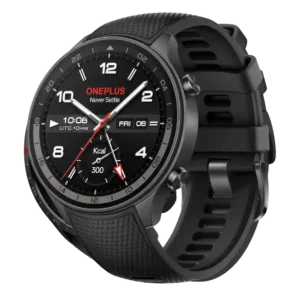
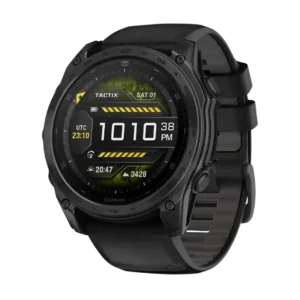
Auto-detection is available for common activities, but reviewers note it is not fully hands-off because some modes may need to be enabled first.
Wear OS and Play Store access give the watch a strong app ecosystem with Google services and many familiar third-party options.
The software/app offering feels broad rather than sparse, with Garmin Connect on one side and a very large set of apps, widgets, and subcategories on the device itself.
The silicone band is generally comfortable and practical, though several reviewers found it less plush or premium than the band on the pricier Watch 2.
Band quality is mixed: the stock silicone option gets decent remarks and one reviewer saw an upgrade, but another strongly disliked the optional nylon band for drying out and aging poorly.
Battery life is one of the watch’s standout strengths, with reviewers repeatedly calling it class-leading for Wear OS and reporting multi-day use.
Battery life is one of the product’s best traits, with repeated praise for multi-week endurance in real use and very strong official estimates across AMOLED and solar versions.
SpO2 tracking is included and useful for overnight breathing-related monitoring, though at least one reviewer found readings relatively slow.
Blood-oxygen tracking is presented as part of the 24/7 health suite and framed as useful for respiratory-health monitoring, but the reviews do not deeply test it.
Bluetooth support handles pairing and calls, but range and connection stability are not flawless in every review.
Bluetooth support is treated as solid and practical, covering Bluetooth calling and headphone playback without complaints about stability.
Brightness is strong for the class, with 1,000-nit high-brightness support, though a few reviewers still wanted more punch in harsh sunlight.
Brightness is good overall, with reviewers finding the screen easy to read and in some cases noticeably brighter than earlier models.
Build quality is solid for a midrange watch, with reviewers praising the lighter aluminum body even if it feels less premium than stainless steel.
Build quality is described in unequivocally premium terms, with reviewers calling it very high and consistent with the price tier.
The physical controls are easy to learn and useful for workouts and shortcuts, but the lack of a functional crown limits tactile navigation.
Buttons are generally liked for texture and easy feel, especially in dark or wet use, but one reviewer missed the older, more tactile click feel.
Bluetooth calling works and is serviceable for quick conversations, but audio clarity and speaker volume are only average.
Calling from the watch is widely praised as genuinely useful when the phone is nearby, especially for workouts, daily errands, and hands-free convenience.
Calorie tracking is present and useful for basic workout logging, but at least one reviewer found calorie estimates somewhat low or inconsistent.
Calorie tracking is most useful when tied to rucking and load-aware activities, where pack-weight input and richer workout data help make the estimates more meaningful.
Fast charging helps everyday convenience, but the magnetic puck and required cable/brick setup drew some complaints.
Charging convenience is mixed: magnetic charging is appreciated, but the proprietary cable is a recurring annoyance for long-term ownership.
Charging speed is excellent, with repeated reports of roughly one-hour full charges and meaningful top-ups in short sessions.
Charging speed is good, with one review citing about an hour for a full recharge and another reporting just under two hours from a partial charge.
Coaching features are helpful rather than advanced, with running-form tips, guided breathing, and recovery-oriented workout context.
Coaching support is strong where discussed, especially through workout suggestions, visual guidance, and training prompts that help structure sessions.
The lighter case improves comfort, especially for daily wear, but the watch can still feel bulky on smaller wrists.
Comfort is good for such a large rugged watch, with reviewers saying it is easy to get used to and helped by the silicone strap.
OHealth is easy enough to use for basics, but multiple reviewers describe it as limited, underpowered, or less polished than rival apps.
Garmin Connect is described as useful for settings control and dashboards, making the companion experience feel capable rather than bare-bones.
Google Wallet support is a clear plus, making tap-to-pay easy and reliable for users who want contactless payments on the wrist.
Contactless payments are straightforward and well supported, with reviewers explicitly noting NFC and Garmin Pay for tap-to-pay use.
Compatibility is broad across Android phones, but the watch does not support iPhones and lacks true cross-platform reach.
Cross-platform support looks good based on assistant compatibility, with explicit references to Siri, Bixby, and Google Assistant on paired phones.
Customization is strong, with adjustable tiles, many watch faces, and broad Wear OS personalization options.
Customization is a standout strength, with reviewers highlighting flexible submenus, editable layouts, and lots of options to tailor the experience.
Display quality is very good overall, with a sharp, colorful AMOLED panel that feels premium for the price.
Display quality is excellent on AMOLED, with reviewers emphasizing stronger color, contrast, and overall visual punch.
Durability is decent for normal use thanks to IP68 and 5ATM protection, but the cheaper materials and missing military-grade rating lower confidence for rough use.
Durability is one of the clearest strengths, with reviews calling out military-grade toughness, like-new performance after abuse, scratch resistance, and confidence in harsh environments.
ECG is not available, and several reviewers specifically call out the lack of this feature versus competing watches.
ECG support is clearly present and described as able to detect cardiac-arrhythmia issues according to Garmin, though the reviews mostly note availability rather than deep validation.
Fit depends heavily on wrist size: the lower weight helps, but the large case still works better on medium to larger wrists.
Fitness tracking is solid for casual and intermediate users, though it does not consistently match the best dedicated fitness watches or Apple-level precision.
Fitness tracking benefits from the rucking mode’s pack-weight input, which reviewers say produces a more accurate picture of workouts than generic hiking logs.
GPS performance is one of the stronger fitness traits, with dual-band support and mostly accurate route and distance tracking across reviews.
GPS performance is consistently excellent, with reviewers calling routes precisely tracked, extremely precise in testing, and accurate even in harder signal conditions.
Health tracking is competent for core metrics, but reviewers repeatedly describe it as basic, simplified, or something to treat with modest caution.
Reviewers found the watch’s broader health readouts credible, with one saying the data matched lived experience and another calling the sensor package more accurate than the prior model.
Heart-rate tracking is improved versus past OnePlus efforts and often close to reference devices, though it is not perfect in every workout scenario.
Heart-rate tracking is repeatedly praised, with reviews citing more accurate readings, only minimal deviations versus a chest strap, and near chest-strap parity in running.
LTE or eSIM support is a major omission on the global model, leaving the watch dependent on your phone for most connectivity needs.
LTE is a clear weakness: one reviewer explicitly notes there is no built-in carrier service, so watch calling still depends on being linked to a phone.
Materials are acceptable for the price, but aluminum and less-premium glass are clear downgrades from the Watch 2’s more upscale build.
Materials are top-shelf throughout the reviewed models, with repeated praise for titanium and sapphire construction.
Menu navigation is generally straightforward and quick, though a few reviewers found the app menu or swipe-heavy design less elegant than a crown-based system.
Menu navigation benefits from a more organized structure, with reviewers specifically liking how key functions are surfaced more immediately.
Music controls are useful enough for workouts and casual listening, including track changes and general playback handling from the wrist.
Music controls are functional and direct, including phone-music control from the watch.
The 32GB storage is generous for the class and supports offline music downloads and other local content well.
Onboard media support is strong, with local storage for music and podcasts plus service support for offline listening.
The Wear OS and RTOS combination works smoothly and gives the watch a polished, efficient day-to-day operating-system experience.
Where the operating-system experience is discussed, reviewers describe the Tactix 8 as faster and more polished than older tactix models.
Outdoor visibility is good overall, with most reviewers finding the screen readable outside despite a few brightness-related caveats in very strong sun.
Outdoor visibility is a major strength, especially on solar/MIP variants that stay clear in bright sunlight, while reviewers still call the display easy to read in all conditions.
Pairing and setup are usually simple, but switching phones or moving the watch between devices is less seamless than it should be.
Initial setup and pairing are described as easy and self-explanatory, suggesting a smooth onboarding experience.
Recovery insights are present through rest suggestions and recovery-oriented running metrics, giving runners some actionable post-workout context.
Recovery guidance is one of the strongest recurring strengths, with reviewers highlighting recovery metrics, suggested recovery times, and actionable prompts about when to push or back off.
Reliability is mixed: many reviewers found the watch dependable, but others noted bugs, wake issues, or occasional tracking annoyances.
Long-term reliability is excellent where directly discussed, with one reviewer saying the watch still looked and performed like new after hard field use.
Safety coverage is basic: there is SOS support, but reviewers repeatedly note the lack of fall detection and other more advanced safety tools.
Safety-oriented features show up mostly in dive use, where alarms, gas settings, and warnings add backup protection.
Size choice is a weak point because the watch effectively comes in one large format, with no smaller option for tighter wrists.
Size availability is good rather than one-size-only, with multiple case configurations aimed at different preferences.
Sleep tracking is one of the better health features here, with multiple reviewers reporting close alignment against other sleep devices.
Sleep tracking comes off as dependable rather than lab-grade; reviewers say results matched their own experience and felt pretty accurate over extended use.
Notifications are easy to access and useful day to day, though some reviewers noticed delays or annoying prompts tied to connectivity quirks.
Smartphone notifications are treated as a standard strength, with support for alerts across messages, emails, and calendar events.
Smartwatch features are comprehensive for the price, covering notifications, calling, Wallet, Assistant, apps, music, and core Wear OS conveniences.
As a general smartwatch, reviewers say it covers the premium basics well, including calls, music, payments, notifications, and other everyday conveniences.
Software smoothness is excellent, with repeated praise for snappy performance, fast app launches, and minimal lag.
Software smoothness is praised for responsiveness, with reviewers noting quicker reactions and little sense of lag or clunkiness in day-to-day use.
Step counting is improved and often close enough for general use, though some reviewers still saw noticeable discrepancies versus comparison devices.
Stress tracking exists and can chart trends, but several reviewers found the results too flat, basic, or not especially convincing.
Stress tracking is described positively, especially for its personalized relaxation suggestions, but only one review discusses it in detail.
Style is appealing overall, especially in Forest Green, though the large case and simpler materials make the design less universally elegant than the Watch 2.
Styling gets strong praise, with reviewers repeatedly calling the watch rugged, great-looking, and more visually distinctive than related Garmin models.
Third-party app support is a major advantage of the platform, helping the watch feel like a real Wear OS smartwatch rather than a limited fitness watch.
Third-party support shows up through Applied Ballistics plus music-service support such as Spotify and Amazon Music, giving the watch more ecosystem reach than a closed niche device.
Touch responsiveness is very good, with reviewers consistently describing swipes and taps as fast and dependable.
Touch response is mostly positive, with multiple reviewers calling it responsive or smartphone-like, though one reviewer found the solar touchscreen slightly worse than the prior model.
The user interface is clean and easy to understand, although some reviewers would still prefer better physical navigation controls.
The interface is generally seen as user-friendly and improved, especially for people coming from older Garmin models or even no smartwatch background.
Value for money is one of the clearest selling points, with reviewers repeatedly highlighting how much of the Watch 2 experience you get at a lower price.
Value is the big tradeoff. Several reviews say the watch excels technically, but the steep price narrows the audience and makes the Fenix 8 or cheaper Garmin models more sensible for many buyers.
Google Assistant and voice-based interactions work, but voice output and call-like audio quality are more functional than impressive.
Voice-assistant support is a helpful convenience feature, letting users trigger commands on the watch or reach a paired phone’s assistant without pulling the phone out.
Watch face support is broad and generally attractive, though some reviewers wanted better bezel integration or faster face transfers.
Watch-face support is attractive mainly for variety and personalization, with multiple styles and color changes called out positively.
Water resistance is strong enough for swimming and everyday exposure, with consistent mention of 5ATM and IP68 protection.
Water resistance is well supported in the reviews, covering submersion, dive capability, and a 40 m dive rating for recreation-focused use.
Wellness insights are one of the weaker areas because the watch offers limited holistic guidance, trends, or readiness-style takeaways.
Wellness features go beyond raw stats, with reviews calling out health monitoring, sleep coaching, and guidance meant to turn data into practical daily decisions.
Wi-Fi support is present and useful, though it is more a baseline capability than a standout strength in the reviews.
Workout variety is excellent, with support for well over 100 activities and more niche modes than many competing smartwatches.
Workout coverage is a major selling point, with reviews citing rucking support, dozens of built-in programs, more than 80 sports modes, and unusually broad activity depth.