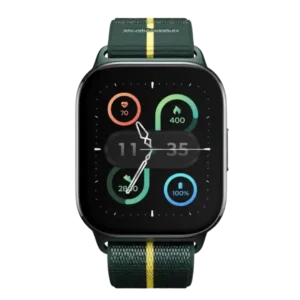
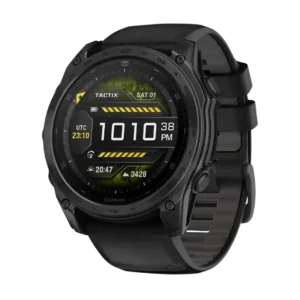
Motorola Moto Watch Fit
Where It Has the Edge
- fit is 4.7 vs 3.8. Fit is strong, especially because the slim case sits flush and the Velcro-style strap can be adjusted closely...
Auto-detection is inconsistent, with evidence of automatic pause or detection in some contexts but manual workout starts and finish limitations elsewhere.
Surf-style tracking was described as starting automatically once a speed threshold was reached, though the reviewer noted small gaps at the beginning and end.
The app ecosystem is very limited because the watch avoids Wear OS, lacks Google Play Store access and mostly relies on Motorola's own apps.
The app story is broad, with Garmin Connect, Applied Ballistics, AB Quantum, Spotify/Amazon music support, widgets, and AllTrails or map-related use mentioned.
Band quality is divisive: some reviewers liked the comfort and security, while others thought the included fabric/Velcro strap felt cheap or simple.
Band feedback was mixed: stock silicone was acceptable or improved, while Garmin's tactical nylon band drew repeated complaints about cost, stiffness, odor, or quality.
Battery life is the clearest strength, with every review citing long life and full tests reporting roughly eight-plus days to two weeks depending on settings.
Battery life was one of the strongest themes, with reviewers citing multi-week AMOLED use and even longer solar runtimes, though always-on AMOLED reduced endurance.
Blood oxygen tracking is consistently present in the health suite, though reviewers discuss it more as a supported metric than a deeply tested standout.
Blood oxygen support was mentioned as part of the health suite, including respiratory-health context and oxygen saturation readings.
Bluetooth connectivity is functional but not perfect, with evidence of occasional manual reconnection and a disconnect alert setting.
Bluetooth was mainly discussed through Bluetooth calling, headphones, and wireless modes; reviewers treated it as present and useful rather than a standout.
Brightness is a strength overall, with repeated 1,000-nit mentions and praise for visibility, though one review warned about harsh midday sun.
Brightness was praised across the flashlight, AMOLED screen, and visibility, with reviewers calling the display bright and the flashlight practically useful.
Build quality is mixed: some reviews praise aluminum and durability, while others call the plastic back and overall feel cheap.
Build quality was consistently strong, with titanium, sapphire, military-grade construction, leakproof buttons, and rugged design emphasized, though one reviewer noticed bezel wear.
Button controls are simple and serviceable, but reviews note the single-button design and one reviewer wished for more controls.
Button feedback was generally positive for texture, underwater use, and usability, but some Tactix 7 upgraders missed the older tactile click.
Call handling is a major weakness because multiple reviewers state calls are not supported due to the lack of microphone and speaker hardware.
Call handling was consistently supported when paired with a nearby phone, with reviewers calling it useful for runs, cycling, or everyday use.
Calorie tracking is useful as part of the activity suite, but evidence is mixed because one review questioned calorie-target accuracy.
Calorie tracking was tied to rucking and pack-weight support; reviewers liked the idea, though one questioned how much pack weight changed calorie estimates beyond heart rate.
Charging convenience is fair: quick weekly top-ups help, but one review notes reliance on a proprietary USB-C charging cable.
Charging convenience was mixed: magnetic or infrequent charging helped, but reviewers disliked the proprietary cable and one wanted an extra charger on hand.
Charging speed is good, with evidence of useful quick top-ups and a 15-minute charge reaching a substantial level in one test.
Charging speed was positive where tested, with one review citing about one hour and another charging from 17 percent to full in under two hours.
Coaching features are mixed: one review says deeper coaching is missing, while another notes preset running workouts for goals and levels.
Coaching features were a strength, including personal-trainer framing, training readiness, workout suggestions, strength plans, stamina, and recovery guidance.
Comfort is widely praised, with reviewers repeatedly highlighting the light weight, flat fit and comfort for daily or 24-hour wear.
Comfort was acceptable for long wear despite the large case, with silicone or UltraFit-style bands preferred over the tactical nylon strap.
The companion app is adequate to good, ranging from basic-but-functional to easy to understand, with syncing through the Moto Watch app.
Garmin Connect was repeatedly described as useful for setup, dashboards, settings, activity syncing, reports, and reviewing detailed workout data.
Contactless payments are absent, with direct review evidence noting no NFC payments or payment app.
Contactless payments were explicitly supported through NFC, Garmin Pay, or Gin Pay mentions in several reviews.
Cross-platform compatibility is limited: the watch works with Android phones, but reviewers repeatedly note no iOS support.
Cross-platform support appeared through phone-paired assistants including Siri, Bixby, and Google Assistant, plus compatible-smartphone calling and voice features.
Customization is strong for a budget watch, especially interchangeable 22mm straps, workout menu personalization, orientation options and band/watch-face choices.
Customization was broad, covering watch faces, wristbands, data fields, night-vision settings, hotkeys, pack weight, and other individual settings.
Display quality is consistently positive, with reviewers praising the OLED/AMOLED panel, sharpness, colors and overall screen quality.
Display quality was praised for AMOLED sharpness, contrast, color, brightness, and readable mapping, while MIP was valued for battery and sunlight.
Durability is a clear positive thanks to Gorilla Glass, dust/water resistance and hands-on evidence of no visible scratches after testing.
Durability was one of the clearest strengths, with military standards, dive ratings, water resistance, scratch resistance, and real-world hard use cited.
ECG was mentioned as part of the watch's premium health hardware or smart features.
Fit is strong, especially because the slim case sits flush and the Velcro-style strap can be adjusted closely to the wrist.
Fit was less extensively discussed, but one long-term user noted the 51 mm watch is thick on the wrist.
Fitness tracking accuracy is favorable in the full fitness review, which found most logged workouts accurate enough for budget-tracker expectations.
Fitness tracking accuracy was generally positive for workouts and heart-rate/GPS-related tracking, though strength training accuracy was treated as harder.
Built-in GPS is a strong differentiator for the price, with reviewers citing route tracking, distance logging and accurate-enough outdoor mapping.
GPS accuracy was repeatedly praised, with multi-band GPS, precise route tracking, maps, off-trail alerts, and navigation reliability appearing across reviews.
Reviewers generally found the basic health-tracking suite capable, with the strongest evidence calling overall accuracy acceptable or decent rather than advanced.
Health tracking was broad and generally positive, covering overall health metrics, body battery, heart rate, sleep, training tools, and wellness monitoring.
Heart-rate accuracy has one strong full-review endorsement, with the reviewer saying readings aligned well with expected resting and exercise rates.
Heart-rate accuracy was usually strong, with reviewers noting minimal deviations or improved sensors, though strength training remained a tougher case.
LTE was a weakness: one reviewer explicitly noted the watch does not have built-in LTE or carrier service.
Materials quality is mixed, balancing aluminum casing with criticism of plastic or cheaper-feeling materials.
Materials quality was repeatedly praised through sapphire crystal, titanium bezels, durable coating, and high-end construction.
Menu navigation is a strength, with reviewers calling it easy, intuitive and simple to move through by touch or gestures.
Menu navigation was generally considered easy or user-friendly, with Garmin's setup guidance and drill-down menus helping despite the dense feature set.
Music controls are available for phone playback and are mentioned by several reviewers, but this does not amount to a richer music experience.
Music controls were supported through phone music control, Bluetooth headphones, and playback from the watch.
Onboard music storage is effectively absent, with one detailed review saying wireless headphones and stored music are not supported.
Onboard music storage was a clear feature, with offline music, podcasts, Spotify/Amazon music, and local storage repeatedly mentioned.
Operating system experience is simple and battery-friendly, but the proprietary RTOS approach trades away Wear OS depth and app flexibility.
The operating system experience was described as feature-rich and close to the Fenix 8 platform, with newer microphone/speaker and UI changes adding smartwatch behavior.
Outdoor visibility is generally good, especially in tested light conditions, with only one preview warning of possible midday-sun legibility issues.
Outdoor visibility was positive, especially for MIP in direct sunlight and AMOLED readability during outdoor map use.
Pairing reliability is mostly good, with fast/reliable syncing in one review and effortless Fast Pair-style linking in another.
Pairing reliability was lightly but positively supported through easy setup and easy loading or syncing through Garmin Connect.
Recovery insight is basic but useful, centered on a stamina or readiness estimate for deciding how prepared the user is to work out.
Recovery insights were a strength, with recovery time, sleep/recovery tracking, HRV-style widgets, and Garmin training recommendations cited.
Reliability is mixed, with one review calling it low-maintenance while another described notification behavior that could go haywire.
Reliability was presented as strong overall, with reviewers citing new-like performance, robust design, and software that performed well in real-world use.
Safety features are modest, consisting of practical torch/SOS-style tools rather than a broad safety suite.
Safety features stood out through stealth mode, kill switch, night vision, off-trail alerts, and emergency data-wipe functionality.
Size options improved over prior Tactix models, with 47 mm and 51 mm AMOLED choices plus 51 mm solar variants repeatedly mentioned.
Sleep tracking receives a strong full-review result because it accurately captured awake windows and made the data useful the next day.
Sleep tracking was treated as useful and reasonably consistent, with sleep scores, sleep coach, and long-term sleep tracking discussed.
Phone notifications are supported and useful for basic alerts, but one detailed review found message handling confusing and not very polished.
Smartphone notifications were supported through messages, email, calendar alerts, texts, and stock alerts when paired with a phone.
Smartwatch features are intentionally basic: reviewers saw useful essentials, but consistently framed the watch as more fitness tracker than full smartwatch.
Smartwatch features were extensive, including calls, payments, notifications, maps, health tools, flashlight, voice, and general daily-use functions.
Software smoothness is mixed: one reviewer reported no lag, while another described notification behavior that vibrated continuously and felt unstable.
Software smoothness was mostly positive, with reviewers calling the watch faster, more responsive, and free of clunkiness or delay in normal use.
Step counting was part of the daily dashboard and broader health tracking, with reviewers using steps as a visible daily metric.
Stress tracking is available, but confidence is mixed because one full review found the stress reading unreliable while others only noted monitoring support.
Stress tracking was mentioned as part of Garmin's health tools, with relaxation suggestions tied to emotional management.
Style and design are polarizing because reviewers often note the Apple Watch-like shape, with reactions ranging from sleek to unoriginal.
Style and design were praised often, especially the blacked-out tactical look, flatter bezel, premium feel, and compliments from others.
Third-party app support is weak, with several reviewers noting the absence of Wear OS app breadth, downloadable apps or many add-ons.
Third-party app support appeared through Komoot route loading and music services, though it was not the deepest review theme.
Touchscreen responsiveness is good, with reviewers describing navigation as responsive and snappy.
Touchscreen responsiveness was mostly positive, with reviewers liking the interface and responsiveness, though one Tactix 7 upgrader found the solar touchscreen slightly worse.
The user interface is generally easy and simple, though one detailed review saw the overall interface feeling basic.
The user interface was generally praised as user-friendly and easy to navigate, even for users new to smartwatches, despite dense menus.
Value for money depends heavily on region and expectations: reviews praise budget value in some markets but criticize the US price.
Value for money was mixed: reviewers often thought the watch delivered for serious users, but the high price repeatedly limited its appeal.
Voice assistant quality scores poorly because review evidence points to no practical voice-assistant use without the needed microphone and speaker setup.
Voice assistant quality was positive for issuing watch commands or using a phone assistant, though it remains phone-paired for broader assistant functions.
Watch face quality is mixed: reviewers liked the large selection and AI-style creation idea, but noted limited deeper customization and a weak always-on face.
Watch face quality was positive where discussed, with customizable watch faces and extra Tactix faces mentioned.
Water resistance is one of the strongest consensus areas, with nearly every reviewer citing IP68, 5ATM or swim/shower suitability.
Water resistance was a major strength, with 40 m diving support, 100 m/10 ATM ratings, leakproof buttons, swimming, and scuba/apnea use cited.
Wellness extras are modest, led by breathing exercises and inactivity reminders rather than a broad coaching or mindfulness system.
Wellness insights were broad, covering Body Battery, sleep analysis, health metrics, recovery tracking, heart rate, and wellness monitoring.
Wi-Fi connectivity is essentially absent from the setup, based on the direct review note that there is no Wi-Fi setup.
Wi-Fi was mentioned mainly as part of wireless connectivity that stealth mode disables, so evidence supports presence but not detailed performance.
Workout variety is a clear strength, with reviewers repeatedly citing around 100 or more sports modes and broad activity coverage.
Workout tracking variety was extensive, with rucking, hiking, strength, swimming, diving, hunting, archery, parachuting, and over 80 sports modes mentioned.