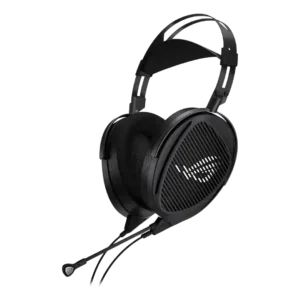
Reviews explicitly say the Kithara lacks ANC, so noise canceling features are absent rather than weakly implemented.
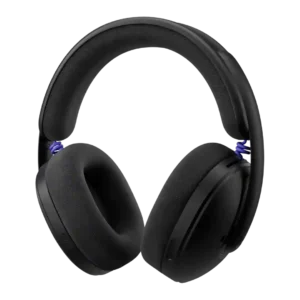
The G325 is explicitly described as not being a noise-canceling headset. Review coverage treats this as a deliberate omission rather than a hidden feature.
Android compatibility is explicitly listed in review specs and compatibility coverage.
Reviews describe the headset as plug-and-play and explicitly note there is no Armoury Crate app integration.
Logitech G Hub is generally seen as a good companion app, but not a feature-rich one for this headset. Reviewers appreciate its usefulness while noting that the G325 itself only exposes a modest set of software options.
Latency performance is a clear strength for gaming use. Reviews that tested gameplay specifically report little to no lag, helping the headset feel responsive over wireless connections.
Bass is generally described as clean and controlled rather than booming. Some reviewers note solid texture or more bass than certain rivals, but most say it is not basshead-friendly and sub-bass is limited.
Bass is the most common audio compromise. It is usually described as restrained, light on sub-bass, or lacking slam, though one reviewer still found it punchy and fun for a budget headset.
Battery life is usually reported around the low-to-mid 20-hour range, which aligns fairly well with Logitech's claim. That is good enough for regular use, but several reviewers note it is not class-leading.
Reviews explicitly describe the Kithara as wired-only and lacking Bluetooth.
Bluetooth performance is broadly positive. Reviewers describe pairing and day-to-day connection stability as reliable, with smooth switching and no major dropout complaints.
Build quality is a recurring strength, with repeated praise for the metal or aluminum frame, sturdier construction, and premium feel, though a few parts are described as thin or less premium.
Build quality is mixed. Many reviewers call the headset plasticky or cheap-feeling, but others find it sturdier than expected in actual handling, so the consensus is functional rather than premium.
Inline controls exist for mute and volume, but reviewers repeatedly call the wheel overly smooth or sensitive rather than precise.
Controls are one of the more consistently praised usability features. The buttons are distinct, tactile, and easy to locate by feel, though a few reviewers still prefer a volume wheel over the rocker.
The included cables are generally described as durable, braided, premium-feeling, and flexible, though one review notes long-term durability remains to be seen.
One review specifically calls out the missing bag or hard case as a disappointment given the number of included cables and adapters.
Charging impressions are positive where mentioned. Reviewers describe recharge times as reasonably quick, and one also highlights the optional 80% charge cap as a battery-health friendly touch.
Clamping force is generally described as moderate or relaxed, helping comfort rather than creating hotspot pressure.
Comfort is widely praised for long desk sessions, with many reviewers calling it comfortable for hours. The main tradeoffs are weight, occasional slider issues, and mixed fit on smaller heads.
Long-session comfort is the standout strength across nearly every review. The G325 is repeatedly praised for disappearing on the head during extended work or gaming sessions.
Connectivity versatility is a major selling point, with multiple cables, swappable plugs, and adapters covering a wide range of wired sources and setups.
Console use is possible, but there are clear limitations around controller volume, mic routing, and especially Xbox support, so console convenience is not universal.
The design is consistently described as premium, understated, and more audiophile than typical gaming-headset styling.
Design is a major positive. Reviewers repeatedly praise the understated, stylish look and the more everyday-headphone vibe, with the color options helping it stand out without leaning too hard into flashy gamer styling.
Multiple detachable cables and swappable terminations make it easier to adapt the headset for different sources and use cases.
The removable boom mic adds flexibility, letting the headset function more like a pure headphone when the mic is not needed.
The included USB-C dongle is useful for compatibility and can improve output on some devices, but reviewers disagree on how much it improves audio beyond convenience.
The Lightspeed dongle is one of the headset's most dependable features. Reviews consistently describe it as stable, low-latency, and easy to use once connected.
Pad comfort is a frequent positive, with reviewers describing the pads as soft, plush, or cooler depending on the material. The main tradeoff is that different pads change seal, warmth, and bass.
Most reviews praise the earcups for being soft, plush, and breathable, with the dual-layer memory foam earning especially positive comments. The main caveat is that one reviewer found the fabric slightly scratchy.
The earcups provide meaningful swivel and lay-flat movement, which helps fit and packing.
Rotation is limited and sometimes absent in practice. This makes the headset a little less adaptable on the head and less convenient to store.
The earpads are removable and swapping them is described as fairly easy.
The drivers are described as responsive to EQ, allowing tonal adjustment, but this is external EQ rather than an onboard app feature.
EQ control is a real plus for the G325. Reviewers like having access to useful audio tweaks, with one specifically praising the full parametric EQ support in G Hub.
Fit and seal are mixed. Some reviewers praise the seal, especially with leatherette pads, while others report looseness or sliding during movement.
Reviews and measurements describe the tuning as clean, linear, and consistent, with good channel matching and balanced response.
Reviewers specifically note the absence of chat-mix style controls, so gamers wanting dedicated game/chat balance will miss this feature.
The headband is adjustable, but multiple reviews report loose or slipping adjustment mechanisms on at least some units.
Adjustment range is viewed positively where discussed. Reviewers say it accommodates different head sizes well and is easy to dial in.
Hinges are described as sturdy and able to take abuse, supporting the headset's premium build impression.
Despite the lightweight construction, the frame is often described as flexible and surprisingly tolerant of twisting or bending. That gives the headset some welcome resilience even if it does not feel premium.
Accessories are repeatedly highlighted as a standout strength, with multiple cables, plugs, pads, adapters, and extra documentation in the box.
The accessory bundle is basic but adequate. Reviews mention the dongle and charging cable as the essentials you need, with no notable extras and at least one complaint about the cable being short.
Instrument layering and separation are called out as a major strength, especially for music and complex game audio.
Multiple reviewers like the built-in mic because it stays out of the way, is always available, and makes the headset feel cleaner and more portable than boom-mic rivals. That convenience is real, but it comes with a clear quality tradeoff.
At least one review notes the drivers retain enough control and headroom to raise volume aggressively without sounding strained.
Microphone performance is generally good enough for gaming and calls, with some reviewers calling it above average, though it is not treated as a flagship streaming mic.
Noise handling is generally solid for a headset mic, with good background-noise rejection and reduced bleed in many tests, but plosives and some leakage caveats still appear.
The AI noise reduction feature does not earn much confidence from the reviews that discuss it. Background noise still comes through too easily, so it helps less than the spec sheet suggests.
For voice chat, calls, and meetings, the mic is generally described as clear, natural enough, and reliably usable.
Mic quality is the product's biggest recurring drawback. It is usually considered usable for Discord, meetings, or casual voice chat, but several reviews call it grainy, distant, tinny, or clearly below good boom-mic standards.
Midrange performance is mostly positive, with reviews praising clarity and superiority to many gaming headsets, though one review notes some recession depending on tuning or pads.
Midrange performance is one of the headset's stronger audio traits. Voices, dialogue, and game cues come through clearly, helping speech and positional details stay easy to follow.
The Kithara is presented as broadly compatible across PC, PlayStation, Switch, phones, and other wired-capable sources.
Multi-device compatibility is one of the G325's strongest practical advantages. Reviews consistently position it as a headset that works across several consoles, PC, and mobile devices, though exact Xbox and wired-use details vary by reviewer.
Passive isolation is minimal because of the open-back design, so outside noise remains audible.
Passive isolation is light. Reviewers repeatedly mention hearing nearby people or household noise, and at least one notes that others can hear audio leaking out as well.
Packaging and presentation are treated as premium, with special mention of the sound signature certificate and upscale box feel.
The cups can lay flat for packing, but overall portability is limited by the large, wired, open-back design.
The G325 is easy to carry because it is so light, but it is not especially travel-friendly in shape. Reviews mention that it does not fold down well and can feel bulky in a bag.
Positional performance is a frequent strength, especially in shooters. Most reviews praise clear directional cues, though a few stop short of calling it class-leading.
The included presets are viewed as sensible rather than transformative. Reviewers generally find the default or gaming-focused options more successful than bass-boost attempts.
The earpads are removable and replaceable, and at least one review explicitly notes replacing them with a new pair.
Setup is simple and software-free, with repeated plug-and-play comments and no requirement for an app.
Setup is mostly straightforward once the headset is in the right mode, especially over the dongle. A few reviewers still ran into avoidable confusion around Bluetooth versus Lightspeed behavior on PC.
Sound leakage is an inherent tradeoff of the open-back design. Several reviews say others can hear your audio, though one reviewer found leakage less severe than expected at normal listening levels.
Sound quality is the headset's clearest strength, with repeated praise for detail, clarity, openness, and a more audiophile-style presentation than typical gaming headsets.
Overall sound quality is consistently framed as good enough to genuinely enjoyable for casual gaming, but rarely exceptional. Reviewers like the clarity and usability in games more than they admire it for music or deep immersion.
A wide, spacious soundstage is one of the most consistently praised audio traits across the reviews.
The headset does a respectable job with stereo spread and positional cues in games. It is not described as huge or cinematic, but directionality is better than its budget tuning suggests.
Reviews explicitly note the lack of virtual surround or other spatial-audio processing features.
Physical stability is mixed because several reviewers report sliding earcups or headband movement during normal use.
Packaging gets positive marks for using less plastic and more cardboard or paper-based materials. It is a small but noticed win in the unboxing experience.
Treble is generally clear and detailed, but several reviews also describe it as bright or potentially fatiguing.
Treble is generally clear and crisp enough for footsteps, cues, and upper-range detail, but it does not deliver especially refined top-end extension. Reviewers see it as competent rather than class-leading.
USB-C support is a recurring convenience point thanks to the included adapter and broad device compatibility.
Value is mixed: some reviews call it a strong planar/open-back value, while others say the price is hard to justify against cheaper or more versatile options.
Volume output depends heavily on source power. Some devices drive it loudly, while others leave it sounding limited without a stronger DAC, amp, or dongle path.
Maximum volume is a mild weakness in the coverage. A couple of reviewers note that the headset does not get especially loud, with Bluetooth use on Switch mentioned as notably quiet.
The headset is undeniably heavy, but opinions split on whether weight distribution offsets that enough for comfort.
At roughly 212g, the G325 is widely viewed as exceptionally light. That low weight is a major reason reviewers find it so easy to wear for hours.
Xbox compatibility is limited and often compromised, usually relying on controller audio with reduced or absent mic functionality.