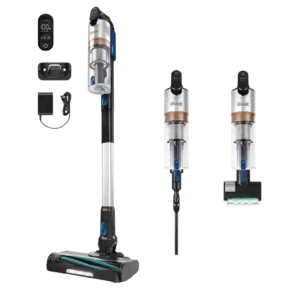
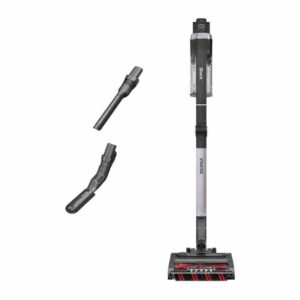
Average score
P1
Product 1: Levoit LVAC-300
4.2
P2
Product 2: Shark Stratos Cordless Vacuum IZ862H
4.3
Accessories and Tools
P1
Product 1: Levoit LVAC-300
4.4
Reviewers generally found the included tools useful, especially the motorized upholstery or pet tool and crevice brush, with one comparison review calling the powered upholstery tool the LVAC-300’s biggest extra feature.
P2
Product 2: Shark Stratos Cordless Vacuum IZ862H
2.9
Accessories are mixed: several reviewers found the included tools useful, but others criticized missing extras, no powered upholstery tool, or an underwhelming dusting brush.
Aesthetic design and finish
P1
Product 1: Levoit LVAC-300
3.3
Design reactions were mixed: one reviewer found the styling basic, while another preferred the LVAC-300 color treatment over the lower model.
P2Product 2: Shark Stratos Cordless Vacuum IZ862H
No score yetAI, Smart, App and Automation
P1
Product 1: Levoit LVAC-300
4.0
One review liked the eco, auto, and turbo suction modes for adapting power across floor types; no app-based automation was praised.
P2
Product 2: Shark Stratos Cordless Vacuum IZ862H
4.1
Clean Sense IQ and dirt-detection automation were mostly viewed as useful, though one reviewer did not notice a major performance boost beyond noise changes.
Airflow blowback
P1
Product 1: Levoit LVAC-300
4.5
Airflow and scatter control were reviewed positively, with one reviewer saying it avoided scattering light debris and another measuring higher airflow than the LVAC-200.
P2
Product 2: Shark Stratos Cordless Vacuum IZ862H
5.0
Airflow blowback evidence is positive but limited, with one test noting rice puffs were not blown away from the vacuum path.
Area Rug Handling
P1
Product 1: Levoit LVAC-300
4.3
Area-rug handling was generally positive, with reviewers noting good transitions across rugs and a favorable result on a sheepskin rug.
P2
Product 2: Shark Stratos Cordless Vacuum IZ862H
4.5
Area-rug handling is generally good, with smooth transitions, though very thin rugs can still be a challenge.
Assembly and Setup
P1
Product 1: Levoit LVAC-300
5.0
Setup was consistently described as quick and simple, with snap-together assembly and straightforward initial charging.
P2
Product 2: Shark Stratos Cordless Vacuum IZ862H
4.8
Setup was consistently described as quick and simple, with assembly taking only minutes.
Battery and Charging
P1
Product 1: Levoit LVAC-300
4.2
Battery and charging impressions were mostly positive, especially for daily cleanups and removable charging, though one comparison found runtime gains over the LVAC-200 minimal.
P2
Product 2: Shark Stratos Cordless Vacuum IZ862H
4.0
Battery evidence is mixed: some reviewers found runtime enough for most homes, while others saw weak runtime in higher modes or wanted more battery life.
Bin and Bag
P1
Product 1: Levoit LVAC-300
4.3
The dustbin system was mostly praised for easy, clean emptying, although one reviewer noted the small canister can fill quickly.
P2
Product 2: Shark Stratos Cordless Vacuum IZ862H
3.4
Bin feedback is mixed: reviewers liked the decent size or capacity in some homes, but others found it small, frequent to empty, or awkward to clean.
Build quality and durability
P1
Product 1: Levoit LVAC-300
3.3
Build quality was mixed: one reviewer criticized cheap-feeling plastics, another found nothing wobbly or cheap, and a technician called it average for the segment.
P2
Product 2: Shark Stratos Cordless Vacuum IZ862H
5.0
Build-quality evidence is positive but comes from one long-term home review that described the unit as built to last and easy to use.
Carpet — High-Pile Pickup
P1
Product 1: Levoit LVAC-300
2.6
High-pile and thick carpet performance was one of the clearest weaknesses, with multiple reviews saying it struggled or would not replace a stronger upright.
P2Product 2: Shark Stratos Cordless Vacuum IZ862H
No score yetCarpet — Low-Pile Pickup
P1
Product 1: Levoit LVAC-300
4.5
Low-pile carpet pickup was rated well across reviews, including above-average carpet debris results and positive home-use impressions.
P2
Product 2: Shark Stratos Cordless Vacuum IZ862H
4.5
Low-pile pickup evidence is positive but narrower, coming from a reviewer who tested low-pile rugs and praised suction with minimal repeat passes.
Carpet — Medium-Pile Pickup
P1
Product 1: Levoit LVAC-300
3.8
Medium-pile and deeper carpet evidence was mixed: lab results showed strong sand removal, but one technician saw substantial debris left behind.
P2
Product 2: Shark Stratos Cordless Vacuum IZ862H
4.3
Medium-pile carpet evidence trends strong thanks to perfect deep-clean results, though one Consumer Reports summary called carpet dirt removal only passable.
Clogging and debris prevention
P1
Product 1: Levoit LVAC-300
3.7
Clogging prevention was split: reviewers liked the anti-tangle approach, but one found filters clogged quickly during testing.
P2
Product 2: Shark Stratos Cordless Vacuum IZ862H
3.0
Debris-prevention evidence is mixed because the powerful roller handled hair well but could catch stray objects left near the floorhead.
Comparative performance
P1
Product 1: Levoit LVAC-300
4.1
Comparative performance was generally favorable for the price and suction class, but reviewers still noted pricier or bulkier rivals can outperform it in some tests.
P2
Product 2: Shark Stratos Cordless Vacuum IZ862H
4.4
Comparative performance is favorable overall, especially for carpet/value against Dyson and award competition, though not every competitor comparison was a clean win.
Controls and UI
P1
Product 1: Levoit LVAC-300
4.3
Controls and display were well liked for simplicity and visibility, though one reviewer considered the panel basic.
P2
Product 2: Shark Stratos Cordless Vacuum IZ862H
4.3
Controls and displays were praised for useful battery/mode information, simple operation, and relief from holding a trigger continuously.
Convertible handheld design
P1
Product 1: Levoit LVAC-300
4.1
The handheld conversion was useful for above-floor jobs, but one reviewer found the balance less comfortable in handheld mode.
P2
Product 2: Shark Stratos Cordless Vacuum IZ862H
3.8
Handheld conversion is useful and sometimes excellent, though one reviewer found the handle awkward for handheld use.
Cordless convenience
P1
Product 1: Levoit LVAC-300
5.0
Cordless convenience was strongly valued by one reviewer who disliked being limited by wall outlets in a small apartment.
P2
Product 2: Shark Stratos Cordless Vacuum IZ862H
4.5
Cordless convenience was praised as removing cord hassle and making quick daily cleaning easier.
Crevice / Groove Pickup (Hard Floors)
P1
Product 1: Levoit LVAC-300
5.0
Groove pickup on hard floors was excellent in the TechRadar fine-dust test, including debris between planks.
P2
Product 2: Shark Stratos Cordless Vacuum IZ862H
5.0
Hard-floor groove and crevice pickup is strongly supported by the DuoClean seal evidence from Vacuum Wars.
Debris illumination
P1
Product 1: Levoit LVAC-300
4.5
Debris illumination was repeatedly praised for helping users see dust, hair, and darker floor areas.
P2Product 2: Shark Stratos Cordless Vacuum IZ862H
No score yetEase of use
P1
Product 1: Levoit LVAC-300
4.7
Ease of use was a standout, with reviewers emphasizing simple operation, light handling, and low-effort daily cleaning.
P2
Product 2: Shark Stratos Cordless Vacuum IZ862H
5.0
Ease of use was strongly praised in home reviews, with simple controls and daily handling standing out.
Edge and Baseboard Cleaning (Hard Floors)
P1
Product 1: Levoit LVAC-300
5.0
Edge and corner cleaning was excellent in the TechRadar test, where the vacuum cleared debris right to the edge without needing a crevice tool.
P2
Product 2: Shark Stratos Cordless Vacuum IZ862H
4.5
Edge cleaning is supported by Consumer Reports evidence that the Stratos is very good around room edges.
Emptying and Mess Control
P1
Product 1: Levoit LVAC-300
4.2
Emptying was usually clean and low-dust, but one reviewer warned that pressing the wrong button could dump collected dirt back onto the floor.
P2
Product 2: Shark Stratos Cordless Vacuum IZ862H
5.0
Emptying and mess control evidence is positive but limited, with one reviewer saying emptying the vacuum is easy.
Filtration / Dust Containment
P1
Product 1: Levoit LVAC-300
4.3
Filtration was mostly praised for allergy and air-quality benefits, though one technician cautioned that the bagless design may not suit allergy sufferers.
P2
Product 2: Shark Stratos Cordless Vacuum IZ862H
5.0
Filtration and containment were praised, with sealed canister/HEPA systems and smoke-test performance supporting strong dust containment.
Floorhead design
P1
Product 1: Levoit LVAC-300
2.7
Floorhead design was mixed to weak: it helped hard-floor pickup in some cases, but reviewers criticized hair handling and large-debris intake.
P2
Product 2: Shark Stratos Cordless Vacuum IZ862H
3.7
The floorhead earns praise for the DuoClean design and carpet performance, but reviewers also note bulk and weight.
Floorhead Seal on Hard Floors
P1Product 1: Levoit LVAC-300
No score yet
P2
Product 2: Shark Stratos Cordless Vacuum IZ862H
5.0
The hard-floor seal was praised for helping pull dirt from crevices and improving hard-floor pickup.
Hair-removal channel issues
P1
Product 1: Levoit LVAC-300
2.0
One technician flagged a hair-channel issue, saying hair moved into the wheel area during testing.
P2
Product 2: Shark Stratos Cordless Vacuum IZ862H
5.0
Hair-removal channel issues were minimal in a long home test, with no hair wrapped around the roller brush after weeks of use.
Hair Pickup — Carpets
P1
Product 1: Levoit LVAC-300
3.3
Carpet hair pickup was mixed, with one pet-shelter test finding most hairs removed on low pile and a technician test leaving some pet hair behind.
P2
Product 2: Shark Stratos Cordless Vacuum IZ862H
5.0
Carpet hair pickup is strongly positive in awards testing, with pet and human hair pickup described as magnetized-like.
Hair Pickup — Hard Floors
P1
Product 1: Levoit LVAC-300
5.0
Hard-floor hair pickup was excellent in the two reviews that directly tested it, including one-pass results.
P2
Product 2: Shark Stratos Cordless Vacuum IZ862H
5.0
Hard-floor hair pickup is strongly positive in awards testing, with pet and human hair described as almost magnetized.
Hair‑Wrap / Tangle Resistance
P1
Product 1: Levoit LVAC-300
4.1
Hair-wrap resistance was highly divisive: several reviewers had no tangles, while others saw clumping or possible wheel-hair problems.
P2
Product 2: Shark Stratos Cordless Vacuum IZ862H
4.6
Hair-wrap resistance is mostly excellent across real homes and lab-style testing, though one aggressive hair test found a failure.
Hard Floor — Fine Dust Pickup
P1
Product 1: Levoit LVAC-300
4.5
Hard-floor fine-dust pickup was a core strength, with several reviews reporting strong or complete results on dust, sand, or similar messes.
P2
Product 2: Shark Stratos Cordless Vacuum IZ862H
4.6
Fine dust pickup is strong overall, including flour, sugar, and super-fine dust results, but one pet-home review noted extra-fine sand could need Boost or extra passes.
Hard Floor — Large Debris Intake
P1
Product 1: Levoit LVAC-300
1.8
Large debris intake on hard floors was a consistent limitation, with multiple reviewers describing snowplowing, pushing, or debris falling back out.
P2
Product 2: Shark Stratos Cordless Vacuum IZ862H
5.0
Large debris intake is a clear strength, with reviewers praising pickup of kibble, plastic, rice puffs, and extra-large debris piles.
Headlight and LED lights
P1
Product 1: Levoit LVAC-300
4.6
The LED headlight system was consistently useful for visibility under furniture, in dim corners, and on dusty floors.
P2
Product 2: Shark Stratos Cordless Vacuum IZ862H
4.4
Headlights/LEDs are consistently useful, helping reveal dust, dark corners, and the cleaning path.
Innovation compared to competitors
P1
Product 1: Levoit LVAC-300
4.0
One reviewer framed the LVAC-300 as different from hit-or-miss stick vacuums because of its practical design and useful tool combination.
P2
Product 2: Shark Stratos Cordless Vacuum IZ862H
4.5
Innovation evidence is positive but limited, with one review saying its features make it stand out as an impressive cleaning companion.
Low-profile design
P1
Product 1: Levoit LVAC-300
5.0
The low-profile design was praised for lying flat and reaching under sofas or furniture.
P2
Product 2: Shark Stratos Cordless Vacuum IZ862H
4.5
Low-profile design helped one reviewer push the head under cabinets and reach lower spaces more easily.
Maintenance requirements
P1
Product 1: Levoit LVAC-300
4.3
Maintenance was generally easy thanks to washable components and simple disassembly, although filter clogging remained a caveat in one review.
P2
Product 2: Shark Stratos Cordless Vacuum IZ862H
4.5
Maintenance is generally easy and low, with one reviewer calling it the easiest vacuum they had maintained, though dustbin cleaning was less ideal elsewhere.
Maneuverability and Handling
P1
Product 1: Levoit LVAC-300
4.8
Maneuverability was one of the strongest points, with reviewers praising swiveling, agility, one-handed use, and easy movement around furniture.
P2
Product 2: Shark Stratos Cordless Vacuum IZ862H
4.4
Maneuverability was a major strength, with reviewers praising the swivel head, flexible wand, and predictable movement around furniture.
Noise level
P1
Product 1: Levoit LVAC-300
4.3
Noise levels were favorable, with reviewers finding it quieter than many other cordless vacuums.
P2
Product 2: Shark Stratos Cordless Vacuum IZ862H
3.5
Noise evidence is limited to one test, where Eco and CleanSense IQ sounded reasonable but Boost reached a loud-car or singing range.
Odor control
P1
Product 1: Levoit LVAC-300
4.0
Odor-control evidence was limited but positive, with one reviewer saying the exhaust looked and smelled clean.
P2
Product 2: Shark Stratos Cordless Vacuum IZ862H
3.2
Odor control is polarizing: some liked the fresh scent, but others called it gimmicky, strong, or unsuitable for scent-sensitive users.
Onboard tool storage
P1
Product 1: Levoit LVAC-300
2.0
Onboard tool storage was a repeated convenience complaint because accessories had to be stored separately from the vacuum.
P2Product 2: Shark Stratos Cordless Vacuum IZ862H
No score yetOngoing ownership costs (bags, filters, batteries)
P1
Product 1: Levoit LVAC-300
4.5
Ownership-cost evidence was positive but limited, centered on the washable reusable filter reducing replacement hassle and expense.
P2Product 2: Shark Stratos Cordless Vacuum IZ862H
No score yetOverall durability/longevity
P1Product 1: Levoit LVAC-300
No score yet
P2
Product 2: Shark Stratos Cordless Vacuum IZ862H
4.5
Durability evidence is positive but limited, with one long home test saying the vacuum survived rough use unscathed.
Overall opinion
P1
Product 1: Levoit LVAC-300
4.3
Overall sentiment was positive, with most reviewers treating it as a strong everyday cordless option; the main caveat was that it should not be the only deep-cleaning vacuum for every home.
P2
Product 2: Shark Stratos Cordless Vacuum IZ862H
4.5
Overall opinion is strongly positive across reviews, with awards, recommendations, and high praise, balanced by concerns about weight, runtime, and scent.
Packaging quality
P1
Product 1: Levoit LVAC-300
4.7
Packaging was praised as compact, secure, and pleasant to unbox.
P2
Product 2: Shark Stratos Cordless Vacuum IZ862H
5.0
Packaging quality was praised in one review for recyclable, minimal materials that impressed the tester.
Pet-Ready Features
P1
Product 1: Levoit LVAC-300
4.7
Pet readiness was strong overall, especially for pet hair, upholstery, and low-maintenance anti-tangle cleaning, though thick carpet remained a limitation.
P2
Product 2: Shark Stratos Cordless Vacuum IZ862H
4.7
Pet-focused evidence is strong: reviewers praised pet hair and dander pickup, including daily pet messes and solid pet-hair performance.
Price and Value
P1
Product 1: Levoit LVAC-300
4.0
Reviewers generally found the price fair or reasonable, but value was more contested against the cheaper LVAC-200 and stronger sale-priced rivals.
P2
Product 2: Shark Stratos Cordless Vacuum IZ862H
4.2
Value is positive but price-sensitive: reviewers call it expensive, yet worthwhile on sale, strong versus Dyson, and good for the money when discounted.
Runtime
P1
Product 1: Levoit LVAC-300
4.2
Runtime was generally considered sufficient for daily use and sometimes exceeded claims, but max mode and larger jobs could require recharging.
P2
Product 2: Shark Stratos Cordless Vacuum IZ862H
4.0
Runtime evidence is mixed: reviewers cite up to an hour in low modes and useful sessions, but Max mode and real-world runtime can be much shorter.
Scratch resistance
P1Product 1: Levoit LVAC-300
No score yet
P2
Product 2: Shark Stratos Cordless Vacuum IZ862H
4.5
Scratch-resistance evidence is limited to attachment use, where the brush gave the reviewer confidence that surfaces would not be scratched.
Stair Cleaning
P1
Product 1: Levoit LVAC-300
4.7
Stair cleaning was praised because the vacuum is light and easy to carry, even compared with bulkier uprights.
P2
Product 2: Shark Stratos Cordless Vacuum IZ862H
3.0
Stair evidence is mixed because compact handheld use helps, but the floorhead may be too heavy for some stair cleaning in upright mode.
Storage footprint and upright-stand stability
P1
Product 1: Levoit LVAC-300
4.9
Storage and upright stability were standout strengths, with multiple reviewers liking that it stands on its own and stores compactly.
P2
Product 2: Shark Stratos Cordless Vacuum IZ862H
4.9
The foldable MultiFLEX design received strong praise for compact storage and freestanding or low-height storage convenience.
Stuck resistance
P1Product 1: Levoit LVAC-300
No score yet
P2
Product 2: Shark Stratos Cordless Vacuum IZ862H
4.0
Stuck-resistance evidence is mostly positive on floor transitions, though one thin rug could still be pulled up if the vacuum sat too long.
Suction and Airflow
P1
Product 1: Levoit LVAC-300
4.4
Suction and airflow were mostly strong for a cordless stick, especially against the LVAC-200, but not enough to make it a full deep-cleaning replacement.
P2
Product 2: Shark Stratos Cordless Vacuum IZ862H
4.4
Reviewers repeatedly found the Stratos powerful, with strong suction and airflow for everyday debris, though one lab-style review said competitors at the price can be stronger.
Suitability for heavy-duty use
P1
Product 1: Levoit LVAC-300
2.0
Heavy-duty suitability was limited; reviewers specifically said it does not replace a full-size upright or serve as an only vacuum for deep cleaning.
P2
Product 2: Shark Stratos Cordless Vacuum IZ862H
2.5
The Stratos suits daily messes better than marathon deep cleaning, with one reviewer recommending corded upright models for hours-long cleaning.
Suitability for small spaces
P1
Product 1: Levoit LVAC-300
5.0
Small-space suitability was positive in the limited evidence, mainly because the vacuum is compact and does not take much space.
P2
Product 2: Shark Stratos Cordless Vacuum IZ862H
4.5
Small-space suitability is positive because compact folding and closet-friendly storage help users with limited room.
Support and Reliability
P1Product 1: Levoit LVAC-300
No score yet
P2
Product 2: Shark Stratos Cordless Vacuum IZ862H
2.5
Reliability/support evidence is limited and cautious, with concern that Shark products may be harder to repair long term.
Surface safety with attachments
P1
Product 1: Levoit LVAC-300
4.5
Surface safety evidence was positive, with reviewers praising gentle hardwood use and a brush tool for delicate surfaces.
P2
Product 2: Shark Stratos Cordless Vacuum IZ862H
4.5
Attachment surface safety is supported by one review that liked the brush for avoiding scratches on furniture surfaces.
Tool-change simplicity
P1
Product 1: Levoit LVAC-300
4.6
Tool changes and brush access were repeatedly described as easy, including quick brush-roll removal and simple attachment handling.
P2
Product 2: Shark Stratos Cordless Vacuum IZ862H
4.5
The vacuum converts to handheld easily, making tool changes and mode shifts feel straightforward in use.
Under-Furniture Pickup
P1
Product 1: Levoit LVAC-300
5.0
Under-furniture pickup was excellent where tested, with reviewers praising flat recline and reach under sofas or furniture.
P2
Product 2: Shark Stratos Cordless Vacuum IZ862H
4.7
Under-furniture pickup is one of the most consistent strengths, thanks to MultiFLEX and the bending wand reducing crouching and bending.
Upholstery / Above-Floor Pickup
P1
Product 1: Levoit LVAC-300
4.8
Upholstery and above-floor cleaning were a major strength, driven by the mini motorized brush and strong sofa, pet-bed, stair, and car-seat results.
P2
Product 2: Shark Stratos Cordless Vacuum IZ862H
4.8
Above-floor and upholstery pickup were praised, especially for hair on furniture and helpful smaller tools.
Versatility
P1
Product 1: Levoit LVAC-300
4.5
Versatility was positive across reviews, especially for switching between floors, upholstery, cars, and tight spaces.
P2
Product 2: Shark Stratos Cordless Vacuum IZ862H
4.0
Versatility evidence is positive but broad, with one review calling the Stratos packed with features for many uses.
Weight
P1
Product 1: Levoit LVAC-300
4.9
Weight was one of the clearest strengths, with reviewers repeatedly calling it lightweight, comfortable, and easy to carry.
P2
Product 2: Shark Stratos Cordless Vacuum IZ862H
2.6
Weight is a repeated weakness, with reviewers calling it hefty, heavier than other models, or heavier than preferred.