Average score
P1
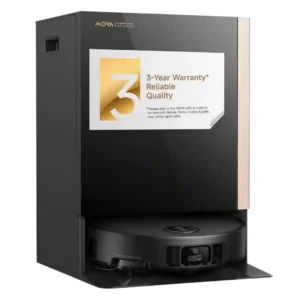
Product 1: Mova Mobius 60
4.2
P2
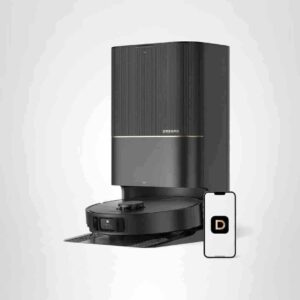
Product 2: Dreame X40 Ultra Robotic Vacuum
4.2
Accessories and Tools
P1
Product 1: Mova Mobius 60
4.8
Accessory coverage is strong, with multiple color-coded mop pad sets, solutions, holders, spare pads, and a dust bag noted across reviews.
P2
Product 2: Dreame X40 Ultra Robotic Vacuum
4.0
Reviews mention a well-equipped ecosystem with included consumables (bags/cleaning tools/solution) and optional accessories like a hair-cutting roller. Add-ons can improve hair handling but can also add to ownership cost.
Adaptive chassis lift
P1
Product 1: Mova Mobius 60
4.9
Adaptive lift and threshold handling are standout strengths, with retractable legs and high obstacle crossing repeatedly highlighted.
P2Product 2: Dreame X40 Ultra Robotic Vacuum
No score yetAesthetic design and finish
P1
Product 1: Mova Mobius 60
4.3
Reviewers like the black, sleek, fingerprint-resistant look, although it is available in a limited finish.
P2
Product 2: Dreame X40 Ultra Robotic Vacuum
3.0
Design opinions are mixed: at least one reviewer says the dock looks dated or appliance-like compared with newer, more aesthetic competitors. Most other reviews focus more on function than finish.
AI, Smart, App and Automation
P1
Product 1: Mova Mobius 60
4.5
Smart automation is a major strength, including AI object recognition, room/floor-type decisions, mop selection, and app automation.
P2
Product 2: Dreame X40 Ultra Robotic Vacuum
4.4
Automation is a major theme: reviewers cite advanced obstacle avoidance, dirt detection with extra passes, customizable schedules, no-go zones, and pet-focused modes. The tradeoff for all that power is a larger settings surface area, and some reviewers find the app experience less polished.
Area Rug Handling
P1
Product 1: Mova Mobius 60
4.2
Area-rug handling is solid because mops lift or can be left at the dock, and reviewers describe good high-pile rug mobility.
P2
Product 2: Dreame X40 Ultra Robotic Vacuum
4.5
Carpet and rug handling is often praised because the robot can lift the mops and, in some modes, leave mop pads at the dock to avoid wetting textiles. A dissenting note is that mop hardware can still catch on some carpet edges or that pad removal is not always automatic, so settings matter.
Assembly and Setup
P1
Product 1: Mova Mobius 60
4.5
Setup is mostly praised as quick or straightforward, with one detailed setup review showing many app and map steps.
P2
Product 2: Dreame X40 Ultra Robotic Vacuum
4.5
Setup is generally described as quick, with guided app onboarding and fast mapping runs. Reviewers report it is straightforward to get from unboxing to a usable map.
Battery and Charging
P1
Product 1: Mova Mobius 60
4.0
Charging features are solid because recharge-and-resume is supported, but battery life and energy use remain recurring caveats.
P2
Product 2: Dreame X40 Ultra Robotic Vacuum
4.5
Battery life is described as long, with a large battery (often cited as 6,400mAh) and support for recharge-and-resume. Reviewers generally expect it to handle larger homes, though thorough mop routines can still take time.
Bin and Bag
P1
Product 1: Mova Mobius 60
4.3
The robot and dock use an onboard dustbin plus a larger dock bag, with reviewers noting automatic debris transfer and long bag intervals.
P2
Product 2: Dreame X40 Ultra Robotic Vacuum
4.1
The dock uses a large disposable dust bag (often cited as 3.2L), reducing how often you deal with dust. However, some reviewers note bag replacement frequency and bag pricing can vary with usage and contribute to ongoing costs.
Build quality and durability
P1
Product 1: Mova Mobius 60
4.7
Build quality impressions are strong, with reviewers calling the robot well-constructed and the physical build excellent.
P2
Product 2: Dreame X40 Ultra Robotic Vacuum
4.0
Only a few sources discuss durability directly, but the comments that do are positive, noting robust wearing parts and a generally well-built feel. No review in the file reports major structural failures.
Carpet — High-Pile Pickup
P1
Product 1: Mova Mobius 60
4.5
High-pile or deep-carpet evidence is mostly strong, but one reviewer found carpet performance only average compared with expectations.
P2
Product 2: Dreame X40 Ultra Robotic Vacuum
4.3
At least one review notes noticeably strong performance on thicker or higher-pile carpet due to high suction. Keeping carpets dry is helped by vacuum-only modes, mop lifting, or leaving mop pads at the dock, but some testers still caution about mop height when crossing carpet edges.
Carpet — Low-Pile Pickup
P1
Product 1: Mova Mobius 60
5.0
Low-pile and general carpet pickup evidence is very strong in one review citing near-100% pickup on carpet and hard floors.
P2
Product 2: Dreame X40 Ultra Robotic Vacuum
4.3
On low-pile carpet, multiple sources report strong pickup and good deep-clean behavior, though stubborn pet fur may require repeat passes. Overall performance is consistently above average for a robot vacuum-mop.
Carpet — Medium-Pile Pickup
P1Product 1: Mova Mobius 60
No score yet
P2
Product 2: Dreame X40 Ultra Robotic Vacuum
4.7
For embedded debris in carpet, test-driven reviews report above-average deep-clean performance and strong suction delivery. Carpet deep-clean scores are described as near the top tier of current robot vacuums.
Child lock
P1Product 1: Mova Mobius 60
No score yet
P2
Product 2: Dreame X40 Ultra Robotic Vacuum
4.2
A child lock is mentioned as available, helping prevent accidental starts or setting changes. It is treated as a nice-to-have safety feature rather than a core performance driver.
Clogging and debris prevention
P1Product 1: Mova Mobius 60
No score yet
P2
Product 2: Dreame X40 Ultra Robotic Vacuum
4.2
Hair-cutting and brush-lifting behaviors are cited as practical ways to prevent gunk and tangles, especially when the robot encounters wet patches. Reviewers generally frame these as helpful for keeping the cleaning path cleaner and reducing manual cleanup.
Comparative performance
P1
Product 1: Mova Mobius 60
4.3
Comparative performance is mixed but mostly favorable: it beats key rivals in some Vacuum Wars metrics, while another test scored it below average overall.
P2
Product 2: Dreame X40 Ultra Robotic Vacuum
4.4
In comparisons, the X40 Ultra is often positioned as a top performer, earning high marks for vacuuming, mopping, and obstacle avoidance versus other flagships. A few reviewers note that the very best competitors are close, so the final choice can come down to price and preferred features.
Controls and UI
P1
Product 1: Mova Mobius 60
4.5
The app and controls are praised for deep customization, room and zone cleaning, scheduling, maps, and setup prompts, though one reviewer found some controls buried.
P2
Product 2: Dreame X40 Ultra Robotic Vacuum
4.0
The app offers deep controls (maps, zones, schedules, no-go lines, and automation toggles), and many reviewers find it powerful. A recurring downside is UI complexity: some call it clunky or overwhelming until you tune settings.
Corner Cleaning (Robot)
P1
Product 1: Mova Mobius 60
4.5
Corner cleaning is strong thanks to the extending side brush and mop reach.
P2
Product 2: Dreame X40 Ultra Robotic Vacuum
4.3
Corner cleaning is repeatedly praised thanks to an extendable side brush and edge-focused routines. Reviewers describe better corner reach than robots that rely on a fixed brush setup.
Crevice / Groove Pickup (Hard Floors)
P1
Product 1: Mova Mobius 60
4.8
Crevice and groove evidence is positive, with Vacuum Wars citing strong crevice pickup and another reviewer showing clean wall/corner areas.
P2Product 2: Dreame X40 Ultra Robotic Vacuum
No score yetDirty water sensor
P1
Product 1: Mova Mobius 60
2.8
Dirty-water sensing is mixed: one reviewer praises a full-tank float warning, while another notes no dirt-detection sensor for recleaning.
P2
Product 2: Dreame X40 Ultra Robotic Vacuum
4.3
Some reviews highlight a dirty-water sensing approach that can trigger extra mop-pad washing or a second cleaning pass when the system detects heavier soil. This feature is presented as a meaningful upgrade for messier kitchens and high-traffic areas.
Docking and Auto-Empty Reliability (Robot)
P1
Product 1: Mova Mobius 60
4.3
Docking and auto-empty reliability is positive overall, with reviews noting automatic dust emptying and successful auto-empty behavior.
P2
Product 2: Dreame X40 Ultra Robotic Vacuum
4.2
Docking and auto-empty are generally described as reliable, with a full-service station that empties dust and maintains the mops. One review flags weaker auto-empty suction and higher bag usage than expected, so performance may vary by debris load and settings.
Dock noise
P1
Product 1: Mova Mobius 60
2.5
Dock noise is a caveat because the auto-empty cycle can hit a short loud burst.
P2Product 2: Dreame X40 Ultra Robotic Vacuum
No score yetDried-On Stain Removal
P1
Product 1: Mova Mobius 60
3.2
Dried-on stain results are mixed: some tests found below-average stain removal, while one reviewer saw strong performance after hot-water passes.
P2
Product 2: Dreame X40 Ultra Robotic Vacuum
4.5
Dried-on mess performance is a standout: multiple reviews describe the spinning mop system and extra-pass behaviors as excellent on sticky or dried spills (such as coffee). It is frequently positioned as among the best moppers in its class.
Ease of use
P1Product 1: Mova Mobius 60
No score yet
P2
Product 2: Dreame X40 Ultra Robotic Vacuum
4.4
Ease of use is generally high once set up, with strong automation and helpful app guidance. The main usability complaint is that the app and feature set can feel complex at first.
Edge and Baseboard Cleaning (Hard Floors)
P1
Product 1: Mova Mobius 60
4.7
Edge and baseboard cleaning are repeatedly praised thanks to extending brushes, extending mop reach, and strong wall/corner cleanup.
P2
Product 2: Dreame X40 Ultra Robotic Vacuum
4.5
Edge and baseboard cleaning is a consistent strength thanks to an extending mop pad and edge-reaching behaviors. Multiple reviewers highlight noticeably better along-the-wall pickup compared with robots that cannot extend to edges.
Energy efficiency (kWh)
P1
Product 1: Mova Mobius 60
3.0
Energy comments are limited, but one reviewer noted water heating consumes noticeable power.
P2Product 2: Dreame X40 Ultra Robotic Vacuum
No score yetFilter-change indicator
P1
Product 1: Mova Mobius 60
3.0
Filter maintenance is tracked in the app, with reset timing mentioned in setup evidence.
P2Product 2: Dreame X40 Ultra Robotic Vacuum
No score yetFloor Drying Time
P1Product 1: Mova Mobius 60
No score yet
P2
Product 2: Dreame X40 Ultra Robotic Vacuum
4.5
One test-focused review notes that after cleaning wet spills the floor was not left overly damp, suggesting good water control. In general, the spinning mop system aims to clean effectively without soaking floors.
Floorhead design
P1
Product 1: Mova Mobius 60
4.5
The dual-brush floorhead is described as advanced and central to debris and hair handling.
P2Product 2: Dreame X40 Ultra Robotic Vacuum
No score yetFloor shine after cleaning
P1
Product 1: Mova Mobius 60
4.5
Floor shine evidence is positive but narrow, coming from hardwood-floor comments about the Plush pad leaving a nice shine without excess moisture.
P2Product 2: Dreame X40 Ultra Robotic Vacuum
No score yetHair-removal channel issues
P1
Product 1: Mova Mobius 60
3.0
Hair removal is mostly good, but one reviewer notes possible clumping with very heavy long-hair loads.
P2Product 2: Dreame X40 Ultra Robotic Vacuum
No score yetHair Pickup — Carpets
P1
Product 1: Mova Mobius 60
5.0
Carpet hair pickup is a standout, with deep embedded hair pickup and high pet-hair test scores cited.
P2
Product 2: Dreame X40 Ultra Robotic Vacuum
3.8
Carpet hair pickup gets conflicting feedback: some coverage labels it a top option for homes with pets, but at least one lab-style test found only average fur removal in a single run. Multiple passes, higher suction, and the right brush can matter here.
Hair Pickup — Hard Floors
P1
Product 1: Mova Mobius 60
5.0
Hard-floor hair pickup is positive, with anti-tangle brush evidence indicating efficient hair collection.
P2
Product 2: Dreame X40 Ultra Robotic Vacuum
3.8
Hair pickup on hard floors is mixed: some reviewers call it excellent for pet hair, while at least one test-focused review found it left a meaningful amount behind without multiple passes. Expect best results with tuned settings and the right brush configuration.
Hair‑Wrap / Tangle Resistance
P1
Product 1: Mova Mobius 60
5.0
Hair-wrap resistance is excellent across reviews, with multiple testers reporting little or no tangling.
P2
Product 2: Dreame X40 Ultra Robotic Vacuum
3.8
Tangle resistance is also mixed: long hair can still wrap around the main roller in some reports, but anti-tangle side-brush design and optional hair-cutting rollers are described as effective upgrades. Cleaning hair out is generally considered manageable.
Hard Floor — Fine Dust Pickup
P1
Product 1: Mova Mobius 60
4.8
Hard-floor fine-dust pickup is strong in several reviews, though one lab-style score warns that advertised suction is not the whole story.
P2
Product 2: Dreame X40 Ultra Robotic Vacuum
4.6
Hard-floor fine debris pickup is described as excellent, with test-style reviews reporting near-perfect results on materials like sand. It is regularly characterized as thorough on hard surfaces.
Hard Floor — Large Debris Intake
P1
Product 1: Mova Mobius 60
4.7
Large hard-floor debris intake is strong, including surface debris sweeping and rice pickup evidence.
P2
Product 2: Dreame X40 Ultra Robotic Vacuum
4.6
Large-debris pickup on hard floors is generally strong, with high percentages reported in testing and good real-world pickup. A minor recurring note is that a single pass can miss a few crumbs, which is solvable with extra passes or higher settings.
Headlight and LED lights
P1
Product 1: Mova Mobius 60
4.5
LED lighting helps obstacle detection and visibility in darker areas.
P2Product 2: Dreame X40 Ultra Robotic Vacuum
No score yetHeating element
P1
Product 1: Mova Mobius 60
5.0
The heating system is a major dock feature, with the hottest mop-wash temperatures cited by reviewers.
P2
Product 2: Dreame X40 Ultra Robotic Vacuum
4.5
A heated mop-wash is repeatedly mentioned, with hot water used in the dock to clean mop pads and the washboard. Reviewers connect the heating to better mop-pad cleanliness and reduced odor.
Innovation compared to competitors
P1
Product 1: Mova Mobius 60
4.9
Innovation is one of the clearest strengths, especially the automatic MopSwap system and category-defining dock design.
P2
Product 2: Dreame X40 Ultra Robotic Vacuum
4.5
Innovation shows up in features like leaving mop pads at the dock, lifting brushes when sensing liquid, edge-extending mops and brushes, camera-assisted stain attention, and sensor-driven re-cleaning. Reviewers frequently call these capabilities differentiators versus simpler robot vacuum-mops.
Large debris handling
P1
Product 1: Mova Mobius 60
4.5
Large debris handling is positive in hands-on tests, including craft beads, cereal, and a straw-wrapper pickup.
P2Product 2: Dreame X40 Ultra Robotic Vacuum
No score yetLow-profile design
P1
Product 1: Mova Mobius 60
5.0
Low-profile performance is strong due to retractable LiDAR and the ability to clean under furniture competitors miss.
P2Product 2: Dreame X40 Ultra Robotic Vacuum
No score yetMaintenance requirements
P1
Product 1: Mova Mobius 60
4.7
Maintenance requirements are low overall because self-emptying, self-washing, drying, large tanks, and long intervals reduce manual work.
P2
Product 2: Dreame X40 Ultra Robotic Vacuum
4.0
Maintenance is described as low day-to-day because the dock empties dust and washes and dries mop pads automatically. Owners still need to refill clean water, empty dirty water, replace bags, and occasionally wipe sensors and check brushes.
Maneuverability and Handling
P1
Product 1: Mova Mobius 60
4.5
Maneuverability benefits from flexible mop movement and adaptive contact on uneven surfaces.
P2Product 2: Dreame X40 Ultra Robotic Vacuum
No score yetMap and Path Efficiency (Robot Vacuums)
P1
Product 1: Mova Mobius 60
3.8
Mapping is generally precise and fast, but navigation speed and some floor-shape handling are less consistent.
P2
Product 2: Dreame X40 Ultra Robotic Vacuum
4.6
Navigation and mapping are repeatedly described as top-tier, with fast mapping and strong coverage efficiency. Some testers note occasional pattern quirks, but overall it is seen as reliable at completing whole-home cleans.
Mop lifting system
P1
Product 1: Mova Mobius 60
4.6
The mop lifting and pad detaching system is highly capable, protecting carpets and letting the robot leave pads at the base.
P2
Product 2: Dreame X40 Ultra Robotic Vacuum
4.4
The mop system can lift during carpet detection and, in some workflows, leave mop pads at the dock to keep rugs dry. Most reviewers view this as a major advantage, though one notes the lift height may still snag on some carpet edges.
Mopping performance
P1
Product 1: Mova Mobius 60
4.3
Mopping is generally praised, especially with mop swapping and hot-water systems, but stain and water-level tests are not uniformly excellent.
P2
Product 2: Dreame X40 Ultra Robotic Vacuum
4.5
Mopping is widely rated as a top-tier strength, driven by spinning pads, edge extension, and options for extra passes on dirtier areas. Some reviewers caution that the most aggressive automated modes can be overkill on delicate finishes until tuned.
Noise level
P1
Product 1: Mova Mobius 60
3.8
Noise is generally acceptable in normal use, but carpet boost and dock auto-emptying can be noticeably loud.
P2
Product 2: Dreame X40 Ultra Robotic Vacuum
3.4
Noise is acceptable on lower settings but becomes noticeably loud at maximum suction, which some reviewers frame as the cost of stronger vacuuming. One lab-style test measured it as louder than average, and reviewers recommend scheduling loud runs when you are out.
Obstacle Avoidance (Robot)
P1
Product 1: Mova Mobius 60
4.8
Obstacle avoidance is one of the strongest consensus points, with high scores and repeated cable/object avoidance praise.
P2
Product 2: Dreame X40 Ultra Robotic Vacuum
4.6
Obstacle avoidance is one of the most consistently celebrated strengths, with multiple sources citing camera and structured-light sensing and near-perfect avoidance results. Cables can still be a challenge for any robot, but overall confidence is high.
Odor control
P1
Product 1: Mova Mobius 60
3.5
Odor control is mixed: one review reports no lingering pad odor, while another notes missing water treatment for dirty tanks.
P2
Product 2: Dreame X40 Ultra Robotic Vacuum
4.4
Odor control is generally praised because the dock both hot-washes and hot-dries the mop pads, reducing musty smells. This is repeatedly mentioned as helpful for keeping the system from getting funky between cleanings.
Ongoing ownership costs (bags, filters, batteries)
P1
Product 1: Mova Mobius 60
3.5
Ongoing cost evidence focuses on replacement dust bags and periodic HEPA-filter or brush replacement.
P2
Product 2: Dreame X40 Ultra Robotic Vacuum
3.0
Running costs come up as a concern in some coverage, mainly around disposable dust bags and other consumables. Reviewers recommend factoring consumables into ownership cost, even if day-to-day maintenance is low.
Overall cleaning convenience
P1
Product 1: Mova Mobius 60
5.0
Cleaning convenience is excellent, with reviewers repeatedly emphasizing hands-off operation and reduced need to supervise.
P2Product 2: Dreame X40 Ultra Robotic Vacuum
No score yetOverall durability/longevity
P1
Product 1: Mova Mobius 60
3.3
Early durability impressions are mostly positive, though one reviewer warns that the many mechanical features create more possible failure points.
P2Product 2: Dreame X40 Ultra Robotic Vacuum
No score yetOverall opinion
P1
Product 1: Mova Mobius 60
4.5
Overall opinion is strongly positive, with most reviewers calling it impressive, category-defining, or worth considering despite tradeoffs.
P2
Product 2: Dreame X40 Ultra Robotic Vacuum
4.4
Overall sentiment is strongly positive, with several sources ranking it at or near the top among flagship robot vacuum-mops. The most common reservations are the high price, the size of the dock, and mixed reports on pet-hair pickup consistency.
Packaging quality
P1
Product 1: Mova Mobius 60
3.5
Packaging is noted as extensive rather than especially premium, with one unboxing highlighting lots of packaging.
P2Product 2: Dreame X40 Ultra Robotic Vacuum
No score yetPet-Ready Features
P1
Product 1: Mova Mobius 60
4.8
Pet-focused evidence is positive: reviewers mention pet hair pickup, pet waste avoidance, pet bowls and toys, and useful pet-oriented solution and camera features.
P2
Product 2: Dreame X40 Ultra Robotic Vacuum
4.6
Pet-oriented features are a highlight: reviewers mention pet zones, avoidance of bowls and toys, and camera-based monitoring (including two-way video in some coverage). Performance with pet hair is more mixed, but overall the feature set is considered very pet-friendly.
Price and Value
P1
Product 1: Mova Mobius 60
3.9
Price is premium, but reviewers repeatedly frame discounts and feature density as improving value.
P2
Product 2: Dreame X40 Ultra Robotic Vacuum
3.2
Price is the most consistent negative: several reviews describe it as a premium, top-of-the-market model. Many still consider the performance and automation strong enough to justify it for the right home, especially when discounted, but value is weaker for budget shoppers.
Privacy controls
P1
Product 1: Mova Mobius 60
4.3
Privacy controls are present, with reviewers noting the camera can be turned off and is off by default in setup.
P2Product 2: Dreame X40 Ultra Robotic Vacuum
No score yetRuntime
P1
Product 1: Mova Mobius 60
2.5
Runtime is the most repeated weakness, with several reviewers calling battery life or coverage below average.
P2Product 2: Dreame X40 Ultra Robotic Vacuum
No score yetSanitizing performance
P1
Product 1: Mova Mobius 60
5.0
Sanitizing is a strong dock feature, with UV sterilization and hot-water washing cited in review evidence.
P2
Product 2: Dreame X40 Ultra Robotic Vacuum
4.6
Sanitizing claims are tied mainly to the dock washing mop pads with very hot water (often stated around 158F). Reviews treat this as a hygiene win for the mop pads, not a guarantee of disinfecting the entire floor.
Self-cleaning cycle
P1
Product 1: Mova Mobius 60
4.6
Self-cleaning is strong, with automatic mop washing, hot-water cleaning, drying, and pad maintenance cited across reviews.
P2
Product 2: Dreame X40 Ultra Robotic Vacuum
4.5
The dock self-cleans and maintains the mopping system by washing pads and the washboard and drying with hot air, often with scrapers and repeat-clean logic. This is repeatedly credited for reducing hands-on upkeep and improving hygiene.
Software-update support / feature longevity
P1
Product 1: Mova Mobius 60
4.0
Software longevity gets a positive signal from over-the-air updates and frequent early refinements.
P2Product 2: Dreame X40 Ultra Robotic Vacuum
No score yetSolution / Liquid system
P1
Product 1: Mova Mobius 60
4.5
The liquid system is highly capable, with dual solution tanks, auto dispensing, and room-based solution use discussed by reviewers.
P2
Product 2: Dreame X40 Ultra Robotic Vacuum
4.1
The solution system is frequently mentioned but described differently across sources: it can wash pads with detergent and, in some coverage, dispense floor-cleaning fluid. At least one reviewer notes detergent may be used mainly for mop-pad washing rather than being mixed into the floor water by default.
Steam Cleaning
P1
Product 1: Mova Mobius 60
1.0
Steam cleaning is not supported; one reviewer explicitly says the mopping is not steam-based.
P2Product 2: Dreame X40 Ultra Robotic Vacuum
No score yetStorage footprint and upright-stand stability
P1
Product 1: Mova Mobius 60
2.5
The dock is feature-rich but large, so storage footprint is a drawback for smaller homes.
P2
Product 2: Dreame X40 Ultra Robotic Vacuum
3.3
Multiple reviewers call out the dock as large and space-consuming, even if the footprint is described as relatively slim in one write-up. Plan for a dedicated spot, especially if you are in a small apartment.
Streaking / Residue
P1
Product 1: Mova Mobius 60
3.8
Streaking and residue evidence is mixed: one reviewer initially saw streaking, while others praised oil-residue separation or streak-prone floor handling.
P2
Product 2: Dreame X40 Ultra Robotic Vacuum
4.0
Residue and streak control depends on settings: reviewers mention choosing mopping direction or dialing back aggressive modes to avoid over-mopping certain finishes. When configured, most describe clean results without problematic streaking.
Stuck resistance
P1
Product 1: Mova Mobius 60
4.8
Stuck resistance is excellent in reviewer evidence, with multiple testers saying it did not get stuck or caught.
P2
Product 2: Dreame X40 Ultra Robotic Vacuum
4.4
Reviewers report good stuck resistance, including handling taller thresholds (often cited around 22mm) and completing coverage without frequent rescues. As with most robots, extreme clutter can still cause interruptions, but it is rated highly here.
Suction and Airflow
P1
Product 1: Mova Mobius 60
4.8
Reviewers consistently describe unusually strong suction, with several noting 30,000 Pa claims or strong real-world pickup; one tester cautioned that suction numbers did not perfectly predict cleaning score.
P2
Product 2: Dreame X40 Ultra Robotic Vacuum
4.5
Across reviewers, suction is repeatedly described as flagship-level, with strong debris pickup on both hard floors and carpets. Several sources cite 12,000Pa suction and top-tier vacuuming results, though max power can be loud and auto-empty strength at the dock is not praised by everyone.
Suitability for small spaces
P1
Product 1: Mova Mobius 60
3.8
Small-space suitability is limited by dock size, even though the robot can clean low-clearance areas.
P2Product 2: Dreame X40 Ultra Robotic Vacuum
No score yetSupport and Reliability
P1
Product 1: Mova Mobius 60
3.7
Support evidence is mixed: reviewers cite a three-year warranty but also mention customer-service and support concerns.
P2Product 2: Dreame X40 Ultra Robotic Vacuum
No score yetUnder-Furniture Pickup
P1
Product 1: Mova Mobius 60
4.8
Under-furniture cleaning is a strength because the retractable LiDAR and slim body let it reach low spaces.
P2
Product 2: Dreame X40 Ultra Robotic Vacuum
4.5
Under-furniture performance is frequently highlighted, especially around the base of cabinets and appliances where hair and debris collect. Extendable side reach behaviors help it pull debris from areas many robots miss.
Value-for-money
P1
Product 1: Mova Mobius 60
5.0
Value-for-money is strong for buyers who want many premium features in one robot, especially as robot-vacuum prices fall.
P2Product 2: Dreame X40 Ultra Robotic Vacuum
No score yetVersatility
P1
Product 1: Mova Mobius 60
5.0
Versatility is a core strength because reviewers describe vacuuming, mopping, pad swapping, obstacle climbing, and app customization in one unit.
P2Product 2: Dreame X40 Ultra Robotic Vacuum
No score yetWater tank
P1
Product 1: Mova Mobius 60
3.9
Water handling is strong on capacity and automation, but water use for mopping and plumbing integration drew caveats.
P2
Product 2: Dreame X40 Ultra Robotic Vacuum
4.0
The system relies on clean and dirty water tanks in the dock and an internal water tank in the robot, which keeps mopping more automated than vacuum-only robots. Expect periodic refills and dirty-water emptying, and some coverage mentions a future-leaning option for auto fill and drain via plumbing.
Weight
P1
Product 1: Mova Mobius 60
2.3
Weight is a drawback in unboxing and dock placement, especially because the station and package are described as heavy.
P2Product 2: Dreame X40 Ultra Robotic Vacuum
No score yetWool carpet compatibility
P1
Product 1: Mova Mobius 60
2.5
Wool or very plush carpet compatibility is cautious; very plush carpets may need no-mop zones.
P2Product 2: Dreame X40 Ultra Robotic Vacuum
No score yet