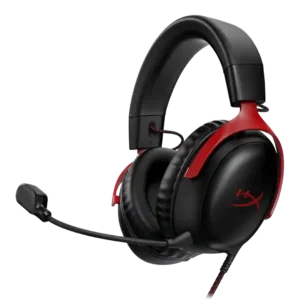
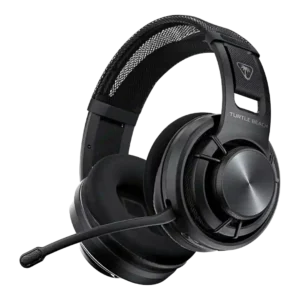
A review explicitly notes that the wireless model lacks active noise cancellation.
There is no active noise cancellation. The open-back design prioritizes airflow and natural sound, so it can’t cancel distractions the way closed-back ANC headsets can.
Android compatibility looks inconsistent from the single directly relevant review, working on one Android device but not another.
Works on Android over Bluetooth and supports the Swarm II mobile app, but several advanced audio features are PC-centric and mobile options can feel limited.
Ngenuity app support exists and can be useful, but the experience varies by platform and setup.
Swarm II provides firmware updates plus access to EQ, mic controls, spatial options, and game/chat features. Stability and feature parity vary by platform, and some users report connection or preset issues.
One review says audio cues stay in sync with on-screen action, supporting good AV sync on the wireless link.
Audio latency is best over the 2.4GHz dongle and 3.5mm wired mode. Bluetooth is fine for casual listening but not ideal when timing is critical.
Bass tuning is divisive. Some reviews describe deep, impactful, or boosted bass, while others say the low end lacks punch or warmth.
Bass is generally controlled rather than thunderous. Some reviews find it punchy enough for games, but many note weaker sub-bass and less impact for explosions or bass-heavy music.
Battery life is one of the standout features, with repeated reports in the roughly 100 to 120 hour range and very slow drain.
Battery life is repeatedly praised, usually meeting the advertised ~50 hours and sometimes exceeding it, so most users can go many sessions between charges.
Wireless reviews repeatedly criticize the lack of Bluetooth connectivity.
Bluetooth generally works reliably for calls and media, but it’s higher latency than the 2.4GHz dongle and switching between sources can take a couple seconds. True simultaneous game audio (2.4GHz) plus Bluetooth mixing isn’t supported. You can toggle/QuickSwitch between sources instead.
Build quality is a major recurring strength, with repeated praise for sturdy materials, durability, and robust construction.
Build is mostly plastic to keep weight low and is generally described as solid and flexible. It doesn’t feel as premium as metal-framed competitors, and the unusual suspension design raises long-term questions for some.
On-headset controls are generally well received, with easy access, useful mute and volume placement, and good dial feel.
Controls are mostly on one earcup with a prominent volume wheel. Some find them easy to locate, while others dislike similarly shaped buttons or coarse volume steps.
Cable impressions are mixed: some reviews praise low microphonics or only minor noise, while another hears noticeable cable noise.
Pack-in cables are commonly braided, longer than average, and better than typical bundled cables, drawing positive comments across multiple reviews.
Wireless bundles include a pouch or bag, but usefulness is mixed because the bag offers little real protection.
The included pouch/bag is useful for scratch protection but isn’t a structured case and offers limited impact protection.
The wireless model charges over USB-C.
USB-C charging is convenient, with multiple reviews citing fast charging (often roughly under a couple hours) and the ability to keep using the headset while it charges.
Clamping force is repeatedly described as just right—secure without excess pressure.
Clamp is typically gentle and glasses-friendly, but the same light clamp can reduce stability for people who move around a lot.
Long-session comfort is one of the clearest strengths, though one review still found the pleather hot and sticky after hours.
Comfort is a standout theme: lightweight build, breathable pads, and low clamp keep it easy to wear for hours, especially for glasses wearers.
One review specifically criticizes dongle-only connectivity as restrictive versus more flexible alternatives.
One review says the wireless connectivity model limits what devices and use cases the headset works well with.
Design feedback is strongly positive, with reviewers calling it sleek, premium, or visually appealing.
A restrained, modern look with distinctive open-back grilles and floating cups. It reads more functional than flashy, which some prefer and others find plain.
Multiple wired reviews explicitly criticize the fixed cable and wanted a detachable option.
The detachable mic design is viewed positively for flexibility and muting convenience.
The detachable boom mic and flip-to-mute are convenient for switching between gaming and casual use. A few mention the boom length or ergonomics as minor annoyances.
The headset relies on a USB dongle; some see that as appropriate for gaming, while others dislike being tied to it.
The included 2.4GHz USB-A dongle is the preferred mode for low-latency gaming and tends to be stable, while also enabling the best PC-only audio options.
Earpads are widely praised as plush, deep, and memory-foam cushioned.
Earpads are described as plush, breathable, and comfortable, often using fabric rather than pleather to reduce heat. Many note they’re removable for cleaning or replacement.
Limited swivel or rotation is a recurring complaint across both wired and wireless impressions.
The earcups don’t swivel flat, which makes it less convenient to rest around the neck or pack neatly compared with headsets that fold or rotate.
One review notes the pads are removable and easy to swap for alternative options.
EQ customization is a clear strength on supported platforms, with custom profiles and 10-band adjustment repeatedly mentioned.
A 10-band EQ with custom presets is a core strength (especially on PC). A few reviewers report EQ-related artifacts or odd behavior with non-default profiles.
One review explicitly praises the comfort and seal as a standout strength.
The overall tuning is described as mostly balanced or neutral, though one reviewer felt it could sound flat or unexciting.
Tuning is broadly balanced with a mild upper-frequency emphasis that favors detail and competitive cues. Multiple notes point to less sub-bass than many closed-backs and occasional treble unevenness.
One review specifically complains that game-chat mix is missing.
Game/chat mix is typically handled in the companion software rather than with a dedicated hardware dial, which is workable on PC but less convenient mid-game.
One review says the headband adjustment has tactile bumps but could be clearer or more refined.
Adjustment relies on a suspension/velcro system rather than sliding yokes. It fits many heads well, but it’s less granular and some worry about long-term velcro tension.
One detailed build review says the revised hinge and buckle design looks less likely to split than the older model.
The floating, band-suspended earcup design avoids traditional hinge stress points and feels robust in early use, but it’s unconventional enough that long-term wear remains an unknown.
Accessory bundles vary, but common inclusions are the microphone, dongle or adapter, charging cable, and sometimes a bag; one wired review also notes a missing pouch.
The bundle typically includes the dongle, USB-C cable, 3.5mm cable, detachable mic (often with a windscreen), and a pouch. Braided cables and overall completeness get frequent praise.
One review found the presentation separated musical parts cleanly enough to appreciate individually.
Instrument and layer separation is strong, helping complex mixes and busy game scenes remain distinct rather than blending together.
One review says the drivers still hold together well when the gain is pushed to max.
Clarity at high volume is generally strong with little distortion, though a few reports suggest certain EQ modes can introduce artifacts, especially at lower listening levels.
Microphone quality is a standout strength across the review set, with repeated praise for clarity and overall performance.
Noise rejection is a major microphone strength, with multiple reviews noting reduced background noise from fans, keyboards, room noise, or other people.
Noise handling is generally good with adjustable noise gates and processing, but some reviewers hear occasional dips or artifacts when noise reduction is too aggressive.
Call and voice-chat performance is consistently strong, with clear voice chat, clean artifacts, and positive Teams-style feedback.
Mic clarity is above average for a gaming headset, especially over the dongle/high-bandwidth modes. Over Bluetooth it can sound more compressed and less full.
Midrange is a weaker part of the tuning in the supporting reviews, with mids described as relatively weak, recessed, or in the background.
Midrange is typically clear and present, keeping dialogue and key cues intelligible even in busy scenes.
Across wired and wireless reviews, compatibility coverage is broad for PC, PlayStation, Switch, phones, mobile devices, and similar USB or 3.5mm connections.
Connectivity is flexible via 2.4GHz dongle, Bluetooth, and 3.5mm analog, covering PC, PlayStation, Switch, and phones well. Xbox support is the main caveat because it isn’t wireless.
Passive isolation is a recurring strength, with the earcups blocking ambient noise well even without ANC.
Passive isolation is minimal by design. Sound leaks out and outside noise comes in, so it’s poorly suited to shared rooms, offices, or commuting.
One review says the wired box uses molded inserts that hold the headset securely.
Portability is limited by the bulky design and lack of folding or rotating travel features.
Positional performance is mixed. Some reviews say cues are easy to place, while others found directionality only adequate or clearly weak.
Preset quality is inconsistent: some reviews like having preset choices, while others call them junk or nonfunctional.
The default Signature Sound profile is widely considered the most balanced and reliable. Superhuman Hearing and other presets can sound artificial or overly bright, and some profiles behave inconsistently.
Multiple reviews mention that the pads can be swapped, including fit with replacement or universal pads.
Earpads are removable and replacements/mod options are available or expected, which helps hygiene and long-term maintenance.
One review positively notes working mic monitoring or sidetone through Ngenuity.
Mic monitoring/sidetone is adjustable and often described as hiss-free, but several reviewers found it too quiet unless set very high or noted it doesn’t feel especially strong.
Setup and software impressions are mixed. Some reviews found setup easy or smooth, while others ran into detection or app issues.
Setup is straightforward when everything behaves, but multiple reviews mention finicky detection, firmware/update hiccups, or settings that don’t persist, making the experience inconsistent.
One review specifically credits the fit and seal with low sound leakage.
Sound quality trends positive for gaming and general media, but it is not universally loved; some reviews praise detail and overall presentation while others call it mediocre or flat.
Overall sound quality is a highlight: detailed, natural-leaning audio with strong positional clarity. The most common caveats are lighter low-end impact and occasional brightness depending on content and EQ.
Soundstage is usually described as narrow or merely average rather than expansive.
Soundstage is notably wide and airy thanks to the open-back cups, creating a speaker-like sense of space that helps immersion and directional awareness in quiet rooms.
Spatial audio is present and sometimes helpful, but reactions are mixed: some found it precise or more immersive, while others found DTS subtle or poor.
PC-focused spatial features (often Waves 3D) can add useful directionality, though results vary by game and some listeners prefer it off for the cleanest, most natural presentation.
One review says the light clamp still keeps the headset in place securely.
Stability is mixed: it can sit comfortably when you’re stationary, but the light clamp and floating cups may shift with head turns or quick movement.
Treble generally comes through as clear and crisp, though one review also notes extra brightness in the highs.
Treble tends to lean bright for detail and cue pickup, but several reviews mention occasional sharpness or sibilance, especially with certain presets or EQ changes.
USB-C support appears in the included adapter and cable arrangement.
Charges over USB-C; reviewers treat the USB-C connection as power/charging rather than a full-featured wired audio link.
Value is mixed overall: several reviews say the headset is worth the money or very strong at $100, while others are less convinced at higher wireless pricing.
Volume headroom is strong, with reviewers repeatedly saying the headset gets very loud.
Overall loudness is adequate for many, but multiple reviewers note an odd volume curve or that it needs higher percentage settings to reach their preferred listening level.
Weight is generally seen as light or manageable, though one review still noted ear fatigue and another called it middling rather than ultralight.
Weight is consistently noted as very low for a wireless headset (around 300g), helping it feel almost invisible during long sessions.
Low-latency wireless performance is consistently praised, with reviewers reporting little to no lag.
Wireless reviews consistently say Xbox support is missing.
Xbox use is described as wired-only through the controller via 3.5mm, with no native Xbox wireless support.