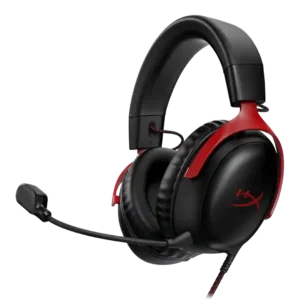
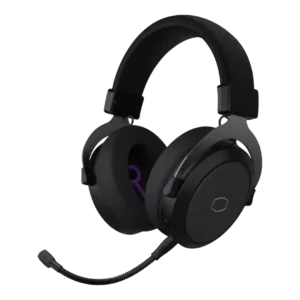
A review explicitly notes that the wireless model lacks active noise cancellation.
There is no strong case for active noise canceling here; one included review flatly says the headset is not noise-canceling.
Android compatibility looks inconsistent from the single directly relevant review, working on one Android device but not another.
Android support is explicitly listed for the CH351, making mobile pairing part of its intended use case.
Ngenuity app support exists and can be useful, but the experience varies by platform and setup.
Software support is inconsistent in the included reviews, ranging from no companion app at all to optional PC software on another Cooler Master unit.
One review says audio cues stay in sync with on-screen action, supporting good AV sync on the wireless link.
Bass tuning is divisive. Some reviews describe deep, impactful, or boosted bass, while others say the low end lacks punch or warmth.
Bass is a recurring strength, delivering weighty explosions and energetic low end without fully burying other cues.
Battery life is one of the standout features, with repeated reports in the roughly 100 to 120 hour range and very slow drain.
Wireless reviews repeatedly criticize the lack of Bluetooth connectivity.
Wireless stability is the CH351's biggest weakness, with persistent static and buzzing reported even during active use.
Build quality is a major recurring strength, with repeated praise for sturdy materials, durability, and robust construction.
Material quality looks decent for the money, though not every component feels equally premium.
On-headset controls are generally well received, with easy access, useful mute and volume placement, and good dial feel.
Control usability varies sharply, from simple inline buttons on one review unit to a crowded, error-prone earcup layout on the other.
Cable impressions are mixed: some reviews praise low microphonics or only minor noise, while another hears noticeable cable noise.
The CH331's permanently attached fabric-wrapped cable is long, practical for desk use and presented as a solid part of the package.
Wireless bundles include a pouch or bag, but usefulness is mixed because the bag offers little real protection.
The wireless model charges over USB-C.
Clamping force is repeatedly described as just right—secure without excess pressure.
Long-session comfort is one of the clearest strengths, though one review still found the pleather hot and sticky after hours.
Long-session comfort is mixed: soft pads help, but weight and head pressure are recurring complaints.
One review specifically criticizes dongle-only connectivity as restrictive versus more flexible alternatives.
One review says the wireless connectivity model limits what devices and use cases the headset works well with.
Design feedback is strongly positive, with reviewers calling it sleek, premium, or visually appealing.
Styling lands well in both reviews, whether you prefer playful colorways or a more subdued black-on-black look.
Multiple wired reviews explicitly criticize the fixed cable and wanted a detachable option.
Cable convenience is mixed across the included reviews, with one headset using a removable aux cable and the other a fixed cord.
The detachable mic design is viewed positively for flexibility and muting convenience.
A detachable boom mic adds welcome flexibility for switching between gaming use and a cleaner everyday setup.
The headset relies on a USB dongle; some see that as appropriate for gaming, while others dislike being tied to it.
The CH351 includes a 2.4GHz USB-C dongle, but the wireless experience is undermined by static noise.
Earpads are widely praised as plush, deep, and memory-foam cushioned.
The ear pads are a consistent positive, described as soft faux/protein leather and generally comfortable on the ears.
Limited swivel or rotation is a recurring complaint across both wired and wireless impressions.
Cup movement is limited overall; the CH331 cups pivot outward but do not offer especially generous articulation.
One review notes the pads are removable and easy to swap for alternative options.
EQ customization is a clear strength on supported platforms, with custom profiles and 10-band adjustment repeatedly mentioned.
EQ customization is weak overall, either missing entirely or present but not especially effective.
One review explicitly praises the comfort and seal as a standout strength.
The overall tuning is described as mostly balanced or neutral, though one reviewer felt it could sound flat or unexciting.
The drivers reproduce both heavy bass and finer ambient details well enough to sound convincing, even if the signature is not neutral.
One review specifically complains that game-chat mix is missing.
One review says the headband adjustment has tactile bumps but could be clearer or more refined.
The CH331 offers useful headband extension, giving it enough adjustment range for fit tuning.
One detailed build review says the revised hinge and buckle design looks less likely to split than the older model.
Accessory bundles vary, but common inclusions are the microphone, dongle or adapter, charging cable, and sometimes a bag; one wired review also notes a missing pouch.
The CH351 package is well equipped with a dongle, aux cable and detachable microphone.
One review found the presentation separated musical parts cleanly enough to appreciate individually.
The reviews point to good layer separation, making footsteps, ambience and soundtrack elements easier to distinguish.
Microphone functionality is a core feature across the included reviews, even though the exact implementation differs.
One review says the drivers still hold together well when the gain is pushed to max.
Microphone quality is a standout strength across the review set, with repeated praise for clarity and overall performance.
Noise rejection is a major microphone strength, with multiple reviews noting reduced background noise from fans, keyboards, room noise, or other people.
The CH351 mic does a notably good job suppressing nearby household noise in the included test.
Call and voice-chat performance is consistently strong, with clear voice chat, clean artifacts, and positive Teams-style feedback.
On the CH351, the detachable mic is clear and loud enough for chat or streaming without sounding thin.
Midrange is a weaker part of the tuning in the supporting reviews, with mids described as relatively weak, recessed, or in the background.
Midrange detail is solid for the class, with dialogue and vocal texture coming through better than a typical one-note budget tuning.
Across wired and wireless reviews, compatibility coverage is broad for PC, PlayStation, Switch, phones, mobile devices, and similar USB or 3.5mm connections.
The CH351 stands out for broad platform support across consoles, computers and mobile devices.
Passive isolation is a recurring strength, with the earcups blocking ambient noise well even without ANC.
Passive isolation is limited, with one review explicitly noting that room sounds still bleed through.
One review says the wired box uses molded inserts that hold the headset securely.
Portability is limited by the bulky design and lack of folding or rotating travel features.
Portability is not a strength, as the included evidence points to a desk-first design rather than a travel-friendly one.
Positional performance is mixed. Some reviews say cues are easy to place, while others found directionality only adequate or clearly weak.
Preset quality is inconsistent: some reviews like having preset choices, while others call them junk or nonfunctional.
Preset tuning is not a standout, with profiles either absent or too similar and bass-skewed to feel useful.
Multiple reviews mention that the pads can be swapped, including fit with replacement or universal pads.
RGB lighting exists on the CH331, but control is minimal and limited to basic on or off behavior rather than real customization.
One review positively notes working mic monitoring or sidetone through Ngenuity.
Setup and software impressions are mixed. Some reviews found setup easy or smooth, while others ran into detection or app issues.
Basic setup is easy enough, but the overall experience is weakened by limited customization and, on the CH351, awkward controls.
One review specifically credits the fit and seal with low sound leakage.
Sound quality trends positive for gaming and general media, but it is not universally loved; some reviews praise detail and overall presentation while others call it mediocre or flat.
The included reviews consistently praise big, immersive gaming sound, although the CH351's wireless buzzing drags down the overall experience. Both reviews paint wired operation as a strong scenario, with seamless connection and better overall sound performance.
Soundstage is usually described as narrow or merely average rather than expansive.
Wide staging is one of the clearest strengths, helping worlds feel larger and positional cues easier to place.
Spatial audio is present and sometimes helpful, but reactions are mixed: some found it precise or more immersive, while others found DTS subtle or poor.
Spatial or virtual surround performance is a real highlight, adding convincing depth and directionality in games.
One review says the light clamp still keeps the headset in place securely.
On-head stability is only average, with one review noting that the headset can slide around during movement.
Treble generally comes through as clear and crisp, though one review also notes extra brightness in the highs.
Treble detail is good enough to keep smaller environmental sounds audible, including birds, crackling fire and distant effects.
USB-C support appears in the included adapter and cable arrangement.
USB-C is part of the CH351 setup, appearing in its dongle and port layout.
Value is mixed overall: several reviews say the headset is worth the money or very strong at $100, while others are less convinced at higher wireless pricing.
Volume headroom is strong, with reviewers repeatedly saying the headset gets very loud.
Volume output is described as lively and forceful, with enough punch to make games and music sound exciting.
Weight is generally seen as light or manageable, though one review still noted ear fatigue and another called it middling rather than ultralight.
Both reviews call the headset noticeably heavy, which becomes more obvious the longer you wear it.
Low-latency wireless performance is consistently praised, with reviewers reporting little to no lag.
Wireless reviews consistently say Xbox support is missing.
Xbox support is not a strength in the included evidence, and one review specifically steers Xbox shoppers toward other models.