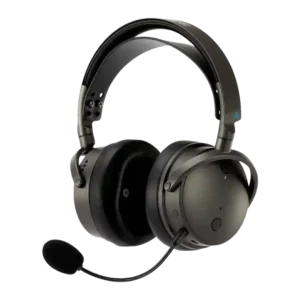
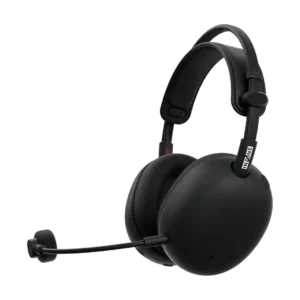
Average score
P1
Product 1: Audeze Maxwell
3.9
P2
Product 2: Sony INZONE H9 II Wireless...
3.7
Active noise cancellation
P1
Product 1: Audeze Maxwell
1.5
Active noise cancellation is absent, and reviewers who care about ANC treat that omission as a real limitation.
P2
Product 2: Sony INZONE H9 II Wireless...
4.5
Reviewers consistently liked ANC, often calling it strong for a gaming headset, though one found it merely good rather than headphone-class.
App
P1
Product 1: Audeze Maxwell
2.7
The app/software experience is mixed-to-negative overall, ranging from stable but basic to buggy, clunky, incomplete, or unreliable.
P2
Product 2: Sony INZONE H9 II Wireless...
3.2
App impressions were mixed: reviewers liked mobile EQ access and simple setup, but repeatedly called the software basic, barebones, or awkward.
Audio-video sync accuracy
P1
Product 1: Audeze Maxwell
5.0
Audio-video sync evidence is positive where tested, with no noticeable lags or delays during games and movies.
P2Product 2: Sony INZONE H9 II Wireless...
No score yetBass performance
P1
Product 1: Audeze Maxwell
4.7
Bass is usually praised as punchy, detailed, and controlled, though a few reviewers note it is not a boomy basshead tuning without EQ.
P2
Product 2: Sony INZONE H9 II Wireless...
3.4
Bass was context-dependent: explosions and weapon fire had punch, but some reviewers found default bass muddy, weak, or hard to tune without hurting clarity.
Battery
P1
Product 1: Audeze Maxwell
4.9
Battery life receives near-universal praise, with reviewers repeatedly describing the 80-hour class endurance as impressive or exceptional.
P2
Product 2: Sony INZONE H9 II Wireless...
2.7
Battery life was the recurring tradeoff, with reviewers calling 30 hours decent or disappointing versus premium rivals, even when real-world tests exceeded the claim.
Bluetooth
P1
Product 1: Audeze Maxwell
2.0
Bluetooth performance has limited scored evidence here, with one reviewer reporting annoying stutter at distance.
P2
Product 2: Sony INZONE H9 II Wireless...
4.5
Bluetooth was generally reliable when discussed, with quick pairing and dependable performance alongside the dongle.
Build quality
P1
Product 1: Audeze Maxwell
4.4
Build quality is mostly praised as sturdy, premium, or tank-like, but early-unit failures and cosmetic wear create some caution.
P2
Product 2: Sony INZONE H9 II Wireless...
3.9
Build quality was generally solid and flexible, though some reviewers felt the lightweight plastic made it less premium.
Built-in DAC and hi-res playback
P1
Product 1: Audeze Maxwell
4.5
Built-in DAC and hi-res playback evidence is positive but limited, centered on high-bitrate decoding without external gear.
P2Product 2: Sony INZONE H9 II Wireless...
No score yetButton control usability
P1
Product 1: Audeze Maxwell
3.9
Physical controls are often appreciated, but reviewers also mention a learning curve, confusing multifunction wheels, or poor placement.
P2
Product 2: Sony INZONE H9 II Wireless...
4.1
Controls were mostly praised for clear layout and tactile buttons, but some reviewers disliked chimes or accidental volume-wheel behavior.
Cable quality
P1
Product 1: Audeze Maxwell
2.5
Cable quality has limited scored evidence; one reviewer calls the included USB-C cable very basic.
P2Product 2: Sony INZONE H9 II Wireless...
No score yetCarry case quality
P1
Product 1: Audeze Maxwell
1.0
Carry case quality is effectively poor because one reviewer explicitly criticized the absence of any case or bag.
P2
Product 2: Sony INZONE H9 II Wireless...
3.6
The included pouch was useful and nicer than expected for several reviewers, but others wished Sony had included a hardshell case.
Charging
P1
Product 1: Audeze Maxwell
4.8
Charging is praised because short top-ups provide many hours or a full day of additional use.
P2
Product 2: Sony INZONE H9 II Wireless...
3.3
Quick charging helped, but charging was not flawless because one review noted it cannot play while charging.
Clamping force comfort
P1
Product 1: Audeze Maxwell
4.2
Clamping force is generally viewed positively because it seals without feeling overly tight in most reports.
P2
Product 2: Sony INZONE H9 II Wireless...
2.5
Clamp comfort was light, but one reviewer found the weak clamp let the earcups shift while moving.
Codec support
P1
Product 1: Audeze Maxwell
4.4
Codec support is well regarded because reviewers value LDAC, LE Audio, LC3/LC3plus, and other higher-quality or future-facing options.
P2Product 2: Sony INZONE H9 II Wireless...
No score yetComfort during long use
P1
Product 1: Audeze Maxwell
4.0
Long-session comfort is mostly positive despite heat and weight caveats; many reviewers could wear it for hours after adjusting.
P2
Product 2: Sony INZONE H9 II Wireless...
4.8
Comfort was the strongest consensus point, with repeated praise for long-session wear, lightweight fit, and reduced pressure.
Connectivity versatility
P1
Product 1: Audeze Maxwell
4.4
Connectivity versatility is a major strength because reviewers value Bluetooth, dongle, USB-C, analog, and broad platform support, despite switching caveats.
P2
Product 2: Sony INZONE H9 II Wireless...
3.9
Connectivity was versatile across dongle, Bluetooth, and wired use, though one reviewer found the platform behavior finicky.
Console compatibility limitations
P1
Product 1: Audeze Maxwell
2.5
Console compatibility has real caveats around buying the correct version and uncertain cross-platform wireless behavior.
P2
Product 2: Sony INZONE H9 II Wireless...
2.5
Console limitations centered on missing or restricted console-side features, including no Xbox support and limited PS5 game/chat integration.
Design and Aesthetics
P1
Product 1: Audeze Maxwell
4.1
Design and aesthetics are mostly praised as understated, premium, sleek, and non-gamer-looking, though one reviewer finds it clunky.
P2
Product 2: Sony INZONE H9 II Wireless...
4.4
Reviewers liked the understated, non-gamer design and lighter redesign, often saying it looked cleaner and more wearable than typical gaming headsets.
Detachable cable convenience
P1
Product 1: Audeze Maxwell
4.0
The wired option is valued as a useful fallback or flexibility feature, even though the headset still needs power.
P2
Product 2: Sony INZONE H9 II Wireless...
4.0
The added wired 3.5mm option was positively judged as useful for handhelds and controllers.
Detachable microphone convenience
P1
Product 1: Audeze Maxwell
4.5
The detachable microphone is valued because it makes the headset easier to use as headphones for music or travel.
P2
Product 2: Sony INZONE H9 II Wireless...
4.0
The detachable mic was usually seen as convenient for travel or everyday headphone use, though one reviewer preferred a stowable design.
Dongle
P1
Product 1: Audeze Maxwell
3.2
Dongle impressions are mixed, with praise for range or form factor offset by artifacting, connection failures, or USB-controller sensitivity.
P2
Product 2: Sony INZONE H9 II Wireless...
4.0
The USB-C dongle was viewed as easy to switch and useful for low-latency PC/console audio.
Ear cup padding quality
P1
Product 1: Audeze Maxwell
4.0
Earpad padding is often plush and comfortable, but repeated caveats mention heat, sweat, thinness, or firmness.
P2
Product 2: Sony INZONE H9 II Wireless...
4.3
Earpads received strong praise for depth, plushness, breathability, and long-wear comfort.
Ear cup swivel/rotation range
P1
Product 1: Audeze Maxwell
4.5
Ear cup swivel evidence is positive, with one reviewer noting the cups rested comfortably around the neck.
P2
Product 2: Sony INZONE H9 II Wireless...
4.3
Swiveling earcups were praised as unusually flexible and helpful for wearing around the neck or packing flat.
Earpad replacement ease
P1
Product 1: Audeze Maxwell
4.7
Earpad replacement is praised as easy, with several reviewers noting twist-off or easily removable pads.
P2
Product 2: Sony INZONE H9 II Wireless...
4.5
Earpad replacement looked easy in hands-on testing, with pads snapping back on without fuss.
Equalizer customization
P1
Product 1: Audeze Maxwell
4.1
EQ customization is valued because the headset responds well to EQ, though reviewers criticize clunky interfaces and occasional access limitations.
P2
Product 2: Sony INZONE H9 II Wireless...
4.0
EQ customization was useful and sometimes necessary, with reviewers appreciating sliders but needing them to fix non-FPS sound.
Fit/seal reliability
P1
Product 1: Audeze Maxwell
4.0
Fit and seal reliability are praised where discussed, especially for maintaining passive isolation.
P2
Product 2: Sony INZONE H9 II Wireless...
3.5
Fit and seal reliability were mixed: the low-clamp design improved comfort but could shift for one reviewer, while another found it more secure than the predecessor.
Footstep sound level scaling feature
P1
Product 1: Audeze Maxwell
3.0
The footsteps-focused feature is useful but not universally ideal; one reviewer preferred more custom EQ control for competitive FPS use.
P2
Product 2: Sony INZONE H9 II Wireless...
4.5
FPS cue tuning was often effective for footsteps and gunfire, but not every reviewer found it class-leading.
Frequency response accuracy
P1
Product 1: Audeze Maxwell
5.0
Frequency response evidence is highly positive, with reviewers highlighting target matching, linearity, and controlled tuning.
P2
Product 2: Sony INZONE H9 II Wireless...
2.0
Frequency response accuracy was criticized by measurement-focused reviewers for deviating from a natural target curve.
Game/Chat balance control
P1
Product 1: Audeze Maxwell
4.8
Game/chat balance control is repeatedly praised for quickly adjusting game and voice levels without heavy software dependence.
P2
Product 2: Sony INZONE H9 II Wireless...
3.8
Game/chat controls were appreciated on PC, but PS5 limitations reduced their usefulness for console players.
Headband adjustability
P1
Product 1: Audeze Maxwell
2.6
Headband adjustability is one of the clearest weaknesses, with reviewers criticizing the limited notches, awkward strap, and imperfect fit granularity.
P2
Product 2: Sony INZONE H9 II Wireless...
4.3
Headband adjustability was usually praised as clever and secure, though one reviewer found fine adjustment tricky while wearing it.
Hinge durability
P1
Product 1: Audeze Maxwell
1.0
Hinge durability evidence is negative due to a reported early unit breaking during normal use.
P2Product 2: Sony INZONE H9 II Wireless...
No score yetIncluded accessories
P1
Product 1: Audeze Maxwell
4.5
Included accessories are praised for quality and usefulness, especially the included adapter and cables.
P2
Product 2: Sony INZONE H9 II Wireless...
3.5
Accessories were mostly adequate and sometimes appreciated, though one reviewer wished a USB-A adapter had been included.
Instrument separation
P1
Product 1: Audeze Maxwell
5.0
Instrument separation and detail retrieval are repeatedly praised, with reviewers noting clear layering in music, games, and busy mixes.
P2Product 2: Sony INZONE H9 II Wireless...
No score yetIntegrated microphone
P1
Product 1: Audeze Maxwell
2.3
Integrated microphone evidence is mostly negative, with several reviewers calling the built-in mics bad, compressed, or inferior to the boom mic.
P2
Product 2: Sony INZONE H9 II Wireless...
2.0
With the boom mic removed, reviewers noted the lack of integrated call microphones as a real everyday-use limitation.
LDAC
P1
Product 1: Audeze Maxwell
5.0
LDAC receives positive evidence, with one reviewer saying audio quality remained exceptional in LDAC testing.
P2Product 2: Sony INZONE H9 II Wireless...
No score yetMaximum volume clarity
P1
Product 1: Audeze Maxwell
5.0
Maximum-volume clarity is praised because highs remain clean and the headset avoids harshness or distortion when turned up.
P2
Product 2: Sony INZONE H9 II Wireless...
4.0
Maximum-volume clarity was praised in limited evidence, with reviewers noting loud playback without harsh highs.
Microphone
P1
Product 1: Audeze Maxwell
4.1
Microphone performance is mixed: the boom mic can be clear or strong, but some reviewers call it muffled, merely serviceable, or not creator-grade.
P2
Product 2: Sony INZONE H9 II Wireless...
4.3
The detachable boom microphone was widely praised, though some reviews found it merely decent or serviceable rather than elite.
Microphone noise reduction
P1
Product 1: Audeze Maxwell
4.7
Microphone noise reduction is one of the most praised non-audio features, repeatedly removing keyboard, fan, vacuum, and ambient noise effectively.
P2
Product 2: Sony INZONE H9 II Wireless...
4.3
Microphone noise reduction was usually strong, especially for isolating voice and rejecting background noise, but not perfect in a loud event setting.
Microphone quality for calls
P1
Product 1: Audeze Maxwell
3.0
Call and chat microphone evidence is adequate rather than studio-grade, with the boom mic considered good enough for work calls or gaming.
P2
Product 2: Sony INZONE H9 II Wireless...
4.0
Call and meeting use was viewed positively, with reviewers saying the mic was reliable for work calls and better than earbuds.
Midrange clarity
P1
Product 1: Audeze Maxwell
4.4
Midrange clarity is mostly described as clear, natural, or accurate, with occasional criticism that gaming tuning can make vocals sound thin or recessed.
P2
Product 2: Sony INZONE H9 II Wireless...
2.5
Midrange clarity was a weak point in music, with lead instruments sometimes lacking presence.
Multi-platform compatibility
P1
Product 1: Audeze Maxwell
5.0
Multi-platform compatibility is a strength where discussed, with reviewers emphasizing broad support across common gaming and media devices.
P2
Product 2: Sony INZONE H9 II Wireless...
4.3
Multi-platform use was a strength for PC, PS5, Switch, mobile, and mixed use, despite separate Xbox and PS5 feature caveats.
Multipoint connectivity reliability
P1
Product 1: Audeze Maxwell
2.4
Multipoint and wireless source handling are mixed: Bluetooth multipoint can help, but lack of simultaneous Bluetooth plus dongle playback frustrates several reviewers.
P2
Product 2: Sony INZONE H9 II Wireless...
4.3
Simultaneous or dual-source audio was valued, but the lack of true multipoint kept the score from being uniformly high.
Noise isolation (passive)
P1
Product 1: Audeze Maxwell
4.0
Passive isolation is mostly praised thanks to the closed cups and pads, though one reviewer found outside sound cut through more than expected.
P2
Product 2: Sony INZONE H9 II Wireless...
3.5
Passive isolation was decent to good, though the loose lightweight seal made ANC more important.
Packaging quality
P1
Product 1: Audeze Maxwell
5.0
Packaging quality has limited but positive evidence, with one reviewer calling the packaging luxurious.
P2Product 2: Sony INZONE H9 II Wireless...
No score yetPortability/foldability
P1
Product 1: Audeze Maxwell
2.5
Portability is limited by the large, heavy cups, even when they fold flat.
P2
Product 2: Sony INZONE H9 II Wireless...
3.3
Portability was mixed: the headset folds flat and has a pouch, but it lacks compact folding and a hardshell case.
Positional audio accuracy
P1
Product 1: Audeze Maxwell
4.2
Positional audio is often excellent for gaming, but competitive-focused reviewers note weaker verticality or pinpoint footstep accuracy than some rivals.
P2
Product 2: Sony INZONE H9 II Wireless...
4.3
Positional audio was a major strength for gaming, especially horizontal imaging and footsteps, though vertical placement was less precise in one review.
Preset EQ profile quality
P1
Product 1: Audeze Maxwell
3.5
Preset EQ profiles are context-dependent: some gaming presets help, while music performance can suffer and some profiles sound poor.
P2
Product 2: Sony INZONE H9 II Wireless...
2.8
FPS EQ presets helped with footsteps for some reviewers but were criticized for being too narrowly focused and sometimes muffling battle noise.
Replaceable earpads
P1
Product 1: Audeze Maxwell
5.0
Replaceable earpads receive positive evidence because reviewers describe the pads as easy to remove, replace, or swap.
P2
Product 2: Sony INZONE H9 II Wireless...
4.5
Replaceable earpads were positively demonstrated in one hands-on review, where they snapped out easily.
Sidetone adjustment quality
P1
Product 1: Audeze Maxwell
1.9
Sidetone is the most consistently criticized feature, with noise, feedback, static, and bugs outweighing one positive report about loud monitoring.
P2
Product 2: Sony INZONE H9 II Wireless...
2.3
Sidetone adjustment was a weak spot, with low defaults and robotic or shrill sound when raised too high.
Smudge resistance
P1
Product 1: Audeze Maxwell
2.0
Smudge resistance is weak in the one scored review, which says the cups show oil after handling.
P2
Product 2: Sony INZONE H9 II Wireless...
1.8
Smudge resistance was poor, with reviewers noting the exterior picked up marks easily.
Software/setup simplicity
P1
Product 1: Audeze Maxwell
3.3
Setup simplicity is mostly positive for plug-and-play use and firmware guidance, though some reviewers criticize broader UX/app friction.
P2
Product 2: Sony INZONE H9 II Wireless...
4.0
Setup was often easy, but broader software simplicity was mixed because some reviewers found the app basic or confusing.
Sound quality
P1
Product 1: Audeze Maxwell
5.0
Reviewers consistently frame sound quality as the Maxwell's core strength, often calling it best-in-class or audiophile-grade for a wireless gaming headset.
P2
Product 2: Sony INZONE H9 II Wireless...
3.9
Sound quality split reviewers: many loved gaming clarity and balance, while others found default tuning poor outside FPS games.
Soundstage width
P1
Product 1: Audeze Maxwell
4.0
Soundstage earns strong praise from several gaming-focused reviews, while audiophile and competitive reviewers describe it as merely adequate or narrower than some rivals.
P2
Product 2: Sony INZONE H9 II Wireless...
4.3
Soundstage width was generally positive, with reviewers hearing a wider or more open presentation in games.
Spatial audio
P1
Product 1: Audeze Maxwell
4.3
Spatial audio is usually a useful immersion bonus, especially on PS5 Tempest or Dolby, but some reviewers avoid it for competitive play.
P2
Product 2: Sony INZONE H9 II Wireless...
4.0
Spatial audio was useful on PS5 or through Sony tools, though one reviewer disliked the ear-photo setup process.
Stability
P1
Product 1: Audeze Maxwell
4.4
Stability is mostly strong for wireless range or physical fit, though Bluetooth distance artifacts appear in one review.
P2
Product 2: Sony INZONE H9 II Wireless...
4.5
Stability was positive in the limited evidence that directly judged it, especially compared with the previous model.
Transparency mode quality
P1
Product 1: Audeze Maxwell
5.0
Transparency-style passthrough is strongly praised in one review for realism and lack of harshness.
P2
Product 2: Sony INZONE H9 II Wireless...
2.2
Transparency or ambient mode was a common limitation; reviewers said it let sound in but was not good enough for real conversation.
Treble clarity
P1
Product 1: Audeze Maxwell
4.1
Treble is generally controlled and clear, but some reviewers hear too much brightness or less openness depending on EQ and use case.
P2
Product 2: Sony INZONE H9 II Wireless...
3.3
Treble clarity ranged from smooth and non-harsh to crunchy or muted, depending on reviewer and EQ.
USB-C
P1Product 1: Audeze Maxwell
No score yet
P2
Product 2: Sony INZONE H9 II Wireless...
4.0
USB-C added useful convenience through the dongle and charging, especially for low-latency use across devices.
Value for money
P1
Product 1: Audeze Maxwell
4.5
Value for money is strongly positive overall: many reviewers call the price justified despite acknowledging the upfront cost.
P2
Product 2: Sony INZONE H9 II Wireless...
3.2
Value was the most divided area: fans thought the premium comfort and audio justified it, while critics said $350 had better alternatives.
Volume output
P1
Product 1: Audeze Maxwell
4.8
Volume output is considered ample, with reviewers describing the headset as plenty loud or unusually powerful.
P2
Product 2: Sony INZONE H9 II Wireless...
3.8
Volume output was generally adequate to strong, though one reviewer found it slightly quieter than the previous model.
Weight comfort
P1
Product 1: Audeze Maxwell
3.4
Weight comfort is the main ergonomic tradeoff: reviewers call it heavy, but many say the distribution keeps it usable for long sessions.
P2
Product 2: Sony INZONE H9 II Wireless...
4.9
Reviewers strongly agreed that the low weight improves comfort and makes the headset feel easy to wear for long sessions.
Wireless latency
P1
Product 1: Audeze Maxwell
4.5
Wireless latency is generally low enough for gaming, though reviewers occasionally report small lag or system-specific issues.
P2
Product 2: Sony INZONE H9 II Wireless...
4.5
Wireless latency evidence was positive where judged, especially through the 2.4GHz dongle for lag-free gaming audio.
Xbox compatibility
P1
Product 1: Audeze Maxwell
4.3
Xbox compatibility favors the Xbox version for broader platform support and Dolby Atmos, but PlayStation support may carry risk or limitations.
P2
Product 2: Sony INZONE H9 II Wireless...
1.0
Xbox compatibility was clearly poor because reviewers noted the dongle mode does not work with Xbox systems.