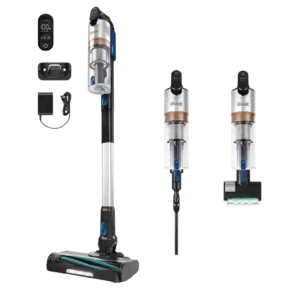
The included accessory set is minimal but useful, centering on a combi/crevice-style tool for corners, cobwebs, and tighter spaces.
The included tool set is simple but useful, usually centered on a crevice tool or brush plus a mini motorized or upholstery tool and wall mount.
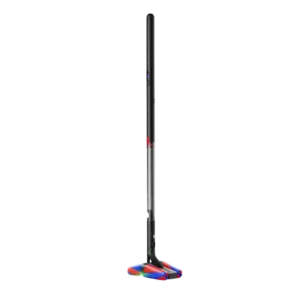
The PencilVac is repeatedly described as slim, stylish, futuristic, and technically impressive in a way that feels more design-forward than a typical stick vacuum.
Styling is functional rather than premium: one reviewer found it plain, while another preferred the LVAC-300's color scheme.
The connected features are present but limited, with reviews describing the app as mostly useful for maintenance prompts, setup, or updates rather than advanced automation.
In the available evidence, emptying created minimal upward dust blowback.
One review found it workable on a flatweave area rug, but only as a limited exception rather than a true rug-cleaning strength.
The limited area-rug evidence is positive, including one review that said it handled a sheepskin rug well without stalling.
Setup is consistently described as fast and straightforward, with simple assembly and very little packaging complexity to sort through.
Setup is repeatedly described as quick and uncomplicated, usually involving little more than snapping parts together and charging the battery.
One review noted that the vacuum automatically shuts off when caught on a rug edge, indicating some obstruction protection.
Battery design gets credit for being removable/swappable, but real-world runtime remains a frequent compromise and charging times vary across reviews.
Battery performance is solid rather than class-leading: several reviews cite around 40 minutes of floorhead use, removable battery charging, and roughly three-hour charge times.
The dust bin is tiny by design, but multiple reviews said the compression system lets it hold more than expected; capacity still remains a recurring tradeoff.
The bagless bin is easy to remove and empty, but one reviewer says the canister can fill relatively quickly.
Build impressions are split: one reviewer praised the overall build quality, while another criticized thin, flimsy-feeling plastic parts.
Build impressions are mixed: some reviewers call the materials average or cheap-feeling, while others say the parts feel solid and secure in use.
High-pile or general carpet cleaning is a recurring weakness, with reviewers saying it bogs down, stalls, or simply is not meant for carpet use.
High-pile or thicker carpet remains a weaker area, with multiple reviews reporting reduced pickup versus hard floors or thinner rugs.
Low-pile and flatweave performance is only modestly acceptable: several reviews say it can handle surface debris on mats or low pile, but not much more.
Low-pile carpet performance is generally positive for regular cleaning and routine debris pickup.
One review explicitly found mid-pile carpet pickup weak, with fine debris still visible after several passes.
In the available controlled test, medium-pile carpet deep-clean performance was excellent.
Clogging is a meaningful downside in tougher scenarios, with reviews citing blockage errors or inlet struggles on flour, larger debris, or heavier messes.
Clog resistance is not flawless; one review says the filters clog quickly and another notes hair going into the wheel area.
At least one reviewer directly preferred a conventional Dyson alternative for whole-home cleaning and stronger suction.
Compared with the LVAC-200 and category averages, the LVAC-300 shows a clear power advantage, though its value edge is less absolute at higher prices.
Controls are simple and easy to understand, with basic buttons and a small display for mode and remaining runtime.
Controls are simple and easy to understand, with useful status info on the display, but some reviewers dislike that it defaults back to Eco mode.
It converts effectively between full stick and handheld use, broadening what it can clean around the home.
Its grab-and-go format makes it easy to keep nearby for fast cordless spot cleaning instead of dragging out a larger machine.
Cordless operation is a major convenience point for fast room-to-room cleanup and homes where cords are a hassle.
One testing-focused review said crevice pickup underperformed relative to category expectations.
One review specifically says it pulled fine dust from grooves between floor planks.
The dual front-and-rear dust illumination is one of the most praised features, repeatedly called useful for revealing debris that would otherwise be missed.
The front LEDs do more than light the path; reviewers say they help reveal hidden dust and show what debris is left behind.
Once users adjust to the broom-like grip, ease of use is widely praised for quick daily cleaning and touch-ups.
Ease of use is one of the strongest recurring positives, with reviewers calling the vacuum simple, intuitive, and low-fuss.
Edge cleaning is mixed but often good: several reviews praise baseboard and side-edge pickup, while others note the pointed front head cannot always sit flush to walls.
Edge cleaning is a clear strength, with reviews highlighting strong pickup along baseboards, corners, and room edges.
Emptying gets mixed feedback: some reviewers call it clean and hygienic, while others say the sliding system can feel messy or overcomplicated.
Emptying is generally clean and controlled, with reviewers noting low mess and minimal dust blowback.
App alerts can notify users about filter cleaning, but this feature is described as basic rather than especially advanced.
Where reviewers tested or cited it, filtration was a strength, with sealed capture claims and one fog test reported as a clear pass.
Filtration is a recurring strength, with several reviews citing 5-stage or HEPA-style capture and generally clean air output, although one test said the system was only partially sealed.
The Fluffycones floorhead stands out for its multidirectional movement and unusual geometry, but the same design also creates edge and carpet tradeoffs.
The multi-surface floorhead is a core part of the design, with anti-tangle elements, debris channels, and easy roller access for maintenance.
A recurring complaint is that hair can form clumps and get ejected or left at the side of the head instead of being fully sucked in.
Despite the anti-tangle claims, a couple of reviews still report hair tangling or hair entering the wheel area.
On carpet, hair pickup is decent on easier surfaces, but thicker carpet is still more challenging.
Hair pickup on hard floors is generally good for visible surface hair, but some reviews note limits with thicker bundles or leftover clumps.
Available evidence points to good hair pickup on hard floors, including pet-hair cleanup.
The conical rollers are widely credited with resisting hair wrap, making tangling much less of an issue than on traditional brush bars.
Hair-wrap resistance is mostly good, but not perfect: many reviewers praise the anti-tangle design, while a few still report long-hair tangling or hair entering the wheel area.
Fine-dust pickup on hard floors is usually a strong point, though one lab-style review reported poor flour performance and blockages, so the praise is not universal.
Hard-floor fine-dust pickup is one of the strongest repeated positives, although a little residue can remain on some textured surfaces.
Large-debris pickup is mixed: some reviewers were impressed by cereal or similar debris on hard floors, while others said bigger messes quickly exposed the tiny bin or caused blockages.
Large debris pickup on hard floors is mixed; some reviewers report easy pickup, while others saw snowplowing or needed to adjust the head.
The front-and-rear floor lights were specifically praised for making hidden dust much easier to see during cleaning.
LED headlights are consistently described as useful for spotting dust under furniture and in dim areas.
Multiple reviews frame the PencilVac as a genuine engineering departure from typical stick vacuums and one of Dyson’s more distinctive ideas.
One review said children were eager to use it, largely because it is light and visually satisfying to clean with.
The slim, low-profile design helps it slide under furniture and work in tight, low-clearance areas.
One review explicitly praises how flat the vacuum can lie for low-clearance cleaning.
Routine upkeep looks manageable, usually centering on filter care, rinsing, and occasional cleaning rather than constant maintenance.
Maintenance is simple overall because parts and filters are washable, but one reviewer did encounter quick filter clogging.
Maneuverability is the clearest consensus strength: reviewers repeatedly describe it as nimble, light, smooth-swiveling, and unusually easy to guide around furniture and tight spaces.
Handling is a major strength, with repeated praise for low weight, agile steering, and easy one-handed use around furniture.
Measured noise was described as a typical high-pitched cordless-vacuum hum rather than an unusually quiet or loud standout.
Measured noise sits roughly in the low-60s to high-60s dB range, and reviewers generally call it quieter than many cordless vacuums.
At least one review praised the dock for giving the crevice tool a dedicated storage spot.
Onboard accessory storage is a weakness; reviewers say there is nowhere on the vacuum itself to keep the extra tools.
One review flagged extra-battery pricing as a notable ongoing cost if you need more runtime.
There are no bag costs, but spare filters and batteries are extras, and washable filters help reduce recurring spend.
Overall sentiment is positive when the PencilVac is judged as a lightweight hard-floor touch-up tool, but much more mixed when price, whole-home use, or broader capability are considered.
Overall sentiment is positive: most reviewers frame it as a capable, practical everyday cordless vacuum with a few clear limitations.
One review praised the packaging as compact, clearly labeled, and easy to unpack.
Packaging is described as compact, protective, and efficiently packed, though one reviewer noted it was not biodegradable.
Pet use is mixed: one review criticized the lack of a mini motorized pet tool, while another found it picked up visible pet hair well on hard floors.
Pet-focused evidence is positive: reviewers mention anti-tangle design, pet-hair-friendly attachments, and useful cleaning for pet homes, especially on upholstery and hard floors.
Value is one of the biggest sticking points: most reviewers call it expensive for a niche hard-floor cleaner, though a few felt the price made sense if you want this exact form factor.
Value is generally rated as good to fair, especially when discounted, though a few reviewers think the midrange price brings tougher competition.
One review criticized the app for pushing for permanent location access during setup.
Runtime is one of the most common compromises. Reviewers say it is usually enough for quick cleans or smaller spaces, but not generous for larger homes or whole-house runs.
Real-world runtime usually lands around 40 to 45 minutes with the floorhead in lower modes, while highest-power cleaning tends to fall around 10 to 17 minutes.
One review described the floorhead as creating a self-propelling feel that makes the vacuum easier to guide.
App-based firmware support exists, but the cited benefits are modest and focused more on updates and maintenance reminders than major new functionality.
Its low weight and long reach make it useful for stairs and baseboards, especially for quick touch-up cleaning.
The light body and mini motorized tool make it useful on stairs and other elevated cleaning spots.
The magnetic/freestanding dock is usually seen as convenient and compact, though a few reviewers found the base flimsy or not especially space-saving versus a normal stick vac.
Its self-standing design stands out across reviews, making pauses, storage, and upright parking easier than on many stick vacuums.
Reviews describe suction as sufficient for hard-floor touch-ups but clearly weaker than fuller-power stick vacuums and a poor fit for carpets or heavier messes.
Reviews consistently describe strong suction for the class, with above-average measured suction in controlled tests and good everyday airflow, though it is not sold as a premium deep-clean powerhouse.
Heavy-duty cleaning is not its lane; one review explicitly says it is only for small, light cleans.
Several reviewers say it is best for everyday or in-between cleaning rather than replacing a stronger full-size vacuum for heavy deep-clean jobs.
Review evidence consistently points to small apartments and smaller hard-floor homes as the most natural fit for this vacuum.
Its compact, self-standing form makes it easier to store and use in smaller homes or apartments.
One review specifically said the soft floorhead can get close to hard floors without risking scratches.
One review says the brush-style surface tool works well on delicate surfaces.
One review said the attachments clip in and out easily, suggesting quick tool changes once you know the system.
Tool changes are quick and straightforward, with reviewers highlighting easy snap-on swapping and simple roller removal for cleaning.
Its ability to lie flat or reach deep under furniture is a real advantage in everyday use.
Its flat-laying or low-profile head helps it reach under sofas and similar low-clearance furniture.
Above-floor cleaning is a mixed bag: the long wand is great for high cobwebs, baseboards, and awkward gaps, but several reviewers found close-range handheld-style jobs awkward.
Above-floor cleaning is a real strength thanks to the mini motorized tool and handheld format for sofas, bedding, curtains, car interiors, and upholstery.
Versatility is limited. Reviewers repeatedly frame it as a specialized hard-floor cleaner rather than a true whole-home or all-surface vacuum.
Reviewers use it across mixed floors, upholstery, cars, and everyday household messes, making it more versatile than a floor-only stick vac.
Low weight is a major selling point, with repeated references to roughly 4 lb / 1.8 kg handling.
The LVAC-300 is repeatedly described as lightweight, with assembled weights around the mid-6-pound range in several reviews.