Average score
P1
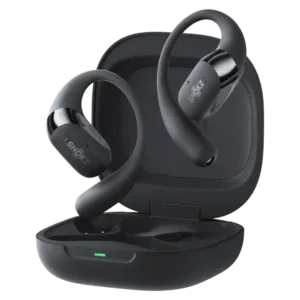
Product 1: Shokz OpenFit 2+
3.9
P2
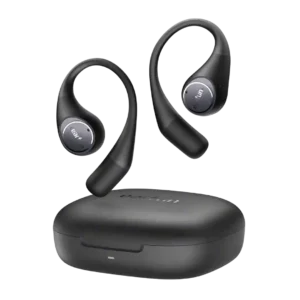
Product 2: EarFun OpenJump Open Ear Earbuds
3.6
Active noise cancellation
P1
Product 1: Shokz OpenFit 2+
1.3
Reviewers consistently framed ANC as absent or unsuitable for noise-cancellation seekers, treating the product as intentionally awareness-first instead.
P2Product 2: EarFun OpenJump Open Ear Earbuds
No score yetAndroid compatibility
P1
Product 1: Shokz OpenFit 2+
5.0
Android compatibility received one direct positive test result alongside iOS compatibility.
P2Product 2: EarFun OpenJump Open Ear Earbuds
No score yetApp
P1
Product 1: Shokz OpenFit 2+
4.3
The app was generally considered useful, simple, or feature-rich for EQ, firmware, controls, Dolby, and tracking, though a few reviews described it as minimal or not essential.
P2
Product 2: EarFun OpenJump Open Ear Earbuds
3.8
Reviewers generally valued the EarFun app for EQ, controls, and setup options, but some found it clunky or hard to navigate.
Audio-video sync accuracy
P1
Product 1: Shokz OpenFit 2+
4.0
One reviewer found video latency minimal and acceptable for casual gaming, while noting no dedicated gaming mode elsewhere in the review.
P2
Product 2: EarFun OpenJump Open Ear Earbuds
4.0
Latency and sync evidence leaned positive, with strong no-drop/no-lip-sync reports and usable low-latency gaming comments, though one reviewer found the modes underwhelming.
Bass performance
P1
Product 1: Shokz OpenFit 2+
4.2
Bass was often better than expected for open-ear earbuds, especially with EQ or Dolby, but several reviewers still noted limited punch and depth compared with sealed earbuds.
P2
Product 2: EarFun OpenJump Open Ear Earbuds
3.4
Bass was one of the most divided areas: some reviewers heard punchy open-ear bass, while others found it muddy, weak, or thinner at higher volume.
Battery
P1
Product 1: Shokz OpenFit 2+
5.0
Battery life received strong agreement as excellent, long-lasting, or a non-issue for daily use, training, and long sessions.
P2
Product 2: EarFun OpenJump Open Ear Earbuds
4.8
Battery life was one of the clearest strengths, repeatedly described as long-lasting, excellent, or enough for full-day use.
Bluetooth
P1
Product 1: Shokz OpenFit 2+
3.3
Bluetooth behavior was mixed: reviewers liked seamless single-bud use, but others reported earbuds staying connected in the case or draining phone battery without an off switch.
P2
Product 2: EarFun OpenJump Open Ear Earbuds
3.2
Bluetooth reliability was mixed, with pairing and cutout complaints in two reviews but a rock-solid connection in another.
Build quality
P1
Product 1: Shokz OpenFit 2+
4.8
Build quality was praised through flexible/durable ear hooks and robust-feeling materials.
P2
Product 2: EarFun OpenJump Open Ear Earbuds
2.9
Build quality was uneven: reviewers often found the buds acceptable, but plastics, hooks, and case materials drew cheap-feeling criticism.
Built-in DAC and hi-res playback
P1Product 1: Shokz OpenFit 2+
No score yet
P2
Product 2: EarFun OpenJump Open Ear Earbuds
4.0
Hi-res wireless playback was positively treated in the single scored review as a meaningful listening benefit.
Button control usability
P1
Product 1: Shokz OpenFit 2+
4.5
Physical buttons were widely praised as easier, more reliable, and more comfortable than touch-only controls, though one ultrarunner wanted an on/off button.
P2Product 2: EarFun OpenJump Open Ear Earbuds
No score yetCarry case quality
P1
Product 1: Shokz OpenFit 2+
3.3
Case quality was mixed: reviewers liked the size/design and wireless charging, but cited a pinch hazard, poor low-battery signaling, and non-waterproof case limitations.
P2
Product 2: EarFun OpenJump Open Ear Earbuds
2.1
The case drew repeated criticism for cheap feel, weak perceived robustness, or large size, despite some pocketability comments.
Charging
P1
Product 1: Shokz OpenFit 2+
4.5
Charging was praised for wireless convenience and quick top-ups, but one review reported case charging behavior that could leave earbuds undercharged.
P2
Product 2: EarFun OpenJump Open Ear Earbuds
4.4
Charging evidence was positive, with reviewers praising wireless charging, USB-C, and useful fast-charge behavior.
Clamping force comfort
P1
Product 1: Shokz OpenFit 2+
5.0
The one explicit clamping-force assessment was very positive because the reviewer felt no clamping pressure at all.
P2Product 2: EarFun OpenJump Open Ear Earbuds
No score yetCodec support
P1
Product 1: Shokz OpenFit 2+
2.0
Codec support drew criticism from one reviewer because the earbuds lack high-end Bluetooth codecs.
P2
Product 2: EarFun OpenJump Open Ear Earbuds
5.0
One reviewer strongly praised the overall codec and connectivity package as essentially complete.
Comfort during long use
P1
Product 1: Shokz OpenFit 2+
4.9
Comfort was one of the strongest points across nearly every review, with repeated praise for long-wear softness, low fatigue, and all-day active use.
P2
Product 2: EarFun OpenJump Open Ear Earbuds
4.4
Comfort was a major strength across most reviews, with many reviewers reporting all-day wearability or no fatigue, though one glasses-wearer disagreed.
Design and Aesthetics
P1
Product 1: Shokz OpenFit 2+
4.8
Design and aesthetics were praised as classy, understated, premium, sleek, and among the best-looking open-ear designs tested.
P2
Product 2: EarFun OpenJump Open Ear Earbuds
2.0
Design evidence was limited and negative, focused on a cheap-looking black rubbery finish.
Equalizer customization
P1
Product 1: Shokz OpenFit 2+
4.2
EQ customization was a clear strength: reviewers liked tweaking sound, custom EQ, and personal preference controls, though one app workflow was limited.
P2
Product 2: EarFun OpenJump Open Ear Earbuds
4.3
EQ customization was widely praised, especially the app’s presets, manual EQ, and personalized sound profile, despite a few usability caveats.
Find My
P1
Product 1: Shokz OpenFit 2+
2.9
Find My-style feedback was mixed: some reviewers liked ringing/tracking features, while others complained about missing true case Find My support or losing tracking when the battery died.
P2Product 2: EarFun OpenJump Open Ear Earbuds
No score yetFrequency response accuracy
P1
Product 1: Shokz OpenFit 2+
2.0
Only SoundGuys offered an opinionated frequency-response critique, finding upper mids and treble below its preferred target.
P2
Product 2: EarFun OpenJump Open Ear Earbuds
4.1
Frequency balance was mostly praised in positive reviews, though one reviewer noted the punchy sound sacrificed balance.
Instrument separation
P1
Product 1: Shokz OpenFit 2+
4.7
Instrument separation was praised when reviewers heard clean, distinct instruments or stereo separation without muddying vocals and guitars.
P2
Product 2: EarFun OpenJump Open Ear Earbuds
2.3
Instrument separation was weak in the two scored reviews, with comments that the presentation was congested or not well separated.
LDAC
P1
Product 1: Shokz OpenFit 2+
2.0
LDAC was specifically missed by one reviewer who expected it on a premium open-ear product.
P2
Product 2: EarFun OpenJump Open Ear Earbuds
4.2
LDAC was consistently treated as a useful or interesting premium feature, with reviewers saying it improved quality or dynamic range.
Maximum volume clarity
P1
Product 1: Shokz OpenFit 2+
4.5
Most reviewers who discussed high-volume behavior heard clean playback without distortion, though one warned that very high volume could sound cranky.
P2
Product 2: EarFun OpenJump Open Ear Earbuds
3.5
Maximum-volume behavior was mixed: one reviewer heard midrange issues near the top, while another praised the controlled reduction that avoided distortion.
Microphone noise reduction
P1
Product 1: Shokz OpenFit 2+
4.1
Microphone noise reduction generally handled traffic, background noise, or indoor noise well, but wind remained the recurring weak scenario.
P2
Product 2: EarFun OpenJump Open Ear Earbuds
4.5
Microphone noise reduction scored strongly, with reviewers reporting reduced room, car, or environmental noise during calls.
Microphone quality for calls
P1
Product 1: Shokz OpenFit 2+
4.2
Call quality was mostly praised as clean, clear, or very good, with caveats around wind, crowded cafés, or heavy processing.
P2
Product 2: EarFun OpenJump Open Ear Earbuds
3.6
Call quality was mixed, ranging from robotic or wind-limited performance to clear, natural-sounding voice pickup.
Midrange clarity
P1
Product 1: Shokz OpenFit 2+
4.3
Midrange and vocals were generally described as clean, natural, energetic, or more forward, with the strongest praise coming from music-focused reviews.
P2
Product 2: EarFun OpenJump Open Ear Earbuds
3.6
Midrange performance split reviewers, from robotic and distorted in one review to clear, smooth, or detailed in several others.
Multi-platform compatibility
P1
Product 1: Shokz OpenFit 2+
5.0
Multi-platform compatibility was positively supported by tested compatibility across Android and iOS.
P2
Product 2: EarFun OpenJump Open Ear Earbuds
4.0
One reviewer found cross-platform use worked well across devices.
Multipoint connectivity reliability
P1
Product 1: Shokz OpenFit 2+
4.8
Multipoint was repeatedly described as smooth, seamless, convenient, or reliable for switching between phones, laptops, watches, and other devices.
P2
Product 2: EarFun OpenJump Open Ear Earbuds
4.3
Multipoint was generally praised for smooth device switching and useful dual-device workflows.
Noise isolation (passive)
P1
Product 1: Shokz OpenFit 2+
1.5
Passive isolation is essentially not the point of the design; the cited reviewer emphasized that the earbuds do not isolate the listener from the world.
P2
Product 2: EarFun OpenJump Open Ear Earbuds
1.5
Passive isolation is intentionally minimal; the scored review framed the product as unsuitable for users trying to block outside noise.
Portability/foldability
P1
Product 1: Shokz OpenFit 2+
2.5
Portability had one notable criticism from an ultrarunner who found carrying the case extra weight and space during long races.
P2
Product 2: EarFun OpenJump Open Ear Earbuds
3.3
Portability was mixed: one case fit pockets easily, another dominated a pocket, and a third was still considered pocketable.
Preset EQ profile quality
P1
Product 1: Shokz OpenFit 2+
4.4
Preset EQ opinions were mostly positive for Bass Boost, Treble Boost, and Vocal/voice modes, with one technical review saying presets help compensate for open-ear limitations.
P2
Product 2: EarFun OpenJump Open Ear Earbuds
2.3
Preset EQ quality was mixed-to-negative, with one reviewer disappointed and another saying presets needed cleanup.
Sensors
P1
Product 1: Shokz OpenFit 2+
3.3
Sensor feedback was mixed: one review praised wear detection, while another wished smart sensors were included.
P2
Product 2: EarFun OpenJump Open Ear Earbuds
2.0
Sensor evidence was negative because one reviewer missed smart auto play/pause detection.
Software/setup simplicity
P1
Product 1: Shokz OpenFit 2+
4.3
Setup simplicity was supported by the convenient pairing button and the fact that app use is not required for basic functions.
P2
Product 2: EarFun OpenJump Open Ear Earbuds
4.3
Setup and software convenience evidence was positive, with easy use and convenient personalization called out.
Sound leakage
P1
Product 1: Shokz OpenFit 2+
4.3
Sound leakage was generally better than expected for open-ear earbuds at reasonable volumes, but reviewers still warned that higher volumes can be heard nearby.
P2
Product 2: EarFun OpenJump Open Ear Earbuds
2.3
Sound leakage was a repeated concern, with two negative reviews calling it heavy or awful, though one reviewer found it decent.
Sound quality
P1
Product 1: Shokz OpenFit 2+
4.5
Reviewers broadly praised the open-ear sound as unusually strong, clear, balanced, or top-tier for the category, though SoundGuys treated it as below critical-listening earbuds and one runner focused mainly on clear voice playback.
P2
Product 2: EarFun OpenJump Open Ear Earbuds
3.9
Overall sound quality was sharply mixed, ranging from poor and lacking detail to enjoyable, clear, and very good for the price.
Soundstage width
P1
Product 1: Shokz OpenFit 2+
4.1
Dolby and the open presentation usually expanded the stage, but SoundGuys felt the spatial positioning was more artificial than genuinely dimensional.
P2
Product 2: EarFun OpenJump Open Ear Earbuds
3.0
Soundstage was mixed: some reviewers found it narrow or ineffective, while others heard a wider, expansive, or large-room presentation.
Spatial audio
P1
Product 1: Shokz OpenFit 2+
4.1
Spatial/Dolby audio was usually praised for richer, wider, more immersive sound, but some reviewers preferred it for video or podcasts over music and one found it gimmicky.
P2
Product 2: EarFun OpenJump Open Ear Earbuds
2.7
Theater/spatial mode was highly polarizing, praised by some for movie-like width but criticized by others for tinny sound or harming music.
Stability
P1
Product 1: Shokz OpenFit 2+
4.1
Stability was strong for running, workouts, and general movement, but reviewers found caveats with helmets, buffs, high-impact jumps, or losing an earbud when removing layers.
P2
Product 2: EarFun OpenJump Open Ear Earbuds
4.1
Fit stability was mostly praised for workouts and running, but a few reviewers reported wobble or insecurity during movement.
Touch control responsiveness
P1
Product 1: Shokz OpenFit 2+
2.5
Touch control usefulness was limited in the cited review because the touchpad was mainly restricted to voice assistant activation.
P2
Product 2: EarFun OpenJump Open Ear Earbuds
3.0
Touch controls were the most divided usability point, with several strong complaints but also multiple reviewers praising customization or responsiveness.
Transparency mode quality
P1Product 1: Shokz OpenFit 2+
No score yet
P2
Product 2: EarFun OpenJump Open Ear Earbuds
4.4
Open-ear awareness was consistently praised for letting reviewers hear traffic, surroundings, or the world naturally.
Treble clarity
P1
Product 1: Shokz OpenFit 2+
4.4
Treble drew mostly positive comments for crispness, sparkle, and detail, while SoundGuys found the treble weak and less detailed in busy mixes.
P2
Product 2: EarFun OpenJump Open Ear Earbuds
3.5
Treble was mixed, ranging from sparkly and clean to grainy, dull, or too forward at volume.
USB-C
P1
Product 1: Shokz OpenFit 2+
5.0
USB-C received one explicit positive mention for avoiding proprietary charging cables.
P2
Product 2: EarFun OpenJump Open Ear Earbuds
4.5
USB-C charging was positively included as part of a well-specified charging case in the scored review.
Value for money
P1
Product 1: Shokz OpenFit 2+
4.5
Value was usually positive for first-time buyers because reviewers saw the $10-$20 Plus premium or category price as justified, though existing OpenFit 2 owners may not need to upgrade.
P2
Product 2: EarFun OpenJump Open Ear Earbuds
4.3
Value was usually strong, especially at discounted prices, though two reviewers warned competitors or slightly pricier options were better buys.
Voice assistant integration
P1
Product 1: Shokz OpenFit 2+
3.3
Voice assistant integration exists through limited touch or button customization, but reviewers treated it as secondary rather than a standout feature.
P2
Product 2: EarFun OpenJump Open Ear Earbuds
4.0
Voice assistant integration had limited but positive evidence, with one reviewer saying the customizable trigger worked well.
Volume output
P1
Product 1: Shokz OpenFit 2+
4.0
Volume was usually enough for music, calls, and outdoor use, but reviewers split on headroom in noisy places, with some wanting more output.
P2
Product 2: EarFun OpenJump Open Ear Earbuds
4.1
Volume output was generally strong, with reviewers saying it had enough power, got loud, or remained usable in noisy environments.
Water/sweat resistance rating
P1
Product 1: Shokz OpenFit 2+
4.3
Water and sweat resistance was generally reassuring for rain, sweat, and workouts, though reviewers warned against submersion and sweat-related charging care.
P2
Product 2: EarFun OpenJump Open Ear Earbuds
4.8
Water and sweat resistance was a standout strength, with multiple reviewers praising the rating as better than average or highly protective.
Weight comfort
P1
Product 1: Shokz OpenFit 2+
4.8
Weight comfort was consistently praised; reviewers repeatedly said the earbuds felt very light or nearly disappeared on-ear.
P2
Product 2: EarFun OpenJump Open Ear Earbuds
4.5
Low weight was consistently praised, contributing to comfort, glasses compatibility, and the ability to forget the earbuds are being worn.