Compare ASUS ROG Azoth Extreme vs Keychron Q1 HE

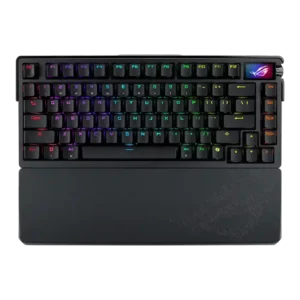
P1 ASUS ROG Azoth Extreme
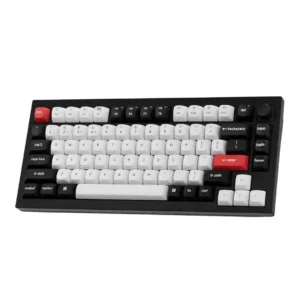
P2 Keychron Q1 HE

Comparison Takeaways

ASUS ROG Azoth Extreme

Where It Has the Edge

  • per-key lighting control is 4.4 vs 2.5. Per-key lighting is directly supported by the specs and reviewers' references to per-key RGB shine-through.
  • switch options is 4.2 vs 2.5. The keyboard is covered with NX Snow and NX Storm switch options, with reviewers generally liking the included...
  • wireless performance is 4.8 vs 3.3. Wireless performance is a standout, with multiple reviewers reporting flawless or lag-free wireless operation.
  • reliability is 4.5 vs 3.0. Reliability is strong, especially around wireless stability, low latency, and stable fast connections.

Keychron Q1 HE

Where It Has the Edge

  • rapid trigger support is 4.8 vs 1.2. Rapid Trigger support is widely viewed as effective and useful for repeated inputs, movement, and gaming responsiveness.
  • analog input support is 4.4 vs 1.5. Analog-style features are broadly supported, including multi-stage inputs and gamepad-style control, though some reviewers find the gaming use...
  • software quality is 4.0 vs 2.2. Software quality is split: the web-based Launcher is often praised as powerful or intuitive, but several reviewers cite...
  • value for money is 3.7 vs 2.1. Value for money is mixed: many reviewers justify the premium with build and features, while others call the...
Average score
Product 1: ASUS ROG Azoth Extreme
4.1
Product 2: Keychron Q1 HE
4.1
acoustics
Product 1: ASUS ROG Azoth Extreme
4.5

Acoustics are strongly praised, with reviewers describing enthusiast-level sound, refined muted tone, and premium sound profile.

Product 2: Keychron Q1 HE
4.5

Acoustics are mostly favorable, described as thocky, satisfying, deep, or pleasant, though at least one comparison preferred another board’s sound.

actuation consistency
Product 1: ASUS ROG Azoth Extreme
4.6

Actuation consistency is supported by smooth linear keypresses, consistent actuation, and the Snow switch's matching actuation and reset point.

Product 2: Keychron Q1 HE
4.5

Adjustable actuation is one of the most consistently praised features, with reviewers highlighting per-key control and stable sensing.

analog input support
Product 1: ASUS ROG Azoth Extreme
1.5

Analog input support is also weak because reviewers point to analogue or Hall Effect features as missing competitive-gaming capabilities.

Product 2: Keychron Q1 HE
4.4

Analog-style features are broadly supported, including multi-stage inputs and gamepad-style control, though some reviewers find the gaming use cases niche or imperfect.

backlight brightness
Product 1: ASUS ROG Azoth Extreme
3.4

Backlight brightness is mixed, with reviewers finding it visible enough but not especially bright and sometimes lackluster.

Product 2: Keychron Q1 HE
4.4

Backlight brightness is adequate to strong in the reviews that address it, with comments that the lighting is bright or adjustable.

battery life
Product 1: ASUS ROG Azoth Extreme
4.5

Battery life is strong, with evidence ranging from long weekly use to 1,600-hour claims with lighting and OLED off.

Product 2: Keychron Q1 HE
3.7

Battery life is mixed, ranging from solid or long enough with lighting off to weak with RGB/2.4GHz heavy use.

build quality
Product 1: ASUS ROG Azoth Extreme
4.7

Build quality is a major strength, repeatedly described through aluminum construction, premium frame design, and solid execution.

Product 2: Keychron Q1 HE
4.9

Build quality receives very strong agreement, with reviewers emphasizing the heavy metal body, premium feel, and lack of compromise.

cable quality
Product 1: ASUS ROG Azoth Extreme
4.1

Cable quality is adequate to good, backed by a braided 2m USB-C to USB-A cable and listed 6.6-foot length.

Product 2: Keychron Q1 HE
4.2

Cable quality has limited but positive evidence, with one reviewer noting a long USB-C cable and included adapter.

compatibility
Product 1: ASUS ROG Azoth Extreme
3.9

Compatibility is mixed-positive: it supports multiple devices and stabilizer/keycap paths, but north-facing switch compatibility can be limiting.

Product 2: Keychron Q1 HE
4.7

Compatibility is a strength, with repeated support for Windows, macOS, Linux, keycap swaps, and platform toggles.

connectivity
Product 1: ASUS ROG Azoth Extreme
4.7

Connectivity is very strong, with wired, 2.4GHz, Bluetooth, and multi-device Bluetooth evidence across reviews.

Product 2: Keychron Q1 HE
4.7

Connectivity is a major strength, with wired, Bluetooth, and 2.4GHz wireless options repeatedly highlighted.

customization options
Product 1: ASUS ROG Azoth Extreme
4.6

Customization options are broad, including tweakable controls, adjustable gasket feel, OLED customization, and physical tuning.

Product 2: Keychron Q1 HE
4.6

Customization options are broad and central to the product, spanning actuation, remaps, triggers, macros, and HE-specific control.

desk space efficiency
Product 1: ASUS ROG Azoth Extreme
4.4

Desk space efficiency is supported by the 75% layout's balance of compactness and functionality.

Product 2: Keychron Q1 HE
4.5

Desk space efficiency is positive because reviewers say the 75% layout saves space and still fits smaller desks.

durability
Product 1: ASUS ROG Azoth Extreme
4.6

Durability evidence is positive overall, with reviewers citing sturdy construction, durable-feeling materials, and resilient magnetic feet.

Product 2: Keychron Q1 HE
4.7

Durability is rated highly due to the robust case, Hall Effect contactless design, long-rated switches, and wear-resistant legends.

ease of switch replacement
Product 1: ASUS ROG Azoth Extreme
4.2

Ease of switch replacement is positive because reviewers mention included pullers, hot-swap switches, and easy access or interchangeability.

Product 2: Keychron Q1 HE
4.1

Ease of switch replacement and internal access is good for tinkerers, with included tools and accessible internals, though compatibility remains restricted.

ergonomics
Product 1: ASUS ROG Azoth Extreme
4.4

Ergonomics are positive, helped by the wrist rest, adjustable feel, stable positioning, and comfortable typing experience.

Product 2: Keychron Q1 HE
3.5

Ergonomics are mixed: reviewers liked the typing angle and comfort, but many disliked the lack of adjustable feet or tall profile.

extra gaming features
Product 1: ASUS ROG Azoth Extreme
4.0

Extra gaming features are plentiful, including OLED, KPS, touchscreen, Copilot, and 8K polling, but not rapid-trigger class features.

Product 2: Keychron Q1 HE
4.5

Extra gaming features are a strength, including multi-action keys, Last Key Prioritization, snap-style actions, and dynamic force behavior.

frame rigidity
Product 1: ASUS ROG Azoth Extreme
4.8

Frame rigidity is excellent, with reviewers describing tank-like strength and no body bend.

Product 2: Keychron Q1 HE
5.0

Frame rigidity is excellent where reviewed, with no flex and a solid aluminum chassis.

gaming performance
Product 1: ASUS ROG Azoth Extreme
4.5

Gaming performance is positive for a mechanical wireless board, with reviewers citing smooth keypresses, good response, and issue-free gameplay.

Product 2: Keychron Q1 HE
4.5

Gaming performance is generally strong thanks to HE switches, rapid trigger, low-latency wireless, and responsive movement, despite one critical gaming-profile review.

hot-swappable switches
Product 1: ASUS ROG Azoth Extreme
4.4

Hot-swappable switches are repeatedly supported, with reviewers noting hot-swap sockets and easy switch changes.

Product 2: Keychron Q1 HE
3.6

Hot-swappable switches are available, but reviewers repeatedly qualify the feature because only compatible magnetic switches fit.

keycap quality
Product 1: ASUS ROG Azoth Extreme
4.1

Keycap quality is generally good thanks to PBT, shine-through legends, and texture, though one reviewer disliked the textured cap feel.

Product 2: Keychron Q1 HE
4.5

Keycap quality is consistently praised for PBT construction, thickness, comfort, texture, durability, and premium feel.

key responsiveness
Product 1: ASUS ROG Azoth Extreme
4.6

Key response is praised as fast and direct, with reviewers connecting that responsiveness to gaming and quick actuation feel.

Product 2: Keychron Q1 HE
4.7

Responsiveness is a strength, with reviewers praising speedy inputs, hair-trigger settings, and performance close to or matching leading HE boards.

key spacing
Product 1: ASUS ROG Azoth Extreme
4.6

Key spacing is praised through the better function-row layout, ergonomic key spacing, and reduced reliance on Fn layers.

Product 2: Keychron Q1 HE
4.5

Key spacing is positively noted in one review as having just the right amount of space between keys.

key stability
Product 1: ASUS ROG Azoth Extreme
4.5

Key stability is strong overall, with reduced wobble, commendable stability, and shorter keycap design called out across reviews.

Product 2: Keychron Q1 HE
4.5

Key stability is positive where discussed, with smooth stable switches and minimal lateral movement or stem wobble.

latency
Product 1: ASUS ROG Azoth Extreme
4.5

Latency evidence is strongly positive, with reviewers noting no noticeable lag, very fast reporting, and improved gaming reaction feel.

Product 2: Keychron Q1 HE
4.5

Latency impressions are strong in wired and 2.4GHz modes, while Bluetooth is treated as the slower connection.

layout options
Product 1: ASUS ROG Azoth Extreme
4.1

Layout options are reasonable for a 75% board, with regional layout availability and praise for a proper exploded 75% layout.

Product 2: Keychron Q1 HE
4.6

Layout options are praised for ISO availability and the useful 75% layout compared with smaller gaming boards.

legend visibility
Product 1: ASUS ROG Azoth Extreme
4.3

Legend visibility is positive: reviewers mention transparent or shine-through legends and enough brightness to see them clearly.

Product 2: Keychron Q1 HE
4.2

Legend visibility is mostly good, but one reviewer noticed alignment and typesetting imperfections on some legends.

macro customization
Product 1: ASUS ROG Azoth Extreme
4.2

Macro customization is supported through on-the-fly macro recording and software macro options.

Product 2: Keychron Q1 HE
4.2

Macro customization is strong overall, with support for macros, multiple commands per key, and task-specific programming, though one interface was called awkward.

materials quality
Product 1: ASUS ROG Azoth Extreme
4.6

Materials quality is very strong thanks to aluminum, carbon fiber, premium machining, and high-quality internal construction.

Product 2: Keychron Q1 HE
4.8

Materials quality is a major strength, centered on aluminum or metal construction, premium finishes, PBT caps, and sturdy specialty editions.

media controls
Product 1: ASUS ROG Azoth Extreme
4.5

Media controls are strong, with reviewers praising or documenting the control knob for volume, media, brightness, and lighting.

Product 2: Keychron Q1 HE
4.5

Media controls are useful but lightly covered, centered on the programmable rotary knob.

noise level
Product 1: ASUS ROG Azoth Extreme
3.6

Noise level is context-dependent: the board is refined and muted to some reviewers but still too loud for a silent-keyboard user.

Product 2: Keychron Q1 HE
4.4

Noise level is context-dependent: many found it quiet or whisper-quiet, while one reviewer called it noisy for a mechanical keyboard.

onboard memory
Product 1: ASUS ROG Azoth Extreme
No score yet
Product 2: Keychron Q1 HE
4.4

Onboard memory is supported by comments that settings can be saved or stored on the keyboard for later use.

passthrough features
Product 1: ASUS ROG Azoth Extreme
3.2

Passthrough features are limited and mostly tied to dongle, extender, and polling-rate booster accessories rather than a full keyboard passthrough hub.

Product 2: Keychron Q1 HE
No score yet
per-key lighting control
Product 1: ASUS ROG Azoth Extreme
4.4

Per-key lighting is directly supported by the specs and reviewers' references to per-key RGB shine-through.

Product 2: Keychron Q1 HE
2.5

Per-key lighting control is weak because reviewers note either no per-key adjustment or per-key RGB without individual software control.

polling rate
Product 1: ASUS ROG Azoth Extreme
4.5

The 8,000Hz polling rate is repeatedly documented and praised as premium or future-facing, though reviewers often say most users may not feel it.

Product 2: Keychron Q1 HE
4.1

The Q1 HE generally earns solid marks for 1,000Hz wired/2.4GHz polling, though some reviewers note it lacks higher 8,000Hz esports polling.

portability
Product 1: ASUS ROG Azoth Extreme
1.8

Portability is poor because reviewers repeatedly emphasize the board's heavy weight and lack of lightweight design.

Product 2: Keychron Q1 HE
2.5

Portability is a weakness because reviewers repeatedly say the heavy metal build makes it poor for travel despite compact dimensions.

profile management
Product 1: ASUS ROG Azoth Extreme
4.0

Profile management is modest but present through profile indicators and layer-style programmability evidence.

Product 2: Keychron Q1 HE
3.3

Profile management is a concern for gaming because reviewers mention limited or manual profiles and missing per-game auto-launch behavior.

rapid trigger support
Product 1: ASUS ROG Azoth Extreme
1.2

Rapid trigger support is a weakness: multiple reviewers note the absence of rapid trigger, Hall Effect, or adjustable actuation features.

Product 2: Keychron Q1 HE
4.8

Rapid Trigger support is widely viewed as effective and useful for repeated inputs, movement, and gaming responsiveness.

reliability
Product 1: ASUS ROG Azoth Extreme
4.5

Reliability is strong, especially around wireless stability, low latency, and stable fast connections.

Product 2: Keychron Q1 HE
3.0

Reliability is mixed: the core build seems sturdy, but one teardown issue, one wake bug, and one low-actuation repeat issue reduce confidence.

RGB customization
Product 1: ASUS ROG Azoth Extreme
4.3

RGB customization is supported through lighting controls, preset effects, Aura-style controls, and software-based customization.

Product 2: Keychron Q1 HE
3.2

RGB customization is serviceable but limited, with preset-driven effects and less per-key control than some competitors.

RGB lighting quality
Product 1: ASUS ROG Azoth Extreme
3.7

RGB lighting quality is mixed: some praise vivid shine-through, while others call the lighting dim or less appealing than the original.

Product 2: Keychron Q1 HE
4.0

RGB lighting quality is mixed-positive: several reviewers praise bright or vibrant lighting, while others find it muted or limited by non-shine-through caps.

size and form factor
Product 1: ASUS ROG Azoth Extreme
4.2

Size and form factor are favorable for desk use because the 75% layout keeps useful keys while reducing footprint versus larger boards.

Product 2: Keychron Q1 HE
4.2

The 75% form factor is generally liked for balancing compactness with essential keys, though a few reviewers miss certain keys or note the weight.

software quality
Product 1: ASUS ROG Azoth Extreme
2.2

Software quality is a recurring weakness, with Armoury Crate described as disliked, oblique, slow, buggy, or required for customization.

Product 2: Keychron Q1 HE
4.0

Software quality is split: the web-based Launcher is often praised as powerful or intuitive, but several reviewers cite rough setup, confusing menus, or wired-only limits.

sound dampening
Product 1: ASUS ROG Azoth Extreme
4.6

Sound dampening is a clear strength, backed by foam layers, silicone pads, and repeated comments about reduced ping and dampened resonance.

Product 2: Keychron Q1 HE
4.7

Sound dampening is a strong point, with foam, acoustic pads, gaskets, and muted bottom-out repeatedly credited for better sound.

stabilizer quality
Product 1: ASUS ROG Azoth Extreme
4.6

Stabilizer quality is strong, especially around the spacebar, with little rattle and well-lubed or well-tuned stabilizers.

Product 2: Keychron Q1 HE
3.8

Stabilizer quality is mixed: some reviewers hear rattle or criticize them, while another praises the stabilizers after testing.

switch feel
Product 1: ASUS ROG Azoth Extreme
4.5

Reviewers describe the NX switches as smooth, factory-lubed, and a major reason the board feels premium for typing and gaming.

Product 2: Keychron Q1 HE
4.7

Reviewers repeatedly describe the magnetic linear switches as smooth, soft, premium, and well controlled, though tactile/clicky fans may miss a bump.

switch options
Product 1: ASUS ROG Azoth Extreme
4.2

The keyboard is covered with NX Snow and NX Storm switch options, with reviewers generally liking the included Snow linear switches.

Product 2: Keychron Q1 HE
2.5

Switch choice is the clearest hardware limitation: reviewers say hot-swap exists, but compatible options are narrow and linear-only.

typing comfort
Product 1: ASUS ROG Azoth Extreme
4.9

Typing comfort is very strong, with reviewers calling the board comfortable for rapid typing and long sessions.

Product 2: Keychron Q1 HE
4.6

Typing comfort is very strong, with reviewers describing comfortable long sessions, easy typing, and a pleasant typing angle.

typing feel
Product 1: ASUS ROG Azoth Extreme
4.7

Typing feel is one of the product's strongest areas, with reviewers praising the feel, gasket options, and satisfying stock sound.

Product 2: Keychron Q1 HE
4.8

Typing feel is one of the product’s strongest areas, described as excellent, cloud-like, silky, and premium across many reviews.

value for money
Product 1: ASUS ROG Azoth Extreme
2.1

Value for money is the main controversy: reviewers praise quality but repeatedly question or reject the $500-class price.

Product 2: Keychron Q1 HE
3.7

Value for money is mixed: many reviewers justify the premium with build and features, while others call the price steep or hard to recommend.

volume control
Product 1: ASUS ROG Azoth Extreme
4.6

Volume control is directly available through the dial and on-the-fly controls.

Product 2: Keychron Q1 HE
4.4

Volume control is broadly praised because the knob feels good, works by default for volume/mute, and can be remapped.

wireless performance
Product 1: ASUS ROG Azoth Extreme
4.8

Wireless performance is a standout, with multiple reviewers reporting flawless or lag-free wireless operation.

Product 2: Keychron Q1 HE
3.3

Wireless performance is mixed: 2.4GHz is praised as solid and low-latency, but some reviewers report wake or pairing problems.

wrist rest quality
Product 1: ASUS ROG Azoth Extreme
3.8

Wrist rest quality is mixed-positive: reviewers like its comfort and premium feel, but some note it is not magnetic or may wear quickly.

Product 2: Keychron Q1 HE
2.5

Wrist rest support is weak because the keyboard does not include one, and a reviewer says one would be welcome at this price.