
Trueplay is repeatedly cited as useful room tuning that can improve the Beam’s sound, but several reviews note the feature still depends on iOS devices.
Multiple reviewers explicitly noted that this model lacks room calibration or ADAPTiQ-style tuning, which hurts it against similarly priced rivals and Bose's own Ultra model.
AirPlay 2 support is consistently confirmed, with reviews describing easy streaming from Apple devices as part of the Beam’s core wireless feature set.
AirPlay 2 support was consistently described as seamless and dependable, making the soundbar easy to integrate into Apple-centric streaming setups.
The Sonos S2 app is generally described as polished, stable, and easy to use, though one review says it can feel confusing at first.
The Bose app is generally viewed as easy to use and essential for unlocking the bar’s best features, though a few reviewers noted minor UX quirks or a one-time pairing/update hiccup.
Reviews consistently describe broad codec support, including Dolby formats, PCM variants, and DTS surround decoding, while also noting some format caveats such as no DTS:X.
The bar supports Dolby Atmos and Bose TrueSpace processing, but reviewers also noted missing DTS or DTS:X support and the need to use HDMI rather than optical for full Atmos playback.
The Beam Gen 2 keeps compatibility with older setups through ARC and the bundled optical adapter, though older connections can limit Dolby Atmos playback.
Multiple reviews explicitly state that Bluetooth is not supported, so codec support is effectively absent on this soundbar.
Bluetooth pairing and everyday wireless use were generally stable in testing, even though Bose does not make codec support a selling point.
Chromecast built-in worked smoothly in multiple reviews and stands out as one of the Smart Soundbar’s most useful convenience features.
Across reviews, the Beam is praised for sounding cohesive, with consistent imaging, organic integration, and an enveloping presentation from a single compact enclosure.
With TV and multichannel content, the soundbar usually presents sound in a coherent, well-blended way, though stereo material can become a bit diffuse because spatial processing is always active.
The touch controls receive positive comments for responsiveness and ease of use when adjusting playback and volume directly on the bar.
The few on-bar touch controls are responsive and easy enough to trigger, but functionality is very limited.
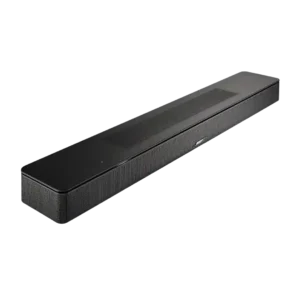
Reviews repeatedly praise the Beam Gen 2’s compact, stylish design, describing it as attractive, discreet, and easy to blend into living-room setups.
Reviewers consistently liked the compact, discreet look and easy placement, even if a few found the finish a little plain or plasticky for the price.
Build impressions are strong, with reviewers highlighting the premium feel and the newer grille’s durability and easier cleaning versus the older fabric finish.
Build quality is generally solid with a tidy, space-friendly design, though some reviewers felt parts of the chassis or remote did not feel especially premium.
The Beam is repeatedly credited with surfacing fine musical and cinematic details, from small instrumental textures to added scene detail and nuance.
Across reviews the Smart Soundbar was repeatedly praised for pulling useful detail out of dialogue, effects, and acoustic material without sounding overly analytical.
Dialogue is one of the Beam Gen 2’s clearest strengths, with reviewers repeatedly calling vocals and speech unusually crisp, clear, and easy to follow.
Dialogue clarity is one of the bar’s biggest strengths, with AI Dialogue Mode often making speech easier to follow in busy mixes, even if some listeners found it slightly crisp or imperfect.
At higher volume, reviews are mostly positive about control and cleanliness, though output is not limitless and some compression or hardness can emerge when pushed.
At sensible listening levels the bar stays controlled, but several reviewers heard hardness, pinched treble, or bass strain when volume and demanding material increased.
Atmos height performance is a mixed strength: reviewers hear extra spaciousness and some height cues, but most stop short of calling the overhead effect convincing.
Its real up-firing drivers create more convincing height than many compact rivals, though Atmos effects still fall short of what larger bars or full surround systems can produce.
Dynamic expression is a clear positive, with reviews noting wider range, strong contrast between quiet and loud moments, and a punchy cinematic presentation.
The soundbar does a respectable job separating softer and louder sounds, but it still cannot deliver the explosive scale of bigger systems with dedicated low-end hardware.
EQ options are limited but useful, with bass, treble, loudness, and basic app-based adjustment available rather than deep manual tuning.
The app offers genuinely useful tuning options like bass, treble, center, height, and wall EQ adjustments, though deeper EQ tools and presets are absent.
Tonally, the Beam Gen 2 is widely described as balanced or neutral, with enough warmth and composure to work well across movies, TV, and music.
Overall tuning is fairly balanced through the mids and highs, but bass depth is limited and some reviewers heard occasional brightness, artificiality, or a slightly thin presentation.
Reviews are consistently negative about passthrough for gaming setups because there is no spare HDMI input for directly connecting consoles or source devices.
Because there is no extra HDMI input, the Smart Soundbar offers essentially no meaningful gaming passthrough capability.
Google Assistant support is consistently confirmed, with reviews framing it as a standard built-in voice option alongside Alexa.
Google ecosystem support is mixed: Chromecast integration works well, but Google Assistant is not onboard, so Google support is less complete than the name alone might imply.
There is no HDMI 2.1-style gaming passthrough here, and reviewers explicitly flagged the lack of an HDMI input as a drawback for console-focused setups.
HDMI eARC is one of the Beam Gen 2’s core upgrades, and reviews repeatedly tie it to improved format support and better Atmos compatibility than the original Beam.
HDMI eARC is the preferred connection and was widely described as simple and reliable, with full Atmos support depending on HDMI rather than optical.
Reviews emphasize how easily the Beam can anchor a broader Sonos home theater, including rear speakers and subwoofers for a fuller cinema setup.
The soundbar integrates neatly into a broader home theater setup thanks to support for Bose subs, surrounds, app control, TV remotes, and accessory expansion.
Pairing with other Sonos speakers is described as seamless and easy, with the Beam fitting naturally into wireless surround and multi-speaker systems.
Connectivity with other Bose products is a major selling point, especially for adding subs, surround speakers, or Ultra Open Earbuds for the Personal Surround feature.
TV latency is viewed favorably, with reviews mentioning minimized lag, strong sync performance, and fewer lip-sync concerns through the main TV connection.
For its size, the Beam is widely considered capable of strong output, with enough volume to fill most small or medium spaces comfortably.
For a compact single bar it gets impressively loud and has useful headroom in small to medium rooms, though it can be outmatched in large or noisy spaces.
Low-volume listening benefits from helpful tuning features, especially loudness compensation, and reviewers suggest the Beam remains usable and balanced at moderate levels.
At least one review specifically highlighted that quieter details remain audible during louder scenes, which helps everyday low-level or late-night viewing.
The built-in far-field microphones are a regular talking point, supporting voice features and audible command pickup without needing external hardware.
Built-in microphones support Alexa features and mute control, and reviewers generally found pickup adequate for normal voice use.
Multi-speaker use is one of the Beam’s strengths, with reviewers describing Sonos grouping and syncing behavior as easy and dependable.
Pairing with other Bose speakers and headphones generally worked well, though one reviewer reported an initial pairing issue that a system update solved.
On-device controls are simple but effective, with touch inputs on the bar covering the core playback, volume, and microphone functions.
On-device controls are sparse and focused mostly on microphone or assistant actions, so most owners will rely on the app or remote instead.
Optical connectivity is supported through an included adapter, but reviews clearly warn that using optical rules out full Atmos performance.
Optical input is a useful fallback for older TVs, but reviewers repeatedly noted that HDMI is the better connection for full capability.
Privacy controls are present and easy to use, especially through microphone muting and the option to leave voice accounts unlinked.
Privacy concerns were minor but real in the reviews: there is mic mute, yet at least one reviewer disliked the lack of a true hardware microphone disconnect.
TV-remote control is well supported and frequently described as simple, reducing the need for a dedicated bundled remote.
The remote is simple and functional, though reviewers were split between finding it satisfying and calling it small, light, or a bit cheap-feeling.
Setup simplicity is one of the most consistent positives, with multiple reviewers calling the Beam quick, painless, and straightforward to install.
Setup is usually straightforward and beginner-friendly, especially through HDMI eARC and the Bose app. Initial installation is broadly painless, with only occasional reset or update friction mentioned.
Alexa integration is consistently presented as built-in and useful for hands-free control, matching the Beam’s broader smart-speaker role.
Alexa support is a genuine feature advantage, but it is Amazon-only and not every reviewer wanted a voice assistant built into a soundbar.
Smart features are a major selling point, with reviewers highlighting voice control, multiroom playback, streaming integrations, and app-based management.
Feature depth is a core strength, with app control, wireless streaming, AI dialogue, multiroom options, and Personal Surround giving the bar more tricks than many rivals.
The Beam creates more perceived height than a standard bar, but reviews still characterize its vertical soundstage as limited compared with true upfiring designs.
The Smart Soundbar creates more vertical scale than many compact bars, but its sense of height still remains limited compared with bigger Atmos systems.
Spotify Connect support is repeatedly confirmed and treated as a core convenience feature for direct music playback.
Spotify Connect was repeatedly reported as reliable and easy to use, reinforcing the bar’s strong everyday streaming story.
Status feedback is basic but present, with LED indicators used for interaction and microphone state feedback.
Status feedback is minimal, relying on LEDs instead of a proper front display, which some reviewers found acceptable and others found limiting.
Stereo and positional imaging are strong for a compact bar, with several reviews praising separation, object placement, and clear left-right spread.
Stereo playback can sound open and well separated, but always-on TrueSpace sometimes makes imaging less precise with two-channel material.
Standalone bass is considered respectable, but reviews also repeatedly note easy subwoofer expansion and meaningful bass gains once a Sonos Sub is added.
Bass is the product’s most common criticism, and many reviewers said a separate Bose subwoofer is the clearest upgrade if you want real low-end impact.
Virtual surround is one of the Beam’s real strengths, with reviews describing a roomy, bubble-like presentation that exceeds typical compact-bar expectations.
TrueSpace and Personal Surround can make the bar sound bigger and more immersive, but results vary by content and they do not fully replace real surround speakers.
One review explicitly notes more sustainable packaging materials, including paper-based packing with no visible foam on the surface.
Value is a recurring positive theme, especially for buyers who want premium compact sound, Sonos ecosystem features, and strong performance below flagship pricing.
Value is the biggest tradeoff: buyers get lots of features and strong dialogue, but many reviewers questioned the price once weak bass and paid add-ons are factored in.
Video passthrough support is absent, and multiple reviews frame that omission as one of the Beam Gen 2’s clearest connectivity compromises.
With no dedicated HDMI input or true video passthrough path, the Smart Soundbar trails more AV-oriented competitors on source-routing flexibility.
Voice assistants respond reliably in the reviews, with good command pickup and little complaint about responsiveness once configured.
Alexa generally responds well, though a few reviewers said you may need to speak clearly or articulate the wake word more carefully.
Music vocals are typically described as clear, present, and articulate, helping the Beam work well for music as well as TV playback.
Voices are articulate and forward in the mix, making speech intelligibility a consistent strength even outside the dedicated dialogue mode.
Voice pickup accuracy is a clear strength, with reviewers saying commands can still be heard across the room or during loud playback.
Voice pickup is usually competent, but not flawless, with some reviewers noting the wake word needed clearer pronunciation than expected.
The Beam’s light weight and compact footprint make it easy to place, especially in smaller rooms or with smaller TVs.
Its light, compact chassis is widely praised for fitting easily on small stands, desktops, or tight TV furniture.
Wi-Fi streaming reliability is a strength, with AirPlay, Chromecast, and related app-based playback described as smooth and dependable.
Wired connections are intentionally minimal but functional, typically centering on HDMI, Ethernet, and optical via adapter rather than a broader port array.
Physical connectivity is simple but practical, covering HDMI eARC, optical, sub out, IR, and service connections for most common setups. HDMI eARC delivers the best wired performance and full Atmos support, while optical is usable but more limited.