Average score
P1
Product 1: Sonos Beam (Gen 2)
4.2
P2
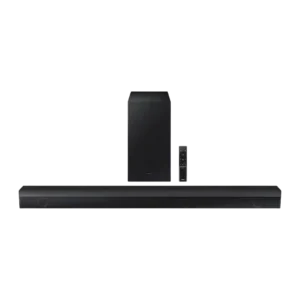
Product 2: Samsung HW-B650 Soundbar
4.0
AI Room Calibration
P1
Product 1: Sonos Beam (Gen 2)
4.2
TruePlay room calibration was often praised for improving clarity and spatial performance, but Android exclusion remained a common caveat.
P2
Product 2: Samsung HW-B650 Soundbar
3.1
Room calibration evidence was mixed: one review called out the lack of room correction, while another praised AI Sonic-Adaptation.
App reliability
P1
Product 1: Sonos Beam (Gen 2)
4.4
The Sonos app was mostly praised as stable, polished, and easy to use, with one reviewer noting it can feel confusing at first.
P2Product 2: Samsung HW-B650 Soundbar
No score yetAudio format support
P1
Product 1: Sonos Beam (Gen 2)
4.2
Audio format support was treated as a meaningful upgrade, especially for Atmos, eARC-era formats, and expanded surround decoding.
P2
Product 2: Samsung HW-B650 Soundbar
4.0
Dolby Digital 5.1 and DTS Virtual:X support helped create cinematic sound, but the lack of Atmos and surround downmixing limited the format story.
Bluetooth connection stability
P1Product 1: Sonos Beam (Gen 2)
No score yet
P2
Product 2: Samsung HW-B650 Soundbar
4.9
One review found Bluetooth streaming fast, stable, and free of dropouts for common apps.
Bluetooth connectivity
P1
Product 1: Sonos Beam (Gen 2)
2.0
Reviewers repeatedly treated the lack of Bluetooth as a real limitation, especially for users who want direct, app-free playback from varied devices.
P2Product 2: Samsung HW-B650 Soundbar
No score yetCabinet construction / bracing
P1Product 1: Sonos Beam (Gen 2)
No score yet
P2
Product 2: Samsung HW-B650 Soundbar
4.4
The subwoofer cabinet construction received positive evidence because the wooden cabinet was linked to warmer, deeper bass tone.
Cohesive presentation
P1
Product 1: Sonos Beam (Gen 2)
4.8
One detailed review praised driver handoff and coherence, describing a seamless presentation across the soundfield.
P2
Product 2: Samsung HW-B650 Soundbar
4.4
The system was described as balanced and cohesive, with components complementing each other well.
Control button responsiveness
P1
Product 1: Sonos Beam (Gen 2)
4.8
Touch controls were praised as responsive and intuitive, though most reviewers expected users to rely more on app or TV remote control.
P2Product 2: Samsung HW-B650 Soundbar
No score yetDesign and aesthetics
P1
Product 1: Sonos Beam (Gen 2)
4.6
The Beam’s compact, stylish look was a major strength, with reviewers praising its clean appearance and room-friendly footprint.
P2
Product 2: Samsung HW-B650 Soundbar
4.3
Design feedback was favorable, emphasizing a compact, sleek, premium-looking bar that fits neatly under TVs.
Design and build quality
P1
Product 1: Sonos Beam (Gen 2)
4.4
Build quality was praised for the durable polycarbonate grille, premium feel, and improved ease of cleaning versus fabric.
P2
Product 2: Samsung HW-B650 Soundbar
4.5
Build quality was praised for sturdy construction, metal grilles, and a finish that felt premium for the price.
Detail retrieval
P1
Product 1: Sonos Beam (Gen 2)
4.6
Detail retrieval was repeatedly praised, with reviewers calling out nuance, timbre, transients, and small sound effects.
P2
Product 2: Samsung HW-B650 Soundbar
4.7
One detailed movie test praised the soundbar for keeping tiny effects audible and clear.
Dialogue clarity (for TV/soundbar use)
P1
Product 1: Sonos Beam (Gen 2)
4.6
Dialogue clarity was one of the strongest points across reviews, with repeated praise for clear, accurate, and easy-to-follow speech.
P2
Product 2: Samsung HW-B650 Soundbar
4.7
Dialogue clarity was the strongest point across reviews, with the dedicated center channel repeatedly making speech crisp, clear, and easy to follow.
Distortion at high volume
P1
Product 1: Sonos Beam (Gen 2)
4.3
Most reviewers found the Beam composed at normal-to-loud levels, with only one noting compression or distortion when pushed above roughly 80 dB.
P2
Product 2: Samsung HW-B650 Soundbar
3.9
High-volume performance was mixed: one review heard tinny or crackly treble, while others said it stayed clean without distortion.
Dolby Atmos height effects
P1
Product 1: Sonos Beam (Gen 2)
4.0
Atmos processing was usually considered impressive for the size, but reviewers also warned it is virtual and not fully convincing overhead.
P2
Product 2: Samsung HW-B650 Soundbar
2.5
Reviews agreed that true Dolby Atmos is missing; DTS Virtual:X can help, but it does not fully replace real height-channel performance.
Dynamic headroom
P1
Product 1: Sonos Beam (Gen 2)
4.7
Dynamic headroom was strong for the size, with reviewers praising wide dynamic range, punch, and convincing jumps in intensity.
P2
Product 2: Samsung HW-B650 Soundbar
4.6
Dynamic handling was positive, with reviews noting less need to adjust volume between quiet and loud moments.
EQ customization
P1
Product 1: Sonos Beam (Gen 2)
3.6
EQ customization is useful but basic; reviewers liked bass/treble adjustment while noting the absence of a full EQ.
P2
Product 2: Samsung HW-B650 Soundbar
3.7
EQ and sound-mode customization helped improve playback, but several reviews said manual control was limited.
Frequency response balance
P1
Product 1: Sonos Beam (Gen 2)
4.6
Reviewers consistently described the tonal balance as clear, robust, refined, and larger than expected for the Beam’s size.
P2
Product 2: Samsung HW-B650 Soundbar
4.2
Most reviews described balanced mids, neutral sound, or good music playback, though some modes could sound tinny and low bass was not always deep.
HDMI ARC
P1
Product 1: Sonos Beam (Gen 2)
4.6
HDMI ARC/eARC was strongly praised for richer format support, easier setup, and reduced sync issues with TVs and game consoles.
P2
Product 2: Samsung HW-B650 Soundbar
4.5
HDMI ARC/eARC was praised for letting the TV remote control volume and for clean, synced daily use.
Home theater integration
P1
Product 1: Sonos Beam (Gen 2)
4.4
Home theater integration was a major Sonos advantage, especially the ability to add a Sub, surrounds, or other Sonos speakers over time.
P2
Product 2: Samsung HW-B650 Soundbar
4.5
Reviewers framed it as a strong home-theater upgrade over TV speakers, with useful connectivity and rear-speaker expansion potential.
Inter-speaker connectivity
P1
Product 1: Sonos Beam (Gen 2)
4.6
Inter-speaker connectivity was a Sonos strength, with reviewers praising easy syncing, grouping, and wireless expansion.
P2
Product 2: Samsung HW-B650 Soundbar
4.5
Optional rear speaker compatibility was viewed as useful upgrade potential, including a path toward a fuller surround setup.
Latency with TV (lip sync)
P1
Product 1: Sonos Beam (Gen 2)
4.7
Lip-sync and TV latency were praised, with reviews noting minimal lag, flawless syncing, or excellent measured performance.
P2Product 2: Samsung HW-B650 Soundbar
No score yetLoudness / maximum volume
P1
Product 1: Sonos Beam (Gen 2)
4.1
Maximum volume is generally strong for a compact bar and enough for smaller spaces, though it is not as powerful as larger Sonos options.
P2
Product 2: Samsung HW-B650 Soundbar
3.8
Reviewers generally found the soundbar loud and powerful for small or medium spaces, but one review warned it may lack power and depth in larger rooms.
Low-volume performance
P1
Product 1: Sonos Beam (Gen 2)
4.2
Night mode was praised in one review for reducing sudden loud effects and making late-night viewing easier.
P2
Product 2: Samsung HW-B650 Soundbar
4.3
Low-volume and night listening received positive evidence through audible quiet effects and a night mode that keeps movies usable.
Microphone
P1
Product 1: Sonos Beam (Gen 2)
4.5
Microphone quality was praised for clarity and far-field voice use, supporting both voice assistants and Sonos control.
P2Product 2: Samsung HW-B650 Soundbar
No score yetMulti-speaker pairing reliability
P1
Product 1: Sonos Beam (Gen 2)
4.8
One review strongly praised Sonos multi-speaker syncing, describing add-on speakers as simple to connect and keep in sync.
P2Product 2: Samsung HW-B650 Soundbar
No score yetMultipoint connectivity
P1Product 1: Sonos Beam (Gen 2)
No score yet
P2
Product 2: Samsung HW-B650 Soundbar
4.1
Bluetooth multi-connection was valued for easier switching between devices and phones.
Omnidirectional sound
P1Product 1: Sonos Beam (Gen 2)
No score yet
P2
Product 2: Samsung HW-B650 Soundbar
4.2
One review specifically praised DTS Virtual:X for a 360-degree-like sound effect.
On-device controls
P1
Product 1: Sonos Beam (Gen 2)
4.5
On-device controls were praised in one review for working well directly on the unit.
P2
Product 2: Samsung HW-B650 Soundbar
4.1
On-device controls were considered basic but useful and cleanly implemented.
optical
P1
Product 1: Sonos Beam (Gen 2)
2.5
Optical input is useful for older TVs, but reviewers noted it blocks Dolby Atmos playback, making it a fallback rather than the best connection.
P2
Product 2: Samsung HW-B650 Soundbar
4.5
One owner recommended the wired optical connection as the best connectivity option for their setup.
Remote control usability
P1
Product 1: Sonos Beam (Gen 2)
4.4
Remote usability was strong when using a TV or Apple TV remote, but the lack of a dedicated remote was still a minor drawback.
P2
Product 2: Samsung HW-B650 Soundbar
4.0
Remote feedback was mostly positive for comfort, responsiveness, and ease of use, with some caveats about limitations or the slim remote being easy to lose.
Setup simplicity
P1
Product 1: Sonos Beam (Gen 2)
4.7
Setup was one of the clearest strengths, repeatedly described as quick, painless, simple, or only a few minutes long.
P2
Product 2: Samsung HW-B650 Soundbar
4.6
Setup was consistently described as quick, easy, and straightforward across HDMI, optical, and Bluetooth use.
Smart assistant integration (Alexa
P1
Product 1: Sonos Beam (Gen 2)
4.2
Smart assistant integration was framed positively for users who want built-in Alexa or Google-style control in the soundbar.
P2
Product 2: Samsung HW-B650 Soundbar
1.8
Smart assistant integration was a weakness because reviewers noted the lack of voice assistant support.
Smart features
P1
Product 1: Sonos Beam (Gen 2)
4.4
Smart features were considered broad and useful, combining ecosystem streaming, voice support, app control, and expandable home-audio options.
P2
Product 2: Samsung HW-B650 Soundbar
3.4
Smart features were limited overall, but adaptive sound and phone/app control were useful where available.
Soundstage height
P1
Product 1: Sonos Beam (Gen 2)
2.9
Soundstage height was the most mixed area: reviewers heard some height, but many said true overhead effects were limited or unconvincing.
P2
Product 2: Samsung HW-B650 Soundbar
4.0
Virtual height effects were present and sometimes convincing, but they remained simulated rather than true Atmos height.
Status indicators
P1Product 1: Sonos Beam (Gen 2)
No score yet
P2
Product 2: Samsung HW-B650 Soundbar
4.4
The front display/status indicator was considered simple but handy for seeing the selected input or mode.
Stereo imaging accuracy
P1
Product 1: Sonos Beam (Gen 2)
4.0
Imaging and placement were praised for width and perspective, but music stereo separation remains limited by the single-bar form factor.
P2
Product 2: Samsung HW-B650 Soundbar
4.3
One review praised the separation of vocals and instruments during music playback.
Subwoofer
P1
Product 1: Sonos Beam (Gen 2)
3.9
Bass is punchy and satisfying for the size, but reviewers agree deep rumble usually requires adding a Sonos Sub or choosing a larger setup.
P2
Product 2: Samsung HW-B650 Soundbar
4.3
The subwoofer was widely praised for punch, rumble, and movie impact, while a few reviews noted limited deep low-bass or large-room power.
Surround sound simulation
P1
Product 1: Sonos Beam (Gen 2)
4.4
Surround simulation was widely liked for width and immersion, though it still falls short of discrete rear-speaker systems.
P2
Product 2: Samsung HW-B650 Soundbar
4.1
DTS Virtual:X and surround modes often created an immersive effect, but reviewers also noted that it is simulated and less reliable than true surround systems.
Sustainability
P1
Product 1: Sonos Beam (Gen 2)
4.5
One reviewer praised Sonos for using sustainable packaging without surface foam.
P2
Product 2: Samsung HW-B650 Soundbar
3.8
Sustainability evidence was limited to one unboxing impression that the packaging looked eco-friendly.
TV connection stability
P1
Product 1: Sonos Beam (Gen 2)
4.8
TV connection stability was praised in one review, which reported no missed beats during streaming tests.
P2
Product 2: Samsung HW-B650 Soundbar
2.5
One month-long user review reported intermittent TV disconnection, even though the soundbar otherwise worked well.
Value for money
P1
Product 1: Sonos Beam (Gen 2)
4.3
Most reviewers judged the Beam Gen 2 as strong value for a compact Sonos soundbar, though some disliked the upgrade cost or add-on expense.
P2
Product 2: Samsung HW-B650 Soundbar
4.7
Value was a major strength, with reviewers repeatedly calling it impressive, affordable, or worth the money for the performance.
Video passthrough support
P1
Product 1: Sonos Beam (Gen 2)
2.3
Video passthrough was a clear weakness because many reviewers criticized the absence of HDMI passthrough or spare HDMI inputs.
P2
Product 2: Samsung HW-B650 Soundbar
2.2
Video passthrough was a weakness because one review noted the HDMI input does not support 4K passthrough.
Voice assistant responsiveness
P1
Product 1: Sonos Beam (Gen 2)
4.4
Voice assistant responsiveness was generally praised, with reviewers saying commands worked reliably even in active listening environments.
P2Product 2: Samsung HW-B650 Soundbar
No score yetVoice clarity
P1
Product 1: Sonos Beam (Gen 2)
4.6
Vocal reproduction was praised in music and TV contexts, with reviewers noting clearer, more natural voices than expected from a compact soundbar.
P2
Product 2: Samsung HW-B650 Soundbar
4.6
Vocal clarity was repeatedly praised, especially with the center channel making voices more focused and easy to hear.
Voice recognition accuracy
P1
Product 1: Sonos Beam (Gen 2)
4.8
Voice recognition accuracy was praised in one review, where far-field microphones heard commands from across a large room.
P2Product 2: Samsung HW-B650 Soundbar
No score yetWired input
P1
Product 1: Sonos Beam (Gen 2)
2.7
Wired input options were a recurring weakness because reviewers found the physical port selection limited, especially with only one HDMI port.
P2
Product 2: Samsung HW-B650 Soundbar
4.6
Wired connectivity was a strength, with reviews praising the broad and versatile port selection.